
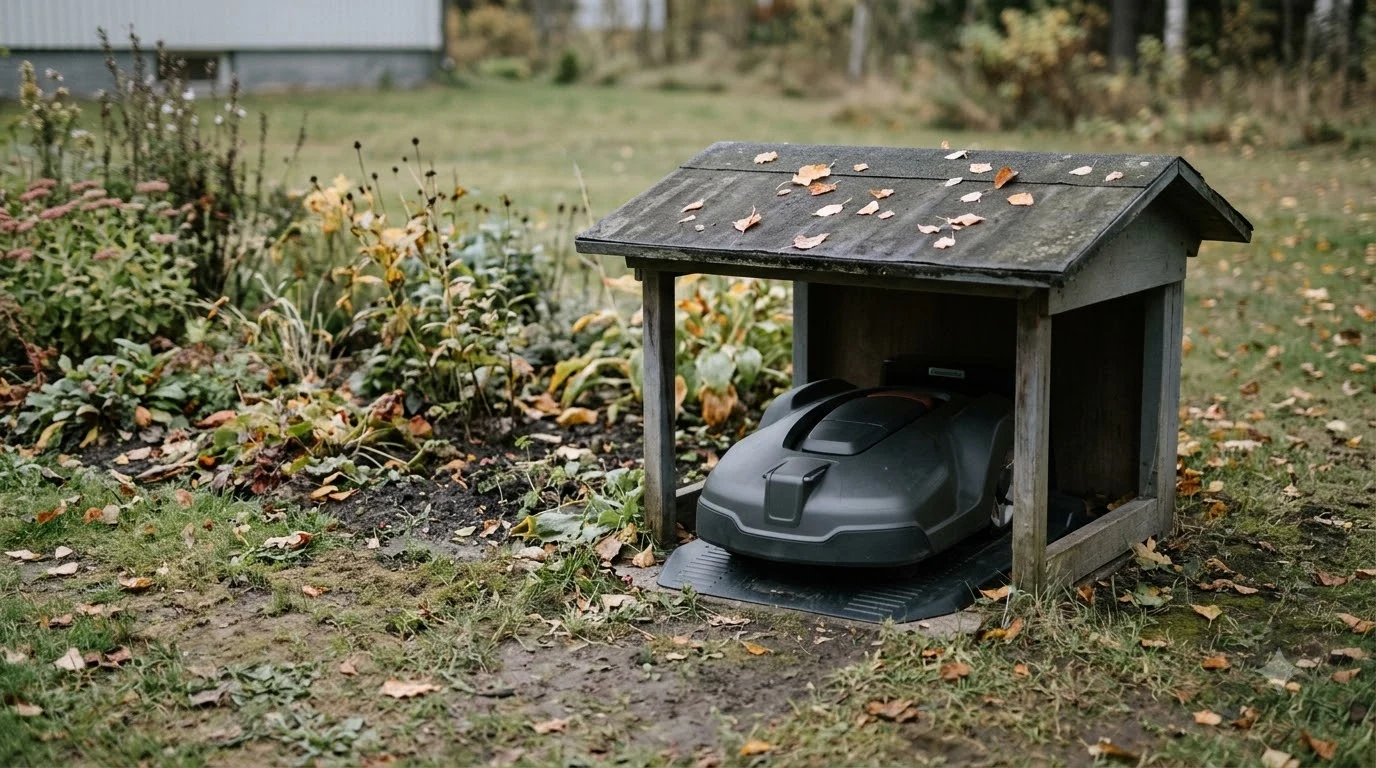

A Mammotion Luba charging station cover is optional, not required. Mammotion’s own garage guidance says the mower usually handles rain by itself, but repeated wet and dry cycles can corrode the charging contacts over time. The goal is to keep the contacts dry and clear while the station still gets air. The Mammotion pages we read list a garage for the LUBA AWD series but publish no footprint for the charging station itself, so measure your own base before you buy anything. This is as of Nov 2026.
The short answer
- Need: optional. Protect the contacts from standing water and debris, and do not seal the station shut.
- Fit: Mammotion’s UK store lists a garage for the LUBA AWD series that it says works with the LUBA 1 AWD and LUBA 2 AWD. Confirm your mower and base variant first.
- Size: the only published mower size we found is a 690 x 533 x 279 mm example for the LUBA 3 AWD series. Measure your own base.
- Airflow: keep the front and sides open. Mammotion says shade is good but heat traps are not.
Does a Luba charging station need a cover?
For most yards, a cover is a convenience rather than a must. The risk it addresses is moisture and debris at the contacts, not a failure that happens every season. Mammotion’s robot lawn mower garage guide makes the same split: rain is usually handled, while the wet and dry cycles that follow are what corrode the contacts. The principles apply to any mower, and the general rules for dock covers explain what to look for before the model details.
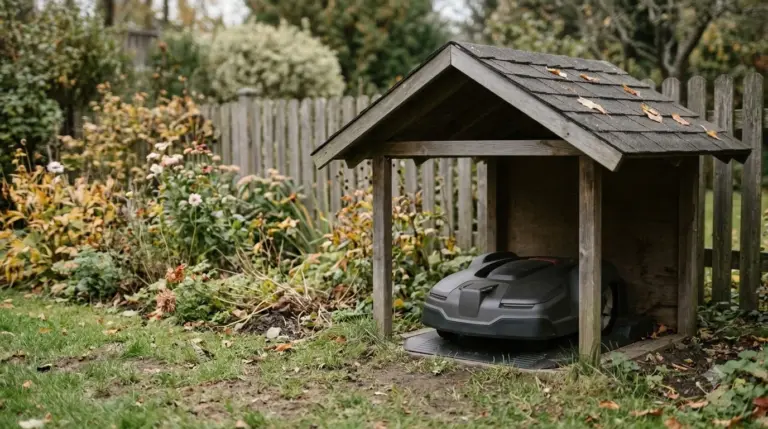
Sun is the second concern. Continuous sun can fade and weaken plastic over time. The same guide warns that a shelter can become a heat trap if it is closed in, so a cover that shelters from above while leaving the front and sides open fits the advice better than a sealed box. Our reading is that an open-sided roof over the base does more good than a full enclosure.
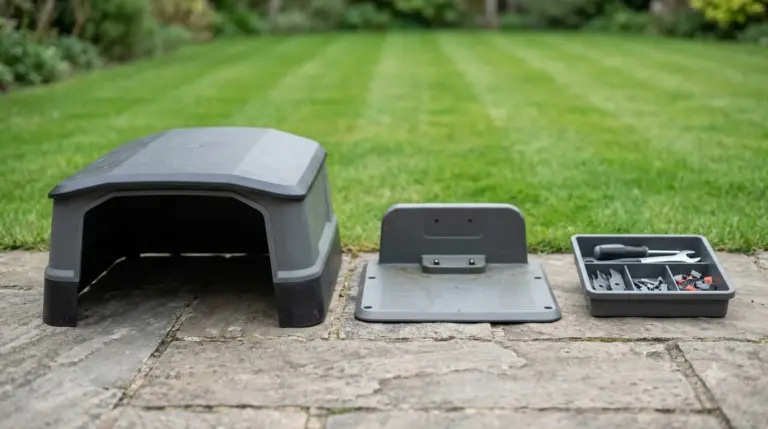
Mammotion Luba charging station cover options
Mammotion sells a garage for the AWD series, and its store pages show separate charging stations for different Luba variants. The UK store lists a Garage for LUBA AWD Series that it says is compatible with the LUBA 1 AWD and LUBA 2 AWD. The US store lists charging stations for the LUBA 2 AWD 2025 and for the LUBA mini AWD, each in S and H versions. Treat each variant as its own product and confirm which one sits on your base before you buy a garage or cover. Some owners choose a full garage over a roof, and garage options for the Luba cover the sizes involved. A cover for the mower itself is a separate purchase, as the notes on model covers for Mammotion mowers explain.
| Item | What the listing says | What it means for you |
|---|---|---|
| Garage for LUBA AWD series | Listed as compatible with LUBA 1 AWD and LUBA 2 AWD (UK store) | Check your exact model before you buy |
| Charging station variants | S and H versions listed for LUBA 2 AWD 2025 and LUBA mini AWD (US store) | Match the S or H version on your base |
| Charging station footprint | Not published on the pages we read | Measure the base yourself |
We did not find a cover sold for the Luba charging station itself on the pages we read. If you use a generic cover, check that it does not block the mower’s docking path or the air around the base.
Measure before you buy
Measure the mower and the base first, then add clearance. The Mammotion DIY garage guide uses 690 x 533 x 279 mm as the example size for a LUBA 3 AWD series mower. It does not label which number is length, width or height, so check the order against your own mower before you cut or buy anything. If a wall is the best spot for the reference station, a wall mount kit for RTK bases changes how much space you need. Measure the area under the dock too, because a plate under the base station adds a little to the footprint.
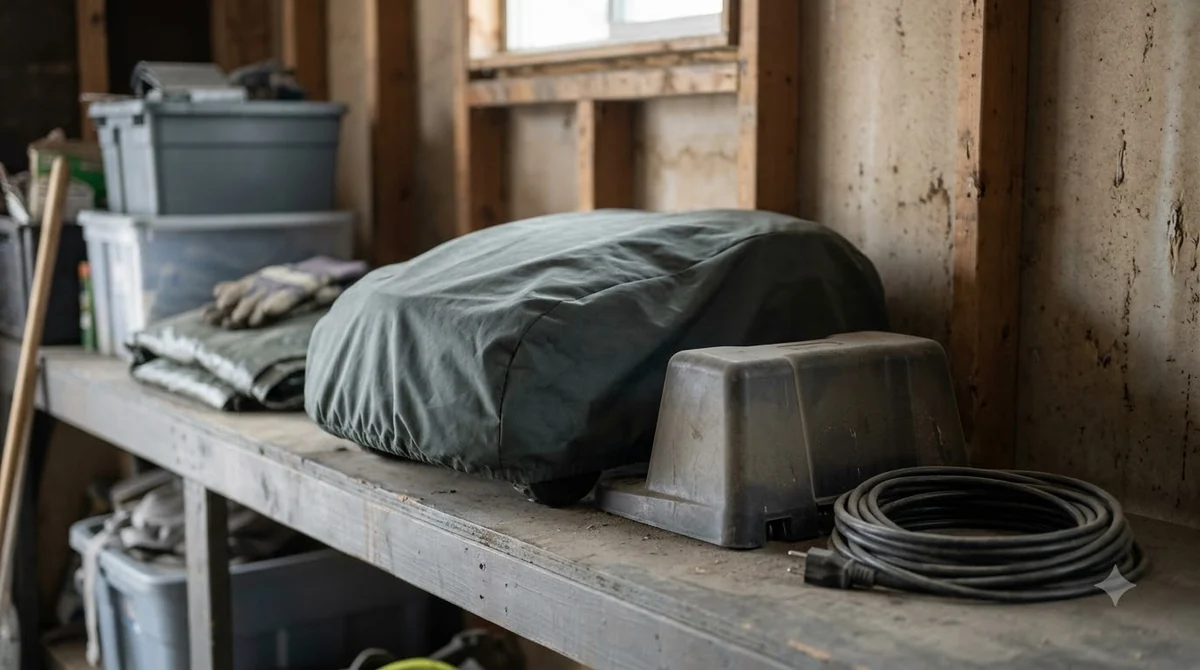
The same DIY guide suggests about 10 cm of clearance on each side of the mower, and it says the length of the garage should cover the mower plus the charging station with a margin. The guide’s sizing advice is general, so use your own base dimensions in the calculation. If you cannot find the base footprint in the manual, measure its width and depth directly and add the margin on every side.
| Measurement | Figure we found | Note |
|---|---|---|
| Mower example (LUBA 3 AWD series) | 690 x 533 x 279 mm | Axis order not labeled |
| Side clearance | About 10 cm per side | From the DIY garage guide |
| Front | Keep fully open | From the garage guide |
| Base footprint | Not found | Measure your own unit |
Keep the contacts dry and clear
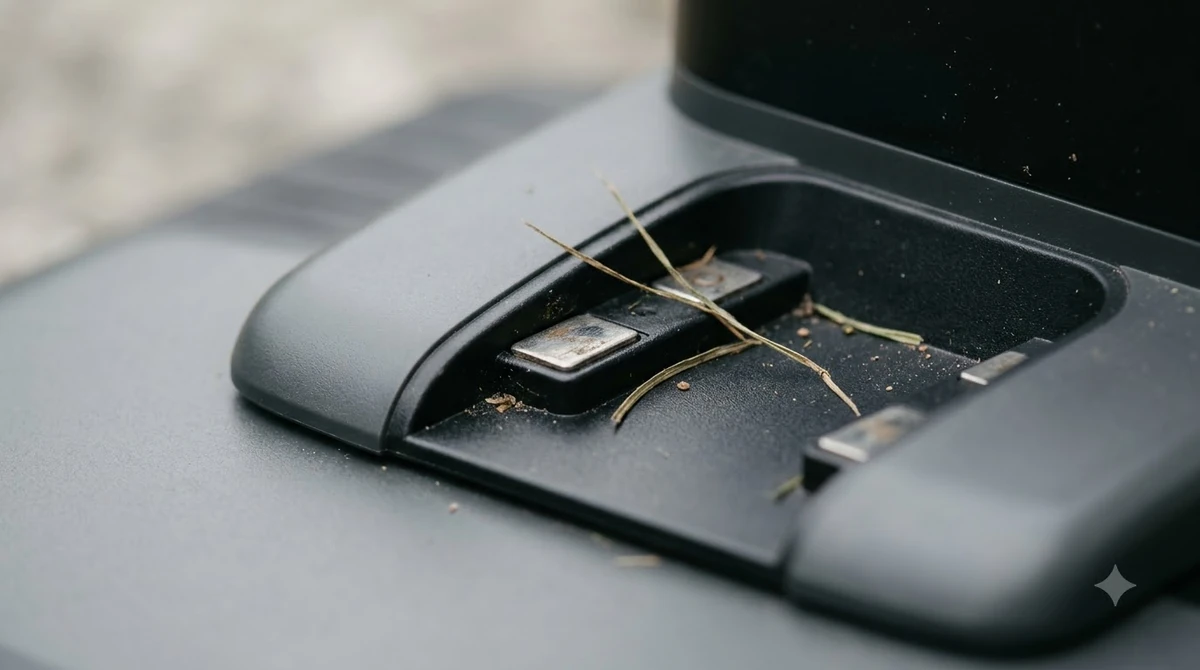
Water pooling near the contacts is the main thing to avoid. Mammotion advises raising the base slightly on gravel or pavers and keeping it away from low spots, because standing water near the contacts causes corrosion. Trim the grass around the base so clippings do not settle on the contacts.
Keep the power adapter and cable off the ground and out of standing water. We did not read a Luba manual that gives an exact adapter height, so check yours before you set the station in a sheltered spot.

Roof, signal and winter storage
If you add a roof, avoid metal. Mammotion warns that metal roofs can reflect or block RTK and GPS signals, while polycarbonate allows partial pass-through. Winter storage is the other point to plan for. Mammotion’s winter guidance recommends storage above freezing, about 10 to 20 C (50 to 68 F), and it warns against garages or basements that stay damp or freeze. A dry, sheltered spot is the safer choice. Where signal is a concern, a shade sail rather than a roof can let the antenna see more of the sky.
A checklist before you buy a cover
- Confirm the model. Check the Luba series and whether your base is the S or H version.
- Measure the mower and the base. Add about 10 cm of side clearance on each side.
- Keep the front open. The mower needs a straight path to the dock.
- Choose the roof material. Avoid metal roofs for RTK signal reasons.
- Check airflow. Keep the sides open so the base does not trap heat.
- Plan winter. Store the mower in a dry spot above freezing, around 10 to 20 C.
Related reads: A checklist before you buy should include ground stakes for the dock base so the cover does not shift in wind.
Frequently asked questions
Does a Luba charging station need a cover?
Not always. A cover mainly helps keep water, debris and sun off the contacts. Mammotion’s guidance says the mower handles rain itself, so the cover is a protection choice rather than a requirement.
Can a cover affect the RTK signal?
It can if the roof is metal. Mammotion says metal roofs can reflect or block RTK and GPS signals. Polycarbonate allows partial pass-through, so it is a safer material choice.
Can I use a generic cover on a Luba base?
You can check, but confirm the base dimensions first and make sure the cover does not block the docking path or the airflow. A generic cover is not something Mammotion lists for the Luba station, so verify the fit yourself.
Should I move the Luba charging station indoors in winter?
Mammotion’s winter guidance recommends storage above freezing, about 10 to 20 C. It also warns against damp or freezing spaces. If your yard gets hard frosts, a dry, sheltered indoor spot is the safer option.
Sources
- Mammotion DIY robot mower garage guide (Mammotion): the 690 x 533 x 279 mm example and the side clearance rule.
- Mammotion robot lawn mower garage guide (Mammotion): roof material, RTK signal, ventilation, front clearance and drainage.
- Mammotion winterize guide (Mammotion): storage temperature and damp or freezing spaces.
 Up next6 min readGearMammotion YUKA Charging Station Cover: What to Check FirstUpdated Nov 20, 2026
 7 min readGearSegway Navimow Charging Station Cover: What to Check FirstUpdated Nov 20, 2026
 7 min readGearEcovacs GOAT Charging Station Cover: What to Check FirstUpdated Nov 20, 2026
 7 min readGearMammotion Luba Replacement Wheels: What to Check FirstUpdated Nov 19, 2026
 8 min readGearMammotion LUBA Replacement Battery: Models, Warranty and What to CheckUpdated Nov 19, 2026
 9 min readGearMammotion Luba Accessories Worth Buying: What to Get and What to CheckUpdated Nov 19, 2026