
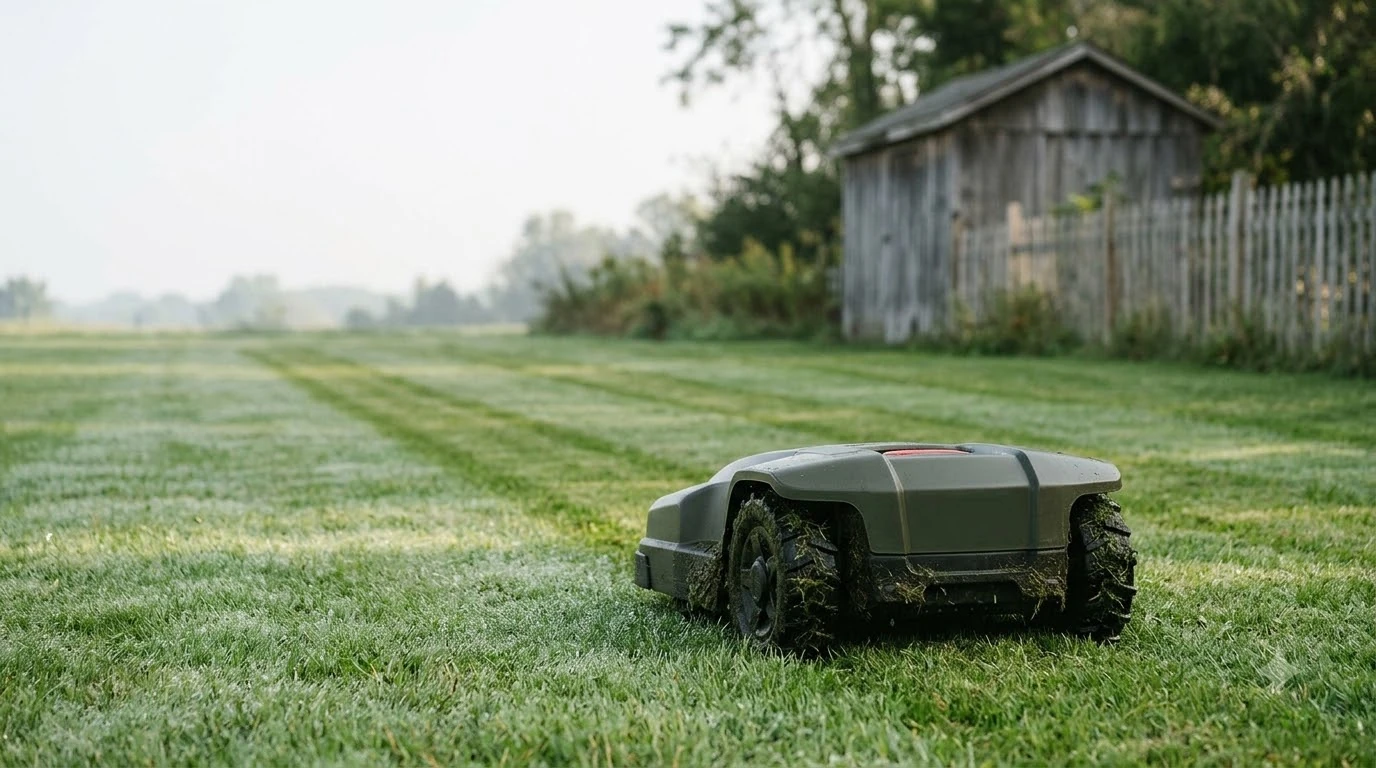

For a lawn with heavy dog traffic, the best robot mower is one with strong traction and a boundary you can set around worn routes, because the damage is usually wear and urine patches rather than the mower itself. Dogs run the same paths, dig, and spend time by gates and water bowls, and those spots turn soft or bare. The points below come from manufacturer and lawn-care sources we read, plus our reading of how they apply to a robot mower, as of November 2026.
The short answer
- Expect worn paths. Repeated runs along the same route thin the turf, and our reading is that the gate, fence line and water bowl are the usual spots.
- Treat urine spots early. Concentrated urine burns grass, and that guide says to flush the spot with water soon after it happens.
- Watch traction on soft ground. Eufy says wet turf reduces wheel grip, so a mower can slip on worn or saturated spots.
- Set the boundary around the worst spots. Our reading is that keeping the mower off a bare route is easier with a wire or a restricted zone than with a fix after the fact.
Why dog traffic wears the lawn, not the mower
Dog traffic does its damage through repeated use of the same spots. A lawn-care guide on dog pee and grass notes that urine adds nitrogen and salts to one spot, and warns that “constantly drenching an area could drown it in excess nitrogen.” The same source describes a typical dog spot as a round patch of yellow or brown grass, often about 3 inches across, with a ring of greener grass around it. Dogs are one factor among many, and the guide to robot mowers for dog-owning households covers the rest. A neighbouring guide on mower choices for dog owners approaches the same question.
Worn paths are a different problem. Our reading is that a route used every day to a gate or fence, or a spot around a water bowl, compacts the soil and thins the turf faster than the rest of the lawn. A robot mower does not cause that wear, but it will drive over the same bare route many times a week, so a worn path can become a mud track with ruts.
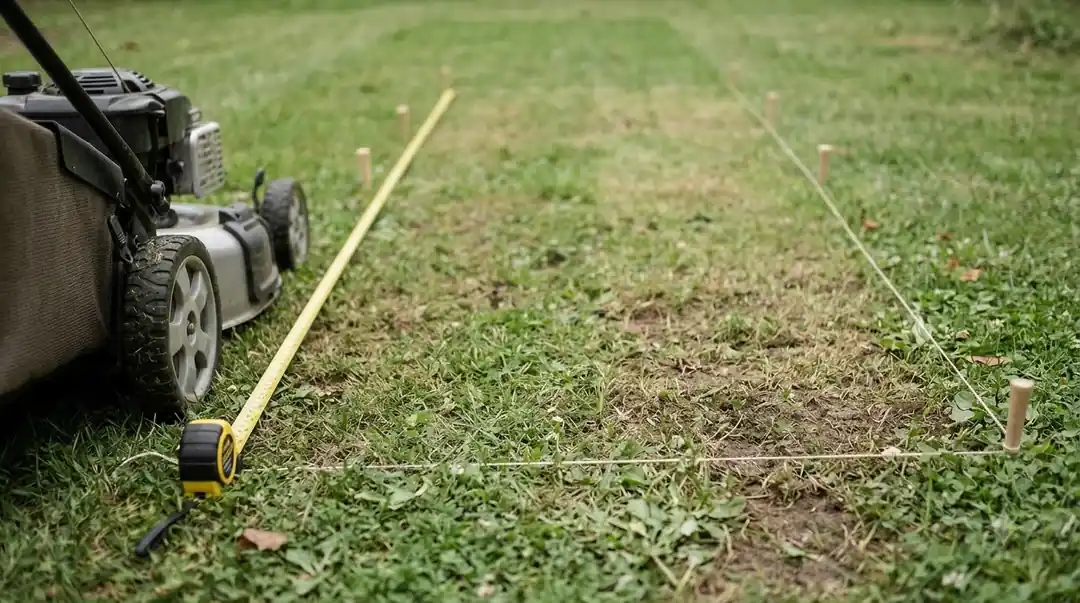
Our reading is that the right first step is to fix the lawn, not to change the mower. Repair the spots, improve drainage on the worn route and then decide where the mower should and should not go.
Traction on worn and soft ground
Eufy’s wet-grass guidance says that wet turf reduces wheel grip, so the mower can slip on inclines. It also warns that mowing on saturated ground risks compaction, and that repeated wheel passes can form ruts, especially near the perimeter or the charging dock. Worn dog routes are often the softest and most compacted spots in a yard, so they are where a mower is most likely to lose its footing. Soft ground under paws and wheels is discussed in clay ground and robot mowers.
When you shop, look at the traction system before the cutting area. An all-wheel or strong-traction model is a better match for a yard with worn routes and banks than a basic two-wheel-drive unit. Our reading is that a yard with a steep run, a gate slope or a bank near a fence should be measured first, because the mower’s slope limit is what decides whether the route is safe.
Urine spots and how to treat them
Dog urine spots are repaired differently depending on the colour of the grass. The guide we read describes three stages. Dark green spots are stimulated but not yet harmed, so watering thoroughly and keeping up with fertilizer can blend them in. Yellow spots are less severe and often recover, so soak the area with a hose right away and follow a commercial repair product’s label. Brown dead spots need the dead turf and old roots removed, the soil loosened and mixed with compost, then reseeded with a seed that matches the lawn. Worn turf is covered in mowing thin or patchy grass alongside the guidance above.
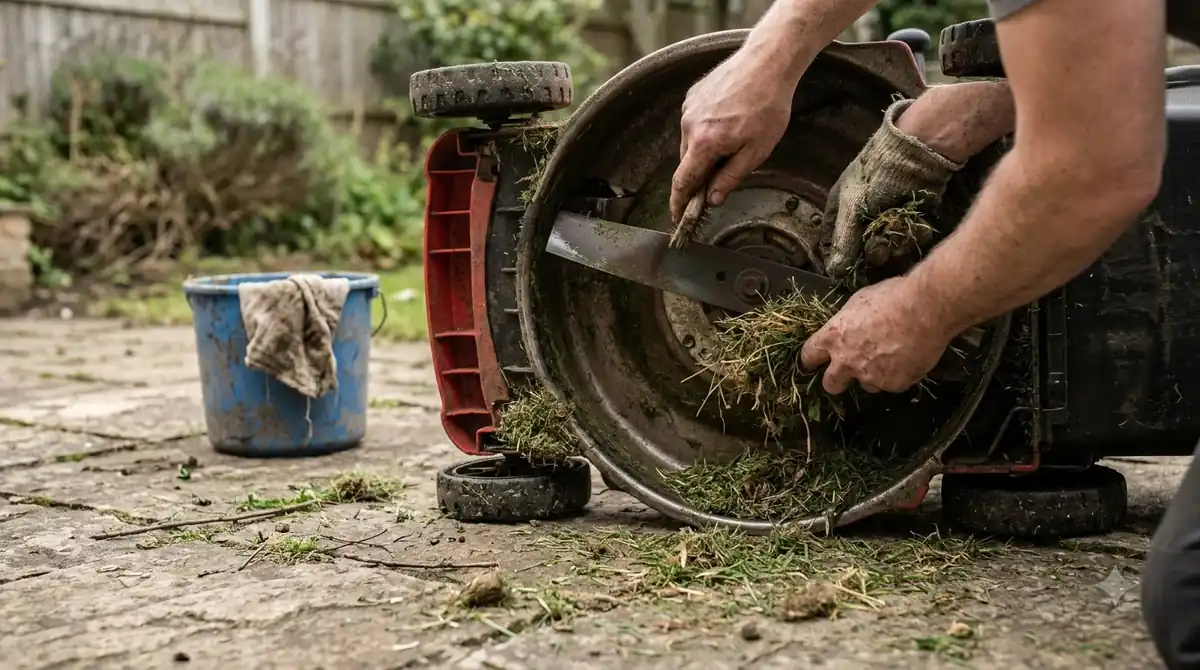
The same guide advises against home remedies such as baking soda, gypsum or dish soap, which it says can cause more harm than good. A simple tug test helps you tell dog urine from pest or fungal damage: if the grass does not pull up easily, dog urine is the likely cause, and if the damage covers a larger area, call a lawn professional.
Keeping the mower off the worst spots
A robot mower can work around a dog’s favourite spots if you set the boundary to match them. Our reading is that the best approach is to fence off the worst route, using a wire or a restricted zone, for a few weeks while the grass recovers, then reopen it once the turf is back. Where the route is a permanent path to the gate, plan a gravel or stone path that the mower can cross, since a bare track will stay bare if the mower keeps driving across it. Young children also share the lawn, as mowers for families with toddlers explains.
Check the mower’s docking area too. A dock on a worn or muddy spot is a common source of ruts, and Eufy says repeated wheel passes near the dock can cause them. Move the dock to a firm, dry, level pad if you can, and keep the route from the dock to the lawn as short as possible.
What to check before you buy for a dog yard
- Traction. Look for all-wheel drive or strong, wide wheels, and check the slope limit in the manual.
- Boundary options. Confirm you can set a restricted zone or wire around a worn route and a bed.
- Dock placement. Choose a firm, dry, level spot away from the dog’s run.
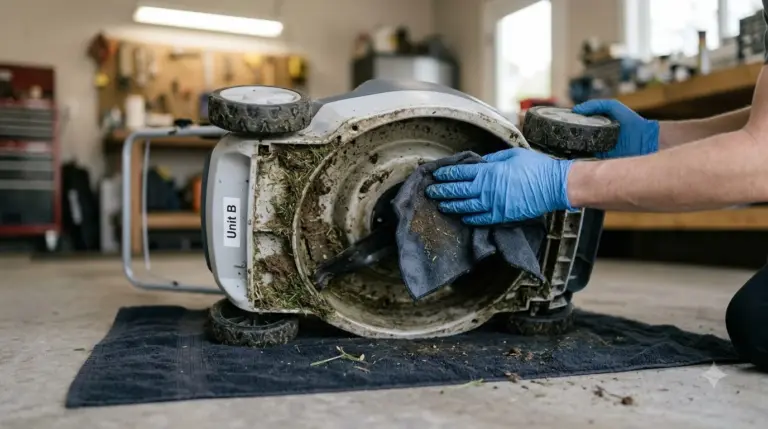
- Blade and deck access. Check that the deck and wheels are easy to clean after mowing a dog yard, since debris and mud build up quickly.
The best robot mower for a lawn with heavy dog traffic is the one that keeps its grip on soft ground and can be kept off the worst routes until the lawn recovers. Lawn damage and pollen are linked, as mowers for people with allergies shows. A busy household also shapes the schedule, as mowers for busy households explains. If a dog yard also calls for a low-effort machine, this overview of the robot mower that is easiest to use shows which setups ask the least of the owner.
Frequently asked questions
Will a robot mower make dog urine spots worse?
The mower does not cause urine damage, which comes from concentrated nitrogen. Our reading is that a mower can make a soft, worn spot worse by driving over it repeatedly, so flush and repair the spots and keep the mower off them while they recover.
What should I do about a yellow urine spot?
Soak the area with a hose right away, then follow the label of a commercial lawn repair product. The guide we read says yellow spots are less severe and often recover, while brown dead spots need reseeding.
Can a robot mower avoid a worn dog path?
It can, if you set a boundary wire or restricted zone around it. Our reading is that a fenced-off route works better than trying to fix the path after the mower has already churned it up.
Should I use baking soda or gypsum on dog spots?
The guide we read advises against home remedies such as baking soda, gypsum or dish soap, which it says can cause more harm than good. Water the spot and follow a repair product instead.
Sources
- LawnStarter, why dog pee kills grass (lawn-care company): nitrogen damage, spot pattern, tug test and repair steps.
- Eufy, robot lawn mower and wet grass (manufacturer): wheel grip on wet turf, ruts near the dock and compaction.
 Up next9 min readBest Robot MowersBest Robot Lawn Mower for Dog Owners: What to Check FirstUpdated Nov 11, 2026
 6 min readBest Robot MowersBest Robot Mower for a Lawn With Heavy Leaf FallUpdated Nov 17, 2026
 10 min readBest Robot MowersChoosing the Best Robot Lawn Mower for Lawns with Heavy Pine Cone DropUpdated Nov 19, 2026
 7 min readBest Robot MowersBest Robot Mower for Texas Heat: Charger, Schedule and LimitsUpdated Nov 17, 2026
 6 min readBest Robot MowersBest Robot Mower With Offline Mode: What Keeps CuttingUpdated Nov 17, 2026
 6 min readBest Robot MowersBest Robot Mower With Replaceable Battery: What to CheckUpdated Nov 14, 2026