
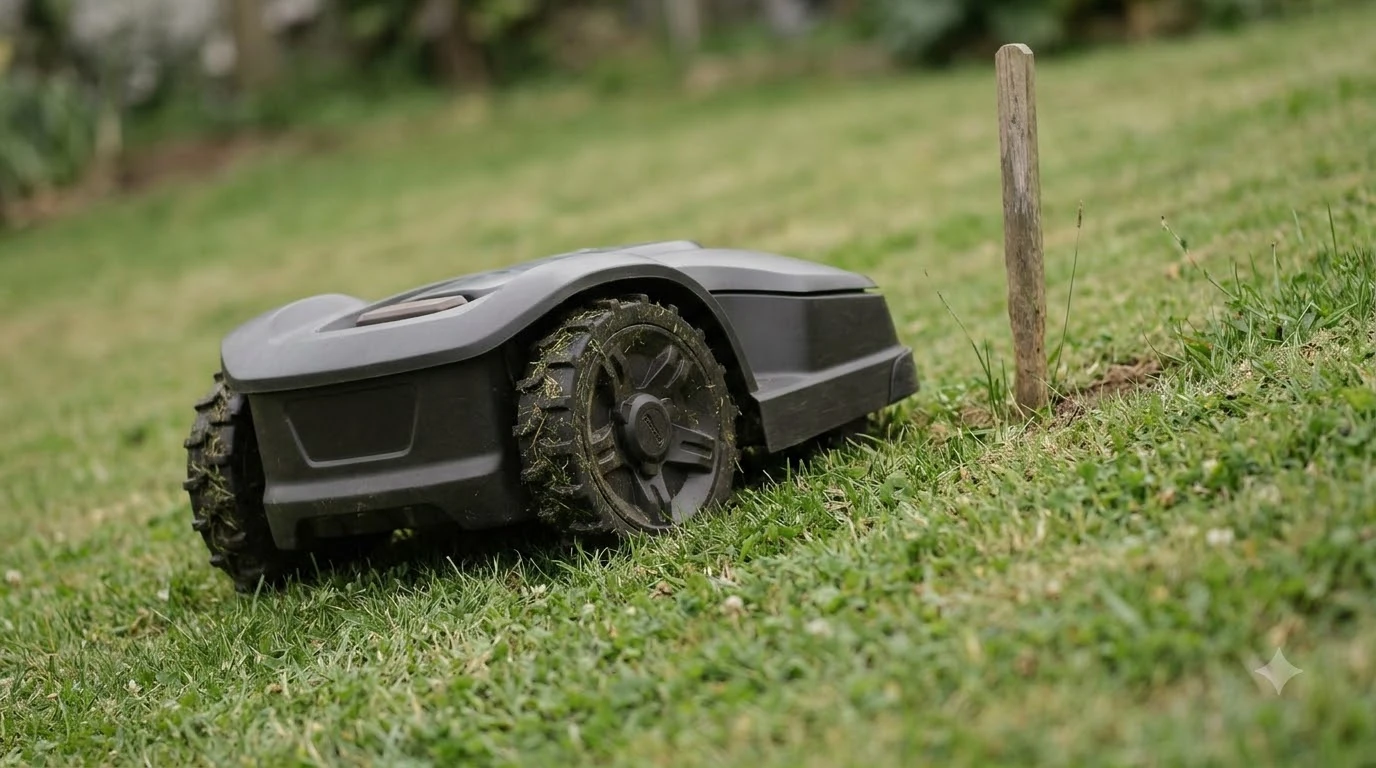

For 2WD vs AWD robot mower traction, an AWD robot mower (four driven wheels) holds grip on steep slopes and damp grass better than a 2WD model, while a 2WD mower is a sound and cheaper choice for gently sloped, dry lawns. The gap matters most when the ground is wet or the bank is steep, because that is when a 2WD machine tends to spin and slide. For a 2WD vs AWD robot mower decision, the real question is how your yard behaves on its worst day, not its average one.
The short answer
- Flat and dry: a 2WD robot mower is enough and costs less.
- Gentle slopes: a 2WD model with good tyres can cope, but it has less margin.
- Steep slopes or damp grass: AWD is the usual recommendation, because power goes to whichever wheels still grip.
- Read the rating carefully: slope figures are often measured on dry, firm ground, so expect less on wet days.
How 2WD and AWD move a robot mower
A 2WD robot mower has two driven wheels and usually two castor wheels. Its drive motors steer by spinning the wheels at different speeds, so the traction comes from only two contact points. An AWD mower powers all four wheels. Its drive can send power to whichever wheels still grip, which is why AWD designs tend to keep moving when one wheel meets a patch of wet moss or loose soil. Traction is only one part of slope ability, and which mowers handle slopes best compares real results across brands. Drive layout is a second variable, and front-wheel versus rear-wheel layouts shows how it changes behavior.
Traction is the ability to push the machine forward without slipping. On a flat, dry lawn, two driven wheels are usually enough. On a slope, weight shifts toward the lower end of the machine, and the driven wheels have to hold the mower up the bank. That is where the drive layout starts to matter.
2WD vs AWD robot mower traction on slopes
Slope capability is the main reason people buy AWD. Vendor comparisons place 2WD models in the moderate range, roughly up to about 15 to 30 degrees, and AWD models in the steep range, up to about 30 to 38 degrees or more. Those numbers come from manufacturers, and the sources do not agree on the exact cut-off. Our reading is that a 2WD mower is comfortable on mild banks, and an AWD mower is the safer choice once the slope passes about 20 degrees. Manufacturer limits depend on drive type, and slope limits for robot mowers explain how to read the numbers.
Units matter too. Manufacturers often list slope as a percentage, and a percentage is not the same as an angle. A 45 degree slope is a 100 percent grade, so a figure of 35 percent is closer to 19 degrees. Check which unit a model uses before you compare two machines side by side.

Wet grass and slipping
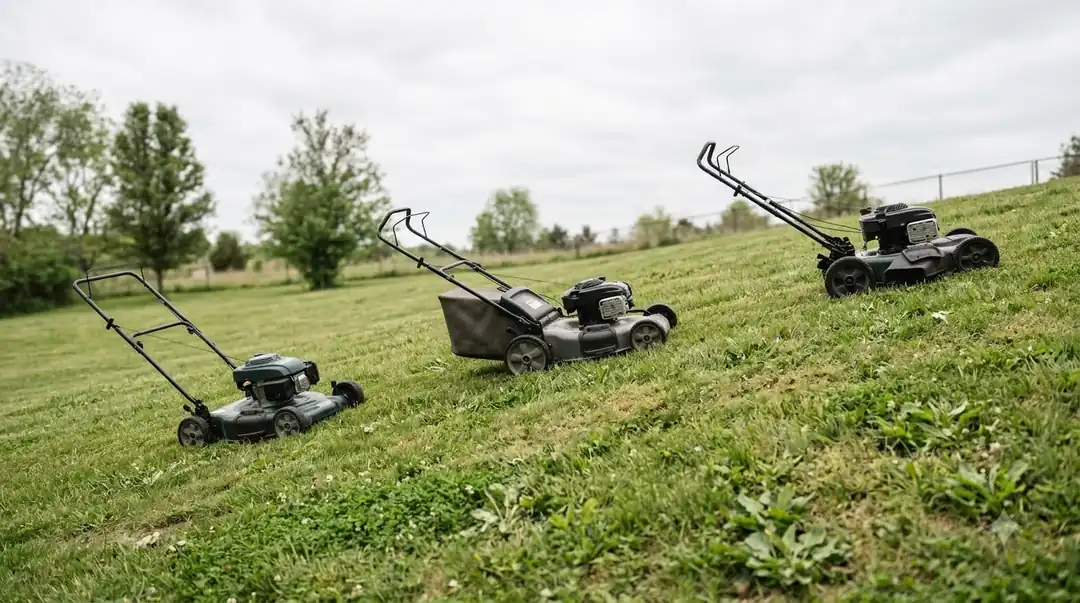
Wet grass is where 2WD traction is most often tested. Several sources say a 2WD mower can slip on soft, wet, or muddy ground well before it reaches its rated slope, and it can spin on an incline. AWD spreads the drive across four wheels, so it is less likely to lose all grip at once. The result is a steadier cut and less wear on the turf, because a spinning wheel digs into the grass. Even AWD mowers can slip, and wheel slip on slopes and wet grass lists the usual fixes.
A practical rule some owners use is to lower the stated slope limit when the lawn is damp. Ratings are usually measured on dry, firm ground, so a machine rated for a steep bank may be closer to its limit on a wet morning. Our reading is that this matters more to the choice than the headline figure.
Cost, weight, and efficiency
In the 2wd vs awd robot mower traction trade-off, a 2WD mower is generally cheaper and lighter, and it has fewer motors to maintain. An AWD model costs more because of the extra drive system and its controls. The extra motors also draw more power, which some sources note can reduce runtime on a large lawn. For a flat, dry yard, that trade is hard to justify. Heavier AWD systems affect runtime, and battery size differences across mowers help you judge the efficiency cost.
Weight is a small but real factor. A heavier mower can dig in more on soft ground, while a lighter one is easier to lift when you need to move it. Check the listed weight alongside the drive layout.
Wheel tread, boundary, and turf care
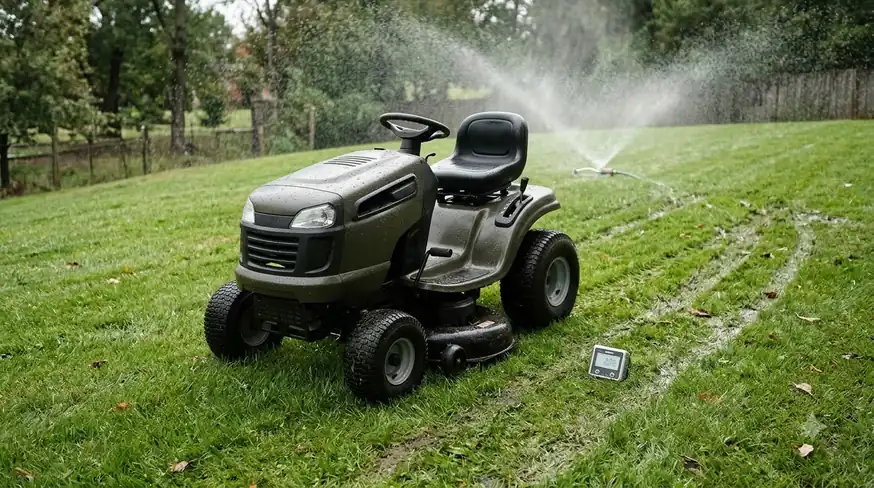
Drive layout does not work alone. Tread pattern and tyre width affect grip as much as the number of driven wheels, and a worn tread loses traction faster on wet grass. Check the tread regularly and replace worn wheels before a wet season.
Boundary placement also matters on steep ground. A mower can slide past a boundary cable on a steep bank, so set the boundary back from drop-offs and steep edges. This is a safety and turf issue, whatever drive type you choose.
Who should pick which
Choose a 2WD mower, since the 2WD vs AWD robot mower traction gap only matters on certain lawns, if your lawn is mostly flat or gently sloped, the grass is generally dry, and you want to keep the cost down. It is a sensible first robot for a simple yard.
Choose an AWD mower if the lawn has a steep bank, a damp microclimate, or uneven ground that tends to stay wet. It also suits a yard that sits in heavy shade, where grass stays soft for longer.
What to check before you buy
- Your steepest slope: measure it with a clinometer app and compare it with the model’s rating, adjusted for wet days.
- Units: confirm whether the rating is in degrees or percent before you compare models.
- Tyres: look for a tread designed for grip and check how easy the wheels are to replace.
- Turf condition: if your lawn is soft or damp, lean toward AWD to avoid torn grass.
Frequently asked questions
Is a 2WD robot mower enough for a sloped lawn?
For a gentle slope on dry grass, often yes. On steeper banks or wet ground, a 2WD mower is more likely to slip, and an AWD model is the usual recommendation.
What slope can a 2WD vs AWD robot mower handle?
Vendor figures put 2WD models roughly in the 15 to 30 degree range and AWD models higher, often up to about 30 to 38 degrees. Ratings are usually for dry, firm ground, so leave margin on damp days.
Why does AWD grip better on wet grass?
With four driven wheels, power goes to whichever wheels still have grip. A 2WD mower has only two contact points, so one slipping wheel can stall the whole machine.
Does AWD use more battery?
It can. Driving four wheels draws more power than driving two, so runtime on a large lawn may be shorter. Check the runtime figure for the specific model.
Sources
- Mammotion, 2WD vs 4WD robot mower (robot mower maker): used for the 2WD and 4WD slope bands, wheel-slip on soft and wet ground, and the steering explanation. Note it is a vendor article.
- Steep Terrain Mowers, robot mower slope percentage (independent retailer guide): used for the percent-to-degree conversion, the FWD, RWD and AWD notes, and the wet-grass derating advice. Note the site is affiliate-supported.
 Up next9 min readReviews & CompareAWD vs 2WD Robot Mower for Hills: Which Drive Do You Need?Updated Nov 11, 2026
 7 min readReviews & CompareRobot Mower vs Hover Mower: Which Fits Your Yard BetterUpdated Nov 18, 2026
 7 min readReviews & CompareMammotion LUBA 2 AWD Lawn Size: Which Model Fits Your YardUpdated Nov 17, 2026
 7 min readReviews & CompareIs the Navimow i210 AWD Worth It? Slopes, Area and LimitsUpdated Nov 17, 2026
 8 min readReviews & CompareMammotion LUBA 2 AWD Problems and Complaints: What Owners ReportUpdated Nov 17, 2026
 7 min readReviews & CompareMammotion LUBA 3 AWD Warranty: Length, Terms and ExtrasUpdated Nov 14, 2026