

In any RTK vs GPS robot mower accuracy comparison, RTK is far more precise than standard GPS, bringing it from roughly meters down to a few centimetres, because a base station in your yard sends real-time corrections. Standard GPS on its own is usually good enough for rough navigation, but it is too coarse for neat edges and precise boundaries. The trade-off with RTK is that it depends on a clear sky and a working base station, so accuracy is only as good as the conditions around it.
The short answer
- Standard GPS: vendor and technical sources put its accuracy at a few meters, and some cite about 10 meters on a single receiver. It is adequate for broad coverage but not for fine edging.
- RTK: the base station corrects satellite errors, and sources commonly quote about 1 to 3 centimetres in good conditions.
- Weak point: RTK loses reliability when the sky is blocked or the base-to-mower radio link drops, and accuracy falls as the distance from the base grows.
- Choose by yard: RTK suits open lawns with a clear sky. Heavy tree cover or tall buildings call for a backup sensor or a different navigation method.
RTK vs GPS robot mower accuracy: the basic difference
Satellite positioning works by timing signals from several satellites. Those signals pick up small errors as they pass through the atmosphere and the receiver’s own electronics. A standard GPS receiver on a mower has no way to remove those errors, so its position can drift by meters from one moment to the next. That is enough to make a robot’s path look wobbly, and it is why a plain GPS mower will often leave a slightly ragged edge.
RTK, which stands for real-time kinematic, adds a second receiver. A base station sits at a fixed, surveyed spot in the yard, compares the satellite signals it receives with the signals it should be receiving, and sends the difference to the mower in real time. The mower applies that correction to its own position. The result is a much tighter fix, and it is the reason RTK mowers can follow a virtual boundary closely.

How accurate each method really is
The figures vary by source, because they describe different conditions and different receivers. One technical guide puts standard GPS at a few meters, while another quotes about 10 meters for a single traditional receiver. For RTK, the same guides agree on centimetre-level accuracy in good conditions, with one citing about 1 to 3 centimetres for a short baseline. Those are the numbers worth planning around, but they assume a clear view of the sky and a base station close to the mower.
Accuracy also depends on distance. As the mower moves farther from the base, the correction becomes less exact. Guides commonly describe the useful range in kilometres rather than metres, and short baselines in a typical yard keep the error small. Treat any single headline number as a best case, not a guarantee.
Where RTK fails and where GPS holds up
RTK has two common weak points. The first is satellite visibility. Dense tree cover, tall buildings, and nearby structures can block or weaken the signals, and the RTK link can drop out in those spots. The second is the correction link itself. The base sends corrections over a radio connection, so an interruption or a blocked base can leave the mower without precise positioning. Where RTK fails, navigation that does not rely on satellites is the usual fallback.
Standard GPS has its own limit: it is simply less accurate. It does not need a base station, so it avoids the correction-link problem, but its coarser fix makes precise edges and tight boundaries harder to hold. In practice, a mower on GPS alone will usually cut a slightly looser line. For many owners that is acceptable, while others notice the difference right away.
Sky view and base placement
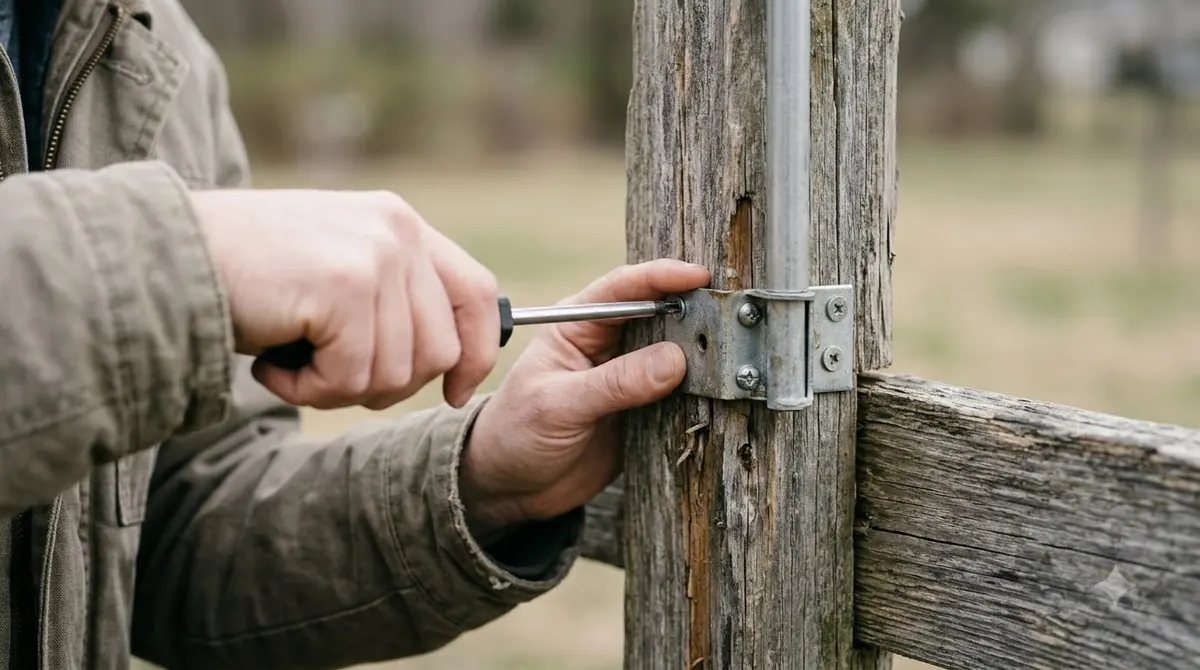
RTK rewards good placement. The base station needs a clear view of the sky and should sit within the distance the manufacturer recommends from the mower’s charging station. Put it on a fence post, a roof edge, or a mast away from trees and walls, and avoid spots where metal structures can reflect signals. A base placed in the shade of a large tree will struggle even if the mower itself has a good view. Base placement affects results, and base station versus no base station covers the trade-offs.
The mower’s own position matters too. If the charging dock sits under a tree or against a building, the mower may lose RTK lock during its return trip. Plan the dock location and the base location together.
Who should pick which
When you weigh RTK vs GPS robot mower accuracy against your yard, choose RTK if your lawn is open, you want neat edges, and you can place a base station with a clear sky view. It is the better fit for precise virtual boundaries and straight mowing lines. Accuracy matters less on small lawns, so see RTK payoff on a small lawn before paying for it. Positioning is one difference to weigh, and Eufy and Segway Navimow compared looks at the rest of the picture.
Choose standard GPS, or a system with a different backup, if the yard is heavily shaded or enclosed. Rough accuracy is acceptable when the lawn is simple and the edges are protected by beds or hard surfaces, and it avoids the cost and placement work of a base station.
What to check before you buy
- Sky view: stand on the lawn and check how much of the sky you can see at the base spot and at the dock.
- Backup navigation: ask what the mower does when RTK lock is lost, such as using vision, lidar, or dead reckoning for a short time.
- Base distance: confirm the recommended maximum distance from base to the farthest part of the lawn.
- Correction service: check whether the model uses a local base station or a network service, and what that costs over time.
Related reads: Positioning services are sometimes paid, as mower GPS with and without a subscription explains. Real-world RTK trouble is described in Luba 2 AWD antenna and connectivity reports from owners.
Frequently asked questions
How accurate is standard GPS on a robot mower?
Sources put it at a few meters, and some quote about 10 meters for a single receiver. That is enough for rough coverage but not for precise edges or tight boundaries.
Does RTK really reach centimetre accuracy?
In good conditions, with a clear sky and a nearby base, guides commonly quote about 1 to 3 centimetres. Accuracy drops with distance from the base, and blocked satellites can break the lock.
Why does my RTK robot mower lose signal under trees?
Tree canopy blocks or weakens the satellite signals, and the correction link can drop out in shaded spots. Move the base to a more open point and consider a model with a backup sensor.
Is RTK worth the extra cost over GPS?
For an open yard where you want precise edges, many owners find it worth it. For a small or heavily shaded lawn, the base station and placement effort may not pay back the gain.
Sources
- Sunseeker, GPS robot lawn mowers explained (robot mower maker): used for the standard GPS accuracy range, the RTK base-station and correction explanation, and the tree and building limits. Note it is a vendor article.
- DFRobot, how RTK technology enhances robotic lawn mower positioning (electronics supplier): used for the correction data flow, the distance-dependence note, and the RTK link failure conditions.
 Up next6 min readReviews & CompareRobot Mower Subscription GPS vs Free GPSUpdated Nov 13, 2026
 6 min readReviews & CompareAnthbot M5 Slope Limit: What 45 Percent Means on Your LawnUpdated Nov 14, 2026
 7 min readReviews & CompareRobot Mower Battery 18V vs 20V vs 28V: What the Numbers MeanUpdated Nov 13, 2026
 8 min readReviews & CompareECOVACS GOAT O-Series vs A-Series: What’s the Difference?Updated Nov 16, 2026
 9 min readReviews & CompareCheap vs Expensive Robot Mower DifferencesUpdated Nov 11, 2026
 7 min readReviews & CompareEcovacs GOAT A1600 RTK Review: Published Specs and GapsUpdated Nov 17, 2026