
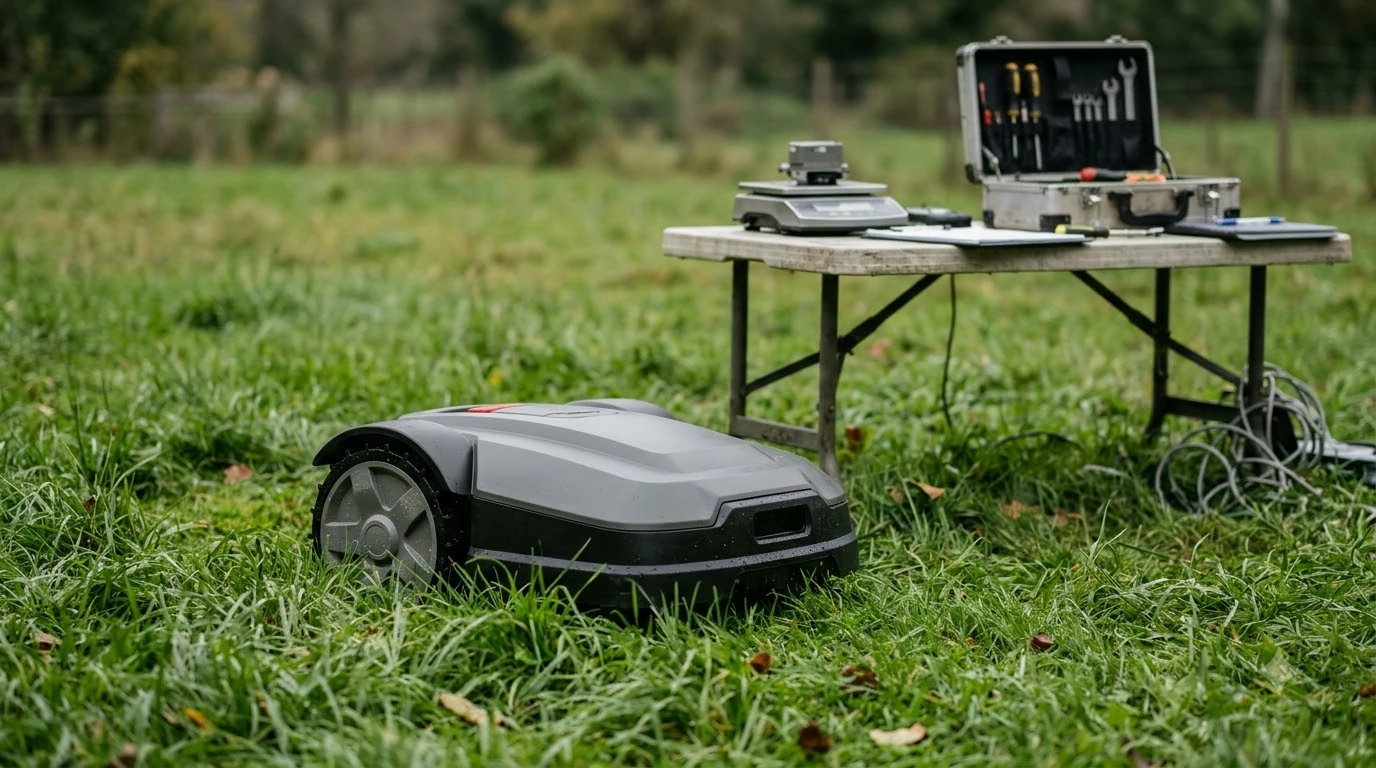

A robot mower for a lawn with a French drain can work, but keep it off the trench and off soggy ground. The buried gravel and pipe can settle over time, leaving soft spots that a mower may sink into or slip on. Wet soil also rutted by wheels is the bigger risk for the lawn itself, so the best approach is to set boundaries around the drain line, mow only when the ground is firm, and check the strip after every few runs.
The short answer
- Yes, with limits: a robot mower can cut the grass over a French drain once the trench has settled and the surface is firm.
- Keep the trench out of the mowing area: use a boundary wire or a physical barrier so the wheels do not repeatedly cross a settled or sunken line.
- Do not mow saturated soil: wheel ruts and compaction make drainage worse, which defeats the drain.
- Check for dips: sunken spots along the trench can trap the mower or leave wheel tracks.
- Keep the outlet clear: grass clippings and debris near the drain outlet can slow the flow.
What a French drain is and why it matters for mowing
A French drain is a trench filled with gravel, usually with a perforated pipe at the bottom, that carries water away from a low or saturated area. Colorado State University Extension describes it as a rock-filled trench, usually with a pipe at the bottom, and notes that it must slope at least 1 to 3 percent to a gravity-flow outlet to work. That slope matters for mowing too, because a drain that is not level or that settles can leave a shallow channel across the lawn. A drain exists to manage wet ground, so the soggy lawn mowing guide is a natural companion for the same problem. Surface cleanout caps along the line act like other small fixtures, as well cap and pedestal handling shows.
The trench itself is not the main problem for a robot mower. The concern is what happens to the surface above it. Gravel backfill settles unevenly, and the soil over the line can end up lower than the grass on either side. A robot mower following its path will repeatedly cross that depression, which can scuff the turf and pull the mower off balance.
Soft ground over the drain can trap or tilt a mower
Settling is the most common issue with older drains. When the backfill compacts, the surface dips and wet soil forms along the line. A mower that enters a soft strip may sink on one side, lose traction, or tilt while the blades are still running. Most robot mowers are built for firm, level lawns, so a wet trench is an area to stay out of rather than a place to test traction. Trench settling can leave dips behind, and holes and dips on settled trenches describes how deep they must be to matter.
Walk the line after a dry spell and look for dips, soft patches, or grass that is greener and lusher directly over the trench. These are signs of extra moisture underneath. If you find them, add a boundary wire along the edge of the dip, or cut the grass by hand in that strip until the ground firms up.
Wet soil is the bigger risk for the lawn
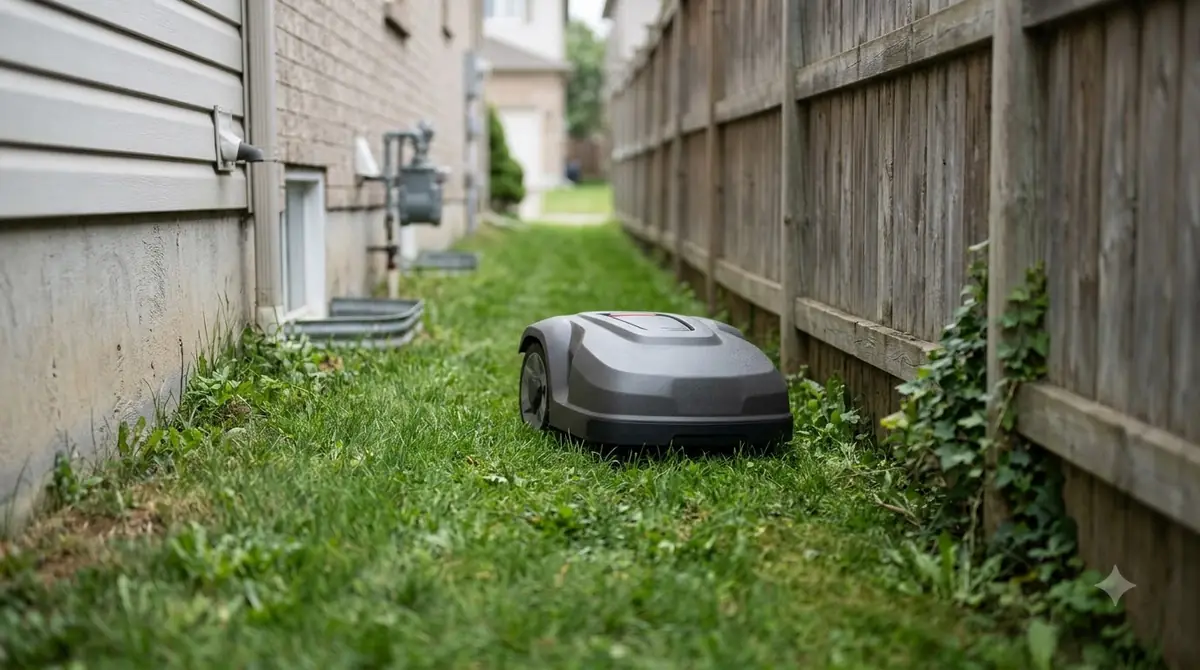
A robot mower is light, but repeated passes on saturated soil still leave tracks. Once the surface is pressed down, the soil pores shrink and water moves more slowly. This is the core problem the drain is supposed to solve, so a mowing schedule that runs wheels over a soggy lawn can work against the system. The drain is often added because of clay, and heavy clay drainage timing explains the mowing schedule that fits. Drains do not always fix a lawn that stays wet, as clay soil that holds water shows.
Colorado State’s guidance on soil drainage explains why. Standing water shuts down root activity, and turf in waterlogged soil stays shallow and is more prone to root rot. Compacted soils have small pores, so water moves slowly and the ground stays saturated. Our reading is that a robot mower should follow the same rule as a person with a push mower: wait until the surface is firm before the first cut of the day.
A simple test helps. Dig a 12-inch hole near the drain line, fill it with water, and time how long it takes to empty. Colorado State describes a drainage problem if the hole has not emptied after 30 minutes. If that happens, delay mowing that zone until the soil dries and the drain has a chance to carry the water away.
Set up a robot mower for a lawn with a French drain
Most of the trouble can be prevented with the setup rather than the mower itself. Start by mapping the trench on paper, including the outlet location and any inspection boxes. Then decide how the mower should avoid that strip. An open channel needs a larger buffer than a buried line, and open drainage ditch mowing covers it.

- Mark the line. Use stakes or spray paint to show where the trench runs, and where the outlet is.
- Add a boundary. Run the boundary wire at least a few inches away from the trench edge, so the wheels stay on firm ground.
- Use a no-go zone. If the strip is too soft even for a boundary wire, cut it by hand or leave it as a short border of longer grass.
- Keep the outlet clear. Remove clippings and leaves from the outlet so water can leave the drain freely.
- Check after rain. Walk the line after heavy rain for new ruts, pooling, or sinking.
Heads up
If water still pools after the drain is in place, the problem may be the drain itself: a flat grade, a clogged pipe, or clay soil that the gravel never reaches. Ask a landscaper or drainage contractor to check the slope and outlet before you change the mowing pattern.
Related reads: Water from the roof often feeds the same line, so downspout and overflow routing is useful context.
Frequently asked questions
Can a robot mower drive over a French drain?
It can drive over a settled, firm trench, but it should not repeatedly cross a sunken or soft line. Use a boundary wire or a no-go strip so the wheels stay on solid ground.
Will mowing a wet lawn damage the drain?
Mowing itself will not break a buried pipe, but wheel ruts and compaction on saturated soil slow water movement. That makes the lawn wetter and can undo the benefit of the drain.
Should I mow over the trench line at all?
Where the surface is firm, mowing over the line is fine. Where it has sunk or stays soggy, it is better to keep the mower off and cut that strip by hand until the ground dries.
How do I know if the drain is not working?
Look for pooling after rain, a spongy strip that stays wet for days, or water that does not reach the outlet. A simple test is a 12-inch hole filled with water. If it does not drain after 30 minutes, the soil has a drainage problem.
Sources
- Soil Drainage (Colorado State University Extension): standing water and root effects, compacted soil, the 30-minute test, French drain slope and outlet.
 Up next7 min readBy YardCan a Robot Mower Cut Mixed Weedy Lawn? What to KnowUpdated Nov 11, 2026
 8 min readBy YardDo Robot Mowers Work on Bumpy Lawns? What to Know FirstUpdated Nov 11, 2026
 9 min readBy YardHow Do I Know If a Robot Mower Will Work in My Yard?Updated Nov 11, 2026
 7 min readBy YardRobot Mower for a Lawn With Tall Ornamental GrassesUpdated Nov 14, 2026
 7 min readBy YardRobot Mower for a Lawn with Fairy Rings: What to ExpectUpdated Nov 13, 2026
 7 min readBy YardRobot Mower for a Lawn With Ground Cover Plants: Zones and EdgesUpdated Nov 14, 2026