
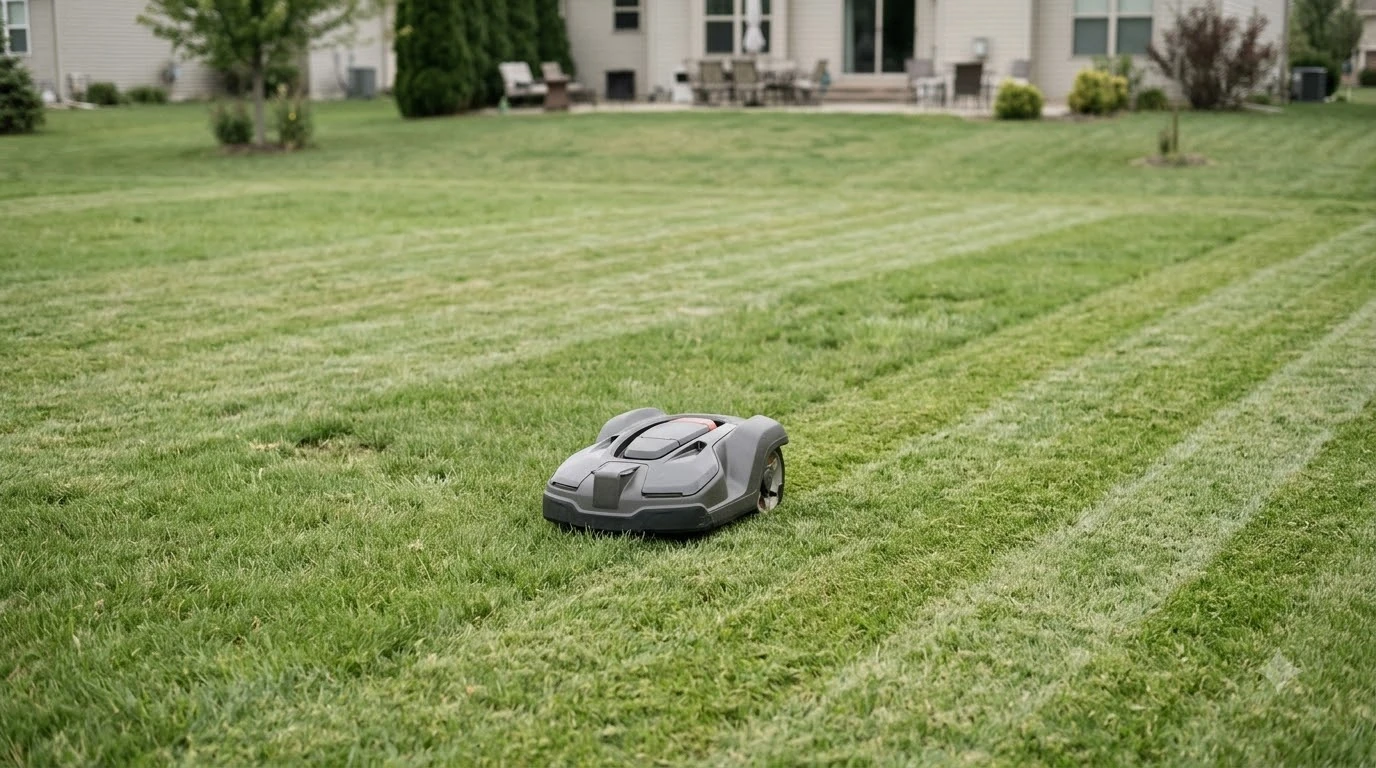

A robot mower for a lawn with fairy rings can keep cutting, because fairy rings are mostly a cosmetic problem in home lawns. The rings come from soil fungi feeding on buried wood or organic matter, and mowing does not remove the fungus or stop the ring from returning. What a robot mower can do is keep the grass at a steady height, so the dark or dead bands are easier to see and manage with aeration, watering, and nitrogen.
The short answer
- Keep mowing: a robot mower does not make fairy rings worse, and regular cutting keeps the ring less noticeable.
- Do not expect mowing to kill the fungus: the fungus lives in the soil and thatch, below the blades.
- Know which type you have: dark green rings, dead or water-repellent rings, and mushroom rings need different care.
- Skip fungicide sprays for home lawns: university guidance says they are not effective once symptoms appear.
- Handle mushrooms by hand: remove them with gloves and discard them, since some species are poisonous.
What fairy rings are and why they show up
Fairy rings are circles or arcs of abnormal grass growth caused by soil-inhabiting fungi. North Carolina State Extension notes that many species can cause them, and that some of these fungi are wood-rotters that grow on stumps, dead tree roots, and waste lumber. The rings can start about a foot wide and expand over years to several hundred feet, so a lawn with an old buried stump or wood debris is the most common setting. Ring-shaped damage often appears in lawns that already have weed pressure, and robot mowers and patchy weedy turf describes how the mower fits in. Fairy rings are most visible when grass is stressed, which ties into pausing the mower on dormant grass.
The rings are not a sign that the lawn is dying from something the mower is doing. They are a sign that organic material is decaying below the surface. That is why the same ring can stay for years even though the grass is cut regularly.
The three ring types and what they look like
Extension sources sort fairy rings into three types, and the type decides the best response. University of Wisconsin Extension describes the first as water-repellent soil that dries the grass in a ring and can kill it. The second is a dense, dark green ring caused by nitrogen released as the fungus breaks down organic matter. The third is a ring of mushrooms or puffballs, often after wet weather. Fairy ring mushrooms are one type of fungal growth, and mushrooms appearing in the lawn explains how a mower copes with caps.
- Type I (water-repellent): brown or dead grass in a ring. Most common on golf greens and less common on home lawns.
- Type II (dark green): a fast-growing, deep green ring or arc. Usually the easiest type to live with.
- Type III (mushrooms): mushrooms at the ring edge, most visible in fall and after rain.
Telling the types apart is usually simple. A Type I ring looks dry, brown, or dead in a band, and the soil can feel hard to wet. A Type II ring looks lush and dark green, often with no mushrooms at all. A Type III ring shows mushrooms along the edge, which tend to appear after wet weather, so a ring that is only visible after rain is probably this type. Watch the ring through a few weeks of normal weather before deciding on a fix, since the look can change with the season.
How a robot mower for a lawn with fairy rings fits in
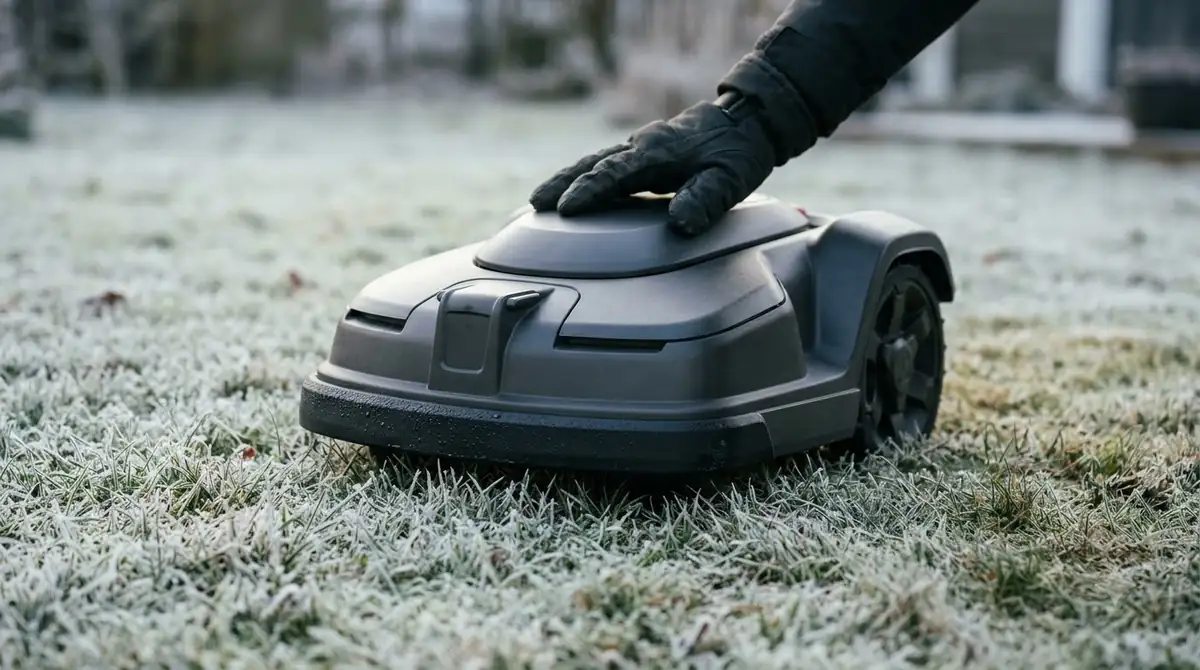
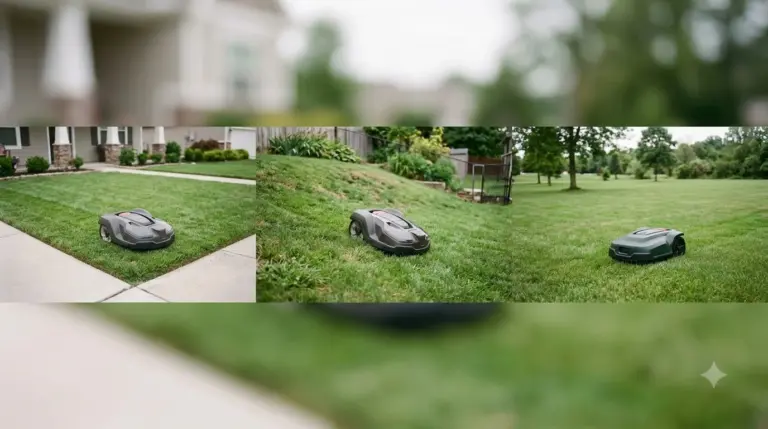
A robot mower can run across a fairy ring without changing the fungus underneath. Keeping the grass at the same height every day helps the ring blend in and makes any dead band easier to spot. Another cause of ring-shaped or patchy damage is pests, which grub damage and robot mowing separates from fungal problems. Lawn problems affect when to start mowing, and mowing a newly sodded lawn has its own timing and grip questions.
Our reading is that the mower is a neutral tool here. It cannot re-wet hydrophobic soil, feed the grass, or remove the fungus. Those jobs belong to aeration, watering, and fertilizer. If you see a Type I ring, the mower’s job is to leave the dead band in place while you work on the soil.
What to do alongside mowing
Most fairy ring advice is cultural rather than chemical. North Carolina State and Wisconsin both emphasize managing thatch, keeping soil moisture steady, and balancing nutrients. The steps below work with a robot mower on the same schedule. Other turf problems such as moss call for a similar mix of cultural and mowing fixes, as moss growth across a robot-mowed lawn describes.
- Aerate. Core aeration breaks up thatch and helps water reach the root zone, which is important for Type I rings.
- Water deeply. For a dead band, water deeply and evenly to re-wet the soil. Light surface sprinkling may not soak a water-repellent ring.
- Feed the rest of the lawn. For a Type II ring, nitrogen on the surrounding turf can match the dark green ring to the rest of the grass.
- Remove mushrooms. Pick them by hand with gloves, or rake them up and discard them.
- Be patient. Many rings fade on their own over time, and home lawns usually recover.
What does not work well
Fungicides are the most common disappointment. North Carolina State Extension notes that fungicides work only as preventive treatments, typically started in spring, and do not work once symptoms appear. Wisconsin Extension advises against fungicides for home lawns. North Carolina State adds that soil fumigation, removing infested soil, or renovating the turf may help briefly, but rings often come back. Soil treatments can affect when the mower runs, and timing a mower run after lime lays out the waiting period.
Related reads: Dead rings can leave bare areas, so mower choice for lawns with bare spots outlines features that reduce further damage.
Frequently asked questions
Will a robot mower spread fairy rings across the lawn?
The sources we read do not describe mowers as a way to spread fairy rings. The fungus grows through the soil and thatch, so the ring usually expands on its own over years, not because of blade cuts.
Should I stop using the robot mower if I see fairy rings?
No. Regular mowing at a steady height is a good habit, and it keeps the lawn looking more even around the ring.
Can mushrooms in a fairy ring be eaten or left alone?
Do not eat them. Some are poisonous, so wear gloves, remove them, and keep pets and children away while they are present.
Do fairy rings kill the grass?
Usually not in home lawns. Type I rings can dry out and brown the grass in a band, but the sources describe most home-lawn rings as primarily cosmetic, and they often fade as conditions change.
Sources
- Fairy Ring in Turf (NC State Extension): causes, wood-rotting fungi, ring types, management and ineffective methods.
- Fairy Rings (University of Wisconsin Extension): the three types, home lawn impact, aeration, nitrogen for Type II, and why fungicides are not a home-lawn fix.
 Up next6 min readBy YardRobot Mower for a Lawn with a Croquet Court: What to ExpectUpdated Nov 13, 2026
 7 min readBy YardRobot Mower for a Lawn with a Sandbox: Keep Sand OutUpdated Nov 13, 2026
 8 min readBy YardRobot Mower for a Lawn with a ClotheslineUpdated Nov 13, 2026
 7 min readBy YardRobot Mower for a Lawn with a French Drain: What to KnowUpdated Nov 13, 2026
 7 min readBy YardRobot Mower for a Lawn with Grubs: What Actually HelpsUpdated Nov 13, 2026
 7 min readBy YardRobot Mower for a Lawn With Tall Ornamental GrassesUpdated Nov 14, 2026