
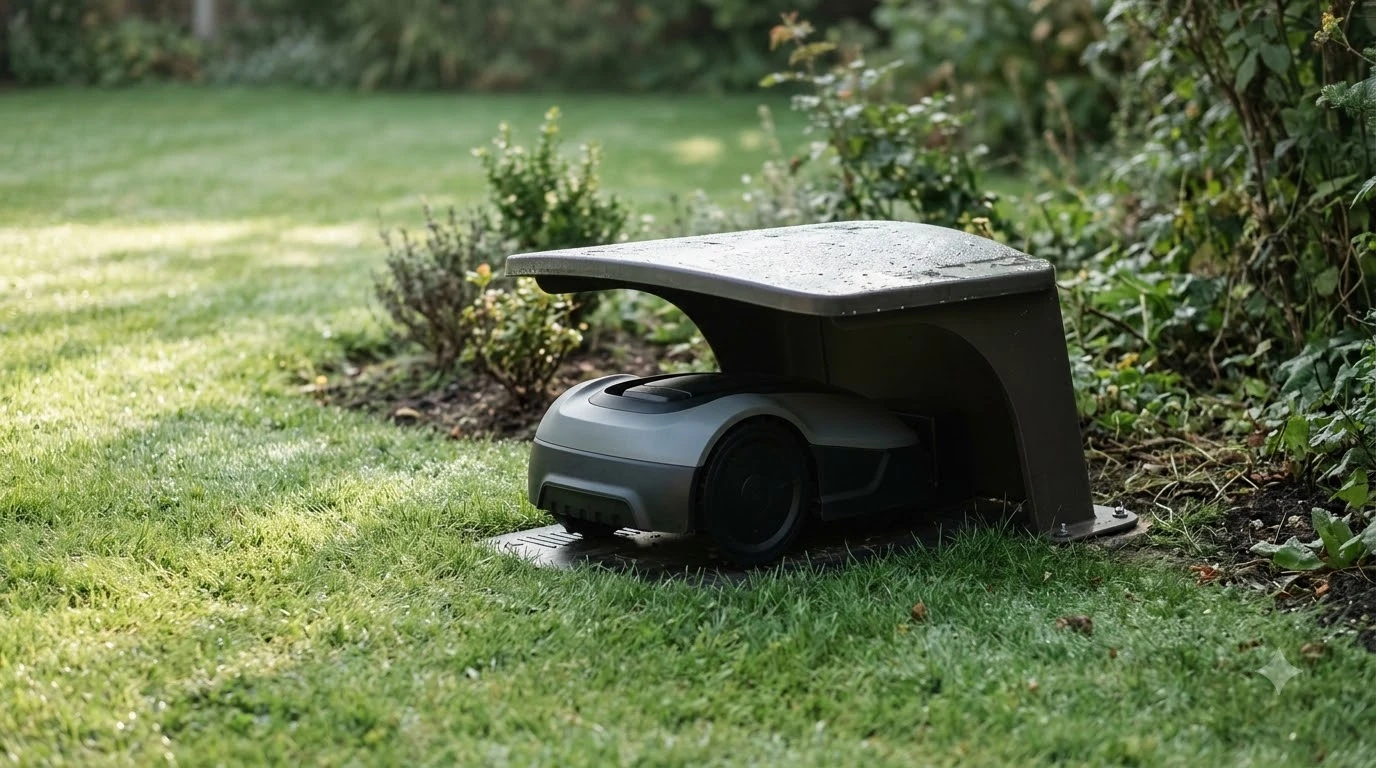

A robot mower for a lawn with grubs can keep cutting the healthy grass, but it cannot control the grubs or repair the damage they cause. Grubs feed on turf roots, so the grass pulls loose or dies in patches that look like drought stress. Penn State Extension suggests checking for grubs before treating, and recommends a grub count of about five to ten per square foot as a common threshold for curative treatment. The mower’s job is to keep the rest of the lawn tidy while you deal with the grubs and let the damaged areas recover.
The short answer
- The mower does not kill grubs: control has to come from the soil, through survey and treatment at the right time.
- Look for spongy turf: grass damaged by grubs can roll back like a carpet, which is a sign to check before mowing it.
- Keep the mower off dead patches: loose, damaged turf gives poor traction and can leave ruts.
- Survey in late summer: Penn State suggests August through early September is the best time to find grubs.
- Watch for animals: skunks, raccoons, crows, and moles dig for grubs, and their digging can damage the lawn more than the grubs.
How grub damage shows up in a lawn
The first sign of grub damage is usually patches of dead or dying turf. Penn State Extension notes that these patches are most visible in April and May and again in September and October. A spongy area that can be lifted and rolled back like a carpet is a stronger sign, because the roots have been cut off from the soil underneath. Grubs are one of several turf problems, and lawn problems that affect a robot mower covers weeds and other conditions. Ground-level holes may be mistaken for other pests, and ground squirrel holes in a lawn explains the difference.
Grub damage is easy to confuse with drought, dog spots, or fungus. Symptoms are not always obvious, so the safest step is to look at the soil rather than guess from the grass alone.
Check for grubs before you decide anything
Penn State recommends a simple survey. Cut out one square foot of turf and soil, two to four inches deep, at several spots across the damaged area. Count the grubs you find in each sample. The guidance says curative treatment is often considered at five to ten grubs per square foot, but the number depends on the grub species, so judge each case on its own. Ring-shaped dead patches can have a fungal cause rather than grubs, which fairy ring patches in a mowed lawn helps separate.
August through early September is the best time to survey. Penn State describes grubs as small and near the surface then, which makes them easier to find and easier to treat than in spring, when they are larger and harder to control.
What a robot mower for a lawn with grubs can and cannot do
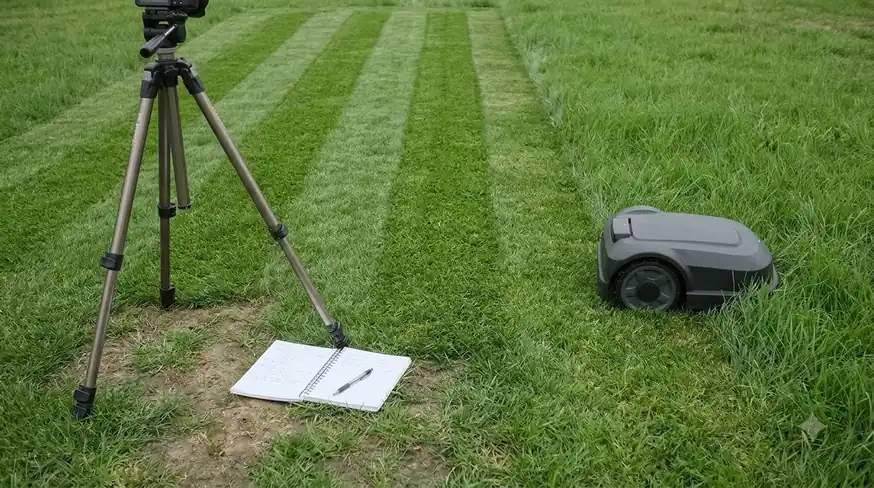
A robot mower does not change the grub population. Mowing does not remove the larvae from the soil, and it does not feed the roots. What it can do is keep the healthy part of the lawn at the right height so that the damaged areas are not cut shorter than the rest. Damaged areas are often reseeded afterwards, and newly seeded lawn repairs and the mower explains the waiting period.
Our reading is that the damaged patches should be treated like a bare spot. Set the mower to a slightly higher height on the rest of the lawn for a few weeks, and keep the mower’s path away from the worst patches until the grass has rooted again. Dead or loose turf gives poor traction, and wheels can tear it out and leave ruts.
The mower’s schedule also matters. Robot mowers run often, so they can keep the lawn short and make a thin patch look more obvious. Keeping the grass a little taller through the affected period helps the lawn hold together until the roots return.
Treatment timing and the mower
Penn State gives two windows for treatment. Curative treatment works best from August through mid-September, when grubs are small and near the surface, and the exact timing depends on location, species, and weather. Preventive treatment goes on before the eggs hatch, and in central Pennsylvania the window in its 2005 data was mid-June through mid-July. Soil treatments affect when the mower should run, and mowing after a lawn lime treatment describes how long to wait. Treatment timing may overlap with fresh turf, so robot mowers on new sod explains how a soft lawn affects the mower.
- Survey first. Check the soil in late summer before buying a product, so you know whether grubs are the cause.
- Treat at the right time. Follow the label and your local extension guidance on timing for your species and region.
- Keep the mower off damaged turf. Use a boundary wire or a no-go strip until the grass roots again.
- Water and feed the rest of the lawn. A healthy surrounding lawn recovers faster, so keep the rest of the turf in good shape.
- Reseed bare spots. Once the grubs are controlled and the soil is firm, reseed the patches and keep the mower away until the new grass is established.
Animals that dig for grubs
Penn State notes that skunks, crows, and moles feeding on turf can point to a grub problem. Moles also feed on earthworms and insects, so their tunnels do not always mean grubs. Digging animals can cause more visible damage than the grubs themselves, so a torn-up lawn is worth checking for both. Digging animals often follow grubs, which moles and gophers in a mowed lawn explains in terms of mower safety.
UC IPM’s mole guidance notes that grub control may make a lawn less attractive to moles, though research has not confirmed this. In practice, that means a lawn that is dug up at night may need a grub survey, and the mower will not stop the digging.
Heads up
Do not treat for grubs on a hunch. Survey first, because treating a lawn without grubs wastes money and does nothing for the damage that other causes create.
Related reads: Grub damage often leaves bare patches, so mower options for lawns with bare spots compares features that suit recovering turf.
Frequently asked questions
Will a robot mower kill grubs in the lawn?
No. Mowing does not remove the larvae from the soil. Control has to come from a survey and a treatment chosen for the grub species and timing.
How many grubs per square foot is a problem?
Penn State describes five to ten grubs per square foot as a common threshold for curative treatment, but notes that no fixed number applies everywhere. Judge each lawn by the survey and the grub species.
Should the robot mower run over dead grub patches?
It is better to keep the mower off them until the roots return. Loose turf gives poor traction, and wheels can tear it out and leave ruts.
When is the best time to look for grubs?
Penn State says August through early September is the best time to survey, because grubs are small and close to the surface then.
Sources
- White Grubs in Home Lawns (Penn State Extension): damage symptoms, the square-foot survey, the five to ten grubs threshold, animal digging, and treatment timing.
- Moles (UC IPM): mole feeding habits and the note that grub control may make a lawn less attractive to moles, which research has not confirmed.
 Up next6 min readBy YardRobot Mower for a Lawn with Gopher Mounds: What HelpsUpdated Nov 13, 2026
 8 min readBy YardRobot Mower and Moles or Gophers: What Actually WorksUpdated Nov 11, 2026
 6 min readBy YardRobot Mower for a Lawn with a Kiddie Pool: Barrier FirstUpdated Nov 13, 2026
 8 min readBy YardRobot Mower for a Lawn with a ClotheslineUpdated Nov 13, 2026
 7 min readBy YardRobot Mower for a Lawn with a Sandbox: Keep Sand OutUpdated Nov 13, 2026
 7 min readBy YardRobot Mower for a Lawn with Fairy Rings: What to ExpectUpdated Nov 13, 2026