
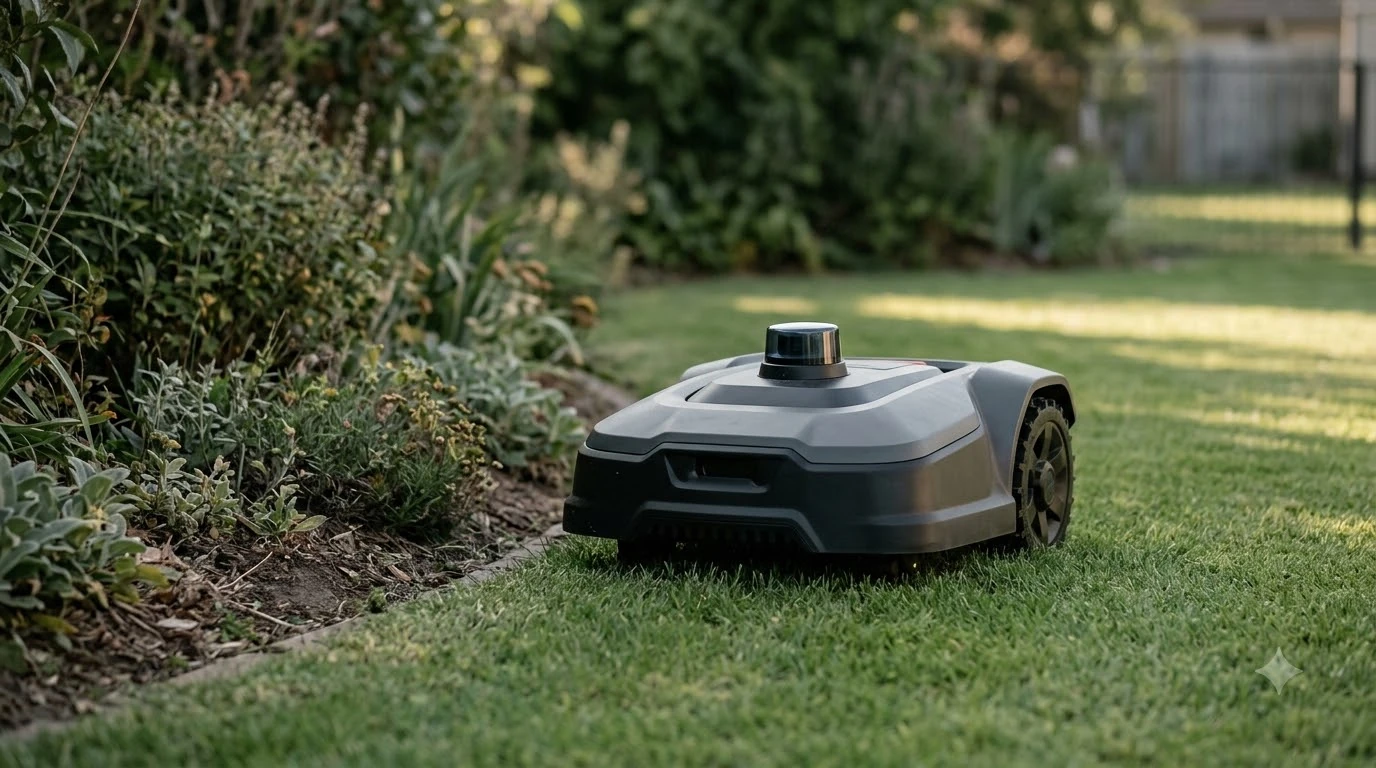

A robot mower for a lawn with gopher mounds can keep cutting around the mounds, but it will not stop the gophers that make them. Pocket gopher mounds are crescent or horseshoe shaped, with the plug of soil pushed off to one side. UC IPM notes that the mounds are unsightly and can interfere with mowing, and research has not found a repellent or frightening device that works. The practical plan is to identify the mounds, prepare the lawn so the mower runs smoothly, and use trapping or baiting when the gophers are active.
The short answer
- The mower does not deter gophers: no research has shown that mowing or vibration drives them away.
- Look at the mound shape: pocket gopher mounds are crescent or horseshoe shaped, with the plug off to one side.
- Clear the path first: loose soil and raised mounds can throw a mower off its line or leave a rough cut.
- Protect the irrigation lines: gophers gnaw flexible plastic water lines, so check them when mounds appear.
- Control with traps or baits: UC IPM describes trapping as safe and effective when set in fresh-mound burrows.
How to tell gopher mounds from other mounds
Pocket gopher mounds look different from the mounds left by moles. UC IPM describes gopher mounds as crescent or horseshoe shaped, with a plug of soil pushed to one side of the opening. Mole mounds, by contrast, are circular and volcano-shaped, and they have no separate entrance or exit hole, according to UC IPM’s mole guidance. Digging animals share many signs, and mole and gopher damage in mowed lawns covers where they overlap and how to tell them apart. Burrow openings look different from mounds, as ground squirrel burrow holes explains with identification tips. Ant mounds are another soil feature in lawns, and they are covered in fire ant mound behaviour.
That difference matters because the fix depends on the animal. A mound pattern that looks crescent-shaped points to gophers, and a round mound with raised ridges through the lawn points to moles. Check a few mounds before you buy a product, since the wrong trap or repellent wastes time.
What gopher mounds do to a lawn and the mower
Pocket gophers are herbivores that feed on roots and fleshy plant parts, so they can damage the grass from below. UC IPM notes that the mounds are unsightly and can interfere with mowing. A robot mower that runs over a raised mound may bump, tilt, or leave a patch of uneven cut, and loose soil can build up on the housing and wheels. Grub damage can draw digging animals into a lawn, as grub signs and mower decisions explains.
Gophers also gnaw flexible plastic irrigation lines. That damage is not visible on the surface, so a sudden dry patch near a mound can be a sign that the line has been cut or punctured.
Does a robot mower for a lawn with gopher mounds keep gophers away?
No. A robot mower will not stop pocket gophers, and that is the most important point in this guide. UC IPM’s guidance on frightening devices says vibrating stakes, ultrasonic devices, and pinwheels were not effective in research trials, and repellents have not been proven effective either. We found no research that tests mowing as a control for gophers. Other animals also disturb the soil surface, as scratching poultry in a mowed yard explains.
Our reading is that the mower should be treated as a neutral tool. It can keep the lawn cut, but it cannot change the gophers’ behavior. The control step has to be trapping or baiting, and the mower’s job is to make the lawn easier to work on.
Prepare the lawn so the robot mower runs smoothly
Preparation makes a big difference when mounds are present. The goal is a surface the mower can cross without tipping, while the gopher control is underway.
- Flatten fresh mounds. Rake or tamp down the loose soil so the mower does not have to climb it.
- Mark the mound zones. Use stakes or a boundary wire to keep the mower off the worst areas until they are cleared.
- Check the irrigation. Look for wet or dry patches near mounds and test the lines for gnawing damage.
- Keep the height steady. Avoid sudden height changes while you work, so the cut stays even around the mound zones.
- Clear the debris. Remove clumps of loose soil and clippings from the mower path after each run.
Trapping and baiting with research behind them
UC IPM describes trapping as a safe and effective method for pocket gophers. The trap is set in a fresh-mound burrow, and it should be reset if there is no catch in one or two days. Baiting is another option. The bait goes in the main tunnel, and the lawn should be rebaited if new mounds appear two or more days later.
Timing matters. Set traps while the mounds are fresh, since older burrows are less active. Once you have a catch, check the next few days for new mounds before deciding the job is done.
Heads up
Follow the label on any bait product, and keep baits away from pets and children. If the mounds keep coming back, ask your county extension office which methods suit your area.
Mistakes to avoid with gopher mounds
The most common mistake is buying a repellent or a vibrating stake and expecting the mower to finish the job. Research has not supported those products, and the gophers keep digging. A second mistake is leaving fresh mounds in place for the mower to run over every day, which can leave a rough, uneven cut. A third is ignoring the irrigation. A gnawed line can cost more than the mounds themselves. Surface runways point to voles rather than gophers, which vole runways across the lawn describes in detail.
Related reads: Raised soil makes the surface uneven, and mowers for bumpy lawns compares which designs handle it best.
Frequently asked questions
Will a robot mower scare gophers away from the lawn?
No evidence supports that. UC IPM’s review of frightening devices found no proven effect, and mowing is not listed as a control.
How do I tell gopher mounds from mole mounds?
Gopher mounds are crescent or horseshoe shaped with the plug to one side. Mole mounds are circular and volcano-shaped with no separate exit hole.
Can I flatten a mound and let the robot mower cut it?
You can flatten fresh mounds to make the path smoother. The gophers may return and dig new mounds, so keep checking and keep the trapping going.
Do gophers damage sprinkler lines?
Yes. UC IPM notes that pocket gophers gnaw flexible plastic water lines, so check the irrigation near active mounds.
Sources
- Pocket Gophers (UC IPM): mound shape, lawn damage and mowing interference, irrigation damage, frightening devices and repellents, trapping and baiting.
- Moles (UC IPM): circular, volcano-shaped mole mounds with no separate exit hole, used to tell mole mounds from gopher mounds.
 Up next7 min readBy YardRobot Mower for a Lawn with Grubs: What Actually HelpsUpdated Nov 13, 2026
 6 min readBy YardWill a Robot Mower Hit Fire Ant Mounds in the Lawn?Updated Nov 12, 2026
 8 min readBy YardRobot Mower and Moles or Gophers: What Actually WorksUpdated Nov 11, 2026
 8 min readBy YardRobot Mower for a Lawn with an RV Parking PadUpdated Nov 13, 2026
 7 min readBy YardRobot Mower for a Lawn With a Cistern LidUpdated Nov 13, 2026
 6 min readBy YardRobot Mower for a Lawn with a Kiddie Pool: Barrier FirstUpdated Nov 13, 2026