
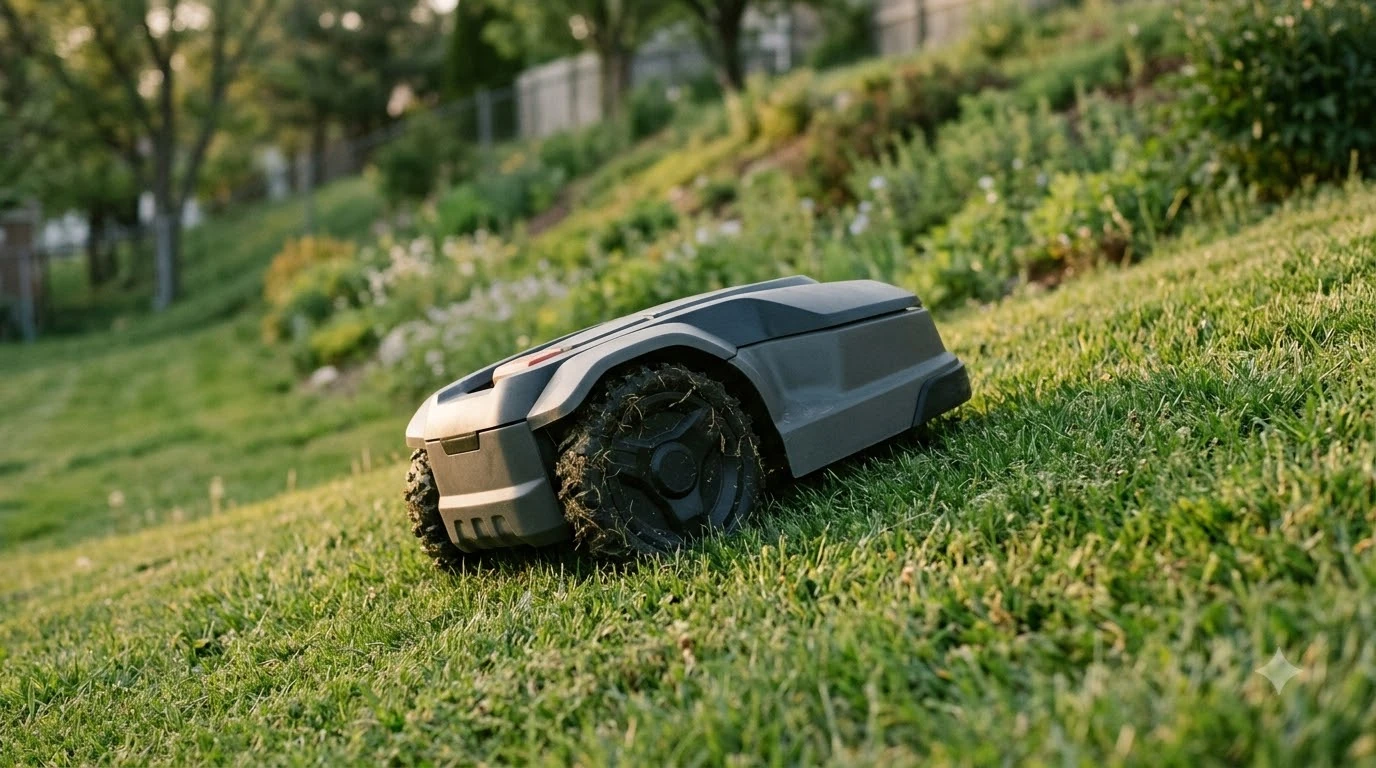

Choosing the best 4-wheel drive robot lawn mower 2026 depends on your slopes and grass, not the badge on the box. Robot mowers marketed as 4-wheel drive, or AWD, power every wheel, which helps on banks and wet turf. The trade-off is price and complexity, so this guide shows how to decide whether that extra drive is worth paying for.
The short answer
- Steep or wet yards: all-wheel power usually gives more grip than rear-wheel drive on climbs and damp grass.
- Flat or gentle lawns: a simpler, cheaper layout is often enough, so paying for 4-wheel power may not help.
- Slope ratings: read them as ideal-condition figures and check whether they are shown in degrees or percent.
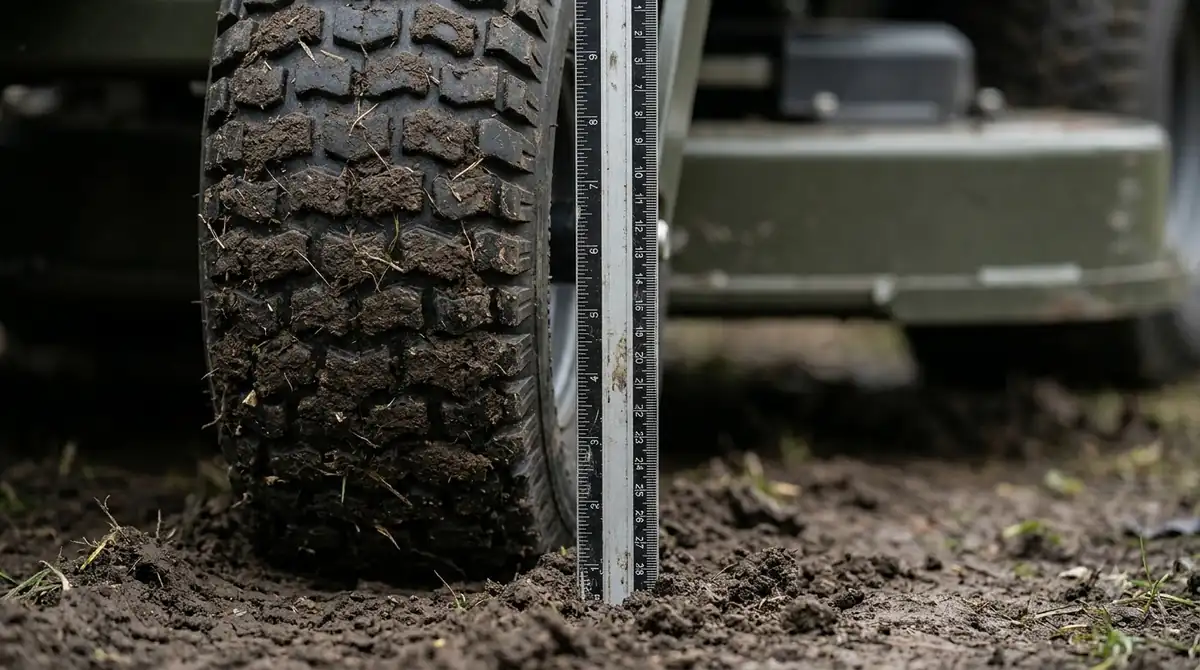
- Tread and wheel size: they decide how the mower behaves in soft soil, even with four powered wheels.
What 4-wheel drive means on a robot mower
On a robot mower, 4-wheel drive usually means all-wheel drive: each wheel can receive power, and the controller shifts torque toward the wheels that still have grip. This is different from a riding mower with a locking 4WD gearbox. Brands sometimes use “AWD” and “4WD” interchangeably, so check the specification sheet rather than relying on the name. Drive layout is only one part of hill performance, and the hub on AWD models for steep lawns covers the wider choices. A plain explanation helps, as what AWD means on a robot mower shows.

How slope ratings should be read
Slope figures are often given in percent in one place and degrees in another. A 100% grade is roughly 45 degrees, while 30 to 35 degrees is about 58 to 70%. A vendor blog we read converts 20 to 25 degrees to about 36 to 47%, which is a useful range for comparing specification sheets. Traction and positioning are separate, which AWD mower accuracy compared explains alongside the guidance above.
Treat the number as a best case. The same vendor source says wet conditions can cut capability by roughly 20 to 30%, and loose soil, dew, and dull blades all increase the risk of slipping. If your lawn has a steep bank, look for independent tests before trusting the top figure on the box.
Drive layouts side by side
Mammotion’s drive comparison page sums up the usual trade-offs. Front-wheel drive is the budget option and suits gentle slopes. Rear-wheel drive is a middle ground for moderate inclines, and all-wheel drive is the choice for steep banks and damp grass. Separate areas bring a different challenge, covered in how multi-zone mowers work.
| Factor | Front-wheel drive | Rear-wheel drive | All-wheel drive |
|---|---|---|---|
| Slope traction | Poor on climbs | Good on moderate slopes | Strongest on steep banks |
| Wet or slippery grass | Limited grip | Better than front-wheel | Highest grip |
| Turning | Average | Good | Very good |
| Price | Budget | Mid-range | Premium |
The layout is only part of the story. Motor power, traction control, and navigation all affect how a mower handles a hill. A well-tuned rear-wheel model can outperform a poorly tuned all-wheel one on a modest slope, so compare the complete specification and any independent reviews.
Wet grass and tread matter as much as drive
Wet turf is where 4-wheel power shows its value. Powered rear wheels alone can spin on damp grass and leave wheel-burn marks, while all-wheel power spreads the load so the mower keeps heading. Tread depth and tire width matter too. Deep, aggressive tread digs into soil, while shallow tread can slip on a wet bank. Wet turf changes traction, as the guide to mowers that work in the rain explains.
Maintenance and service for all-wheel drive
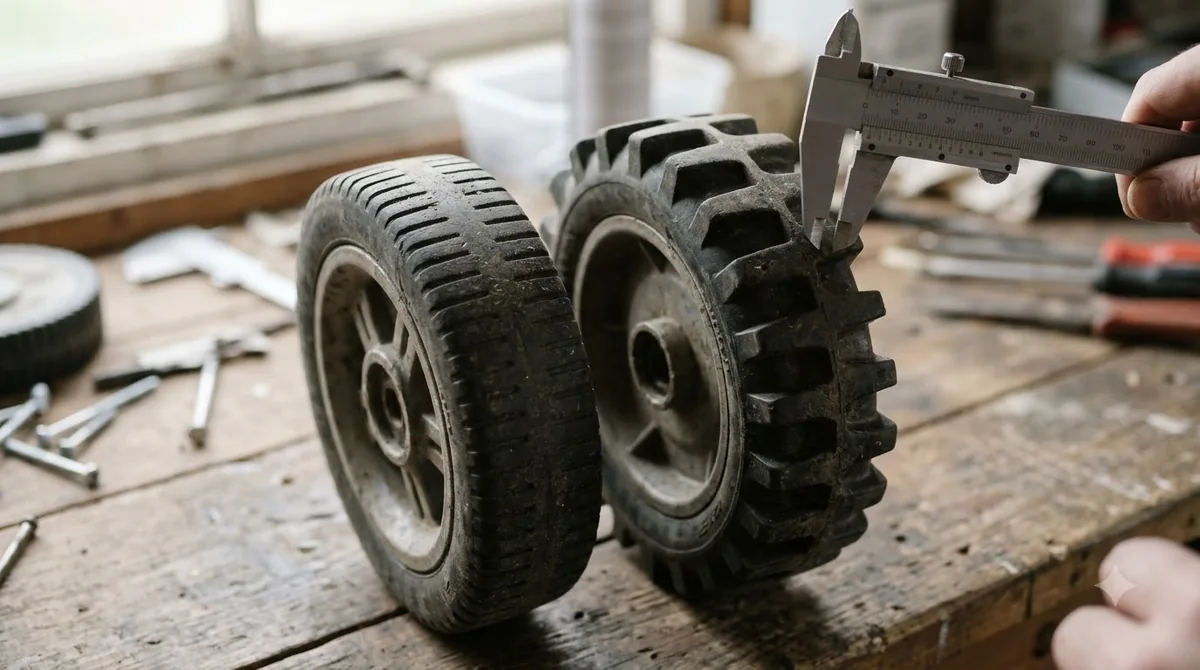
More powered wheels mean more drive hardware to look after. Each wheel module, belt, or hub motor is another part that can wear, and grass, mud, and grit can work into the drive area over a season. Vendors that describe a more complex drive system usually say little about upkeep, so ask the dealer how the drive wheels are serviced and what the warranty covers for the drive components specifically.
Routine care is simple but worth doing: clear clippings from the wheel wells, check the tires for embedded stones, and wipe mud off the wheels after a wet mowing session. Keeping the wheels clean helps the tread grip the way it was designed to, which matters more on a 4-wheel drive model because you are paying for that grip.
Who a 4-wheel drive robot mower suits
A 4-wheel drive model suits a lawn with real banks, a damp climate, or uneven transitions between the lawn and the garden. It also suits a buyer who would rather pay once for grip than fight a mower that keeps spinning on the same slope. For a yard that is flat and mostly dry, the extra cost does not buy much, and a simpler layout may be the better fit. For yards with several areas, see the roundup on multi-zone mapping mower picks.
What to check before you buy the best 4-wheel drive robot lawn mower 2026
- Measure your steepest slope. Use a level app or a simple inclinometer, and note whether it is wet or dry most of the year.
- Confirm the rating unit. Make sure the spec sheet uses the same unit you measured in.
- Check the tire tread and width. Look for a tread pattern suited to soft or damp ground.
- Read the boundary setup. A mower that overshoots a wire on a downslope can stall even with good traction.
- Price the upgrade. Compare the extra cost against how often the lawn is wet or steep.
If your lawn is mostly flat, a simpler layout will usually mow just as well and cost less to buy. If you have a real bank, 4-wheel power is the more defensible choice, especially in a damp climate.
Frequently asked questions
Is 4-wheel drive worth it on a robot mower?
For steep or wet lawns, usually yes. On flat or gently sloping ground, rear-wheel or front-wheel drive is often enough, and the savings can be significant.
What slope can a 4-wheel drive robot mower handle?
It depends on the model and the conditions. Manufacturer figures are usually measured under ideal conditions, and wet or loose ground can reduce them noticeably. Check independent reviews before relying on the top number.
Does AWD mean the mower has four motors?
Not always. Some designs use hub motors at each wheel, while others share power through a drivetrain. Read the drive section of the spec sheet for your model.
Do I need 4-wheel drive for a small yard?
Not necessarily. A small, flat yard rarely needs four powered wheels. The extra drive matters more on banks, uneven ground, and damp turf.
Sources
- Mammotion, FWD vs RWD vs AWD robot lawn mowers (manufacturer blog): drive layout trade-offs and yard-type recommendations.
- Lymow, robot mowers on hills: slope ratings and stuck prevention (manufacturer blog): degree-to-percent conversions and conditions that reduce slope performance.
 Up next7 min readBest Robot MowersWhich 4-Wheel Drive Robot Mower Is the Most Accurate?Updated Nov 14, 2026
 6 min readBest Robot MowersRobot Lawn Mower Sale: 4 Checks Before You Buy in 2026Updated Nov 18, 2026
 7 min readBest Robot MowersBest Robot Lawn Mower for 1/4 Acre: What to Check FirstUpdated Nov 11, 2026
 8 min readBest Robot MowersBest Robot Lawn Mower for Texas Lawns: 4 Specs to CheckUpdated Nov 12, 2026
 8 min readBest Robot MowersWhat Size Robot Mower Do I Need for 3/4 Acre?Updated Nov 14, 2026
 8 min readBest Robot MowersBest Robot Lawn Mower for 3/4 Acre: How to Choose the Right SizeUpdated Nov 11, 2026