
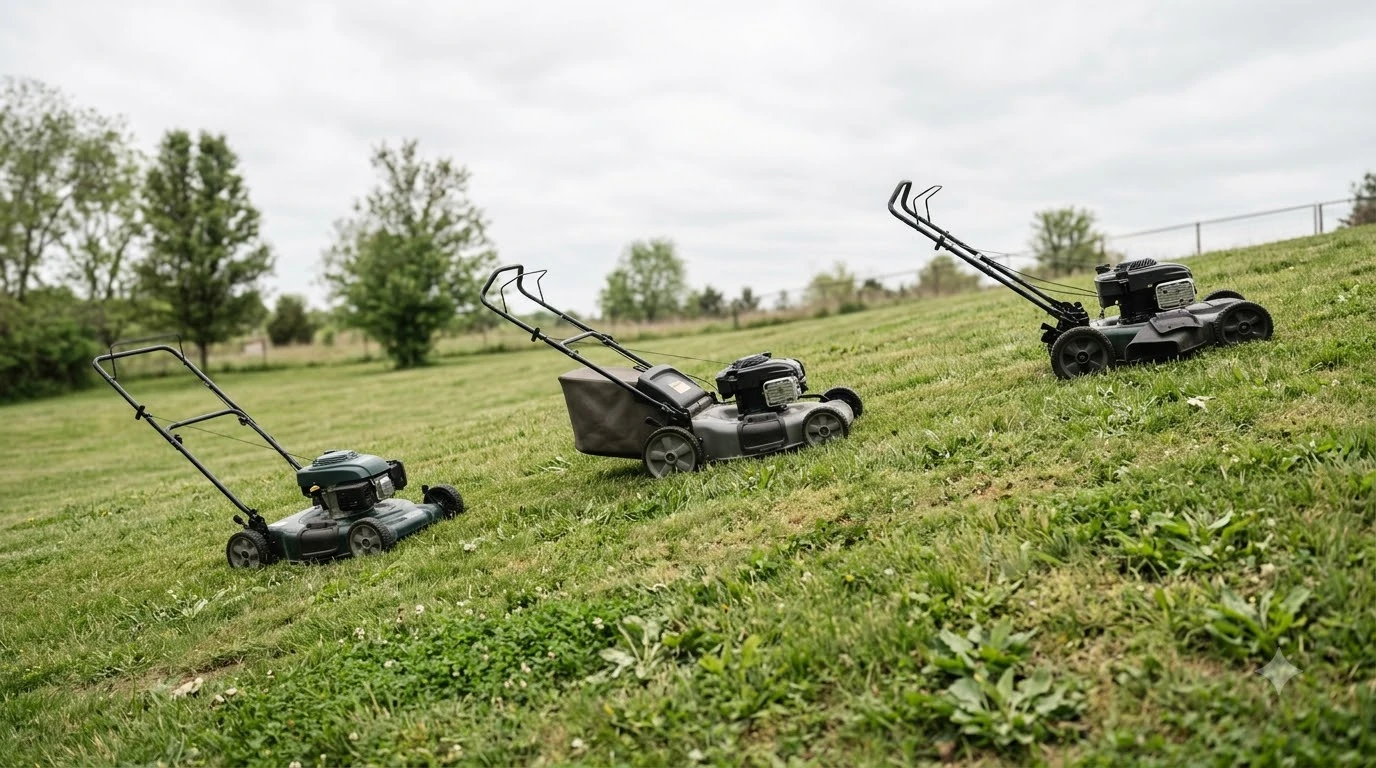

Which AWD robot mower is the most accurate? All-wheel drive does not measure accuracy. AWD describes how the mower grips a slope, while accuracy describes how well it knows where it is on the lawn. A mower can have AWD and a strong navigation system, or AWD with a weaker one. This guide separates the two, shows what Husqvarna publishes for its AWD models, and explains what to check when you compare them.
The short answer
- AWD is about traction. It helps on slopes and uneven ground, but it does not set boundary accuracy.
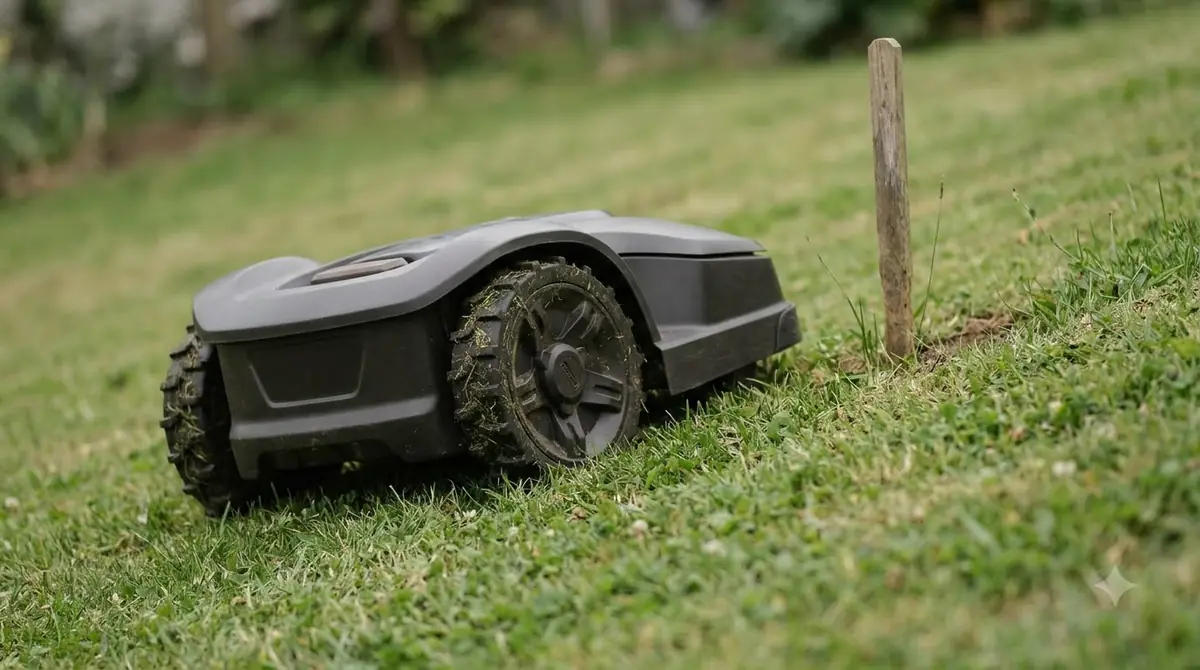
- Husqvarna says its AWD models such as the 435X AWD can handle up to 70% incline (about 35 degrees).
- We found no published accuracy figure for AWD mowers separate from the navigation system the model uses.
- Compare navigation first, then check whether the model’s drive suits your slope.
Why AWD and accuracy are different things
All-wheel drive sends power to more than the front or rear wheels, so the mower keeps its footing on wet grass, sideways slopes and short climbs. That is a mechanical feature. Accuracy comes from the positioning system, which may use satellite correction, a boundary wire, cameras or lidar. A mower’s drive layout does not tell you how precisely it follows a virtual boundary. Because drive type says little about positioning, it helps to read the overview of navigation accuracy across mower types before comparing models.
Shoppers sometimes read AWD as a sign of a more advanced mower overall. That is not a safe shortcut. Two mowers with the same drive can use very different navigation, so the drive tells you where the mower can go, not how exactly it will stay inside the lines.
What Husqvarna publishes for its AWD models
Husqvarna’s steep-slope support page gives a clear split. Standard models are rated for slopes of 25 to 50%, depending on the model, while AWD models such as the 435X AWD and 435X AWD NERA can handle up to 70% (35 degrees). The page is dated 11/02/2026. Those numbers describe slope capability. They do not describe boundary accuracy.
| Item | What the source says | What it does not say |
|---|---|---|
| Standard models (steep-slope page) | 25 to 50% slopes, depending on model | Accuracy |
| AWD models such as 435X AWD (steep-slope page and FAQ) | Up to 70% incline | Accuracy or positioning figure |
| Wire-free positioning (Husqvarna FAQ) | Typically within 5 cm for wire-free mowers | Whether a figure applies to AWD models specifically |
The table shows why the question is hard to answer directly. The published accuracy figures belong to the positioning system, and the AWD ratings belong to the drive. Our reading is that an AWD mower with a weaker positioning setup will drive well on a slope but may still drift near edges, while a satellite-based mower without AWD may track its boundary well but struggle on the steepest ground.
Heads up
Husqvarna’s steep-slope page also says that obstacles such as trees or rockeries force the mower to turn, which adds slipping risk on wet slopes. Good traction does not remove that risk, so the slope itself and its obstacles still need checking.
Which AWD robot mower is the most accurate: how to judge it
Because AWD tells you nothing about positioning, look at the navigation system on its own. Ask which correction source the model uses, what accuracy the maker states and under which conditions, and how the mower behaves when the signal drops. The same questions apply to AWD and non-AWD mowers, so you can compare them on equal terms. A neighbouring guide on all-wheel accuracy ranked by navigation approaches the same question from the 4-wheel-drive angle. Wire-guided designs are a useful contrast, as boundary wire models and their precision shows. Lidar mowers rely on scanning rather than wheels, as described under 3D lidar positioning explained. Accuracy depends on drive layout and positioning, so it helps to ask which 4G mower is most accurate before you compare models.
The slope itself also matters for accuracy. Husqvarna advises placing a boundary wire further in on flat ground before a slope begins, and laying a guide wire diagonally across the slope for better traction. For a virtual boundary, the equivalent step is to map the slope edge carefully so the mower does not try to cut past the drop.
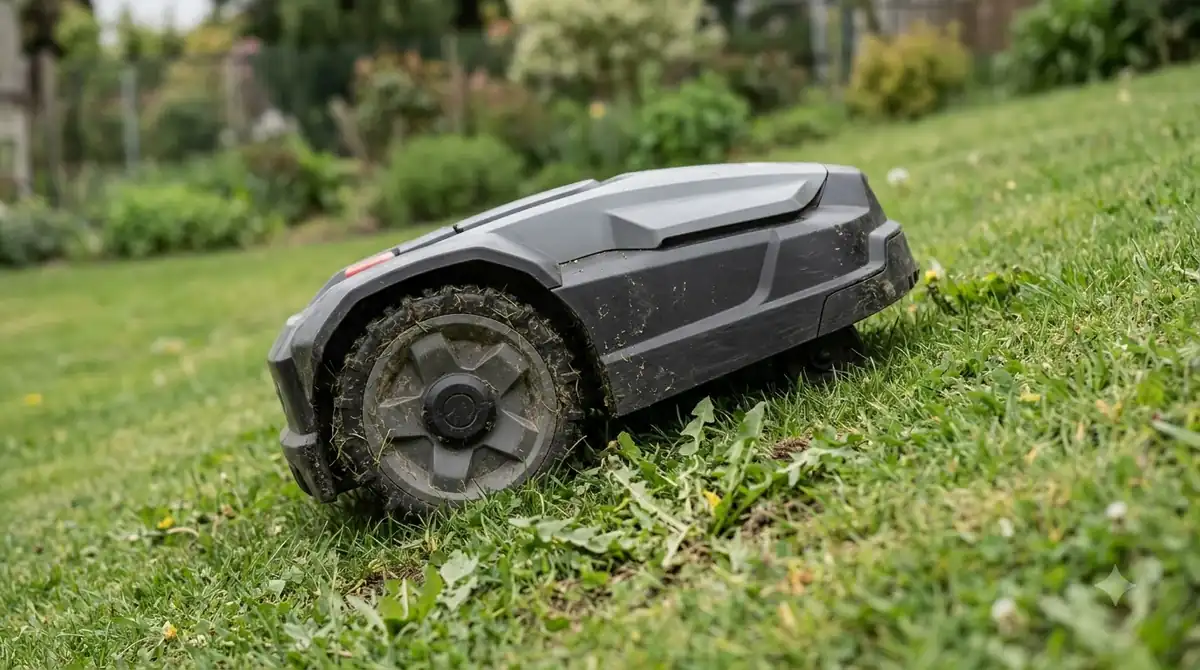
Slope conditions also change over the season. Wet grass lowers traction on any drive, and a satellite signal can weaken under heavy leaf cover or after a storm. If your slope is the reason you are shopping, test the mower in the wettest conditions you expect, and watch how it handles the boundary at the top and bottom of the rise. A mower that pauses and reports a fault is easier to live with than one that keeps running on a weak signal and drifts toward the drop.

What to check before you buy an AWD mower
If you narrow the list to AWD models, use a simple order of checks. First, confirm the slope rating against your measured steepest section. Second, compare the navigation figures and the conditions behind them. Third, look at how the boundary plan handles the slope edge, because a mower that stops short of a drop is safer than one that tries to cut right up to it. Finally, confirm that software updates and service will still be available for the model when you need them. Before you buy an all-wheel-drive mower, the roundup on four-wheel drive models for hills lists what to check on slope ratings. To see how satellite signals affect precision, read about satellite positioning on AWD-class mowers.
- Your real slope. Measure the steepest section of the lawn and compare it with the model’s rated incline, not a general “hill” description.
- The navigation system. Read the accuracy figure and its conditions. A “typical” figure means something different from a “best case” figure.
- Signal coverage on the slope. If corrections come from a cloud or station, test whether the slope has a clear sky view.
- Obstacles near the slope. Trees, rockeries and walls on or beside the slope can force turns and reduce signal.
- Service and software. Ask how positioning updates are delivered and whether the mower’s boundary mapping can be edited later.
Frequently asked questions
Does AWD make a robot mower more accurate?
No. AWD improves traction on slopes and uneven ground. Boundary accuracy depends on the positioning system, such as satellite correction, a boundary wire or a camera-based system.
How steep can an AWD robot mower go?
Husqvarna says its AWD models such as the 435X AWD can handle up to 70% incline, which is about 35 degrees. Standard models are rated lower, at 25 to 50% depending on the model. Check the rating for the exact model you are considering.
Is an AWD mower worth it for a flat lawn?
Usually not for traction alone. If the lawn is flat, a standard drive may be enough, and you can spend the budget on a navigation system that suits your yard.
Can trees on a slope affect an AWD mower?
Yes. Husqvarna notes that obstacles such as trees or rockeries cause turns, and that this adds slipping risk on wet slopes. Clear or fence off the worst areas where possible.
Sources
- Husqvarna steep-slope installation support (manufacturer, dated 11/02/2026): standard and AWD slope ratings, boundary wire placement and cutting pattern advice.
- Husqvarna robotic mower FAQ (manufacturer): AWD incline rating and the wire-free positioning figure of within 5 cm.
 Up next7 min readBest Robot MowersWhich Boundary Wire Robot Mower Is the Most Accurate?Updated Nov 13, 2026
 7 min readBest Robot MowersWhich No Base Station Robot Mower Is the Most Accurate?Updated Nov 18, 2026
 6 min readBest Robot MowersWhich RTK GPS Robot Mower Is the Most Accurate? What MattersUpdated Nov 18, 2026
 7 min readBest Robot MowersWhich Virtual Boundary Robot Mower Is the Most Accurate?Updated Nov 18, 2026
 6 min readBest Robot MowersWhich RTK and Vision Robot Mower Is the Most Accurate?Updated Nov 13, 2026
 8 min readBest Robot MowersWhich 3D LiDAR Robot Mower Is the Most Accurate? What the Numbers ShowUpdated Nov 16, 2026