
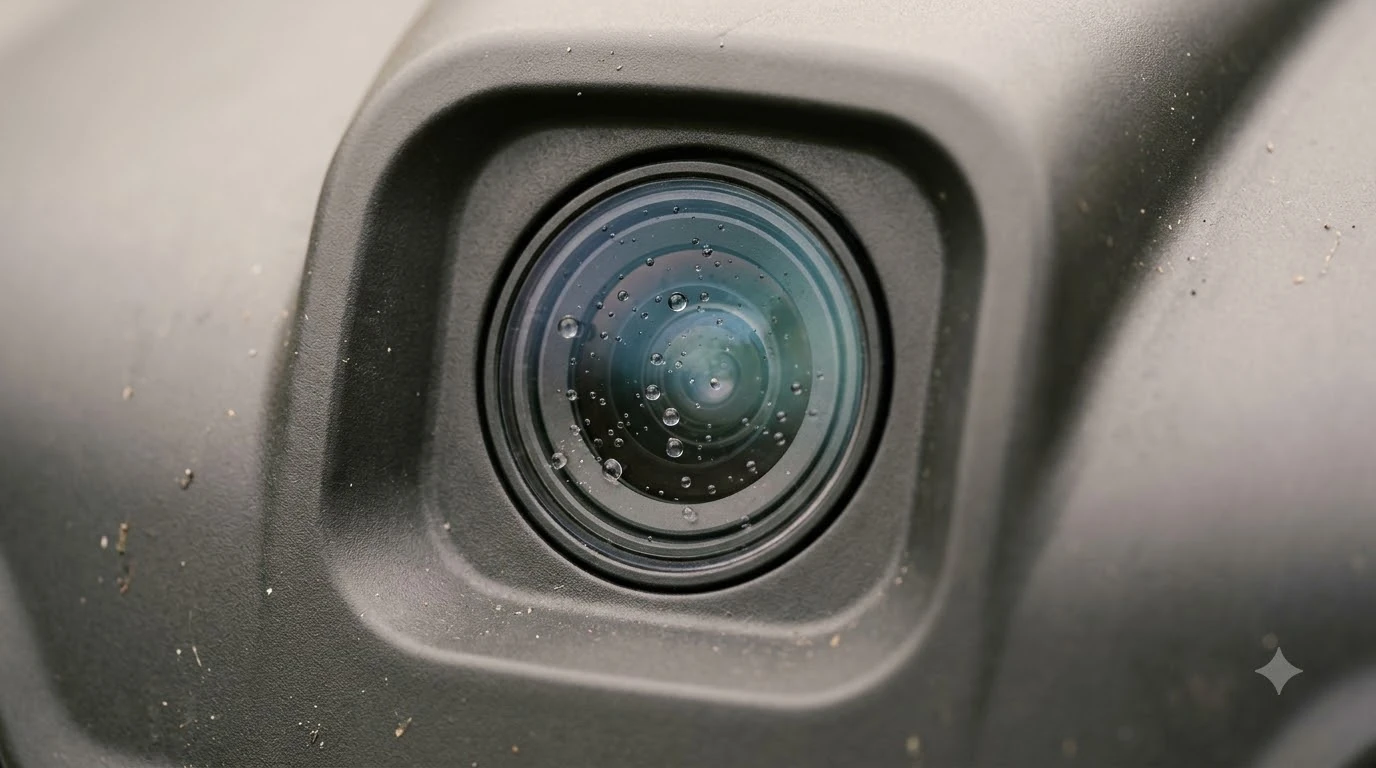

Which RTK and vision robot mower is the most accurate? There is no clean winner, because the two sensors measure different things. RTK tells the mower where it is, while vision helps it recognise what is in the grass. A mower that combines both can hold a tight boundary and react to pets or toys, but how well it does either depends on your yard and the model’s software.
The short answer
- RTK covers position: it is the usual source of centimeter-level accuracy when the fixed solution holds.
- Vision covers objects: it can identify things such as pets, toys, and garden tools, which RTK cannot do on its own.
- Combined systems trade off: vision can be sensitive to light and shadow, so it does not replace good positioning.
- Judge by your yard: open lawns and shaded or cluttered yards call for different balances between the two.
What RTK and vision each contribute
RTK gives a precise position when the receiver holds a fixed solution with a clear view of the sky. Vision uses cameras and software to see the lawn and objects around the mower. Vendor comparisons often rate RTK as the most precise for boundary lines, while rating vision as the strongest at identifying obstacles. Neither sensor does the other’s job well, which is why many current models use both. Pairing satellites and cameras is one approach among many, and the overview of how robot mower accuracy is measured shows how it compares. For the satellite half of the pairing, the guide to RTK GPS mower positioning explains fixed and float states.
The practical question is not which sensor is better in the abstract. It is whether the mower keeps a tight edge where you need it and avoids the things you care about most in your garden.
Where RTK loses ground
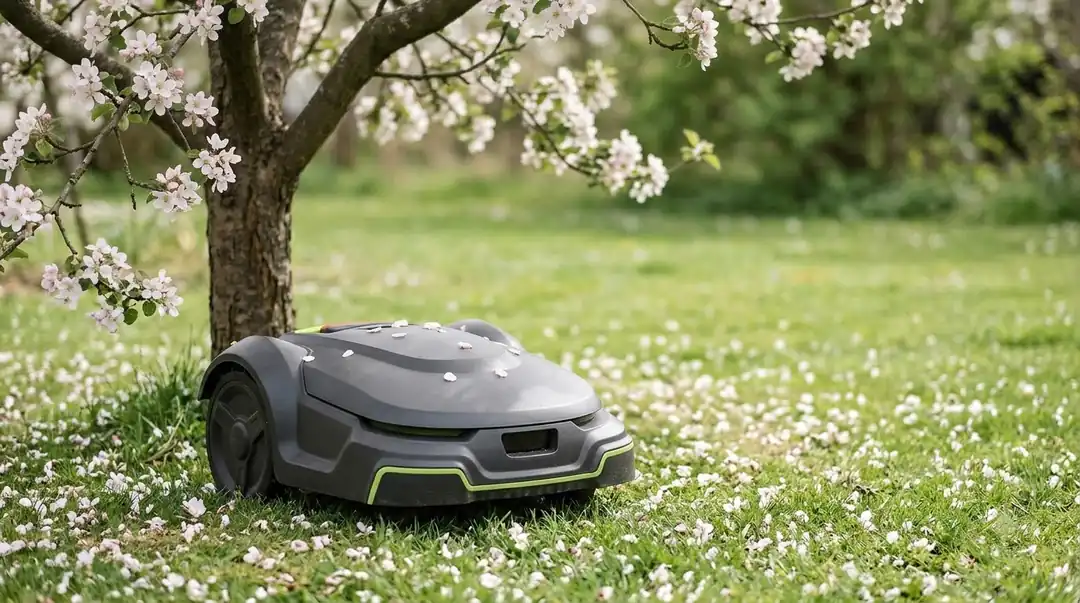
RTK is most exposed under tree canopy and near tall buildings, where satellite signals are blocked. The rtkdata accuracy guide advises a clear sky above roughly 15 degrees for a reliable fix, and it warns that reflections off metal sheds, parked cars, and glass can bias the position. When the fix drops to float, a precise boundary becomes less reliable, which is exactly when a vision-equipped model needs to rely on something else. Where tree cover blocks the sky, satellite-only mower accuracy gives useful background on what is lost. Models without a reference station depend on other corrections, as explained in stationless mower accuracy.
That is the case for pairing vision with RTK in a yard with patchy sky. A mower that can see the lawn edge and the surroundings can keep its heading while the positioning signal is weak, though the exact behaviour depends on the manufacturer’s software.
Where vision loses ground
Vision is sensitive to lighting, shadows, and weather. Dawn, dusk, deep shade, low sun, and wet or dusty lenses can all reduce how well a camera classifies an object. A vendor comparison rates vision’s edge precision as slightly less consistent than RTK’s, so vision is usually better at knowing what is there than at drawing a perfectly straight line. Camera-led systems have limits of their own, which the roundup on AI camera navigation accuracy describes. RTK can lose ground under tree cover, so robot mowers that skip the RTK antenna are worth comparing with the options discussed here.
Which balance suits which yard
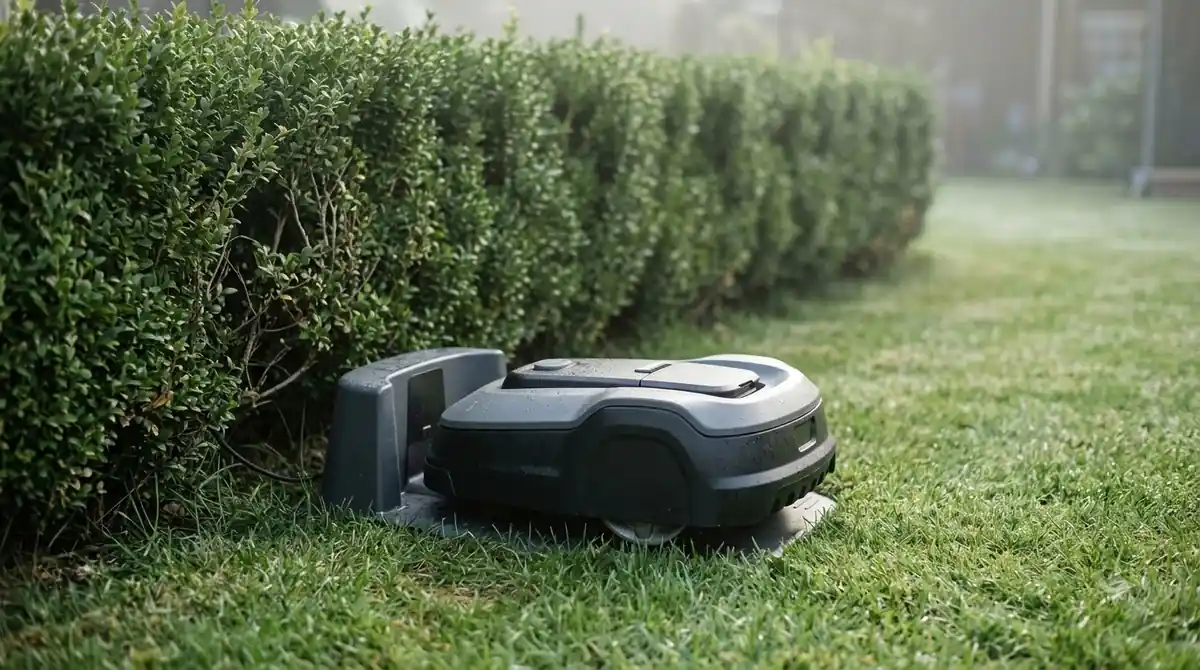
Vendor guidance suggests that AI vision with RTK fits a large, mostly open lawn with some visual complexity, while vision with LiDAR may suit a shaded or cluttered yard. These are reasonable starting points, but they come from manufacturers who sell those combinations. Treat them as hypotheses to test on your own lawn rather than as proof. Some buyers weigh a third option, covered under laser scanning for mower navigation.
A small, sunny, open yard with few obstacles may not need vision at all. The extra sensor adds cost and software complexity, so ask whether you will use the object recognition or whether a boundary wire and a simpler RTK model would do the job.
Keeping the camera and antenna working
Both sensors need basic care to hold their accuracy. A dirty camera lens or a smeared dome can blur the image the mower uses to classify objects, and grass clippings can cover the lens after a damp mowing session. Wipe the lens and any sensor window when you service the blades, and check the manufacturer’s cleaning interval. A lens used for navigation is also a camera, so see how mower cameras for remote viewing handle cleaning and weather.
RTK hardware needs similar attention. If the mower uses a garden antenna, make sure its cable is protected and the mount has not shifted, since a moved antenna changes the reference that the boundary depends on. A camera and antenna that both stay clean and fixed will do far more for accuracy than any spec-sheet upgrade.
How to judge which RTK and vision robot mower is the most accurate for your lawn
Because the published figures are vendor claims, run your own checks before deciding. Walk the boundary at the times you plan to mow, note where the sky is blocked, and look for shadows that fall across the lawn in the afternoon.
- Test the fix. Confirm the app reports a fixed solution across most of the lawn during mapping.
- Check shade and sun. Note which areas are shaded at dawn, midday, and dusk, since vision performance changes with light.
- Look for pets and toys. If you need object recognition, confirm the model is trained for the items in your garden.
- Set wider buffers first. Start with generous virtual boundary buffers near pools, roads, and drops, and tighten them only after stable runs.
- Read the fallback behaviour. Ask what the mower does when it loses the fix or the camera view is poor.
Frequently asked questions
Which RTK and vision robot mower is the most accurate overall?
There is no reliable single answer. RTK drives positional accuracy, vision drives object recognition, and their quality depends on your yard and the model’s software. Compare models on how they perform in your own conditions.
Does vision make an RTK mower more accurate?
Not in the sense of a tighter position. Vision helps the mower recognise obstacles and may help it keep its course when the fix is weak, but the boundary precision still comes mainly from positioning.
Do vision cameras work at night or in deep shade?
Performance is weaker in low light and deep shade, and it is sensitive to shadows. If your mowing time or lawn is mostly shaded, check how the model handles those conditions before buying.
Is RTK plus vision better than RTK alone?
It can be, if you need obstacle recognition or have patchy sky. For a sunny, open yard with few obstacles, RTK alone may be enough and cost less.
Sources
- Mammotion, AI vision vs RTK vs LiDAR for robot lawn mowers (manufacturer blog): sensor strengths, weaknesses and combinations.
- RTKdata, wire-free robot mower RTK accuracy guide (2026) (industry guide): sky-view, multipath and fix-loss conditions for RTK.
 Up next8 min readBest Robot MowersWhich Vision AI Camera Robot Mower Is the Most Accurate?Updated Nov 14, 2026
 6 min readBest Robot MowersWhich RTK GPS Robot Mower Is the Most Accurate? What MattersUpdated Nov 18, 2026
 10 min readBest Robot MowersBest RTK and Vision Robot Lawn Mower 2026: What to CheckUpdated Nov 13, 2026
 8 min readBest Robot MowersRTK vs LiDAR vs Vision: Which Robot Mower Navigation Fits Your YardUpdated Nov 11, 2026
 7 min readBest Robot MowersWhich Virtual Boundary Robot Mower Is the Most Accurate?Updated Nov 18, 2026
 7 min readBest Robot MowersWhich Boundary Wire Robot Mower Is the Most Accurate?Updated Nov 13, 2026