


Which boundary wire robot mower is the most accurate? The wire, not the mower brand, sets most of the boundary. A boundary wire mower follows a physical loop, so its accuracy depends on how well the wire was laid, how far it sits from the edge and how the mower handles turns. Brands rarely publish a single accuracy number for wire systems the way satellite-based makers do. This guide explains what that means, what Husqvarna’s published wire guidance says, and what to check so the mower cuts exactly where you want.
The short answer
- There is no published accuracy ranking for boundary wire mowers that we could verify, so no winner can be named from specs.
- Wire placement sets the boundary. Husqvarna advises placing the wire further in on flat ground before a slope begins.
- On slopes, lay the guide wire diagonally across the incline, according to Husqvarna, for better traction and less grass wear.
- Test the boundary before you rely on it, especially near beds, driveways and the top of any drop.
What “accurate” means for a boundary wire mower
For a wire mower, accuracy describes how closely the cut matches the edge you laid. The mower does not know where it is on a map. It senses the wire and turns when it reaches it. That means the boundary is only as good as the wire path, the mower’s sensing and the way the mower handles the turn at the wire. Boundary wire is only one of several positioning methods, so an overview of robot mower navigation accuracy compared across systems gives useful context for the figures below.
This is a different question from the one satellite mowers answer. A satellite system can report centimeter-level figures for its position. A wire system has no equivalent published figure in the sources we read, so accuracy has to be judged by setup and by a test run.
How wire placement sets the cut
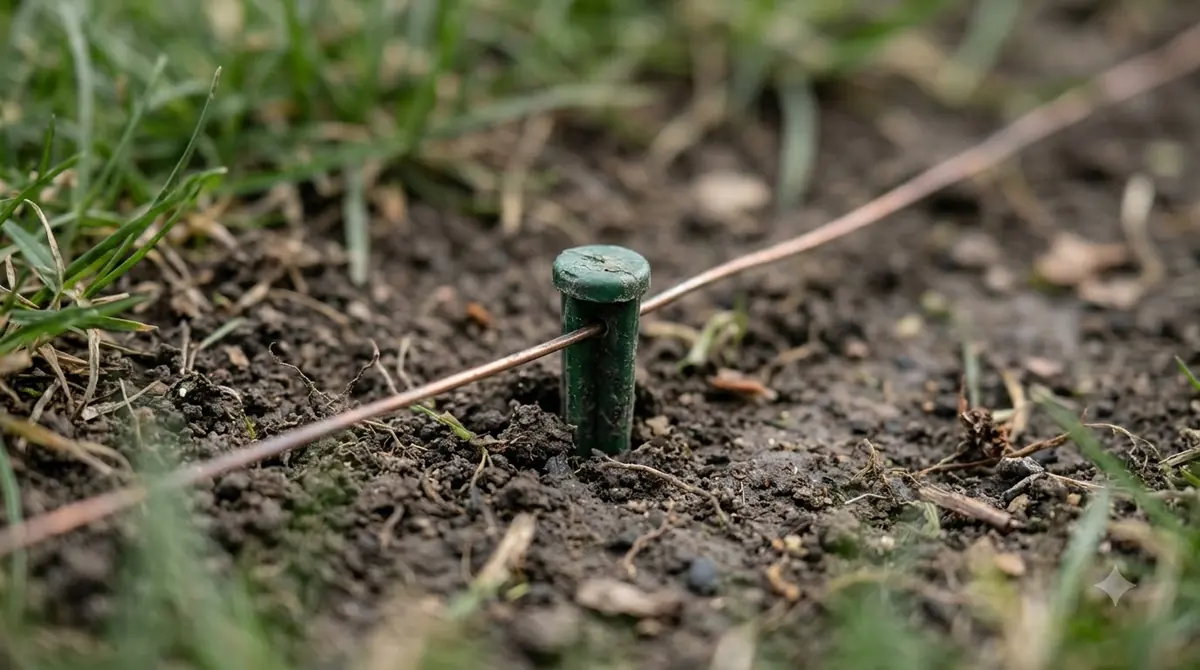
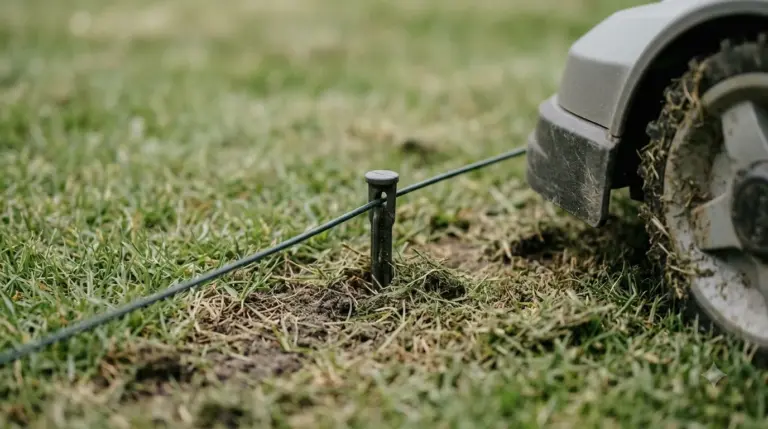
Most edge problems come from the wire, not the mower. If the wire runs right at the edge of a flower bed or a driveway, the mower will turn at that line and may clip the edge on the way in. Husqvarna’s steep-slope guidance makes the same point for slopes: the outer edge of a slope can be too steep to use as a boundary, so the advice is to place the wire further in on flat ground before the slope starts. Tight gaps and islands in the lawn make wire placement harder, so see the advice on mowers for complex yard layouts before you lay the loop.
Our reading is that a small inset from the true edge is usually the safer choice, because it leaves a margin for the mower’s turning arc. The inset costs a little grass at the edge, but a wire placed too close can cut into the bed you wanted to protect.
Boundary wire on slopes and uneven ground
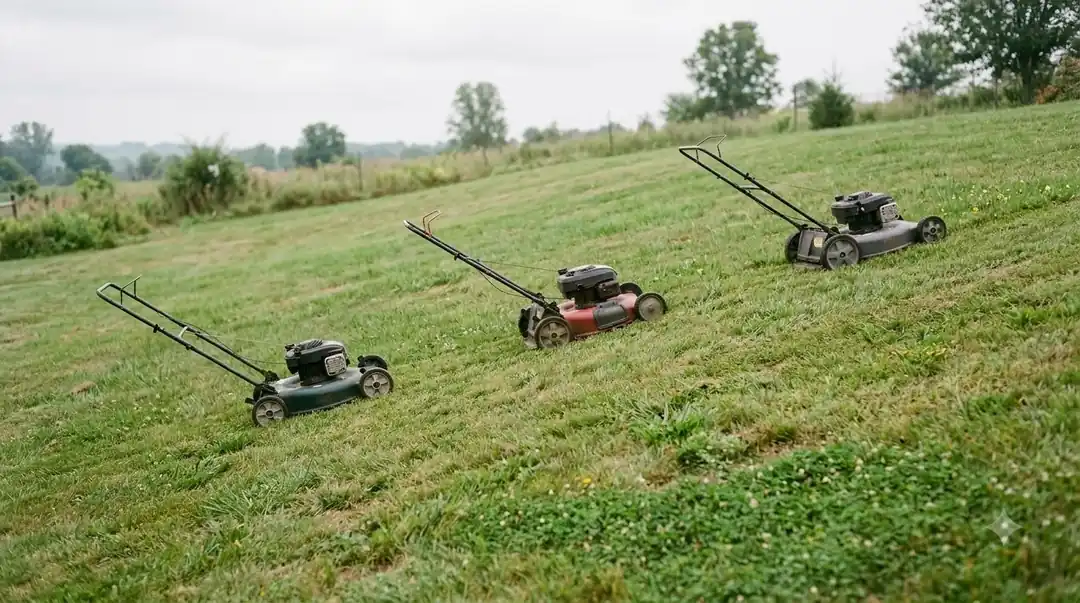
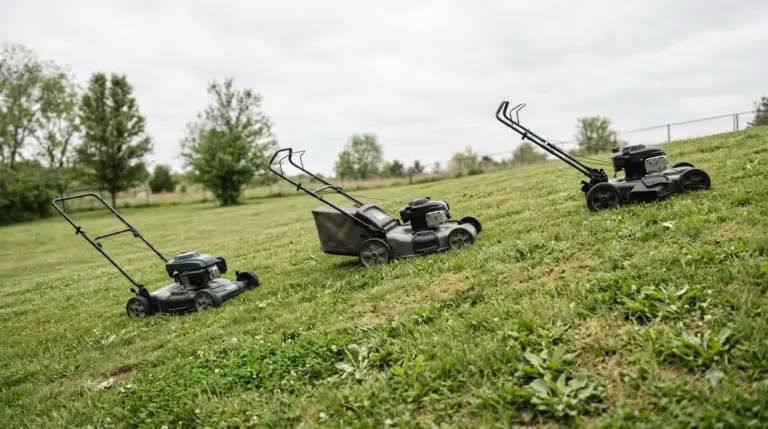
Slopes are where wire placement matters most. Husqvarna’s steep-slope installation page gives two specific steps. First, keep the outer boundary off the steepest part of the slope and move it inward onto flat ground. Second, lay the guide wire diagonally across the slope rather than straight up or down, which the page says gives better traction and reduces grass wear. Drive layout also changes how a mower holds its line on a bank, which is covered in the notes on four-wheel drive accuracy on slopes.
The same page notes that obstacles such as trees or rockeries force the mower to turn, and that the turns add slipping risk, especially when the grass is wet. Wire placement can help here by routing the mower around the obstacle in a controlled path, but it does not remove the slipping risk. If the slope is wet most of the year, consider a smaller cutting area or a different mowing pattern.
Heads up
Husqvarna’s page recommends setting the mowing pattern straight up the slope where possible, and on some EdgeCut models, at a 45-degree angle to the slope. Follow the pattern guidance for your own model, because the advice differs by product line.
Boundary wire compared with wire-free positioning
Wire-free systems are often described as more flexible, because you can change the boundary through an app instead of re-laying the wire. Husqvarna describes its wire-free positioning as typically within 5 cm, and its reference-station option as typically 1 to 2 cm. Those are manufacturer figures for satellite positioning, not for wire systems, so they do not transfer directly to a wire mower. If you are weighing the loop against newer systems, this guide to mowing without a perimeter wire explains what wire-free navigation changes in daily use. A closer look at virtual boundary accuracy versus wire shows where mapped lines and buried loops can differ in practice. Readers who want to see how satellite corrections stack up can read about RTK GPS accuracy for wire-free mowing in a separate roundup.
The practical trade-off is this. A wire mower does not depend on satellite signal or cellular data, so it keeps working under tree cover where satellite positioning can weaken. A wire-free mower avoids the time of laying wire, but it needs an open sky view and a working correction source. Choose the system that fits the yard you have, not the one with the most impressive number.
Which boundary wire robot mower is the most accurate in your yard
Because the boundary is set by the wire, the most accurate result comes from careful installation rather than from any single model. Two mowers with the same sensing can give different edges because one owner laid the wire carefully and the other did not. Before you compare brands, decide what you want the wire to protect, measure the margin you need and plan the path around slopes, trees and beds. Another way to position a mower without a buried loop is laser scanning, discussed in the guide to 3D lidar accuracy for mowing. Models that skip the reference station use a different correction method, which the piece on accuracy without a base station explains.
- Mark the true edge. Walk the lawn and mark driveways, beds and any drop or slope that the mower must avoid.
- Inset the wire. Place the wire a small distance inside those edges, more on the steepest sections, and keep the outer boundary on flat ground where possible.
- Route the guide wire. On slopes, lay the guide wire diagonally across the incline, following the installation advice for your model.
- Test the turns. Watch the mower at the wire through several passes, and check the edges that matter most.
- Adjust before you trust. Move any wire section that lets the mower clip a bed or drift toward a drop, then retest.
Frequently asked questions
Is a boundary wire mower more accurate than a wire-free one?
There is no published accuracy comparison we could verify. The two systems fail in different ways. Wire mowers depend on the wire path, while wire-free mowers depend on satellite or camera positioning and the conditions around the lawn.
How far should the wire sit from the edge?
There is no single distance that fits every mower. Our reading is that a small inset leaves a margin for the mower’s turns. Check your model’s installation guide, then test the edge and adjust.
Should the wire run straight up a slope?
Husqvarna’s steep-slope guidance says to lay the guide wire diagonally across the slope for better traction and less grass wear. Straight runs are not the recommended approach on the steepest sections.
Does a boundary wire work under trees?
A wire system does not rely on satellite signal, so tree cover does not block it the way it can block satellite positioning. Trees and rockeries still force turns, so plan the wire path around them.
Sources
- Husqvarna steep-slope installation support (manufacturer, dated 11/02/2026): boundary wire placement on slopes, diagonal guide wire, obstacles and pattern advice.
- Husqvarna EPOS (manufacturer): stated accuracy for wire-free satellite positioning, used here only for contrast with wire systems.
 Up next7 min readBest Robot MowersWhich Virtual Boundary Robot Mower Is the Most Accurate?Updated Nov 18, 2026
 8 min readBest Robot MowersWhat Is the Best Robot Mower Without a Boundary Wire?Updated Nov 11, 2026
 8 min readBest Robot MowersDo Robot Lawn Mowers Need a Boundary Wire?Updated Nov 11, 2026
 8 min readBest Robot MowersWire-Free vs Boundary Wire Robot Mowers: Which Setup Fits Your YardUpdated Nov 11, 2026
 7 min readBest Robot MowersWhich AWD Robot Mower Is the Most Accurate? Traction FactsUpdated Nov 18, 2026
 6 min readBest Robot MowersWhich RTK GPS Robot Mower Is the Most Accurate? What MattersUpdated Nov 18, 2026