
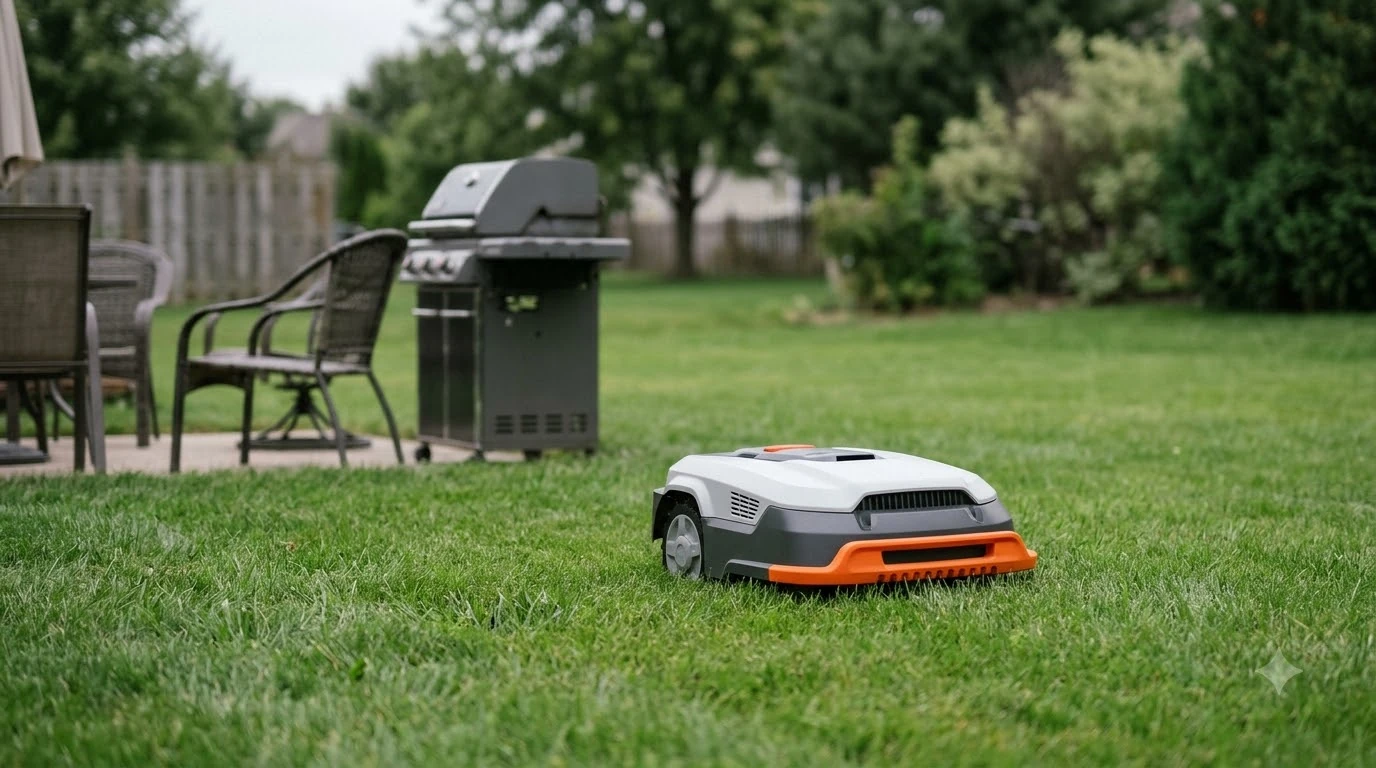

Choosing the best RTK and vision robot lawn mower 2026 means matching two sensing systems to your yard, since no single model suits every lot. RTK tells the mower where it is using satellite corrections, and vision tells it what is in front of it using cameras.
Vendor figures depend on sky view and lighting, so this guide focuses on conditions you can check before you buy. Status as of Nov 2026, based on manufacturer and vendor pages we read for this guide.
The short answer
- RTK: uses a fixed base station to correct satellite signals. Vendors quote positioning within about 1 to 3 cm in open sky, but these are manufacturer claims.
- Vision: uses cameras to spot obstacles such as pets, toys and furniture. Recognition can drop in low light, strong shadows, rain, fog or snow.
- Combined: a best RTK and vision robot lawn mower 2026 uses both sensors, and many current models pair RTK with vision or LiDAR so one can cover gaps in the other.
- Before you buy: check the sky view under trees and near walls, your lighting, and how the maker explains signal loss.
How RTK and vision each guide a robot mower
RTK answers where the mower is, while vision answers what is in front of it, so the two cover different questions. A robot mower needs to know its position inside the lawn boundary, and it also needs to recognize obstacles, edges, and people or animals close by. In a best RTK and vision robot lawn mower 2026, RTK GPS handles the first job with satellite positioning, as explained in our guide to how an RTK robot mower works. Vision handles the second job with cameras, and some makers also use it to support position. For the camera side, see how vision robot mowers work.
Mammotion describes RTK as giving centimeter-level location accuracy by correcting satellite signals with reference data. The same vendor says RTK can struggle near dense tree cover, tall buildings, or uneven terrain, and that GPS signals may drift for a moment. This is a vendor statement, not an independent test.
What RTK does well and where it struggles
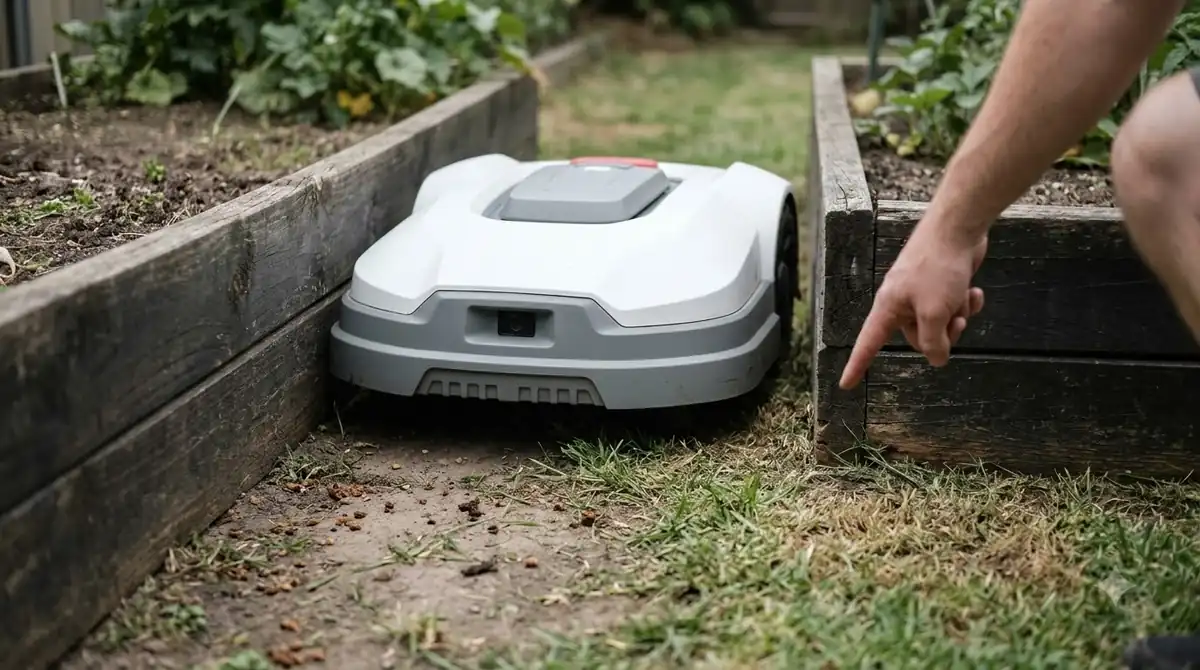
RTK corrects satellite positioning with a fixed base station, and vendors say it reaches within a few centimeters in open sky, though those figures are manufacturer claims. Standard GPS in a phone is accurate to roughly 5 to 10 meters. Sunseeker’s RTK explainer says the base station calculates satellite error at its fixed spot and sends corrections to the mower. The same page says a mower usually needs about 3 to 5 minutes to get its first satellite fix.
Accuracy figures differ from one vendor to the next. Vendor pages quote anything from within a few centimeters to 1 to 3 cm, and some say often 1 to 2 cm. None of these sources gives test conditions, and we found no independent government or university test comparing RTK mowers in this research. Treat these numbers as claims, not benchmarks.
The weak points are mostly about sky view, which is why a clear view of the sky matters for RTK. According to Mowrator’s signal loss article, trees block, weaken, and reflect satellite signals, which vendors call multipath. In practice that means:
- Tree canopy: heavy cover weakens the signal and can cause reflections.
- Walls and roof overhangs: smooth walls can reflect signals, and overhangs reduce the open sky a base needs.
- Signal drop: the mower may pause, slow down, or correct its route when it loses a fix.
- Sky view target: Sunseeker cites a 160-degree vertical sky view as the vendor target.
Base placement matters as much as the mower. ECOVACS’ LiDAR vs RTK article says the base should sit in an open, unobstructed area, and that wrong placement reduces precision. It also rates RTK installation as moderate, because calibration and base placement take extra time.
What vision does well and where it struggles
Vision lets a mower recognize obstacles such as pets, toys, and furniture, but its performance depends on light, visibility, and how clean the cameras are. Mammotion’s US blog says vision mowers use one or more cameras with computer vision to detect and classify obstacles, and that vision often needs the least setup of the three methods.
Mammotion’s Canadian page describes the camera types as monocular, stereo, or 3D, facing the area in front of the machine. Images go to onboard edge AI processors, so decisions do not depend on a cloud connection. The page does not give a camera count, so ask the maker for that figure before comparing models.
The same vendor lists the main limits:
- Low light: recognition can drop at night or in dim light without supplemental lighting.
- Shadows and glare: strong shadows, glare, or uneven light may briefly confuse edge or obstacle detection.
- Rain, fog, and snow: these can obscure visual detail and lower system confidence.
- Leaves and mulch: fallen leaves, mulch, or seasonal browning can be read as obstacles.
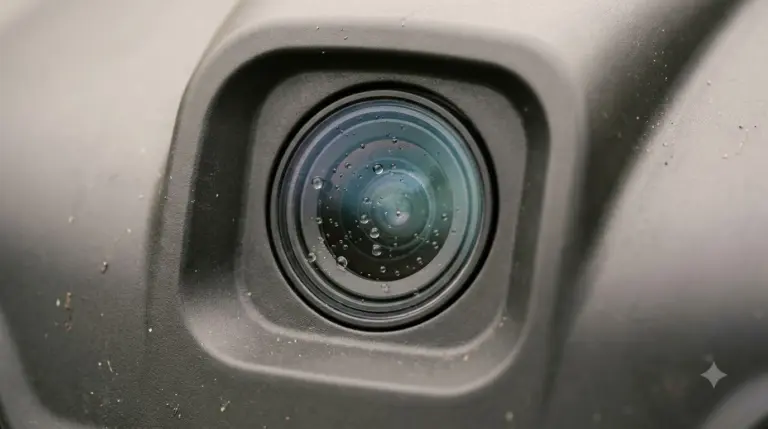
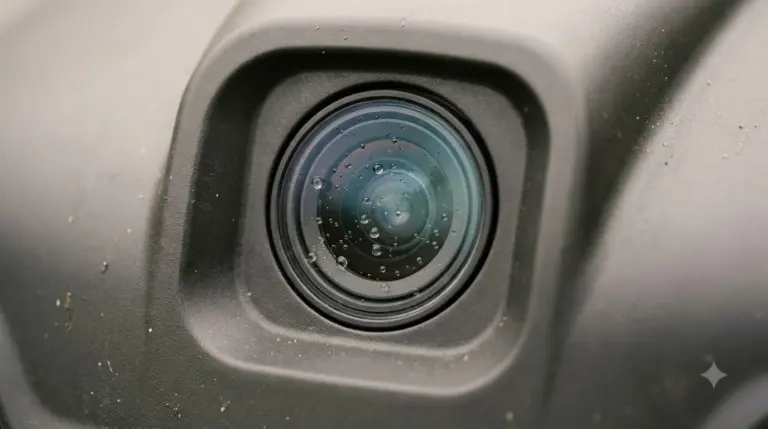
- Dirty lenses: an obstructed or dirty camera reduces accuracy, so cleaning is part of ownership.
Edge precision is a smaller concern but still a trade-off. Mammotion’s US page says edge precision can be slightly less consistent than other methods. For a yard with a clear boundary, that may matter less than obstacle handling, but it is worth checking against your own lawn edges.
Why many current models combine RTK with vision or LiDAR
Combined systems cover the gaps each sensor leaves, and ECOVACS describes RTK paired with vision or LiDAR as common in current wireless mowers. A best RTK and vision robot lawn mower 2026 follows the same logic: RTK gives position when the sky is open, while vision or LiDAR helps when the sky is blocked or the view is cluttered. Yarbo says its RTK mowers fall back on vision, an inertial measurement unit, and odometry when the RTK fix drops.
LiDAR is the third option, covered in how LiDAR robot mowers work. According to ECOVACS, it needs no base station, but fog and heavy rain may scatter its laser beams. Mammotion says LiDAR works reliably in shade and under tree cover because it does not depend on light. The table below sets the three methods side by side on the criteria that matter most at purchase.
| Criterion | RTK | Vision | LiDAR |
|---|---|---|---|
| Main job | Position from satellites | Obstacle recognition with cameras | Position and obstacle sensing with lasers |
| Base station | Needed | Not a satellite method | Not needed, per ECOVACS |
| Weak conditions | Trees, tall buildings, uneven terrain | Low light, shadows, rain, fog, snow | Fog and heavy rain |
| Strong conditions | Open, flat yards with clear sky | Recognizing pets, toys, and furniture | Shade and under tree cover |
| Setup effort | Moderate (ECOVACS rating) | Often the least (Mammotion) | Not stated in the sources we read |
Mammotion argues that hybrid systems give higher reliability and adaptability. That is the vendor’s view, and the page does not include test data, so treat it as a reason to ask questions rather than as proof.
Yard conditions that decide which setup fits
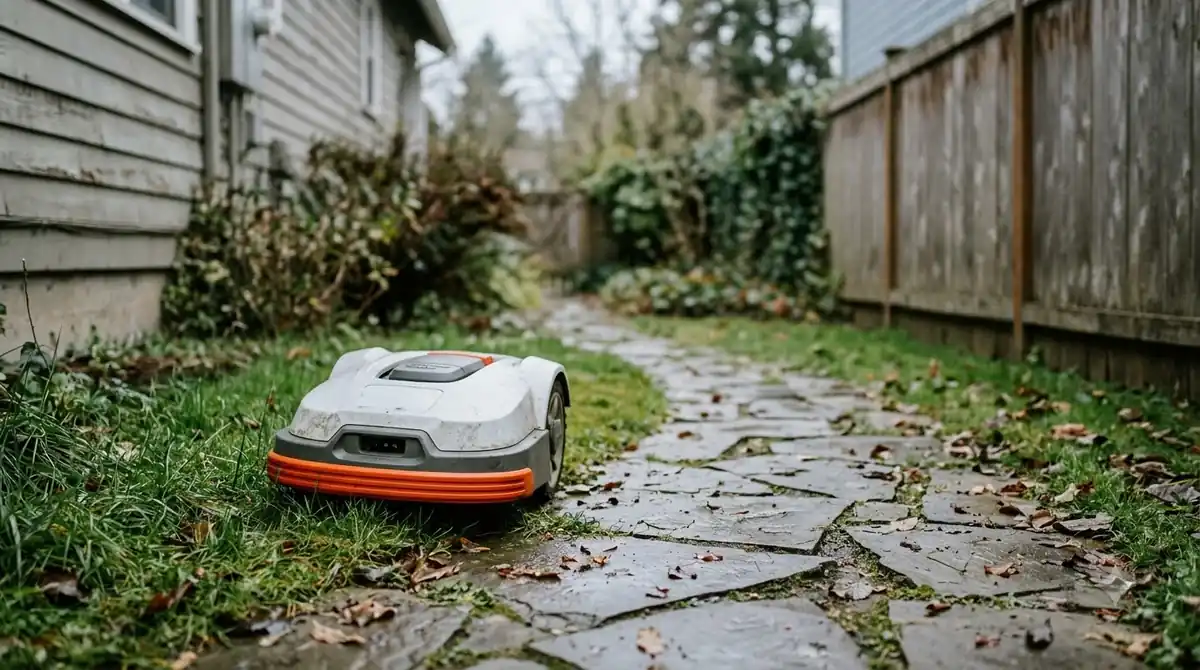
Which best RTK and vision robot lawn mower 2026 fits depends on the yard. An open yard with few obstacles suits RTK on its own, while a shaded yard with many objects points toward vision or a combined system. This is our reading of vendor guidance, not a verdict from our own trials.
- Open suburban lawn: Yarbo describes suburban and rural lawns as the ideal case for RTK.
- Tight urban courtyard: Yarbo notes that courtyards may need careful base placement.
- Heavy tree canopy: RTK alone may pause or correct its route, so look at combined or LiDAR-supported options.
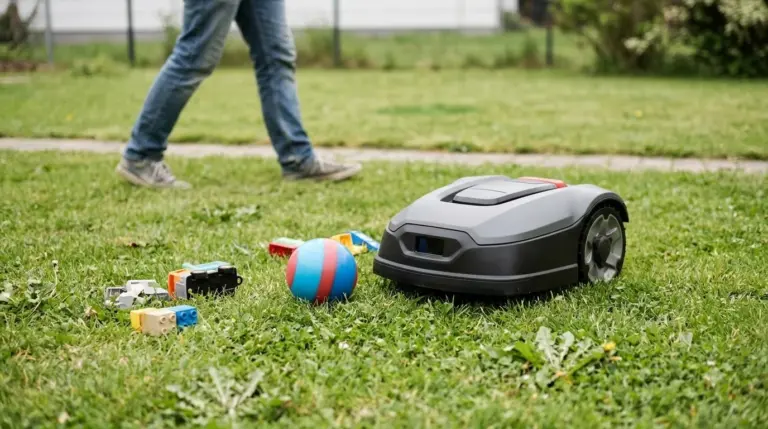
- Many toys, furniture, or pets: vision helps recognize these, but check lighting for early or late mowing.
- Leafy autumn yards: vision can mistake leaves for obstacles, so plan for cleanup and camera care.
These patterns come from vendor pages. A yard visit or the maker’s own coverage map is a better test than any general rule, and we would not treat one yard type as settled without that check.
Best RTK and vision robot lawn mower 2026: what to check before you buy
Before you buy a best RTK and vision robot lawn mower 2026, check sky view, base placement, lighting, lens care, and how the maker documents signal loss. The sources tie robot mower performance to these conditions more than to any single spec.
- Map your sky view. Note trees, walls, and roof overhangs near the planned base spot, then compare them with the vendor’s sky view guidance.
- Find an open base spot. ECOVACS advises an open, unobstructed area for the base, since wrong placement reduces precision.
- Ask for camera and lighting details. Find out the camera count, whether the mower has supplemental lighting, and how it performs at night.
- Read the signal-loss section. Check whether the manual describes fallback sensors and what the mower does when RTK drops.
- Plan for leaves and lenses. Budget time to clear leaves in fall and to clean the cameras on a regular schedule, for example with a camera lens cleaning kit.
- Look for independent data. Vendor accuracy figures come without test conditions, so look for third-party results before relying on any number.

Frequently asked questions
Is RTK or vision more accurate for a robot mower?
They measure different things, so no single number settles which best RTK and vision robot lawn mower 2026 is more accurate. Vendors quote RTK positioning within about 1 to 3 cm in open sky, while vision handles obstacle recognition. No independent test we found compares the two side by side, so check the conditions behind any number.
Does a vision mower still need RTK?
Not always. Some makers pair vision with LiDAR instead of RTK, and ECOVACS says LiDAR needs no base station. Whether a given model needs a base depends on its design, so check the spec sheet before you buy.
Does vision work at night?
Mammotion says recognition accuracy can drop in low light or at night without supplemental lighting. Confirm whether the model has its own lighting features before you plan to mow after dark.
How do I know if my yard suits RTK?
Check how much open sky reaches the planned base spot. Vendors say trees, tall buildings, and roof overhangs weaken the RTK signal, so a heavily shaded yard is a poor fit for RTK alone.
Sources
- What is RTK technology (Sunseeker, manufacturer blog): base station role, standard GPS accuracy, first fix time, sky view target.
- RTK vs LiDAR robot lawn mowers (Sunseeker, manufacturer blog): vendor-stated 1 to 3 cm accuracy.
- LiDAR vs RTK robot lawn mowers (ECOVACS, manufacturer blog): base placement, RTK installation rating, LiDAR base station and fog limits, hybrid systems.
- RTK robot mower signal loss and trees (Mowrator, manufacturer blog): multipath under trees, signal drop behaviour.
- Can you trust an RTK robot mower? (Yarbo, manufacturer blog): fallback sensors, suburban and courtyard yards.
- AI vision vs RTK vs LiDAR (Mammotion US, manufacturer blog): vision obstacle detection, setup, LiDAR in shade, RTK accuracy claim.
- How AI vision robot lawn mowers work (Mammotion CA, manufacturer blog): camera types, edge AI, RTK limits, vision limitations.
 Up next8 min readBest Robot MowersRTK vs LiDAR vs Vision: Which Robot Mower Navigation Fits Your YardUpdated Nov 11, 2026
 6 min readBest Robot MowersWhich RTK and Vision Robot Mower Is the Most Accurate?Updated Nov 13, 2026
 8 min readBest Robot MowersBest Vision AI Camera Robot Lawn Mower 2026: What to CheckUpdated Nov 11, 2026
 8 min readBest Robot MowersBest LiDAR Robot Lawn Mower With No RTK Antenna: What to CheckUpdated Nov 11, 2026
 8 min readBest Robot MowersBest RTK Robot Lawn Mower for Suburban Yards: What to Check Before You BuyUpdated Nov 11, 2026
 8 min readBest Robot MowersWhich Vision AI Camera Robot Mower Is the Most Accurate?Updated Nov 14, 2026