
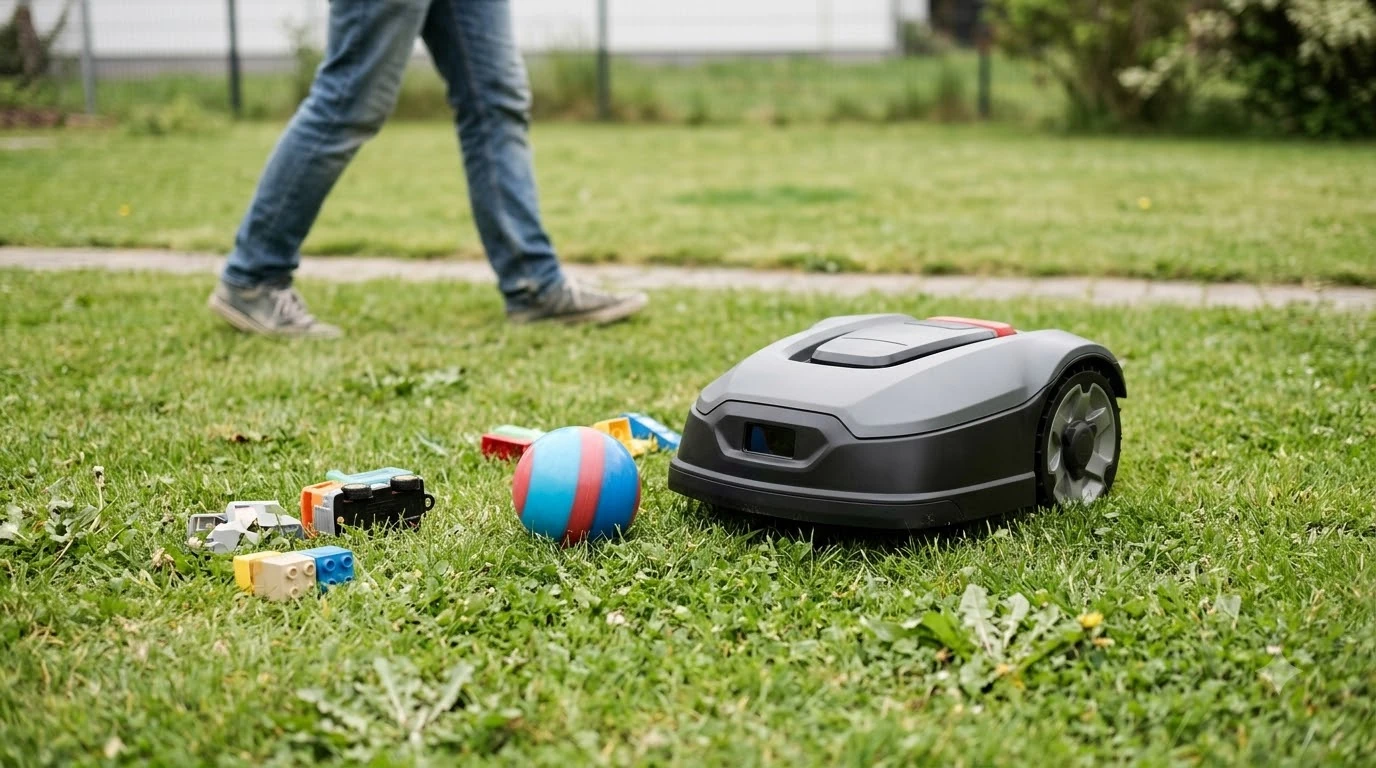

The best vision AI camera robot lawn mower 2026 for your yard is the one whose camera matches your light, your slope and your obstacles. The camera sees grass, the lawn edge and objects with onboard processing, but its limits come from light, glare, dirty lenses and the specific model. Brand names and marketing labels tell you little on their own. The spec sheet, the manual and the manufacturer’s own limits do.
The short answer
- Camera: one or more cameras on the mower; some makers advertise three-camera systems, which is a vendor claim, not an independent accuracy figure.
- Light: many vision models are day-only. Night detection needs an infrared-equipped model.
- Backup: most current vision mowers pair the camera with RTK or LiDAR, because each covers the other’s weak spot.
- Slope: the slope rating belongs to the model’s drive system. The camera does not set it.
What the camera on a vision AI mower actually does
A vision mower carries a camera in its body, and the camera lets it detect objects while it cuts. Husqvarna says its vision models process images on the mower, and that images are not stored, transmitted or shared. Mammotion describes its cameras as monocular, stereo or 3D units aimed at the area ahead, with onboard “edge AI” so that decisions do not depend on a cloud connection. Both are manufacturer descriptions, and neither gives an accuracy percentage for recognition.
Camera count is a spec you can check on the product page. Mammotion’s comparison article says vision uses “one or more cameras,” and one of its models is described as having a triple-camera system. Our reading is that more cameras help with depth and coverage, but the page does not publish a test result that proves a specific count is more accurate. Treat the count as a feature list item, not a performance guarantee.
Best vision AI camera robot lawn mower 2026: light, night and glare
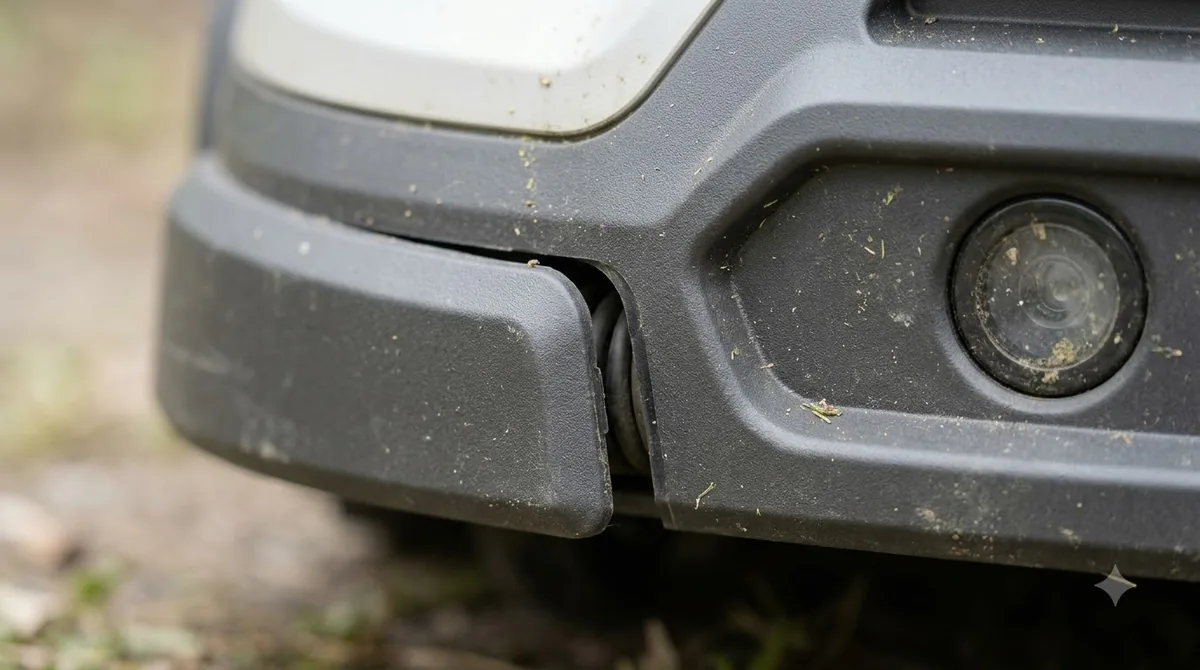
Light is the factor that most often separates one vision mower from another. Husqvarna splits its vision line by time of day. The Aspire R6V, 308V and 312V are listed as daytime-only for AI vision features, while the 405VE, 410VE, 430V and 450V NERA models add an infrared camera that works day and night.
| Husqvarna model group | Vision at night | Source |
|---|---|---|
| Aspire R6V, 308V, 312V | No, daytime only | Husqvarna support |
| 405VE NERA, 410VE NERA, 430V NERA, 450V NERA | Yes, infrared camera | Husqvarna support |
Outside the Husqvarna pages, the general picture is the same. Mammotion says low light or night reduces recognition accuracy unless supplemental lighting is present, and that glare, strong shadows and uneven light can confuse detection. Neither company publishes a lux threshold or a glare limit, so a spec sheet that says only “AI vision” does not tell you how the mower behaves at dusk.
How vision compares with RTK and LiDAR
Vision is one of three common navigation approaches, and the comparison depends on your yard. The table below uses Mammotion’s own comparison, so the ratings are a manufacturer view rather than independent testing.
| Criterion | AI vision | RTK GPS | LiDAR |
|---|---|---|---|
| Obstacle recognition | Excellent | Limited | Good |
| Performance in shade | Moderate | Poor to moderate | Excellent |
| Setup complexity | Low | High | Medium |
| Best lawn type (vendor view) | Dynamic residential lawns | Large, open lawns | Complex or shaded lawns |
RTK’s positioning accuracy is the strongest figure in this comparison. Sunseeker states RTK accuracy within 1 to 3 cm, and another maker says often within 1 to 2 cm. Both numbers are vendor claims. The weak point is canopy: Mowrator explains that trees block, weaken or reflect satellite signals, and that base placement is one of the biggest factors in signal quality. LiDAR does not depend on satellites. Resident’s article says it performs the same under dense canopy as in an open yard, and Sunseeker warns that accuracy may drop in heavy rain, fog or dust.
Most current wireless mowers do not rely on one sensor. Mammotion describes dual-fusion systems that combine AI vision with RTK or with LiDAR. A vision camera can classify a toy or a garden hose, while RTK or LiDAR gives position when the camera’s view is poor.
Slope and terrain: read the model page, not the category
Slope is where buyers most often assume a camera feature is doing more than it is. The figures that appear in vendor material are model-specific. Mammotion’s YUKA mini 2 1000H is listed as handling slopes up to 45%, which is about 24 degrees, and its LUBA 3 AWD is listed for slopes up to 80%, about 38.6 degrees, with all-wheel drive. Neither page gives a slope rating for AI vision, RTK or LiDAR as a technology.
Our reading is that the slope rating comes from the wheels, motors and chassis. A camera that sees the grass well still cannot climb a steep bank that the drive system cannot handle. When you compare models, look for the rating on the same page as the drive system, and ask the seller for the slope figure in percent or degrees.
Obstacles, pets and the risk classes
Vision mowers do not treat every object the same. Husqvarna’s object detection page sorts obstacles into two groups. High-risk objects include humans, animals and items such as water hoses, and the mower keeps a larger safety distance from them. Low-risk objects include toys, garden furniture and flowerpots, and the mower gets closer before it turns, which leaves a little more uncut grass.
The page does not list pets separately, so animals fall in the high-risk group. The page also names limits: floating objects such as benches with raised sections may be misjudged, and objects hidden in high grass, such as trampoline legs, may snag the mower. These are the situations to test in your own yard before relying on the mower near children or pets.
Rain, dirty lenses and the visibility setting
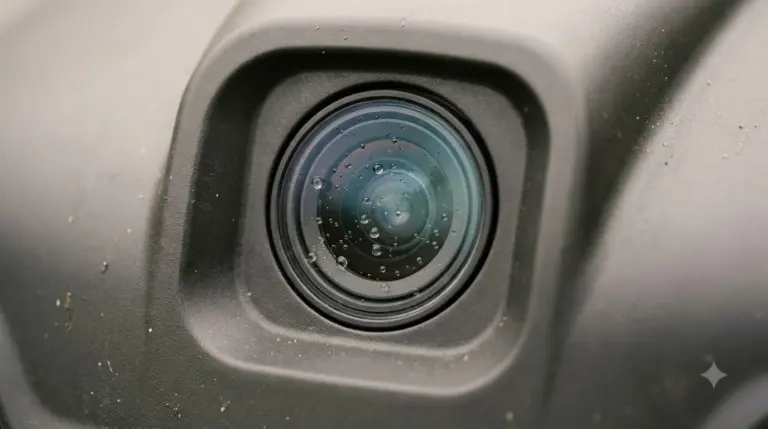
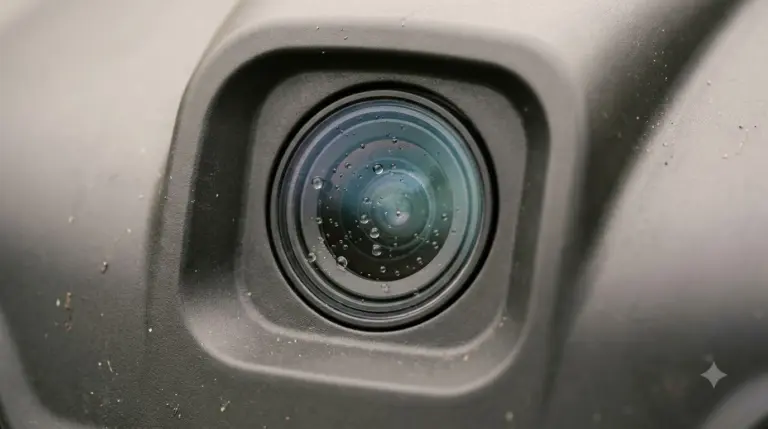
Water, dust and fog reach the camera lens, and a dirty lens reduces what the mower sees. Husqvarna offers a camera visibility setting for heavy rain or a dirty lens, with two choices: “Keep mowing” or “Pause.” Its cleaning advice is to rinse the lens with water and then wipe it gently with a soft cloth.
- Keep mowing: the mower continues while the camera is impaired, so the risk of missed obstacles is higher.
- Pause: the mower stops until the view is clear, which may leave the lawn unfinished on rainy days.
- Cleaning: rinse with water, then wipe with a soft cloth. Husqvarna does not state how often to do this.
Mammotion adds that rain, fog or snow can obscure visual detail and reduce confidence, and that dirty or scratched lenses degrade performance. Neither company publishes a fog or visibility distance.
What to check before you buy a robot lawn mower 2026 with vision
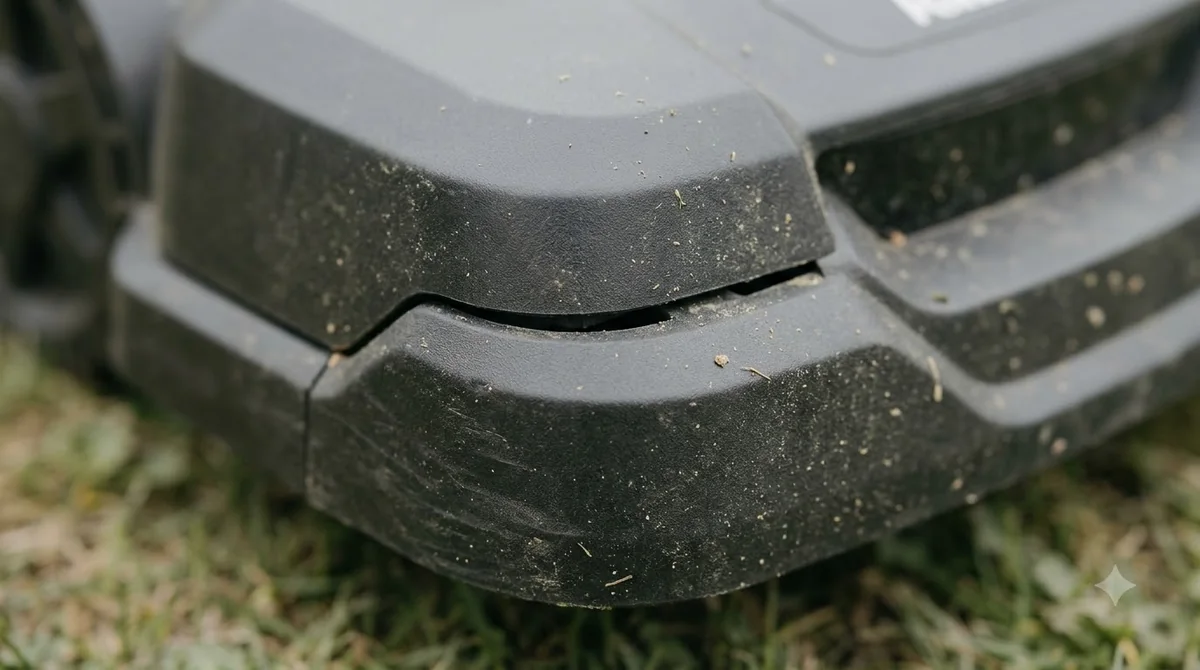
A vision AI camera mower is a reasonable choice for many residential lawns, but the decision rests on a short list of checks. Shoppers looking at the best vision AI camera robot lawn mower 2026 options should run through the same list. We recommend the following order.
- Night operation. Confirm whether the model has an infrared camera or is daytime-only.
- Backup navigation. Ask whether the model uses RTK, LiDAR or a boundary wire, and what happens when the satellite signal drops.
- Slope rating. Find the figure in percent or degrees on the model page, not in general category copy.
- Obstacle and pet policy. Check how the manufacturer classifies obstacles, and whether it names pets.
- Lens care and weather setting. Check for a rain or visibility setting and a published cleaning routine.
Heads up
Most of the performance figures on this topic come from manufacturer pages. Where a company gives no figure for glare, fog or recognition accuracy, this guide says so rather than filling the gap.

Frequently asked questions
Do vision AI camera robot lawn mowers work at night?
Only some models do. Husqvarna lists the 405VE, 410VE, 430V and 450V NERA as having an infrared camera for day and night operation, while the Aspire R6V, 308V and 312V are daytime-only for AI vision.
Do vision mowers need a boundary wire?
The Husqvarna vision pages describe camera-based obstacle detection and, on some models, a camera-based boundary assist that detects a physical edge such as a flower bed or paving. Check the manual for your model, because boundary assist is disabled by default on those models.
Are vision mowers better than LiDAR?
Neither is better in every case. Mammotion notes that LiDAR works regardless of lighting but detects shapes without classifying objects, while vision classifies objects but depends on light and weather. Your yard’s light and tree cover should decide.
Can a vision mower detect pets?
Husqvarna places humans and animals in its high-risk group, so the mower keeps a larger safety distance from them. The page does not list pets as a separate category, and no accuracy figure is published for detection.
Sources
- Husqvarna support: How Automower AI vision technology works (Husqvarna): camera processing, day and night model split, boundary assist, satellite fallback.
- Husqvarna support: Object detection and avoidance (Husqvarna): risk classes, visibility setting, lens cleaning, limitations.
- Mammotion: how AI vision robot lawn mowers work (Mammotion): camera types, grass recognition, low-light and weather limits.
- Mammotion: AI vision vs RTK vs LiDAR (Mammotion): comparison table, slope figures for named models, dual-fusion statement.
- Sunseeker: RTK vs LiDAR robot lawn mowers (Sunseeker): RTK accuracy, LiDAR weather limit and cost.
- Mowrator: RTK robot mower signal loss under trees (Mowrator): canopy, multipath and base placement.
- Resident: LiDAR in robot lawn mowers (Resident): LiDAR operation and tree-cover claim.
 Up next8 min readBest Robot MowersWhich Vision AI Camera Robot Mower Is the Most Accurate?Updated Nov 14, 2026
 10 min readBest Robot MowersBest RTK and Vision Robot Lawn Mower 2026: What to CheckUpdated Nov 13, 2026
 7 min readBest Robot MowersBest Robot Mower With Camera for Remote Viewing (2026)Updated Nov 10, 2026
 8 min readBest Robot MowersRTK vs LiDAR vs Vision: Which Robot Mower Navigation Fits Your YardUpdated Nov 11, 2026
 8 min readBest Robot MowersHow Do Vision Robot Mowers Work?Updated Nov 11, 2026
 6 min readBest Robot MowersWhich RTK and Vision Robot Mower Is the Most Accurate?Updated Nov 13, 2026