
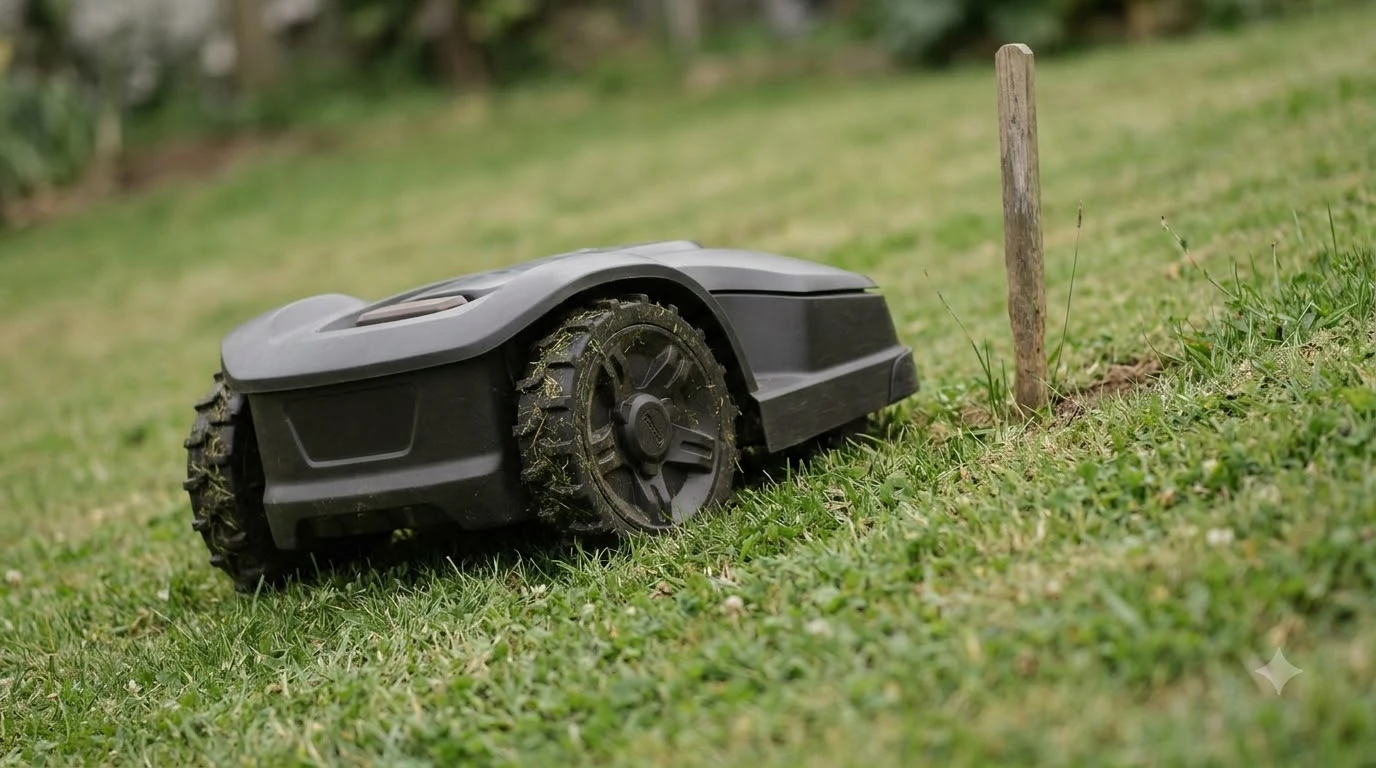

The best robot lawn mower for Texas lawns is the one whose cutting height, slope rating and blade design fit your grass and yard. Texas lawns are mostly warm-season grass, and a robot mower cuts often, so the spec sheet matters more than the brand name. As of November 2026, this guide shows what to check and where the extension sources agree.
The short answer
- Match the cutting height to your grass. Typical ranges run from about 0.5 inch for hybrid Bermuda to 4 inches for St. Augustine.
- Raise the height in summer stress. Taller grass shades the soil and supports deeper roots.
- Check four specs. Lowest cutting height, slope rating, passage width and blade type.
- Clear debris first. A robot mower cannot see every branch, leaf pile or stone.
- Confirm heat and rain limits. Check each model’s manual, since the sources we read did not give them across models.
What Texas lawns ask of a robot mower
Most Texas lawns are warm-season grasses such as Bermuda, St. Augustine and zoysia, and each one has its own cutting range and heat tolerance. The Texas A&M AgriLife Extension office in Williamson County names these three grasses in its turfgrass drought guidance.
A robot mower changes the job in one important way. It cuts small amounts very often, so its lowest setting and its run schedule both shape the lawn. Our reading is that a robot mower suits fast-growing warm-season grass, because it trims little and often. For grass-specific detail, see our guides on whether a robot mower can cut Bermuda grass, St. Augustine grass and zoysia grass. The catch is that the mower must be able to go as low as your grass needs, and no lower. That single fit check matters more when you pick the best robot lawn mower for Texas lawns than any list of top models.
Cutting height by grass type
Each grass has a typical cutting range, and the county office gives a separate highest height for three of them. The typical ranges come from Clemson’s mowing guide, and the highest heights come from the Williamson County article.
| Grass | Typical cutting range (Clemson) | Highest height (Williamson County) |
|---|---|---|
| Common Bermuda | 1 to 2 inches | 3 inches |
| Hybrid Bermuda | 0.5 to 1.5 inches | Not stated |
| St. Augustine | 2.5 to 4 inches | 4 inches |
| Zoysia | 1 to 2 inches | 2 inches |
| Centipede | 1.5 to 2 inches | Not stated |
The two columns do not conflict. The typical range is where most turf is cut, while the highest height is the ceiling the county office gives for keeping roots deep and the lawn alive in drought. For a robot mower, the practical step is to find the row for your grass, check that the mower’s lowest setting falls inside that range, and then pick a height near the top when the lawn is stressed.
How summer heat changes the cutting height
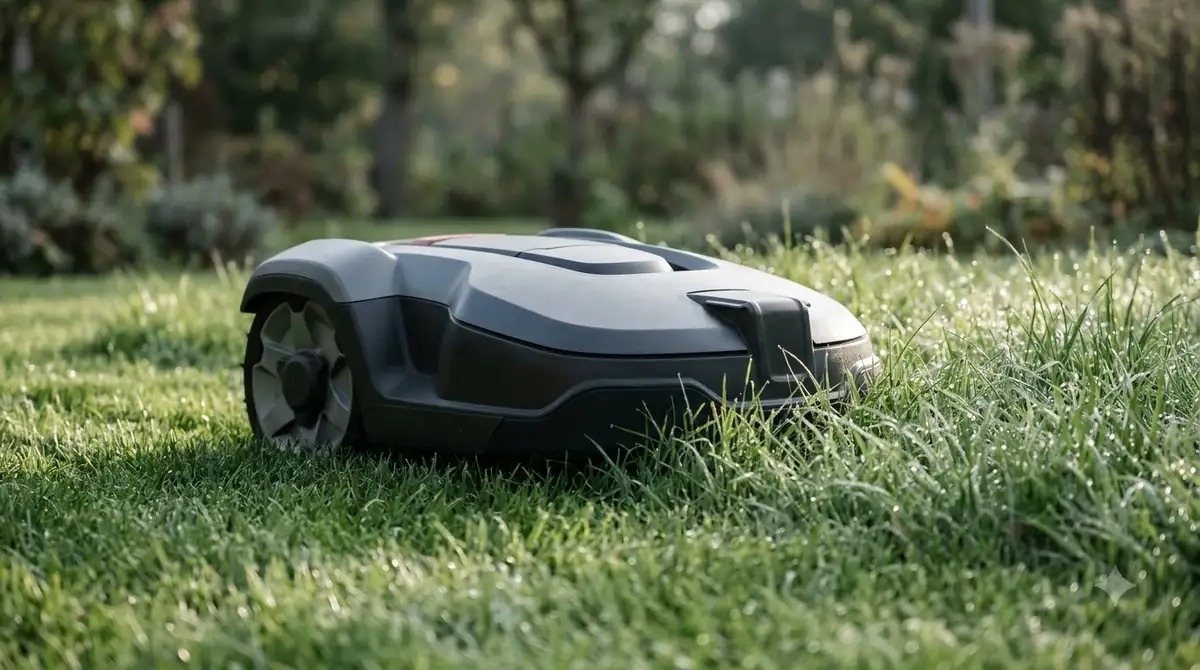
Raising the cutting height is the main summer adjustment for a Texas lawn, because taller grass protects the soil. The county office explains that taller grass shades the soil surface, keeps it cooler, and reduces water loss from evaporation. It also says taller shoots promote deeper root growth and drought survival.
- Raise one step in heat waves. Clemson’s zoysia calendar advises raising the mowing height slightly during high heat or lack of rain.
- Hold the higher setting until the stress ends. The same Clemson guidance says to keep the height raised until the stress passes.
- Ease off fertilizer in the hottest months. Williamson County advises low levels of fertilizer, or none for a few months, in the hottest part of summer.
Our reading is that a robot mower should stay at the higher setting until the lawn shows it has recovered, rather than dropping back to its lowest height the same week. Check in the manual how your model changes its height before summer arrives, and see our guide to mowing in summer heat and drought for more on stress periods.
Spec sheet checks for the best robot lawn mower for Texas lawns
Four spec items decide whether a robot mower fits a Texas yard: the lowest cutting height, the slope rating, the passage width and the blade type. Compare the numbers on the spec sheet rather than the marketing copy.
- Lowest cutting height. It must reach your grass’s typical range. Ranges differ by model, so a mower that cannot go low enough will keep the lawn too tall (compare robot mowers with adjustable cutting height).
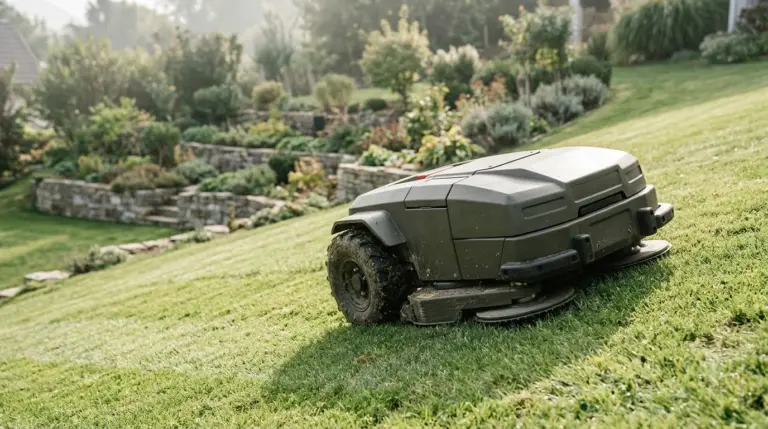
- Slope rating. Robomow’s guidance on stuck mowers says robot mowers are designed for a certain slope, which can be 30%, 45% or more. Compare the rating on your model with your steepest section.
- Passage width. Robomow recommends a minimum passage width of one meter between zones, so measure gates and side yards before you buy.
- Blade type. Robomow says star blades usually shred small fallen fruit and branches, while disc blades nick them.
- Floating deck. Worx says its floating deck lets the cutting disk adapt its height to uneven ground.
Heat limits and rain behavior are the two specs we could not confirm across models from the sources we read. Check each model’s manual for its operating temperature range and how it handles wet grass before you commit.
Clearing debris and leaves before each run
Walk the lawn and clear debris before each mow, because a robot mower cannot see every branch, leaf pile or stone. The Texas A&M AgriLife safety guidance says to walk the yard and remove limbs, rocks, wire and glass before mowing, although that advice was written for walk-behind mowers.

Robomow says random leaves do no harm, but a continuous layer of leaves can interfere with cutting and traction. It also warns that stones can cause serious damage to the blades, and it suggests collecting leaves with a rake or a battery-powered leaf blower before the mower starts. Sensors help, but they do not replace a walk-through.
Watering and mowing together
Water deeply and infrequently, and mow at the higher end of your range, since both help roots reach moisture deep in the soil. The Williamson County article advises waiting until you see visual wilt before watering, and for deep soil it suggests watering about once a week.
Local watering rules differ by city and water district, so check yours before you set a schedule that depends on irrigation.
What to check before you buy
Before you buy, confirm the lowest height, slope rating, passage width and the model’s heat and rain limits in its manual. These four checks do more to predict fit for Texas lawns than any ranking of brands.
- Compare the lowest height with the typical range for your grass.
- Measure your steepest slope and set it against the model’s rating.
- Measure the narrowest passage the mower must travel through.
- Read the manual for operating temperature and wet-grass behavior.
Our reading is that a mower with a low minimum height and a higher slope rating suits a rolling Texas yard with mixed grass, while a model with a higher minimum height suits a lawn you keep at 3 inches or more, such as St. Augustine.
Frequently asked questions
What is the best robot lawn mower for Texas lawns?
No single model is the best robot lawn mower for Texas lawns in every yard. Choose by grass type, lowest cutting height, slope rating and passage width. The grass sets the height range, and the spec sheet tells you whether a given mower can reach it.
What height should a robot mower cut Bermuda grass in Texas?
Clemson gives a typical range of 1 to 2 inches for common Bermuda and 0.5 to 1.5 inches for hybrid Bermuda. The Williamson County office lists 3 inches as the highest recommended height for Bermuda, so a setting near the top of the range suits stressed summer turf.
Should I raise the mowing height in a Texas summer?
Yes, when the lawn is under heat or drought stress. Clemson advises raising the height during high heat or lack of rain and keeping it raised until the stress ends. Taller grass also shades the soil and supports deeper roots, according to the county office.
Can a robot mower handle slopes on a Texas lawn?
It depends on the model. Robomow says robot mowers are designed for a certain slope, which can be 30%, 45% or more, and ratings differ across brands. Compare the rating with your steepest section, and check the manual for wheel traction and slope limits before you buy.
Sources
- Turfgrass in Drought (Texas A&M AgriLife Extension, Williamson County): highest mowing heights, shading, deep roots, watering and fertilizer advice.
- Mowing Lawns (Clemson Home and Garden Information Center): typical cutting ranges by grass.
- Zoysiagrass Maintenance Calendar (Clemson Home and Garden Information Center): raising the height during heat or lack of rain.
- Can a robotic lawnmower get stuck (Robomow): designed slopes and minimum passage width.
- How does the robotic lawnmower deal with fallen fruit (Robomow): blade type and small branches.
- Robot mowers and complex lawns (Worx): floating cutting deck on uneven ground.
- Lawn maintenance safety (Texas A&M AgriLife Extension): walk the yard and remove debris before mowing.
 Up next8 min readBest Robot MowersBest Robot Lawn Mower for 3/4 Acre: How to Choose the Right SizeUpdated Nov 11, 2026
 8 min readBest Robot MowersWhat Size Robot Mower Do I Need for 1/4 Acre?Updated Nov 11, 2026
 8 min readBest Robot MowersMost Powerful Robot Lawn Mower: What the Specs Really MeasureUpdated Nov 11, 2026
 8 min readBest Robot MowersWhich Robot Lawn Mower Is Best for Uneven Ground: 3 SpecsUpdated Nov 11, 2026
 9 min readBest Robot MowersHow to Read a Robot Mower Spec SheetUpdated Nov 11, 2026
 9 min readBest Robot MowersBest Robot Mower That Mows in Straight Lines: 6 ChecksUpdated Nov 11, 2026