
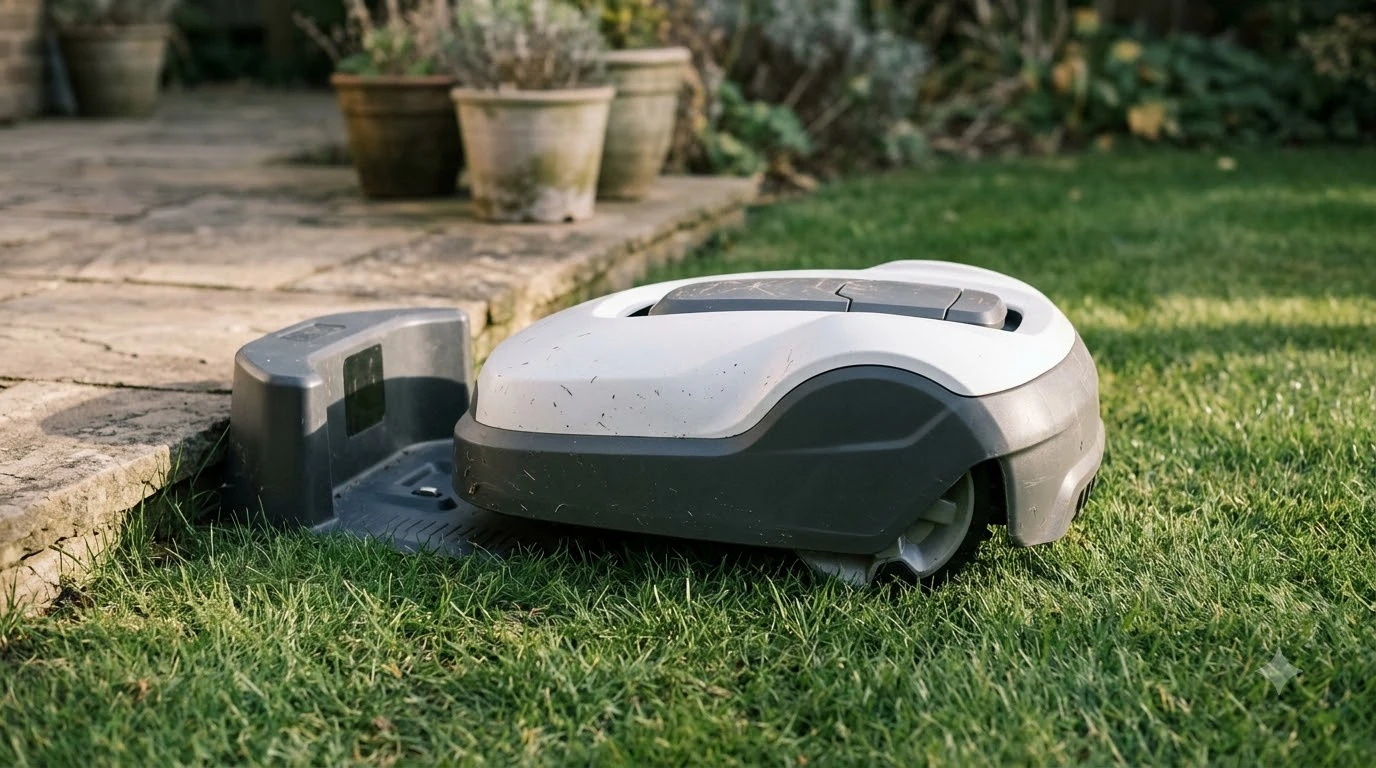

Choosing the best robot lawn mower for New England lawns starts with three checks: a cutting height of about 3.5 inches or more, a plan for frost and winter storage, and wheels that grip wet, sloped ground. Most New England lawns are cool-season grass, and many robot mowers were built with shorter turf in mind. Use the checks below to narrow the field before you compare brands.
The short answer
- Cutting height: Look for a maximum of about 3.5 inches or higher. Missouri Extension lists 2.5 to 3.5 inches for Kentucky bluegrass and 3.0 to 4.0 inches for tall fescue.
- Cold limits: Check the operating temperature and frost settings. Husqvarna lists an operating range of 0 to 50 C (32 to 122 F) for its Automower.
- Wet and sloped ground: Choose coarse-tread wheels, which Robomow says perform well on slopes and in wet grass.
- Winter plan: Store the mower indoors above freezing and charge it fully before storage.
Why New England lawns are a special case
Cool-season grasses grow best in the cool weather of spring and fall, which is when most New England lawns need the most mowing. Missouri Extension says cool-season lawns are generally mowed at 2.5 to 4.0 inches, and that lower heights require more frequent mowing. When you shop for the best robot lawn mower for New England lawns, the top cutting height matters as much as the lawn-size rating on the box.
The season also has hard edges. Farmer’s Almanac notes that northern New England can see frost as early as September, and that October is the prime first-frost window across much of the Northeast. Our reading is that a New England mowing season is shaped more by frost dates than by the calendar, so the mower’s cold settings deserve as much attention as its battery.
Check the maximum cutting height first
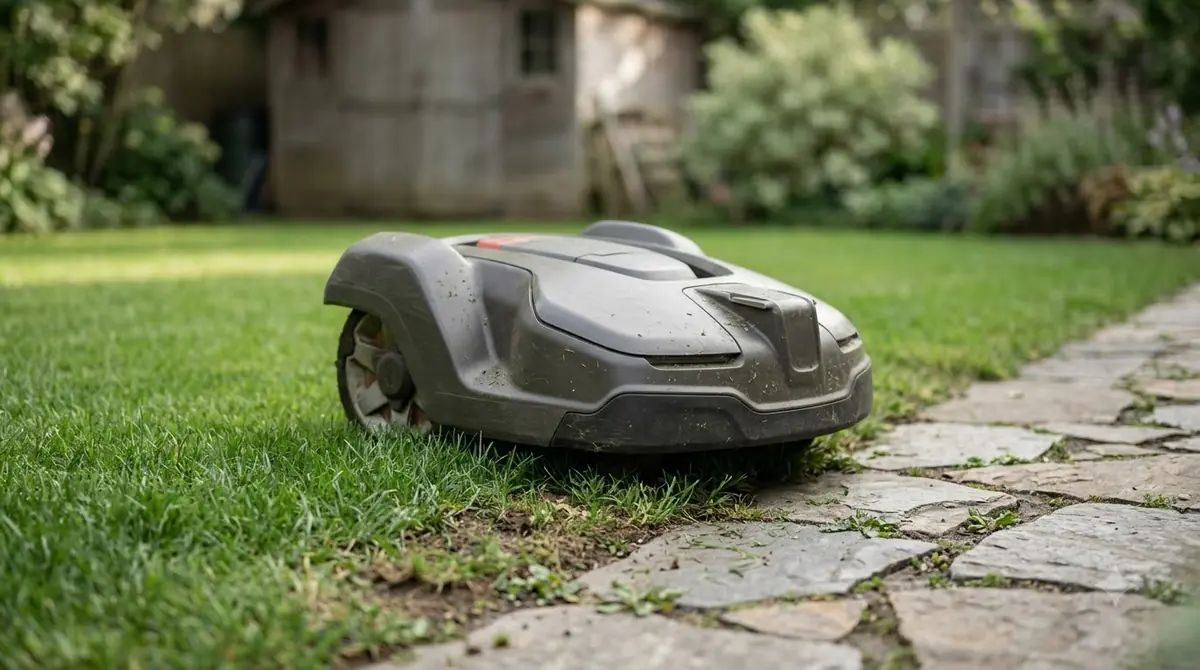
Cutting height is the spec that most often decides whether a robot mower fits a cool-season lawn. Robomow says most robot models cut between 15 and 60 millimeters, about 0.6 to 2.4 inches, while some models for taller grass reach 100 millimeters, about 3.9 inches. A mower that tops out near 2.4 inches will keep struggling with a lawn you want at 3 inches or more. Our guide to a robot mower with adjustable cutting height explains how to read that spec.
| Grass | Recommended mowing height | What to check on the mower |
|---|---|---|
| Kentucky bluegrass | 2.5 to 3.5 inches (Missouri Extension); see Kentucky bluegrass cutting height | Maximum height at or above 3.5 inches |
| Tall fescue | 3.0 to 4.0 inches (Missouri Extension) | Maximum height near 4 inches, or a model rated for taller grass |
| Typical robot range | About 0.6 to 2.4 inches on most models (Robomow) | Confirm the spec sheet, since taller-grass models reach about 3.9 inches |
The one-third rule still applies to robots. Missouri Extension says to mow when grass has grown one-third taller than the desired height. Robomow advises cutting roughly every two to three days, even with tall grass, so a robot can keep up with spring growth only if the schedule allows frequent runs.

Plan for frost, cold snaps and the first cut
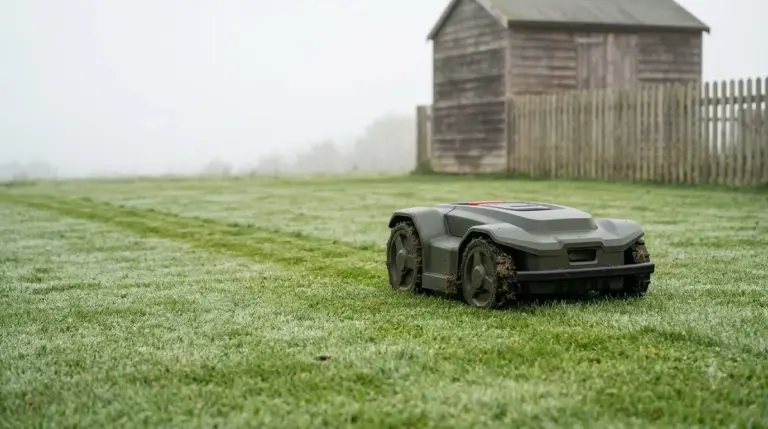
Frost and cold set the real limits of a New England season. Husqvarna says mowing is usually unnecessary below about 8 C (40 F), because grass more or less stops growing, and that grass is extra sensitive to wear under frost. Its Frost Guard keeps the mower parked when the scheduled start temperature is 5 C (41 F) or below, rechecking hourly.
Spring is the other pinch point. Iowa State Extension says to make the first mow once grass reaches about 4.5 to 5.25 inches, with a standard cut of 3 to 3.5 inches. Robomow adds that after a long winter break, another type of mower is better for the first cut. Our reading is that many owners will want a conventional mower or a hand pass for the first spring cut, then switch to the robot once growth settles. Farmer’s Almanac also advises against mowing while grass is frozen or covered in frost.
Wheels and slopes matter in wet weather
Wet ground changes traction more than most buyers expect, and the best robot lawn mower for New England lawns has to cope with it. Robomow says coarse-tread all-terrain wheels perform well on slopes and in wet grass, and our explainer on robot mower wheels slipping on grass covers what goes wrong when they do not. Check the manual for the model’s published slope rating, because limits differ between brands and a general number can mislead.
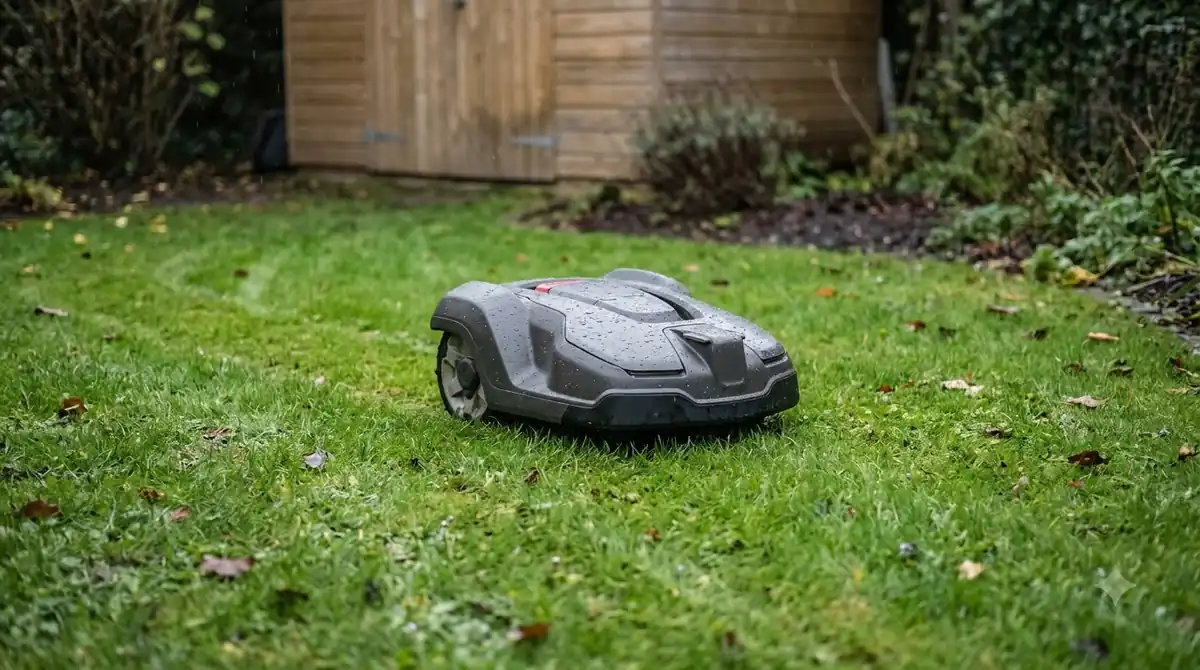
Rain also changes the workload. Robomow notes that grass can grow taller after longer breaks in the rain, which means a wet week can push a lawn past the one-third rule before the next scheduled run. If rain is frequent where you live, read how robot mowers work in rain first. Our reading is that a schedule with spare runs in a wet week is worth checking before you buy.
Winter storage and battery care
Husqvarna’s winter guide says to fully charge the mower and switch it off, then store it in a dry place indoors, above freezing at 0 C (32 F) or warmer. Our robot mower winter storage guide walks through the full routine. Its guidance says most models need no charging during storage, though some older models need a top-up about every three months.
Mammotion’s US support page gives a different set of thresholds. It says to move the mower indoors when outdoor temperatures fall below -10 C (14 F), and to charge to at least 80 percent before storage. Its Canadian guide advises 40 to 60 percent for a removable battery and says never to charge batteries in freezing conditions. The two Mammotion sources conflict on charge level, so follow the battery instructions in your own model’s manual.
Checklist for the best robot lawn mower for New England lawns
- Maximum cutting height. Confirm the mower reaches about 3.5 inches or more for cool-season grass.
- Mowing frequency. Ask whether the schedule can run every two to three days during peak growth.
- Temperature settings. Note the operating range and whether frost mode is standard or an add-on.
- Wheels for wet ground. Look for coarse-tread wheels and a published slope rating.
- Storage space. Confirm an indoor spot above freezing and the battery charge level in the manual.
- Spring first cut. Decide how you will handle the first cut after winter.
The best robot lawn mower for New England lawns depends on the lawn itself. A small, flat yard with a long season may work with a mower that has a lower height ceiling if it runs often. A larger lawn with tall fescue, a steep side or a wet backyard should put height and wheels first, even if that means paying more.
Frequently asked questions
Do robot mowers work through New England winters?
Not through the cold months. Husqvarna says mowing is usually unnecessary below about 8 C (40 F), and its Automower should be stored indoors above freezing. Plan on a winter storage routine rather than year-round outdoor operation.
What cutting height do New England lawns need?
Missouri Extension lists 2.5 to 3.5 inches for Kentucky bluegrass and 3.0 to 4.0 inches for tall fescue. Choose a mower whose maximum height reaches the top of your grass range, since most robot models cut lower than that. That is the main filter for the best robot lawn mower for New England lawns.
Are robot mowers good for wet lawns?
They can be, if the wheels suit the job. Robomow says coarse-tread all-terrain wheels perform well in wet grass and on slopes. Check the model’s published slope rating before buying for a steep or soggy yard.
Should I leave the mower outside in winter?
No, according to the manufacturer guides. Husqvarna recommends a dry indoor place above freezing, and Mammotion says to move the mower indoors when outdoor temperatures fall below -10 C (14 F).
Sources
- Proper Mowing Practices for Your Lawn (University of Missouri Extension): mowing heights, the one-third rule and mowing frequency.
- Can the robotic lawnmower cut tall grass? (Robomow): robot cutting heights, mowing interval, wheels for wet grass and slopes, first cut after winter.
- At what temperature can I use, charge and store my Automower (Husqvarna): operating range and the 8 C mowing threshold.
- Protect your lawn with Automower Frost Guard (Husqvarna): the 5 C (41 F) parking threshold.
- Complete winter storage guide for your Automower (Husqvarna): indoor storage above freezing and charging before storage.
- Winter storage (Mammotion support): the -10 C (14 F) indoor threshold and 80 percent charge.
- Robot lawn mower winter maintenance guide (Mammotion Canada): battery storage level and charging in freezing conditions.
- Mowing tips for spring (Iowa State University Extension): the first spring cut at 4.5 to 5.25 inches.
- When to stop mowing your lawn (Farmer’s Almanac): frost timing in northern New England and the Northeast.
 Up next8 min readBest Robot MowersBest Robot Lawn Mower for New Jersey Lawns: What to Check FirstUpdated Nov 14, 2026
 7 min readBest Robot MowersBest Wireless Robot Mower for 1/3 Acre Lawn: What to CheckUpdated Nov 11, 2026
 9 min readBest Robot MowersBest Robot Lawn Mower for New Construction Homes: Setup FirstUpdated Nov 10, 2026
 8 min readBest Robot MowersBest Robot Mower for a New Build Lawn with SodUpdated Nov 13, 2026
 8 min readBest Robot MowersWhat Size Robot Mower Do I Need for 3/4 Acre?Updated Nov 14, 2026
 9 min readBest Robot MowersBest Robot Lawn Mower for 3 Acres: What the Ratings Really CoverUpdated Nov 11, 2026