
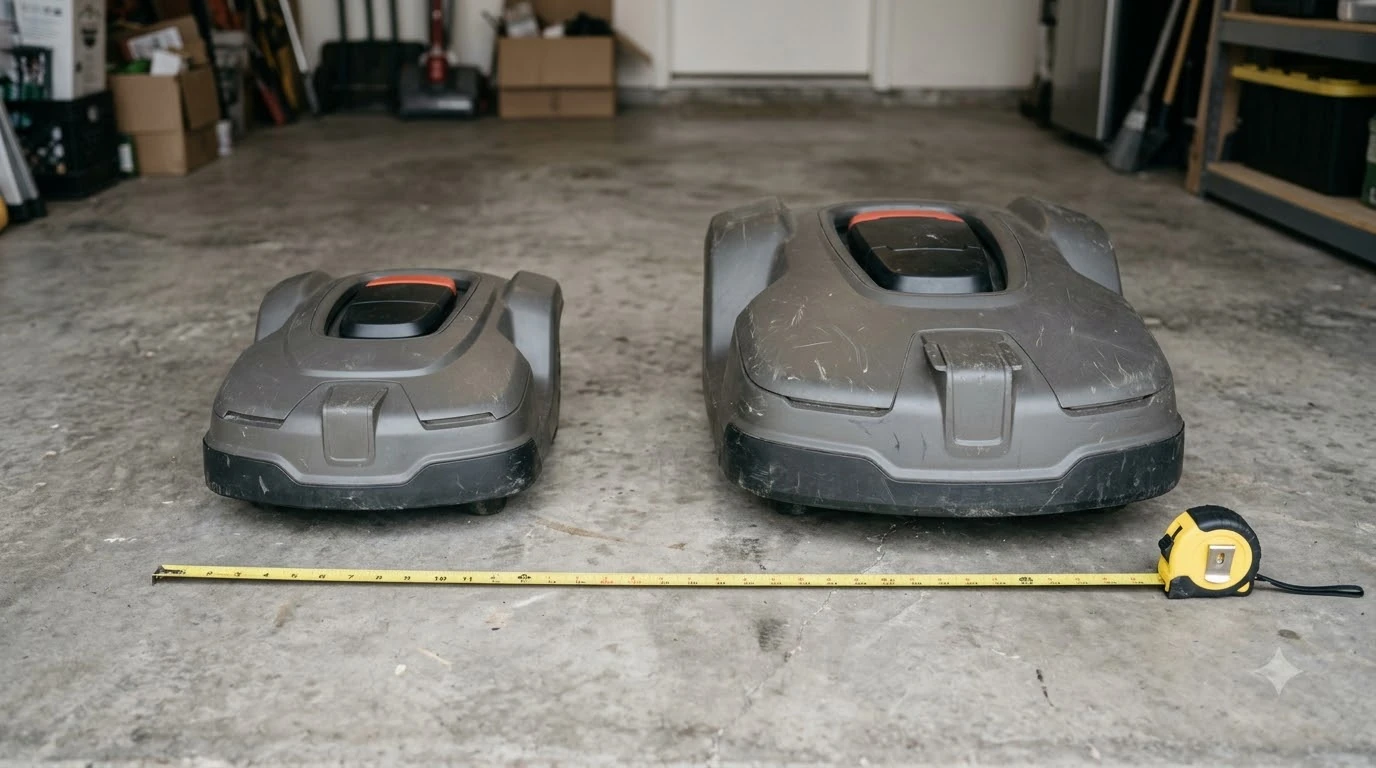

There is no single best robot lawn mower under $800, but the price band sets clear limits. In the brand and consumer pages we read, models listed at this price cover about 0.12 to 0.25 acre, are rated for mild slopes, and their navigation depends on satellite signal or lighting, as each brand page describes. Prices below are as listed on those pages when we read them in November 2026, and the pages themselves were not dated, so confirm the current price before you buy.
The short answer
- Coverage: about 0.12 to 0.25 acre in the listings we read, measured against grass area only.
- Slope: Anthbot suggests entry-level models suit mild slopes of 15 to 25 degrees.
- Navigation: RTK needs a stable satellite signal and vision depends on lighting, so match the system to your yard.
- Price: sale and regular prices differ on the same listing, so compare both.
Best robot lawn mower under $800: what the price covers
Models listed under $800 in the pages we read cover roughly one-eighth to one-quarter of an acre. The Worx Landroid WR165 is listed at $699 with coverage of up to 0.125 acre, according to a Mammotion comparison page that also says it has no GPS or advanced mapping. Anthbot’s own buying guide lists its M5 at $549 on sale and $799 regular, with coverage of 500 square meters (about 0.12 acre by our conversion). Its M9 is listed at $649 on sale and $899 regular, with 1,000 square meters (about 0.25 acre). Anthbot’s Genie 600 is listed at $699 on sale and $1,099 regular, with 900 square meters (about 0.22 acre).
| Model (as listed) | Listed price (as read Nov 2026) | Stated coverage | Note on the page |
|---|---|---|---|
| Worx Landroid WR165 | $699, undated | Up to 0.125 acre | No GPS or advanced mapping (Mammotion comparison) |
| Anthbot M5 | $549 sale / $799 regular | 500 m2 (about 0.12 acre) | Brand guide |
| Anthbot M9 | $649 sale / $899 regular | 1,000 m2 (about 0.25 acre) | Brand guide |
| Anthbot Genie 600 | $699 sale / $1,099 regular | 900 m2 (about 0.22 acre) | Brand guide |
For the next price band up, see our guide to the best robot lawn mower under $1000, and for the band below, what to expect from a robot mower under $500. Our reading is that the regular price matters as much as the sale price. A model that is under $800 only during a promotion may not stay in that band, and the listings we read do not say how long a sale lasts.
Measure the grass area before you compare coverage
Coverage ratings describe grass a mower can work, so the number to compare is your measured grass area. Anthbot advises measuring the actual grass area and leaving out driveways, patios, and flower beds. Consumer NZ, which tested mowers over areas up to 2,000 square meters, advises checking that the backyard fits within a model’s range before buying.
When you compare the best robot lawn mower under $800 options, use the grass area as the first filter. A coverage rating that matches your grass area exactly leaves little room for tight edges, narrow passages, or an irregular shape. Our reading is that a lawn near the top of a model’s listed range may need a more capable model or a second check of the layout.
Slope limits for mowers in this price range
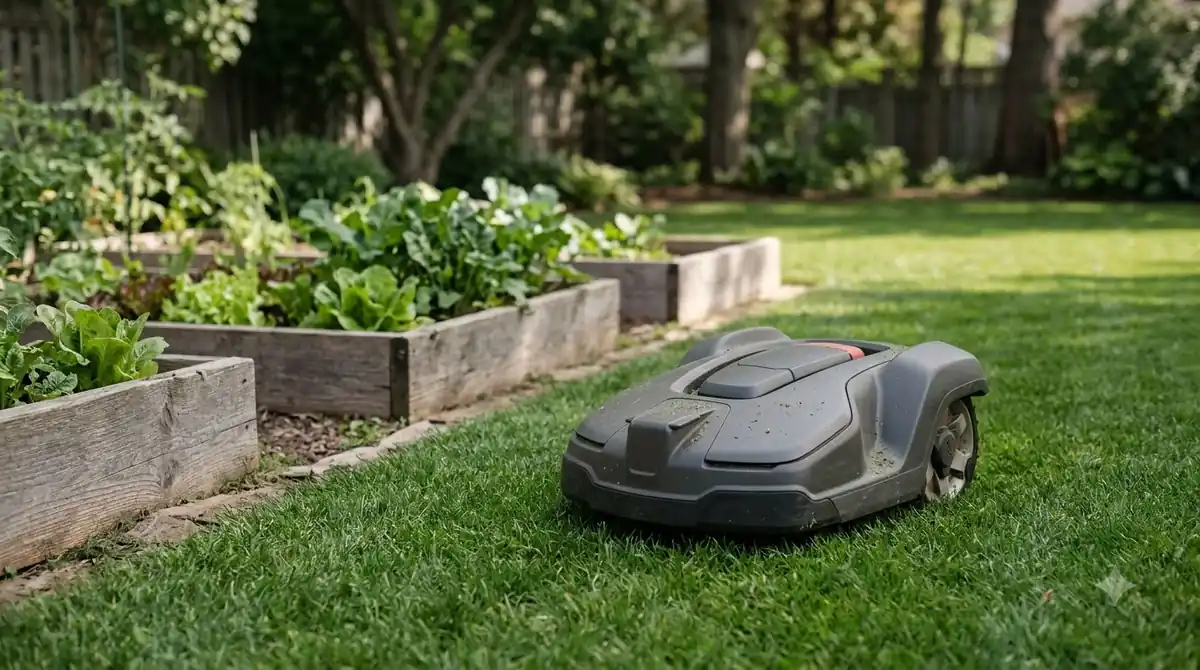
Slope is the limit that most often rules out a cheaper model, which is why our slope rating explainer is worth reading before any price comparison. Anthbot’s guide says entry-level models suit mild slopes of 15 to 25 degrees and that premium models handle much steeper terrain, without giving a figure for them. Consumer NZ tested models on a 19-degree slope, which is about 35 percent grade, and notes that some manufacturers claim steeper limits that their manuals say should be used only for short spells.
Models priced above this band are listed with a 30 percent (17 degree) slope rating in a Sunseeker comparison, including the Worx Landroid Vision WR208 and the Segway Navimow i110. The pages we read do not say whether each rating is for the working area or the boundary, so ask the seller which one applies before you buy.
Heads up
Measure the steepest part of your lawn with a level or phone app before you read any slope figure. A rating that looks high on paper can still be too low for a short, steep bank.
Wire-free or boundary wire at this price
Consumer NZ says boundary wire suits smaller properties, lawns with poor satellite reception, and fixed zones. Wire-free models suit lawns with good satellite reception, large or complex yards, and layouts that change. Anthbot adds that boundary wire takes more time to install and that zones are harder to change later. Weigh that before you shortlist the best robot lawn mower under $800 for a yard whose layout may change.
Our comparison of wire-free and boundary wire robot mowers covers the trade-offs in more detail. The label “wire-free” alone does not tell you how a model finds its way. Check whether the mower uses RTK, vision, LiDAR, or a combination, and read the conditions that each one depends on.
Navigation conditions to check
Navigation matters as much as price when you choose the best robot lawn mower under $800. Each navigation type has a condition that limits it. Anthbot says RTK requires a stable satellite signal, vision is affected by lighting, and LiDAR tends to work better in shaded or complex areas where GPS may be unstable. The comparison below lists three models priced above $800 in the Sunseeker page, which shows the noise and navigation specs listed for models in this class.
| Model (listed, page dated 12/11/2025) | Listed price | Coverage | Slope | Navigation | Noise |
|---|---|---|---|---|---|
| Worx Landroid Vision WR208 | approx $1,599 | about 0.2 acre | 30% (17 deg) | Vision, no boundary wire | 59 dB(A) |
| Segway Navimow i110 | approx $1,299 | about 0.25 acre | 30% (17 deg) | EFLS 2.0, AI-enhanced RTK | 58 dB(A) |
| Sunseeker Elite X3 Gen 2 | approx $1,599 | about 0.3 acre | 30% (17 deg) | RTK + VSLAM + vision AI | 55 dB(A) |
We did not find a published noise figure for the sub-$800 models in the pages we read, so do not assume the sub-$800 range matches the 55 to 59 dB(A) shown above. If noise matters for early or late mowing near neighbors, check the spec sheet of the exact model.
Upkeep to budget beyond the purchase price
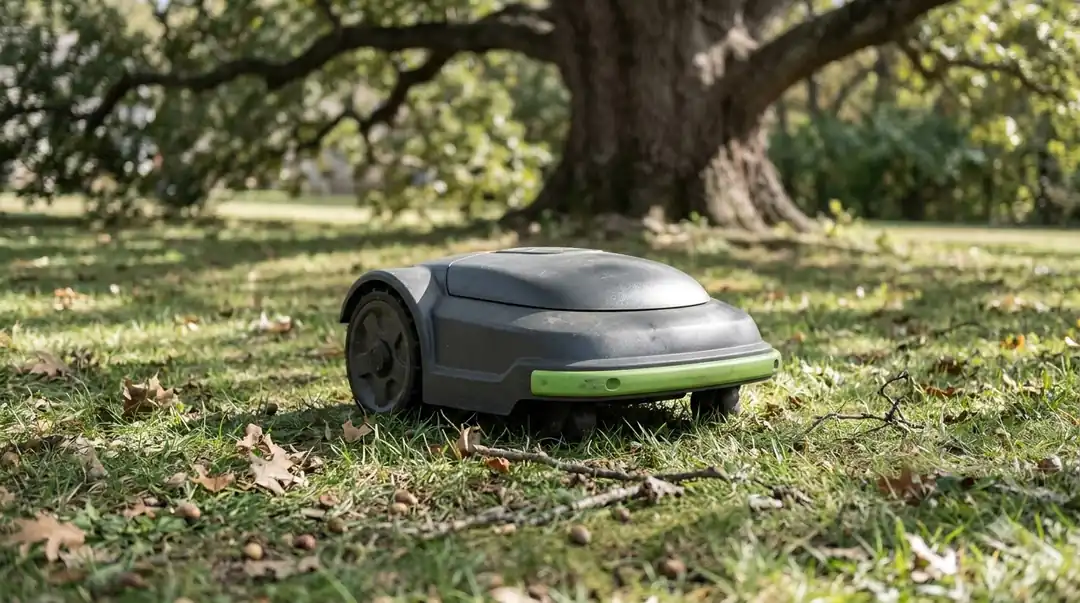
Consumer NZ advises replacing blades every one to two months, inspecting the mower weekly, expecting an annual service, and replacing the battery every few years. Budget for blades and a battery from the start, not just the mower; our page on robot mower total cost of ownership lays out the other running costs.
- Water resistance: IPX6 gives better protection than IPX5, according to Consumer NZ.
- Rain sensor: fewer than half of the models Consumer NZ tested had one.
- Battery: check that you can replace it yourself and that replacements are sold locally at a reasonable price.
What to check before you buy the best robot lawn mower under $800
Five checks cover most of the decisions a buyer faces, and each one uses a number or condition from the sources above.
- Measure grass area. Leave out driveways, patios, and flower beds, then compare with the listed coverage.
- Check the slope rating. Compare it with your steepest grade and ask whether the figure is for the working area or the boundary.
- Choose the boundary type. Match wire or wire-free to your satellite reception and how often your layout changes.
- Confirm the weather rating. Look for IPX6 and whether a rain sensor is included.
- Confirm parts and battery. Check that replacement blades and batteries are available in your area before you buy.
Frequently asked questions
Does a robot mower under $800 cover a full acre?
In the pages we read, models at this price were listed at up to about 0.25 acre. A full acre usually needs a higher-priced model, so compare the coverage rating with your measured grass area.
Can a robot mower under $800 handle a steep hill?
Anthbot suggests entry-level models suit mild slopes of 15 to 25 degrees. Check the slope rating against your steepest grade before buying.
Are the prices on these listings current?
The brand pages we read listed prices without a current date, and sale prices can change. Confirm the price with the seller before you buy.
Is a wire-free robot mower always better?
Not always. Consumer NZ says boundary wire can suit small properties, poor satellite reception, and fixed zones, while wire-free suits good reception and changing layouts.
Sources
- Consumer NZ, robot lawn mower buying guide (updated March 2026) (consumer organization): tested area range, slope test angle, IPX rating, blade and battery upkeep, rain sensor count.
- Anthbot, how to choose the right robot lawn mower (manufacturer): lawn area rule, entry-level slope range, wire vs wire-free trade-offs, RTK and vision limits, listed prices and coverage.
- Mammotion, best robot lawn mower under 1000 (comparison page) (manufacturer comparison): Worx WR165 price and coverage, its listed limits.
- Sunseeker, best budget robot lawn mower (comparison table dated 12/11/2025) (manufacturer comparison): Worx Landroid Vision WR208, Segway Navimow i110, Sunseeker Elite X3 Gen 2 specs.
 Up next6 min readBest Robot MowersBest Wire-Free Robot Mower Under $800: What the Price BuysUpdated Nov 14, 2026
 9 min readBest Robot MowersBest Robot Lawn Mower for 3 Acres: What the Ratings Really CoverUpdated Nov 11, 2026
 8 min readBest Robot MowersBest Robot Lawn Mower Under $5000: What to Check Before You BuyUpdated Nov 12, 2026
 8 min readBest Robot MowersBest Robot Lawn Mower Under $1500: What to Check FirstUpdated Nov 12, 2026
 9 min readBest Robot MowersBest Robot Lawn Mower Under $700: What to Check Before You BuyUpdated Nov 12, 2026
 7 min readBest Robot MowersBest Robot Lawn Mower Under $3000: What to Check Before You BuyUpdated Nov 14, 2026