

The best reflective safety stickers for night-mowing robot mowers are outdoor-rated microprismatic vinyl decals (ASTM D4956 Type IV or Type XI) cut into low-profile strips that sit clear of cameras, radar domes, and bumper seams. Unlike standard decorative graphics or glass-bead tapes, prismatic films bounce headlights and porch lights straight back to the source from wide angles without draining battery power. Choosing flexible, pressure-sensitive sheeting ensures the stickers stay bonded to curved plastic shells through wet grass, sprinkler cycles, and evening dew.
The short answer
- Best material grade: Microprismatic retroreflective sheeting (ASTM D4956 Type IV High Intensity Prismatic or Type XI Diamond Grade) returns dramatically more light than basic glass-bead Type I engineer grade film.
- Best colors for yards: High-contrast white, fluorescent yellow-green, or alternating red-and-white conspicuity stripes stand out cleanly against dark turf and pavement.
- Adhesive requirement: Look for outdoor Class 1 pressure-sensitive acrylic adhesive rated for plastic substrates and wet exposure rather than indoor craft vinyl.
- Critical placement rule: Never cover AI vision camera lenses, infrared emitters, LiDAR windows, ultrasonic transceivers, or the floating body-to-chassis seam.
- Maintenance habit: Wipe sticker faces with a damp microfiber cloth during routine blade checks so grass sap and mud do not block the microprisms.
Why night-mowing robot mowers need retroreflective decals
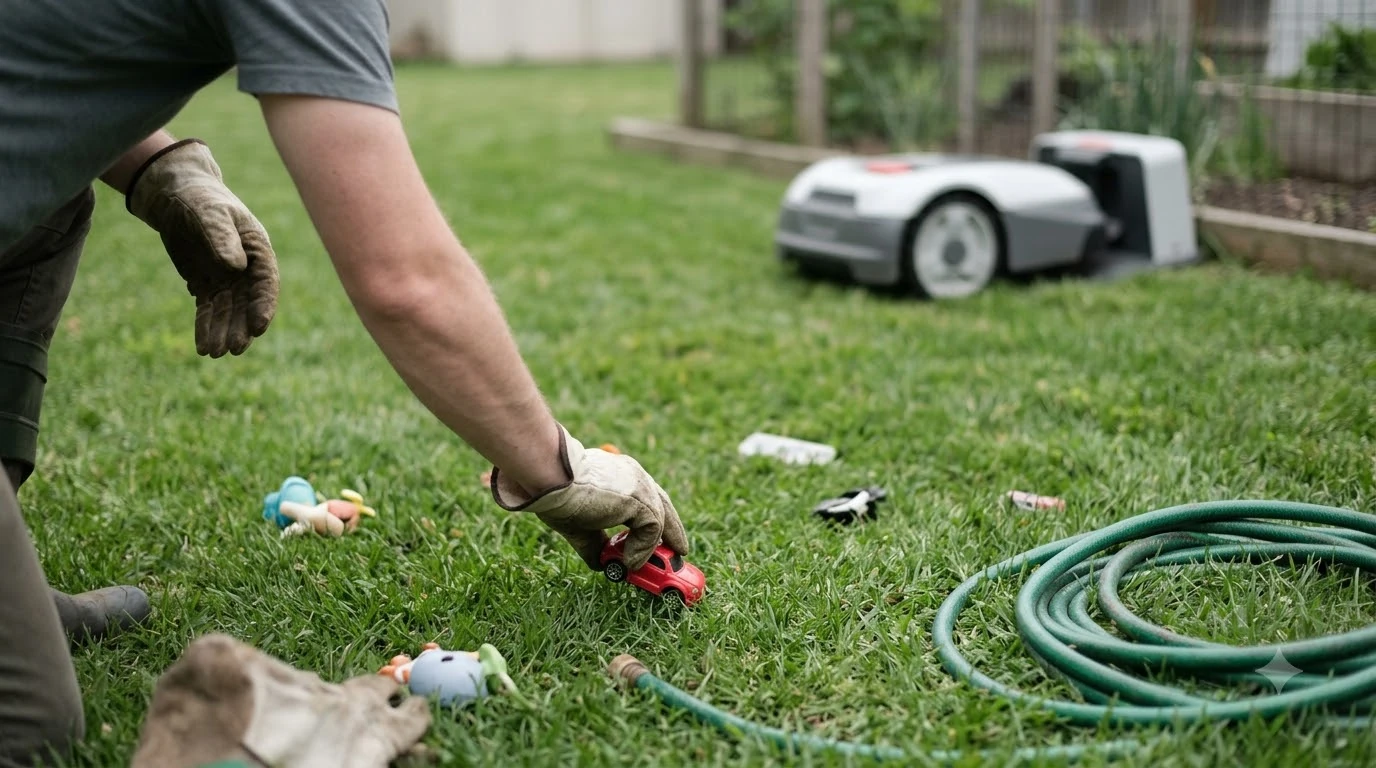
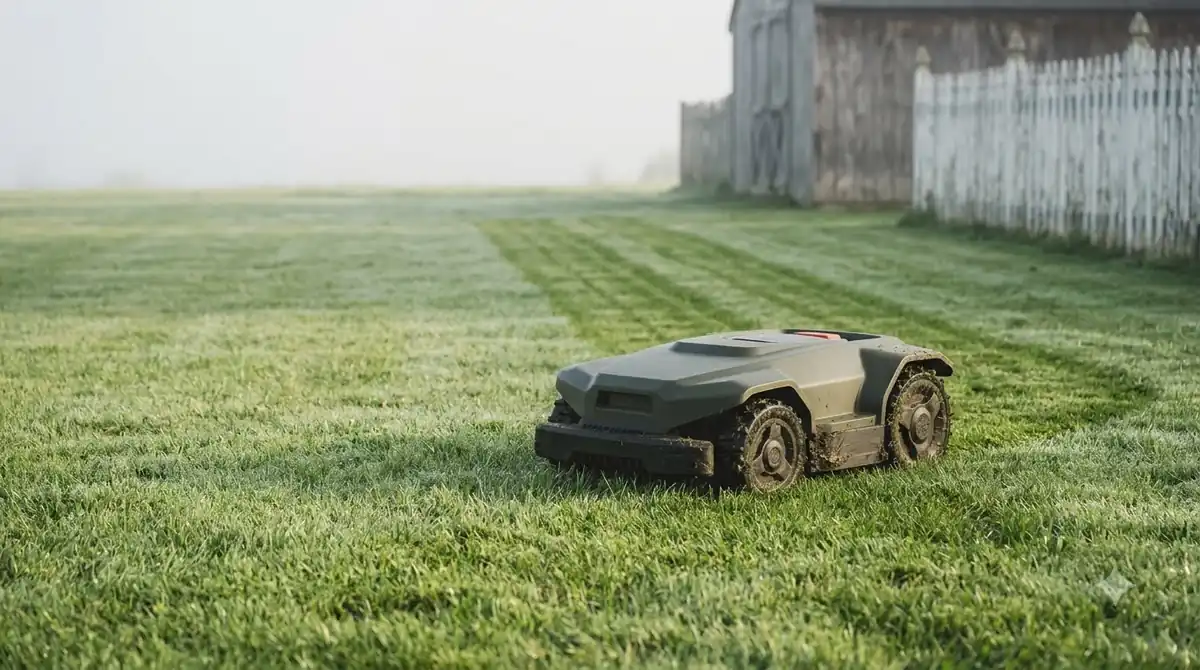
Low-profile robotic mowers sit just inches above the turf in dark chassis colors, making them nearly invisible to backing vehicles, delivery drivers, and evening pedestrians.
While modern machines rely on onboard navigation to stay inside their boundaries, many residential yards require the mower to cross a driveway apron, sidewalk, or shared path to reach a secondary zone. Even when a unit stays strictly on the grass, homeowners walking out to a patio, letting pets outside, or pulling into a dark driveway can easily miss a quiet, dark-gray robot moving across the lawn. Adding retroreflective markings solves the visibility gap without wiring extra LEDs into the mower’s electrical system or voiding chassis seals.
True retroreflective stickers work differently from glossy or metallic decals. Instead of scattering light randomly, microscopic glass beads or cube-corner prisms bounce beam light directly back toward the light source—such as a car’s headlights or a flashlight—making the mower’s perimeter pop in low light while staying subtle during the day.
Types of reflective safety stickers and sheeting grades
Reflective decals fall into distinct performance tiers defined by the Minnesota Department of Transportation Retroreflective Sheeting Identification Guide and ASTM D4956 standards, which govern brightness, durability, and flexibility.
For robot mowers, the optical construction inside the film determines whether a sticker actually catches a driver’s eye at an oblique driveway angle or only shines when hit dead-on. Basic glass-bead films cost less and conform easily to tight curves, while microprismatic films pack tiny pyramid-shaped prisms that deliver far higher nighttime luminance and wider observation angles.
| Sheeting type | ASTM classification | Optical construction | Best use on a robot mower |
|---|---|---|---|
| Engineer Grade | ASTM D4956 Type I | Enclosed glass beads | Tightly curved nose cones and custom die-cut shapes where high flexibility matters most |
| High Intensity Prismatic | ASTM D4956 Type III / IV | Encapsulated microprisms | All-around side skirts, rear fenders, and top deck borders for strong driveway visibility |
| Diamond Grade | ASTM D4956 Type XI | Full-cube microprisms | Maximum long-distance and wide-angle visibility for mowers crossing streets or driveways |
| DOT Conspicuity Tape | FMVSS 108 / DOT-C2 | Alternating red/white prismatic | Flat or gently curved rear bumpers and side rails where high-contrast warning stripes fit |
Standard rigid sign sheeting can fight against a mower’s rounded ABS or polypropylene shell and lift at the corners. Flexible fleet-grade prismatic films—such as 3M Scotchlite 680CR or flexible Type IV conspicuity strips—combine microprismatic brightness with conformable vinyl backings engineered to hug compound curves without edge-lifting.
What to look for when choosing reflective stickers
Selecting reliable stickers comes down to matching adhesive chemistry, weather resistance, and color contrast to an outdoor mower’s harsh operating environment.
- Pressure-sensitive outdoor adhesive (Class 1): According to ASTM D4956 adhesive classifications, Class 1 pressure-sensitive backings bond cleanly to smooth surfaces at room temperature without heat guns or solvents. Avoid low-tack repositionable craft adhesives, which peel quickly when exposed to morning dew and wet grass clippings.
- Sealed edges for wet mowing: Multi-layer prismatic films can trap moisture or dark algae along cut edges if the prism cells are left unsealed. Factory-sealed perimeter strips or solid-layer flexible reflective vinyl prevent water ingress during rain mowing or hose cleanings.
- High-contrast daytime and nighttime colors: White and fluorescent yellow-green provide the highest nighttime retroreflectivity and stand out sharply against dark green grass. Alternating red-and-white DOT-style stripes also create immediate visual recognition near driveways, whereas dark blue or black reflective films offer lower nighttime return.
- Thin, snag-free profile: Stickers thicker than heavy-duty sign aluminum laminates can catch on low bushes, trampoline legs, or chain-link fencing. Look for thin, smooth topcoats that shed twigs and dried grass without peeling.
How to fit reflective stickers without blocking mower sensors
Proper placement keeps your mower visible from all four sides while preserving the clearance and line of sight required by onboard obstacle-avoidance hardware.
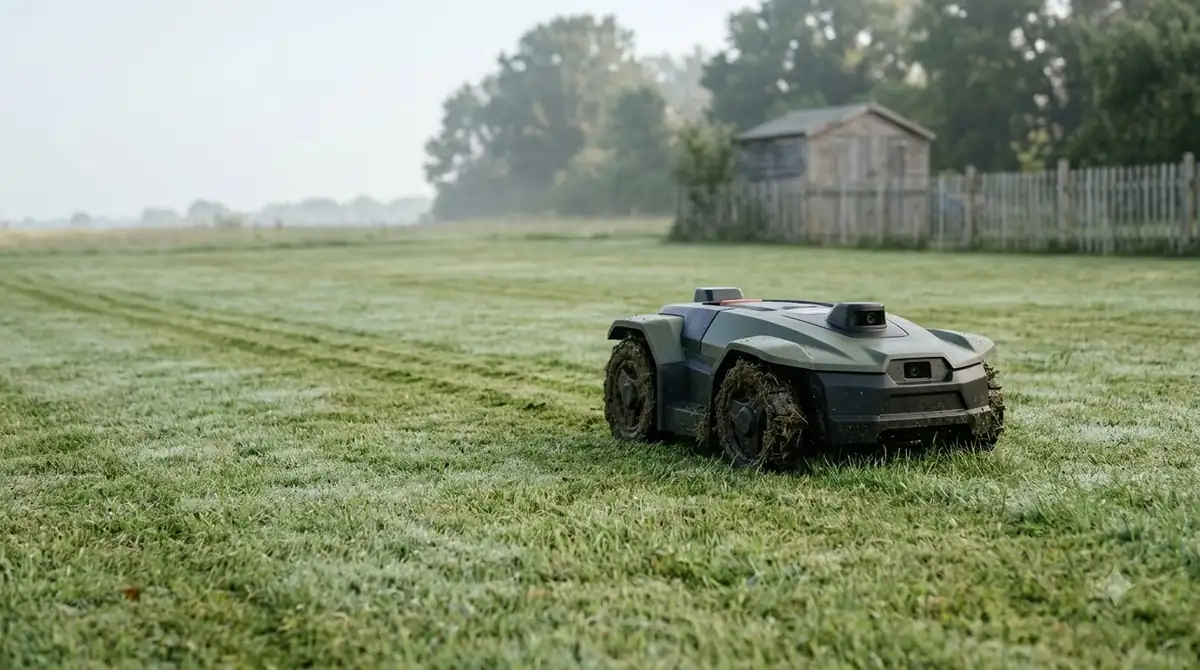
Modern wire-free and perimeter-wire mowers pack sensitive electronics behind their front bumpers and upper shells. As detailed in Husqvarna’s AI vision object detection documentation, front-facing cameras and infrared sensors rely on an unobstructed field of view to identify hazards at night, while many models also house radar arrays or ultrasonic transceivers behind seemingly plain plastic panels. Furthermore, robot mowers use a floating outer shell mounted on pillars so collision sensors register bumps; bridging that gap with a sticker can lock the shell and trigger constant collision errors.
Heads up
Never apply reflective tape across the gap between the movable upper body shell and the lower chassis, and keep stickers well away from front camera lenses, infrared emitters, LiDAR domes, and charging contact plates.
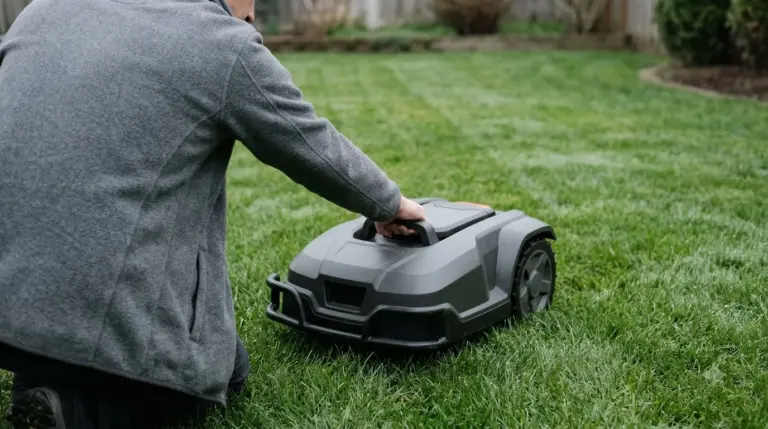
- Power down and check sensor zones. Switch the mower off completely and inspect your operator’s manual to locate ultrasonic sensors, radar modules, rain sensors, and camera windows before cutting any vinyl.
- Wash and degrease the shell. Clean the target plastic panels with mild soap and water to remove grass sap, then wipe with isopropyl alcohol and let the surface dry fully.
- Apply above minimum bonding temperature. Per 3M Diamond Grade Series 4000 application guidelines, apply pressure-sensitive sheeting when the plastic shell is warm—ideally above 65°F (18°C)—so the acrylic adhesive flows into microscopic surface textures.
- Press from center outward and round corners. Trim sharp 90-degree corners with scissors into gentle curves to prevent snagging, then burnish firmly from the center toward the edges with a felt squeegee or soft cloth.
- Leave expansion gaps between strips. If placing multiple strips along a bumper, leave a small gap between pieces rather than overlapping them so thermal expansion in summer sun does not cause buckling.
Routine care and inspection for night-mowing decals
A quick wipe-down during weekly blade inspections keeps retroreflective microprisms shining at full brightness throughout the mowing season.
Grass juice, fine soil dust, and hard-water sprinkler spots form an opaque film over retroreflective surfaces that scatters incoming light before it reaches the prisms. Clean the stickers gently using plain water and a soft microfiber cloth whenever you brush clippings off the deck. Skip abrasive scouring pads, harsh petroleum solvents, and direct high-pressure washer nozzles aimed at sticker seams, as pressurized water can lift vinyl edges from polypropylene mower shells. If a corner begins curling after a season of bush-rubbing, peel the damaged strip off cleanly, wipe away residual adhesive with isopropyl alcohol, and apply a fresh replacement strip.
Frequently asked questions
Can reflective stickers interfere with a robot mower’s cameras or radar?
Stickers placed on the side skirts, rear fenders, or upper deck will not interfere with navigation, provided they stay clear of optical lenses, infrared emitters, LiDAR domes, and radar windows. Never place reflective tape directly adjacent to a front camera or infrared illuminator, where stray glare could wash out nighttime obstacle detection.
Is DOT trailer conspicuity tape good for a robot lawn mower?
Yes, DOT-C2 conspicuity tape works well on flat or gently curved mower bumpers because it uses bright microprismatic sheeting designed for vehicle headlights. For tight curves or rounded domes, choose a flexible fleet-grade reflective vinyl so the edges do not lift over time.
What color reflective sticker is easiest to see on grass at night?
White and fluorescent yellow-green offer the highest retroreflective brightness and contrast sharply against dark turf and asphalt driveways. Alternating red-and-white stripes are also effective for alerting drivers near driveway crossings.
How do I remove old reflective stickers without scratching my mower’s plastic shell?
Warm the sticker gently with a hair dryer on a low setting to soften the acrylic adhesive, then peel it back slowly at a shallow angle. Remove any leftover adhesive residue using isopropyl alcohol or a citrus-based adhesive remover safe for automotive plastics.
Sources
- Retroreflective Sheeting Identification Guide (Minnesota Department of Transportation): Used for ASTM D4956 sheeting types, optical constructions, and adhesive backing classifications.
- 3M Diamond Grade DG3 Reflective Sheeting Series 4000 Product Bulletin (3M): Used for minimum surface application temperatures, butt-splicing spacing, and plastic substrate preparation rules.
- Object detection and avoidance with AI vision technology (Husqvarna): Used for nighttime infrared camera operation and keeping optical sensor lenses unobstructed.
- Collision sensor problem – Automower error message (Husqvarna): Used for verifying how upper body shell movement triggers collision sensors so decals do not bridge body seams.
 Up next8 min readGearBest Soil Moisture Sensor to Pair With Robot Mower: What Actually Controls MowingUpdated Nov 13, 2026
 8 min readGearBest Mowing Strip Pavers for Robot Mower Edges: What to CheckUpdated Nov 13, 2026
 7 min readGearHusqvarna Automower Charging Station: Placement, Clearance and WiringUpdated Nov 13, 2026
 6 min readGearMammotion Wall Mount Kit: Placement, Model Match and ChecksUpdated Nov 13, 2026
 7 min readGearWorx Landroid Charging Station: Placement, Limits, and FixesUpdated Nov 13, 2026
 7 min readGearMammotion Extension Cable: Length, Safety and SetupUpdated Nov 13, 2026