


A robot mower wire break finder tool is a break detector that helps locate a cut in boundary wire without cutting it, but it is one of several options. Husqvarna’s support page says such a tool is useful for finding clean breaks, while partial breaks are harder to find. The other common methods, an AM radio, a multimeter and a halving test, need no dedicated tool, and each has its own limits.
The short answer
- Detector: the purchased option. It works best on clean breaks and avoids cutting the wire.
- Multimeter: measures resistance at the station and at join points, with no cut needed.
- AM radio: a free check that listens for noise changes along the wire.
- Halving test: needs cuts and a new piece of wire, but works with no tool beyond your connectors.
- Prices: none of the sources we read gives a fixed price, so check current listings yourself.
Robot mower wire break finder tool: what it actually detects
A break finder is meant to show where the boundary wire loop is interrupted, so you do not have to cut it into pieces to look. The tool’s main strength is a clean break, where the conductor is fully severed. Husqvarna says it is less effective when the wire is only partly damaged, which is a common case after a shovel or aerator has nicked the cable.
Worx explains that damage often comes from soil aerators, shovels and rakes. Its maintenance wiki also notes that a damaged wire can still carry a signal that is too weak for the mower to read, while a fully cut wire gives no signal at all. Worx Landroid no wire signal explains the symptom side. That difference matters when you choose a method, because a weak signal and a full break call for different tests.
Before you buy anything, confirm the symptom (the Husqvarna case is covered in Husqvarna Automower no loop signal). On Husqvarna models, a blue flashing light with a “No loop signal” error usually points to a broken wire, according to Husqvarna’s wire break guide. Check the station connectors first, since a loose connector can produce the same error.
Break detector: what to check before you buy one
A robot mower wire break finder tool is worth considering if you want to find a clean break without cutting the wire. Worx says these detectors can be bought from electrical stores or online. The Worx page gives no price, so the decision should rest on the specification rather than the cost.
- Break type: it suits clean breaks. If your symptom is a weak signal, expect less from it.
- Manual fit: check whether your mower’s manual names a method for the wire search, such as an ECO mode setting that must be off first.
- Your loop: confirm the tool works with the wire gauge and loop layout you have.
Our reading is that a detector is most useful when the error is sudden and the wire was recently disturbed. If the mower has been working for months with gradual signal loss, a resistance check or a radio walk is more likely to tell the two faults apart.

Multimeter resistance: the check that needs no cut
A multimeter can stand in for a robot mower wire break finder tool when you only need to know whether the loop is intact, because it reads resistance and does not require you to cut the wire first. The Robot Mower guide, a specialist site, says an intact cable reads about 1 ohm per 100 m, and roughly double once joins are added. Treat that as one article’s figure, not a manufacturer specification.
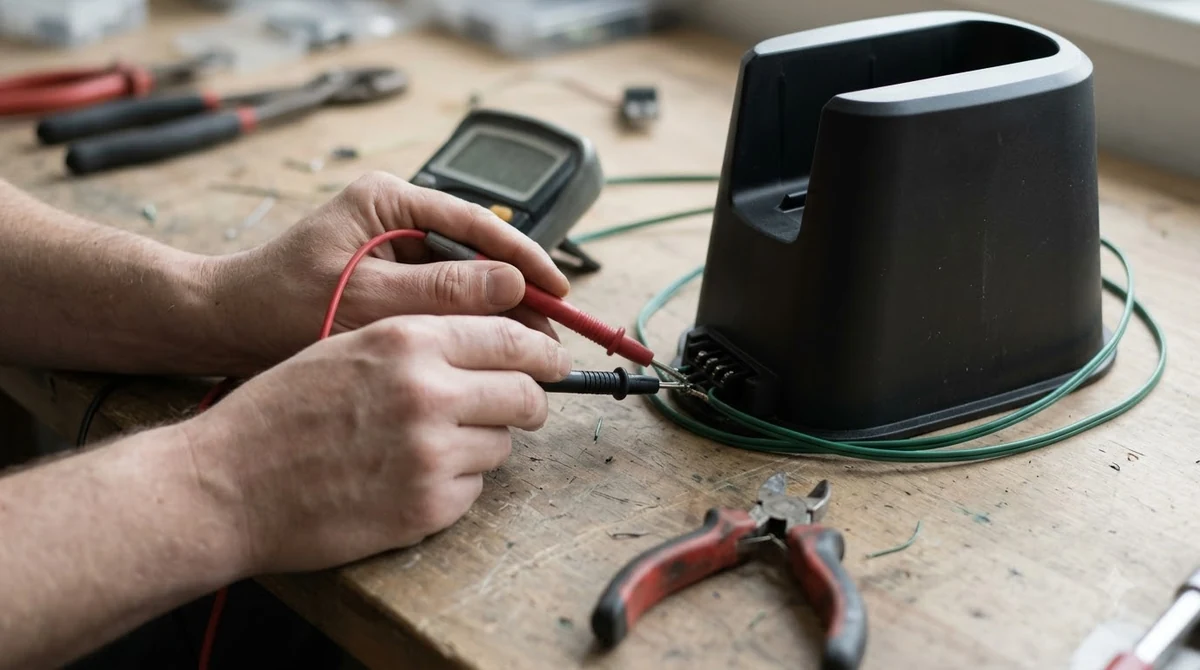
- Disconnect the loop. Take the wire off the charging station before you measure.
- Read the whole loop. Compare the reading with the expected figure for its length and joins.
- Read the break indicator. The same guide gives 1000 ohms or more as the level that points to a break.
- Split at midpoints. Join the wire at midpoints and measure from the station to each point, moving toward the section where resistance jumps.
The same guide says readings in kilo-ohms suggest damaged strands, which can be a warning sign even before the wire fails. This method is useful because it narrows the fault without repeated cuts. It is still only as good as your meter and your connections, so clean the contacts before each reading.
Heads up
A multimeter reads resistance, not distance. The figures above are for the loop as a whole, so the reading tells you that a fault exists and roughly where, not the exact spot in the soil.
AM radio: a free check that listens along the wire
You do not need to buy a robot mower wire break finder tool to start, because an AM radio can locate a wire break, as the loop carries a signal that changes near damage. Worx describes tuning a portable AM radio to about 700 kHz, extending the antenna fully and pointing it at the ground. You then walk along the wire, and the noise rises near the wire and drops off at the damaged spot.
The limit is that you must walk the full path, and nearby sources can add noise. Our reading is that the radio is a slow but free first check, best used on a short, accessible section. It cannot tell you the size of the damage, so a repair still needs the coupler steps covered in the guide to finding a break in robot mower wire, and a boundary wire repair kit covers the parts.
Halving test: when cutting is the only option
The halving test is the method that needs cuts, so it suits cases where the other checks did not settle the fault. Husqvarna describes it as splitting the boundary wire into halves until the damaged section is found. Each test adds a joint, and each joint needs a proper coupler or a sealed connector such as waterproof repair connectors and burial later.
Husqvarna’s support page describes the same routine on its Automower systems. Disconnect the suspect wire, join a new wire to a free slot, cut the suspect section at its midpoint and reconnect. A solid green lamp means the break is in the section with the disconnected end. When the suspect section is short, Husqvarna notes that replacing it can be quicker than locating the exact cut.
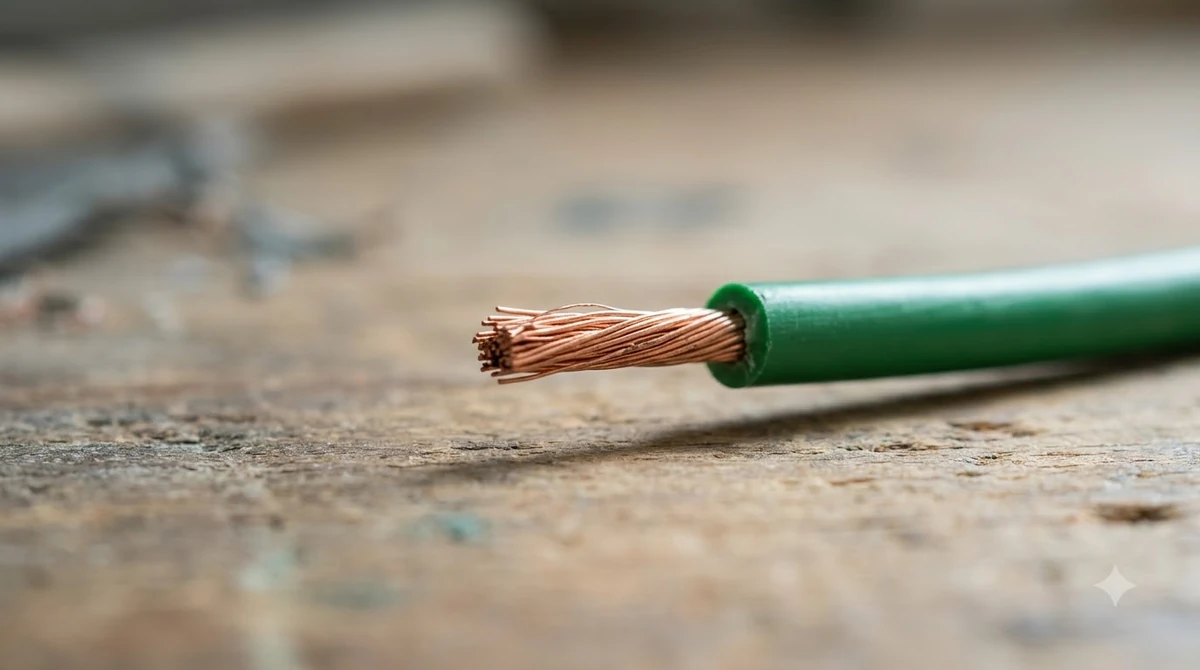
If you do repair, Husqvarna advises trimming about 60 cm (2 feet) from each end of the damaged wire and inserting both ends into an original Automower coupler. Press the connection firmly, then bury the exposed wire and coupler or secure them with staples. The steps are Husqvarna’s own, so your model’s manual may differ.
Comparison: which method fits which fault
The four methods differ mainly in whether they cut the wire and whether they catch partial breaks. Use the table to match your symptom to a method before you buy a tool or cut anything.
| Method | Needs a purchase | Cuts the wire | Partial break | Main limit |
|---|---|---|---|---|
| Break detector | Yes, from a store or online | No | Less effective | Clean breaks work best |
| Multimeter | Yes | No | Resistance can show it | Figures come from one guide |
| AM radio | No extra tool | No | Noise drop shows damage | Slow, and walking the full path |
| Halving test | No | Yes, one cut per test | Narrows to a short section | Each cut adds a joint |
When you can skip buying a tool
You can often skip a robot mower wire break finder tool if the mower and the charging station still work and the damage is in one easy section. The mower’s own error and lamp readings come first, because they cost nothing. A tool helps most when you have several suspect sections and the wire runs under beds, paths or pavers where digging is hard.
- Check the station and connectors. Many faults are not in the wire at all.
- Try the radio on an open section. It costs nothing and needs no cuts.
- Use a meter if you have one. Compare readings with the figures you have verified.
What the sources do not tell you is how often a detector finds a partial break in real yards. Husqvarna says it is less effective there, but it gives no rate. Check the manual for your model before you rely on any single method.
Frequently asked questions
Is a robot mower wire break finder tool better than a multimeter?
Neither is better in every case. A detector is useful for clean breaks without cutting, according to Husqvarna. A multimeter reads the loop’s resistance and can point to a fault without cutting, but its figures come from a single guide, so compare them with your manual.
Can you find a break in robot mower wire without buying anything?
Yes, an AM radio method is free, according to Worx. You tune a portable radio to about 700 kHz, extend the antenna, and walk the wire, listening for noise that rises near the wire and drops at the damage.
Does a damaged robot mower wire always stop working?
No. Worx says a damaged wire can still carry a signal that is too weak for the mower to read, while a fully cut wire gives no signal. Partial damage can therefore cause odd behavior before it causes a full loop error.
Should you cut the wire to find a break?
Only if the non-cutting checks did not settle the fault. Husqvarna describes splitting the wire in half until the damaged section is found, and notes that replacing a short suspect section can be quicker. Each cut adds a joint that needs a coupler and burial.
Sources
- Husqvarna support page on wire breaks (Husqvarna): wire break detector, halving test, ECO mode, repair length and coupler.
- Worx Landroid maintenance wiki: locate a damaged spot in the boundary wire (Worx): damage causes, AM radio method at about 700 kHz, and where detectors are sold.
- The Robot Mower guide (specialist site): resistance figures and the 1000 ohm break indicator, used as a single-source reference.
 Up next9 min readGearHow to Find a Break in Robot Mower WireUpdated Nov 19, 2026
 7 min readGearRobot Mower Guide Wire Installation Tool: What You NeedUpdated Nov 20, 2026
 7 min readGearRobot Mower Wire Stapler Tool: Pegs, Tension and Staple DepthUpdated Nov 20, 2026
 9 min readGearHow to Change Dreame Blades: Steps, Timing and ToolsUpdated Nov 19, 2026
 6 min readGearRobot Mower Lawn Edge Trimmer Companion Tool: How to ChooseUpdated Nov 20, 2026
 8 min readGearBest Lawn Edging to Bury Robot Mower Wire: What Works and What to AvoidUpdated Nov 14, 2026