
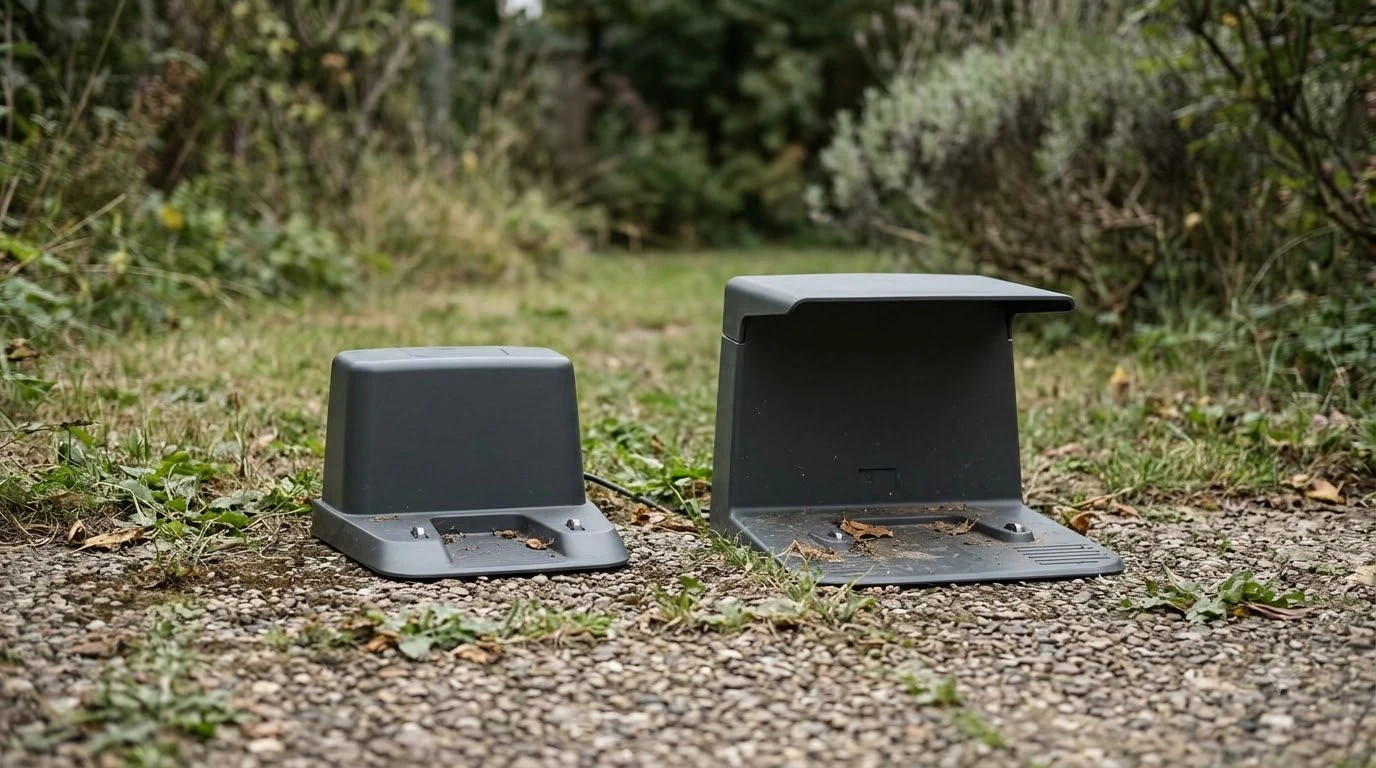

For an RTK base station power cable outdoor, use a cord labeled for outdoor use, plug it into a GFCI-protected outlet, and keep the adapter dry and off the ground. The safety guidance we could read treats the cord, the outlet and the circuit as separate checks. As of 2026-11-10, the rules below come from federal electrical safety notes and base station and charger manuals, and they do not give a rated cord length for any specific model.
The short answer
- Cord: use only extension cords labeled for outdoor use, and only on a temporary basis, according to CPSC.
- Outlet: use a GFCI-protected outdoor outlet, or a portable GFCI where the outlet has none.
- Circuit: the IGS guidance recommends a dedicated circuit and surge protection for a continuous power source.
- Adapter: keep the power supply out of enclosed boxes, and off the ground where water can reach it.
- Length: we did not find a rated cable length for an RTK base station, so check your station’s manual before adding any extension.
Heads up
This is general information from published safety guidance, not electrical advice. Have a licensed electrician install or check any outdoor outlet or circuit.
Why an RTK base station power cable outdoor is a safety issue
Electric cords cause a steady number of home fires, and the outdoor power cord for a base station is one of them. The U.S. Consumer Product Safety Commission (CPSC) says about 2,000 residential fires each year are associated with electric cords or plugs, and that these fires usually start because of short circuits, too many products plugged into one cord, and damaged cords. A base station is a device that stays on all season, so the cord and outlet deserve the same care as the receiver itself.
The IGS CORS guidelines make the same point from the reliability side. They say every CORS site “needs to be powered by a continuous and reliable source,” and they describe mains power and solar power as both suitable, depending on the site. Our reading is that a yard base station should be treated as a fixed outdoor electrical installation, not a gadget plugged in for one afternoon.
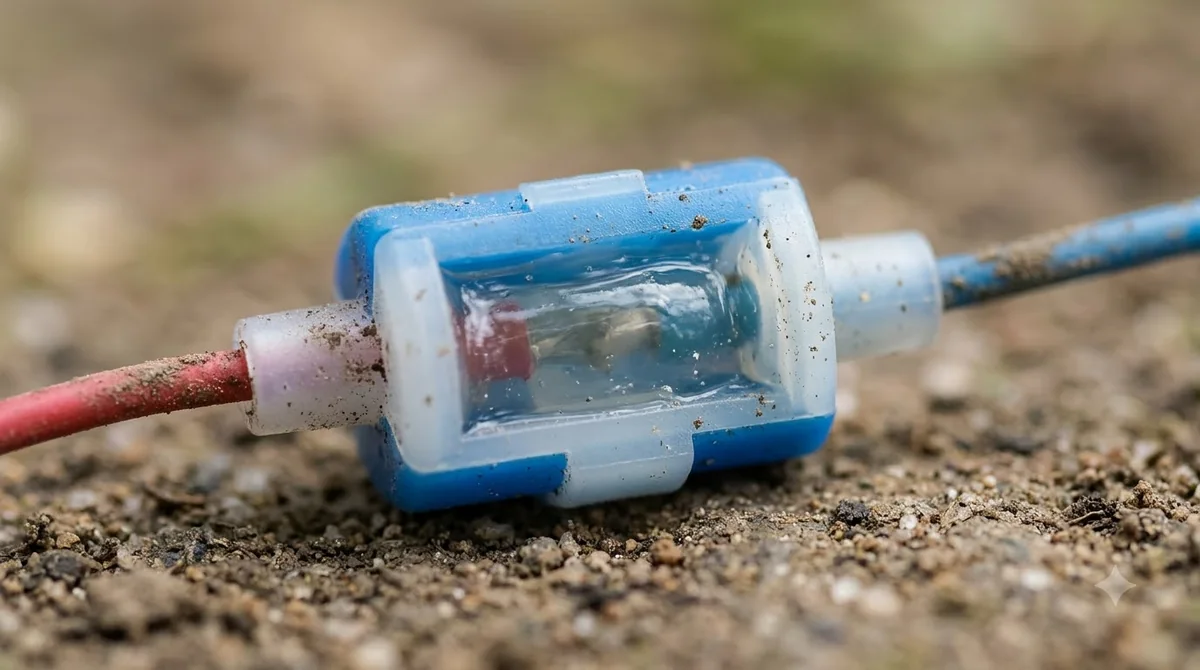
Use an outdoor-rated cord for a short time, not a season
CPSC’s guidance on extension cords is short and specific. When you use outdoor tools and appliances, use only extension cords labeled for outdoor use. The same safety note says to use extension cords only when necessary and only on a temporary basis, and not to overload a cord or power strip.
| Cord check | What the CPSC note says | Our reading for a base station |
|---|---|---|
| Outdoor label | Use only extension cords labeled for outdoor use with outdoor tools and appliances. | Look for the mark on the cord itself before you buy. |
| Wire count | Use only three-wire extension cords for appliances with three-prong plugs. | Match the plug type of the adapter, not the cord’s color or price. |
| Condition | Replace cracked or worn cords. | Check the jacket after every storm and before each season. |
| Duration | Use extension cords only when necessary and only on a temporary basis. | Do not leave an extension running all season. |
Those rules matter more outdoors, where sun, moisture and yard work can wear a cord jacket faster than an indoor run would. A cord that fits the adapter but is not labeled for outdoor use is the wrong cord for this job.
Use a GFCI outlet, or a portable GFCI
A ground-fault circuit interrupter (GFCI) cuts power when it senses a current leak, and CPSC’s GFCI fact sheet describes detection of a current difference as small as 0.006 A. CPSC also notes that the National Electrical Code has required GFCI protection on outdoor receptacles since 1973. Before you connect the station, confirm that the outlet has this protection, and test it with the outlet’s test button.
If the outlet near the station has no GFCI, CPSC recommends a portable GFCI for garden equipment, which gives protection where the circuit has none. Robomow’s charging station guide says an outdoor socket should be suitable and weatherproof for the device to work well, and the same test applies to a base station’s outlet. A GFCI outlet cover for a robot mower is one way to keep the plug itself covered.
Give the base station its own circuit and surge protection
The IGS CORS power guidance recommends a dedicated mains circuit so that other equipment’s loads do not trip the breakers or residual current devices that protect the receiver. The same page recommends outlets installed to guard against accidental or deliberate disconnection, and surge protection against power spikes.
IGS also describes a UPS as a short-term source that covers the switchover to a longer backup, and a power distribution unit (PDU) as a recommended way to condition the supply and switch between sources. Our reading is that a UPS helps most where outages are common, since it keeps the station running through a short interruption. Surge protection is best built into the circuit or outlet. Do not rely on a power strip or an extension cord to provide it, because the charger guidance below says not to.
Keep the adapter open to air and dry
Husqvarna’s charging station guide says not to put the power supply in an enclosed box, so the power supply needs open sides and airflow. Our reading is that the same rule applies to a base station adapter, because a closed box can trap the heat the supply produces and hold moisture against the connections. Keep the adapter in open air, under cover if you can, and off the ground where splashing water or sprinkler spray can reach it.
Mammotion’s install guide for its RTK reference station shows a wall-mounted setup in which the power supply is plugged into a wall socket. For a fixed station, a weatherproof outlet on the wall or post is the normal arrangement, and the adapter should hang or sit where the outlet is protected.
Extension cords: temporary only, and the charger caveat
An extension cord is a short-term fix, not a plan for a station that runs all season. The clearest warning we found comes from a mower charging station, not a base station, but the logic carries over.
| Setup | What the source says | Our reading |
|---|---|---|
| Mower charging station (Toro installation manual) | Do not plug the charging station into a power strip or an extension cord. | Treat any fixed outdoor device the same way and avoid a permanent extension. |
| Wall-mounted RTK station (Mammotion install guide) | The power supply is plugged into a wall socket. | Use a fixed outlet close enough that no extension is needed. |
| Any extension cord (CPSC) | Use only outdoor-labeled cords, and only temporarily. | Do not leave one running through the season. |
If the outlet is too far from the station, the better fix is an outlet closer to the station, installed by a licensed electrician, rather than a longer cord. Moving the station is a second option, but check the antenna sky view and the manual before you do. Our guide to robot mower charging station power requirements covers the same outlet and cord limits for chargers.
Plan the route so the cord stays dry
Keeping an RTK base station power cable outdoor dry is mostly a matter of placement and routing. Mammotion’s guide says to place the station in an open area that receives satellite signals, on flat ground or on an unobstructed wall or roof. The power route should follow the same logic: keep it clear of puddles, mower paths and foot traffic.
- Our reading: raise the adapter off the ground so water runs away from the connections.
- Route the cord so it does not lie in standing water or where a mower wheel or a foot can crush it.
- Recheck the cord jacket after storms, and replace it if it cracks or wears through.
Our reading is that water and worn jackets are the two risks to check first for any outdoor base station cord. CPSC’s note says specifically to replace cracked or worn cords.
RTK base station power cable outdoor: what to check before first power-on
Check the cord, the outlet, the circuit and the adapter in that order before the first power-on of any RTK base station power cable outdoor setup. The steps below use only the rules from the sources above.
- Confirm the cord label. The cord should be labeled for outdoor use, and three-wire if the plug has three prongs.
- Inspect the jacket. Replace any cord that is cracked or worn.
- Test the outlet. Confirm the outlet has GFCI protection, or add a portable GFCI.
- Check the circuit. Ask whether the outlet shares a circuit with pumps or tools that trip breakers. IGS recommends a dedicated circuit.
- Place the adapter. Keep it in open air, off the ground and out of standing water.
- Check the manual. Confirm the cable length and adapter rating for your model, since we could not verify them for RTK base stations.
An RTK base station power cable outdoor should be checked on its own, because antenna cable protection and choosing a spot for the base station are separate questions. If you plan a wall setup, the checks for an RTK antenna wall mount bracket come next, and the full RTK robot mower setup order lists every step.
Frequently asked questions
Can I use an extension cord for an RTK base station outdoors?
Only temporarily, and only a cord labeled for outdoor use, according to CPSC. Toro’s manual tells owners not to plug a mower charging station into an extension cord, which is a useful guide for a base station too. A fixed outlet close to the station is the better choice for a season-long setup.
Does an RTK base station need a GFCI outlet?
CPSC says the National Electrical Code has required GFCI protection on outdoor receptacles since 1973. If the outlet has none, CPSC recommends a portable GFCI for outdoor garden equipment. Test the outlet before the first power-on.
Can the power adapter sit outside?
Only where it has airflow and stays dry. Husqvarna advises against enclosing the power supply in a box. Keep the adapter off the ground, out of standing water, and check the manual for its rating.
How long can an RTK base station power cable be?
We did not find a rated cable length in the pages we read. Use the cable the manufacturer supplies, and check the manual before adding any extension.
Sources
- Extension Cords and Power Strips (NSN-09-2) (U.S. Consumer Product Safety Commission): outdoor-labeled cords, temporary use, three-wire cords, cord condition, fire statistics.
- IGS CORS Guidelines: Power and Communications (International GNSS Service): continuous power, dedicated circuit, surge protection, UPS and PDU.
- CPSC GFCI fact sheet (U.S. Consumer Product Safety Commission): 0.006 A detection, NEC GFCI requirement for outdoor receptacles since 1973, portable GFCI for garden equipment.
- Automower charging station: optimal placement guide (Husqvarna): do not enclose the power supply, place the station near an outlet.
- Robomow charging station installation guide (manufacturer): outdoor socket should be suitable and weatherproof.
- Toro Turf Pro installation manual (manufacturer): no power strip or extension cord for the charging station.
- How to install the RTK reference station (Mammotion): open-area placement and wall-mount power supply.
 Up next8 min readGearBest Weatherproof Enclosure for RTK Base Station: 6 Checks Before You BuyUpdated Nov 11, 2026
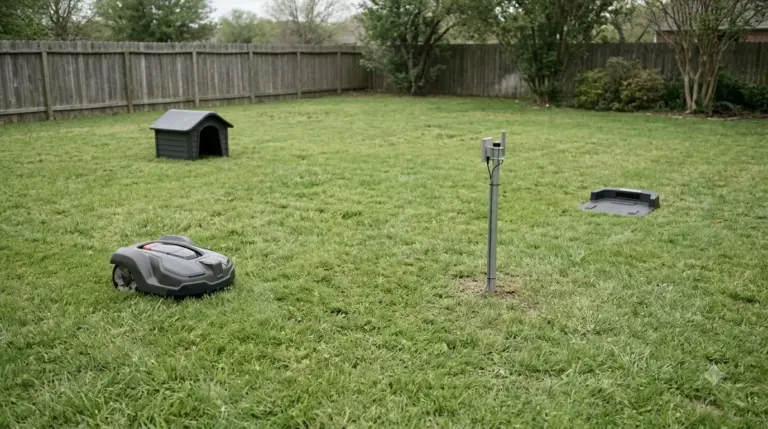 8 min readGearWhere to Mount an RTK Base Station for a Robot MowerUpdated Nov 11, 2026
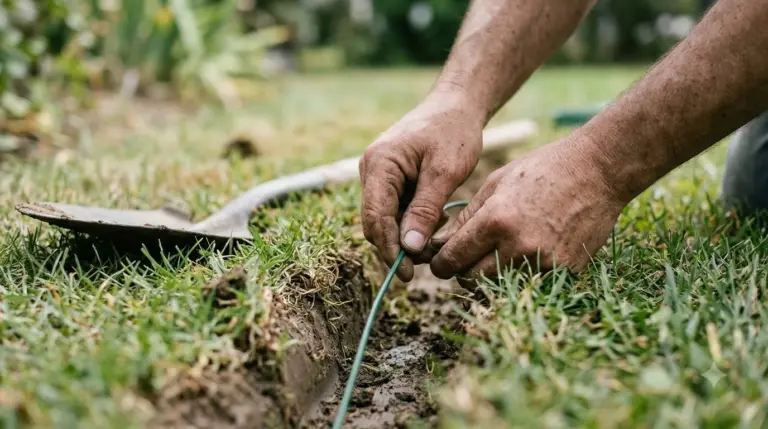 7 min readGearBest Outdoor Cable Protector for Robot Mower: 5 Key ChecksUpdated Nov 11, 2026
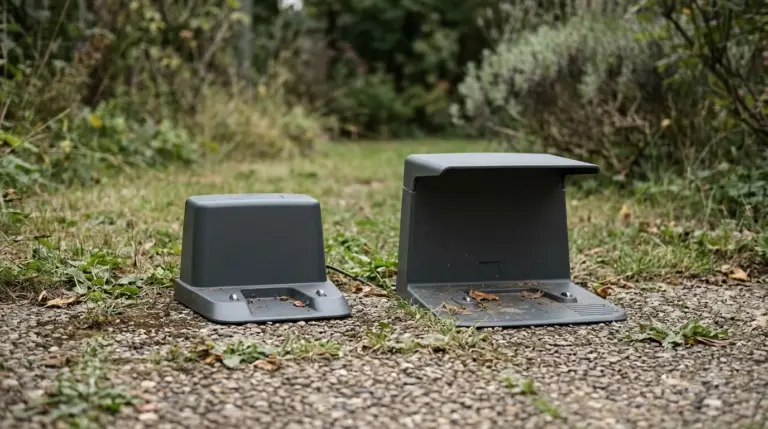 9 min readGearRobot Mower Charging Station Power Requirements ExplainedUpdated Nov 11, 2026
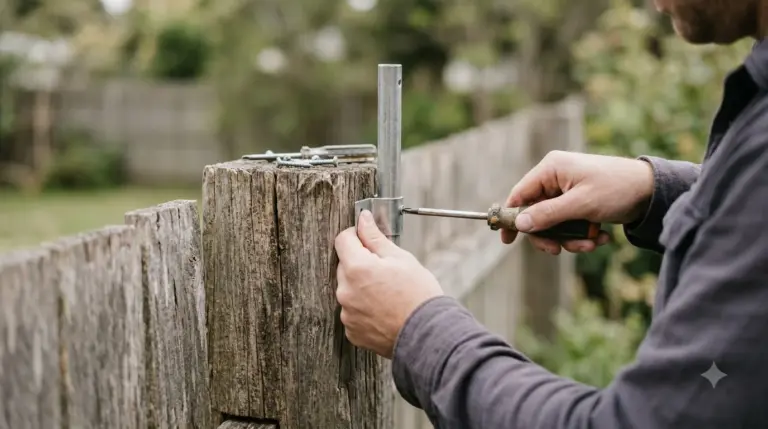 9 min readGearRTK Antenna Wall Mount Bracket: What to Check Before You BuyUpdated Nov 11, 2026
 8 min readGearBest Robot Mower Garage for Hot Sun: What to Check FirstUpdated Nov 11, 2026