
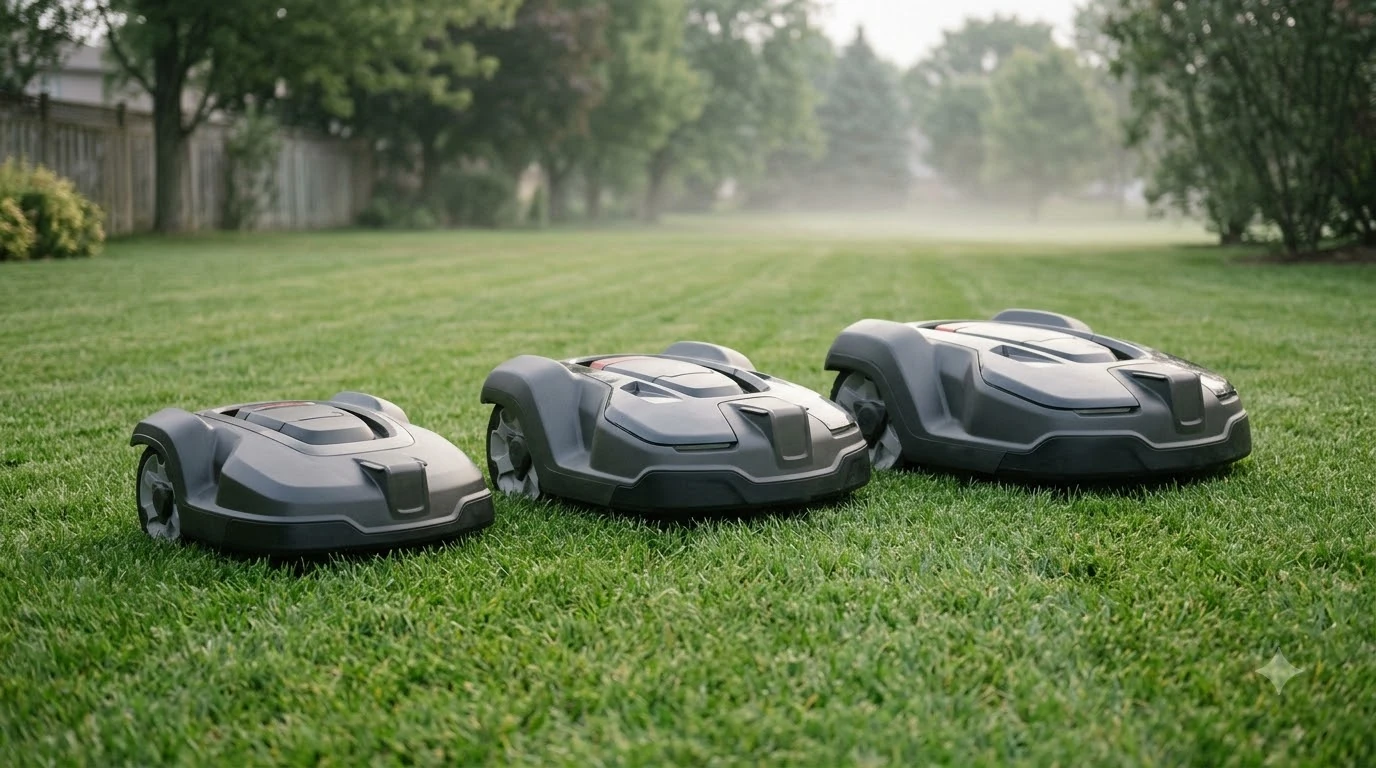

Robot lawn mower vs zero turn mower comes down to lawn size, slope, and how much hands-on time you want. Robot mowers suit smaller lawns you want mowed without a rider, while zero-turns cut faster across flat, open acreage. Product claims below are as of 2026-11-10.
The short answer
- Smaller lawns: a robot lawn mower fits lots up to about 1.2 acres for some models, according to Dreame, and it runs without an operator.
- Flat acreage: a zero-turn is the usual choice for about 1 to 3 acres of mostly flat, open ground, according to Dreame and Sunseeker.
- Steep ground: both types have slope limits that vary by model, so the owner’s manual decides, not a general rule.
- Cost: Ecovacs says robot and ride-on mowers both have a higher upfront cost, and zero-turns cost more than ordinary riding mowers.
How a robot lawn mower and a zero-turn mower differ day to day
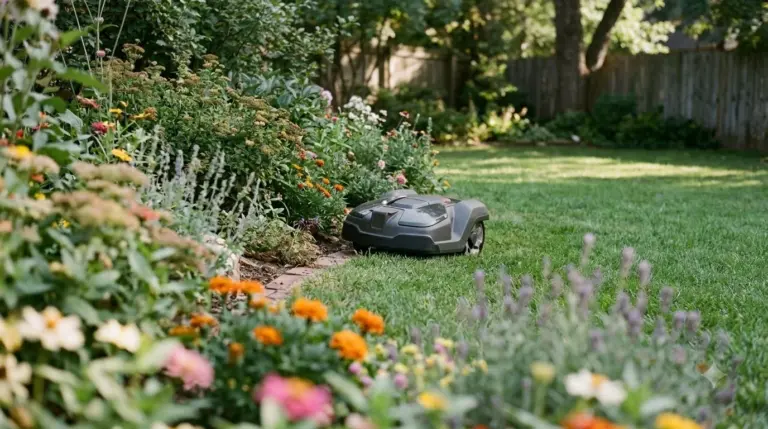
A robot lawn mower works on its own once it is set up, while a zero-turn needs a rider for every session. A robot works in many short sessions, and a zero-turn finishes a large lawn in fewer, longer trips. That trade-off, not the machine’s price, is usually what decides the choice for a homeowner with a regular mowing schedule.
| Factor | Robot lawn mower | Zero-turn mower |
|---|---|---|
| Operator | Runs on its own after setup | Needs a rider for every cut |
| Travel speed | Slower completion speed than ride-ons, according to Mammotion | 6 to 8 mph, according to Dreame |
| Best lawn fit | Smaller lawns, up to about 1.2 acres for some models | Flat, open ground of about 1 to 3 acres |
| Steering | Automatic, with obstacle handling that varies by model | Two handles steer front and rear wheels separately |
The speed gap is real but depends on the yard. Dreame says zero-turns are about 25 to 40 percent quicker on open ground, and the gap narrows to 10 to 20 percent in obstacle-heavy yards. Treat that as a manufacturer’s figure, not an independent test, but it shows why the answer changes with the layout of the lawn.

Lawn size: how many acres each one suits
For a robot lawn mower vs zero turn mower decision, lawn size comes first. Robot mowers cover a wide range of lawn sizes, while zero-turns are usually recommended for larger, flatter lots. Mammotion lists robot coverage from 0.1 to 5 or more acres in its comparison table, and its LUBA 3 AWD covers 0.37 to 1.25 acres. Dreame puts its A3 AWD Pro at 0.5 to 1.2 acres, and recommends zero-turns for about 1 to 3 acres of flat, open ground.
Sunseeker gives a similar threshold for a zero-turn: one acre or more of mostly flat lawn with trees, flower beds, or fences. Husqvarna’s automower buying guide asks for lawn size in square meters, with bands from up to 500 m2 to over 7,500 m2. Check which unit your measurement uses before comparing models, because a figure in acres and one in square meters are easy to mix up. Our guide to choosing a robot mower by lawn size walks through the conversion.
Slopes: robot lawn mower vs zero turn mower on hills
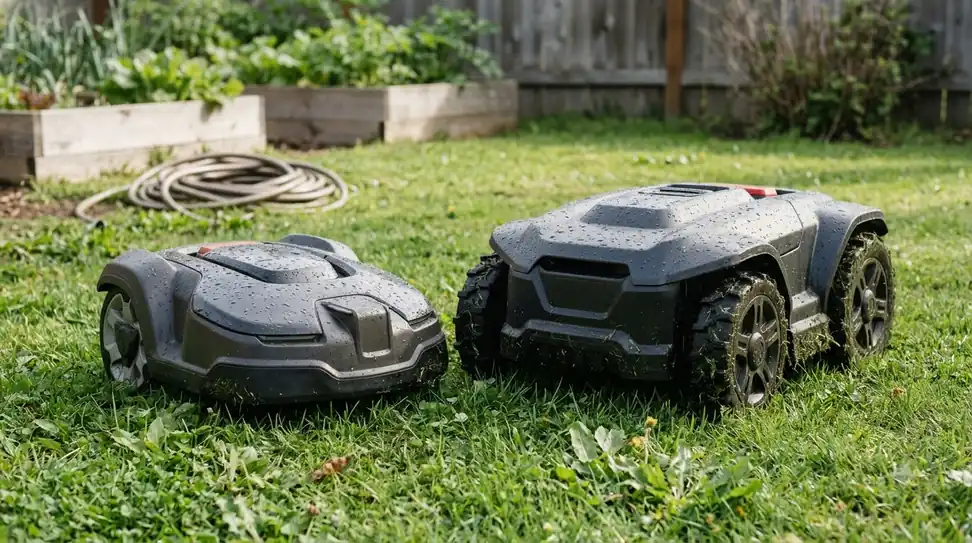
On hills, some robot models claim a higher slope rating than zero-turns, but only for specific models. Mammotion says its all-wheel-drive robots handle slopes up to 80 percent, which it lists as 38.6 degrees. Ecovacs reports a 45 percent result, about 24 degrees, for its GOAT O1000 RTK, and describes that figure as an experimental lab result rather than a field rating.
Zero-turns are rated more conservatively. Dreame lists their slope range at about 10 to 15 percent grade, and its guidance for ride-ons says to avoid inclines steeper than 15 degrees, about 27 percent grade, unless the machine is rated for it.
Sunseeker says zero-turns “do not perform well on steep slopes or uneven ground” and tells owners to follow the manufacturer’s limits. Ecovacs says ride-on mowers generally do best on flat or gently undulating lawns to reduce the risk of overturning, but it adds that zero-turn or all-wheel-drive models are safer options for steeper areas than other ride-ons, so the brands do not fully agree. For the math behind the figures, see robot mower slope ratings explained.
Heads up
Slope specs mix percent and degrees. A 30 degree slope is about 58 percent grade, and a 45 percent grade is about 24 degrees. Convert the figure in the manual before you compare a robot with a zero-turn.
Obstacles, trees, and flower beds
A zero-turn handles tight spots well, though an operator guides it through each one. TopTenReviews explains that zero-turns steer with two handles that control the front and rear wheels independently, which gives them a near-zero turning radius. That helps around beds and fences, though Mammotion lists poor slope handling as the main limitation of zero-turns.
A robot lawn mower handles obstacles through its own sensors and routing, and that behavior differs by model. Dreame’s obstacle figure, the 10 to 20 percent speed gap, shows that clutter cuts into a zero-turn’s advantage. Before buying a robot for a yard with many features, read the model’s obstacle detection and boundary setup, and compare them with the layout of your lawn.
Cost and running effort
Cost is where a robot lawn mower vs zero turn mower comparison gets less clear. Both machine types carry a higher upfront cost. Ecovacs says robot and ride-on mowers both have a higher upfront cost, and lists robots as higher upfront with low operating cost, while ride-ons carry high upfront and running costs. TopTenReviews notes that zero-turns tend to be more expensive than ordinary riding mowers, because their premium features carry a premium price tag.
On the running side, the brand comparisons favor the robot. Ecovacs places robots in the low operating cost column, which fits a battery-powered machine with no fuel or routine servicing to plan around. A zero-turn still makes sense when speed on open ground is the priority. For a fuller cost comparison, read robot mower versus gas mower long-term cost. Price figures in this article are not quoted, because the brands publish ranges that change and do not agree with each other.
What to check before you buy
Before choosing between a robot lawn mower vs zero turn mower, measure the lawn and read the slope rating in the model’s manual. These steps narrow the choice to the machine that fits your yard.
- Measure the lawn. Record the area in acres or square meters, and subtract beds and paths the mower cannot cut.
- Map the slope. Note the steepest grade and whether the slope is sustained or short, using how to measure yard slope if you need a method.
- Check the rating. Find the stated limit in percent or degrees in the manual, and convert it before comparing.
- Count obstacles. Trees, beds, and fences reduce the zero-turn’s speed advantage, so note how many you have.
- Decide on effort. If you want the lawn kept short without a rider, a robot fits. If you want the fastest cuts on open ground, a zero-turn fits. If you are still unsure a robot pays off, read are robot lawn mowers worth it.
Frequently asked questions
Is a robot lawn mower faster than a zero-turn mower?
No, on open ground a zero-turn is usually faster. Dreame says zero-turns are about 25 to 40 percent quicker on open ground, and 10 to 20 percent quicker in obstacle-heavy yards. Mammotion also says robots have a slower completion speed than ride-on mowers.
Can a robot lawn mower handle a steep lawn?
Some models claim high slope ratings. Mammotion lists up to 80 percent with all-wheel drive, while Ecovacs reports a 45 percent result for one model in a lab setting. Check the specific model’s manual before buying for a steep yard.
Which one costs less to run?
The robot usually costs less to run, according to the brand comparisons. Ecovacs lists robots as low operating cost and ride-ons as high upfront and running cost. Zero-turns cost more than ordinary riding mowers, according to TopTenReviews, so check the total cost of ownership for your lawn.
Should a zero-turn mower be used on a steep slope?
Be careful. Sunseeker says zero-turns do not perform well on steep slopes or uneven ground, and it advises following the manufacturer’s slope limits. Dreame lists zero-turn grades of about 10 to 15 percent and advises avoiding inclines steeper than 15 degrees unless the machine is rated for them.
Sources
- Dreame yard care blog (manufacturer): zero-turn size fit, slope range, travel speeds, and the open-ground and obstacle speed figures.
- Husqvarna Automower buying guide (manufacturer): lawn size bands in square meters.
- Ecovacs ride-on vs robot mower guide (manufacturer): terrain suitability, slope lab result, and upfront and running cost statements.
- Mammotion guide to lawn mowers for large yards (manufacturer): robot coverage and slope claims, and the zero-turn steep-slope and completion-speed notes.
- Sunseeker riding mower vs zero-turn guide (manufacturer): zero-turn slope wording and lawn size fit.
- TopTenReviews zero-turn explainer: steering design and price positioning.
 Up next9 min readReviews & CompareCellular vs Wifi Robot Mower: Which Connection Fits Your YardUpdated Nov 11, 2026
 10 min readReviews & CompareWired vs Wireless Robot Mower Pros and Cons: Which Setup Fits Your YardUpdated Nov 11, 2026
 8 min readReviews & CompareHusqvarna Automower 430X NERA vs 450X NERA: Which Model Fits Your LawnUpdated Nov 11, 2026
 7 min readReviews & CompareSunseeker vs Mammotion Robot Mower: Which Fits Your Lawn?Updated Nov 11, 2026
 7 min readReviews & Compareeufy E15 vs eufy E18: Which Robot Mower Fits Your LawnUpdated Nov 11, 2026
 7 min readReviews & CompareDreame A1 Pro vs Dreame A2: Which Robot Mower Fits Your Lawn?Updated Nov 11, 2026