
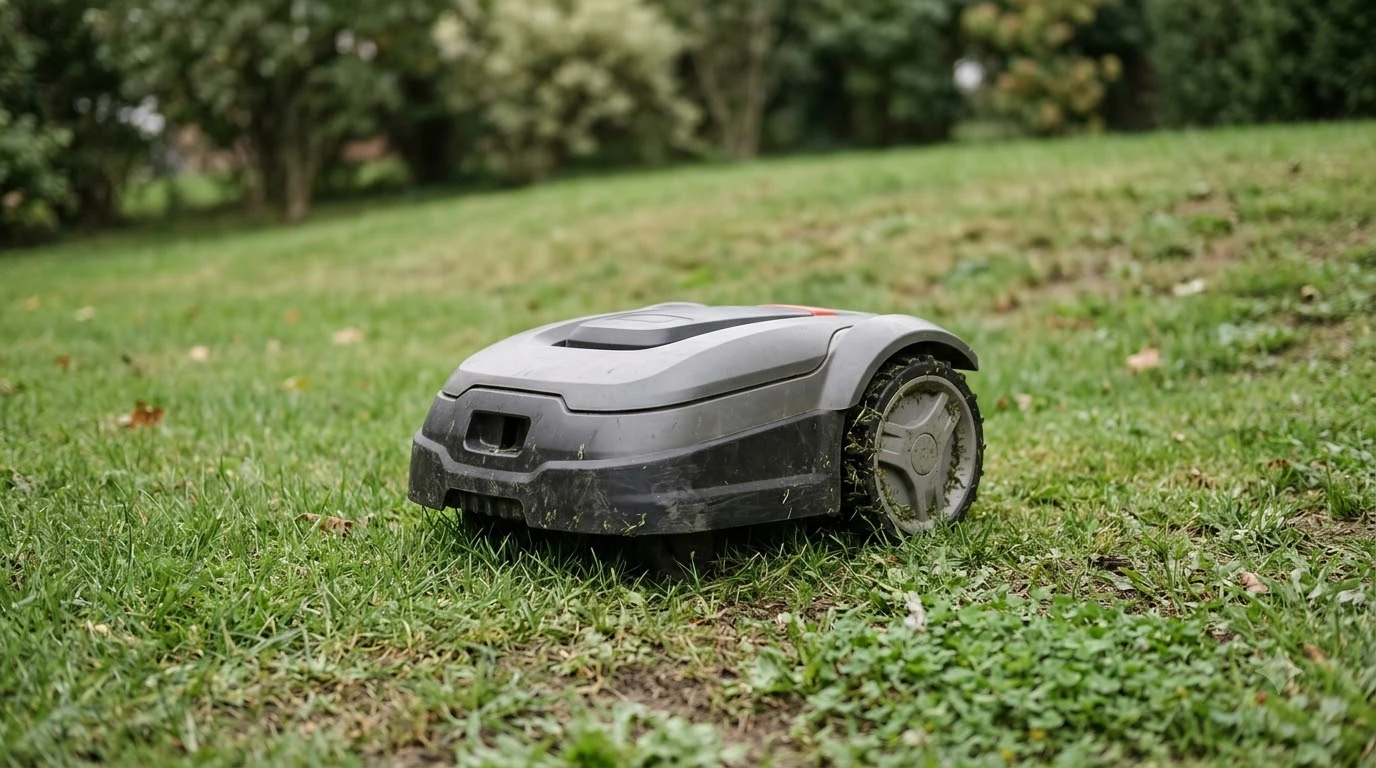

A sunseeker vs mammotion robot mower choice usually comes down to slope, lawn size, and how the mower finds its position. Sunseeker lists its V3 Plus at a 42% maximum incline and 0.25 acre, and its X7 at 0.75 acre with RTK positioning. Mammotion’s Luba 2 AWD is listed for 1,000 to 3,000 square meters, but the slope and cutting-height figures for that model could not be confirmed from its official pages, so this guide flags them instead of guessing.
The short answer
- Lawn size: the Sunseeker X7 is rated for 0.75 acre, the V3 Plus for 0.25 acre, and the Mammotion Luba 2 AWD for 1,000 to 3,000 square meters.
- Slope: the Sunseeker V3 Plus is listed at 42% (22 degrees). Check the exact Mammotion model’s spec page before comparing.
- Positioning: the X7 uses RTK-enhanced GPS with a wireless boundary. Mammotion’s mini and Yuka models rely on LiDAR or camera vision, some with NetRTK.
- Price: prices change with model, region, and sales, so this guide gives no fixed US price for either brand.
- Our reading: pick by yard size, slope, and sky view first. The brand name matters less than the exact model.
Sunseeker vs Mammotion robot mower at a glance
The table below uses only the figures on the official or review pages we could read. Blank cells mean the page did not give that spec, not that the model lacks it.
| Feature | Sunseeker V3 Plus | Sunseeker X7 | Mammotion Luba 2 AWD |
|---|---|---|---|
| Mowing area | 0.25 acre (1,000 m2) | 0.75 acre | 1,000 to 3,000 m2 |
| Maximum incline | 42% (22 degrees) | Not stated in review | Not confirmed |
| Cutting height | 20 to 60 mm | 20 to 100 mm, adjustable in app | Not confirmed |
| Positioning | Not stated | RTK-enhanced GPS with visual navigation | Not stated on the page we read |
| Boundary | Not stated | Wireless, mapped in app | Not stated on the page we read |
In a sunseeker vs mammotion robot mower comparison, the two brands publish different kinds of detail. Sunseeker’s US guide gives slope and height for the V3 Plus, while Mammotion’s homepage gives area ranges and positioning type by model. The sections below walk through each row.
Slope and terrain
The Sunseeker V3 Plus is listed at a maximum incline of 42% (22 degrees) on Sunseeker’s US buyer guide. A slope rating is a ceiling for the mower, not a promise for your lawn, because wet grass and loose soil lower traction well before the rated figure.
Heads up
The same Sunseeker page lists the V3 Plus at 44% (22 degrees) in a comparison table, so the figure is not fully consistent. Check the current spec sheet before you rely on either number.
Mammotion is the gap in this comparison. The Luba 2 AWD listing on the Mammotion homepage gives an area range but no maximum slope, and Mammotion’s product pages were rate-limited when we tried to read them. This guide therefore does not state a Mammotion slope figure. Look for the maximum incline on the exact model’s official page before you compare.
For a sunseeker vs mammotion robot mower slope check, our reading is to measure your steepest section with a level or phone app, then choose a mower whose rated slope leaves some margin above that figure. Our guide to a robot lawn mower for a 45 percent slope covers what steep grades ask of any model.
Lawn area and cutting height
The Sunseeker X7 has the largest rated area of the Sunseeker models on this list, at 0.75 acre. A rating like this is about 3,035 square meters by our arithmetic, which is close to the top of the 1,000 to 3,000 square meter range that Mammotion’s homepage gives for the Luba 2 AWD.
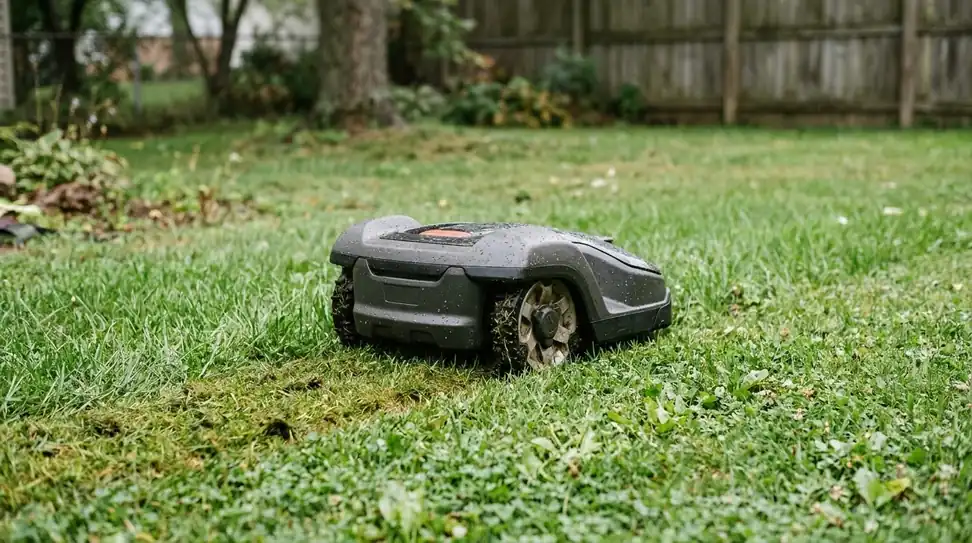
Cutting height is where the two Sunseeker models differ most. The V3 Plus cuts from 20 to 60 mm, while the X7 covers 20 to 100 mm and can be adjusted in the app, according to The Gadgeteer’s X7 review. A wider range matters if you want a shorter cut on open turf and a taller one in shade.
For a sunseeker vs mammotion robot mower decision, lawn size is usually the first filter. Area ratings are a guide, not a timing promise. A complex yard with beds, slopes, and narrow passages takes longer to cover than an open rectangle of the same size.
Positioning and boundary setup
The Sunseeker X7 uses RTK-enhanced GPS, which corrects satellite position using a reference signal and works best with a clear view of the sky. The Gadgeteer review describes a visual navigation system, AONavi, that keeps the X7 mowing when GPS reception is weak. The X7’s boundary is wireless and mapped in the companion app rather than set with a buried wire, a setup we explain in our guide to how robot mowers work without a wire.
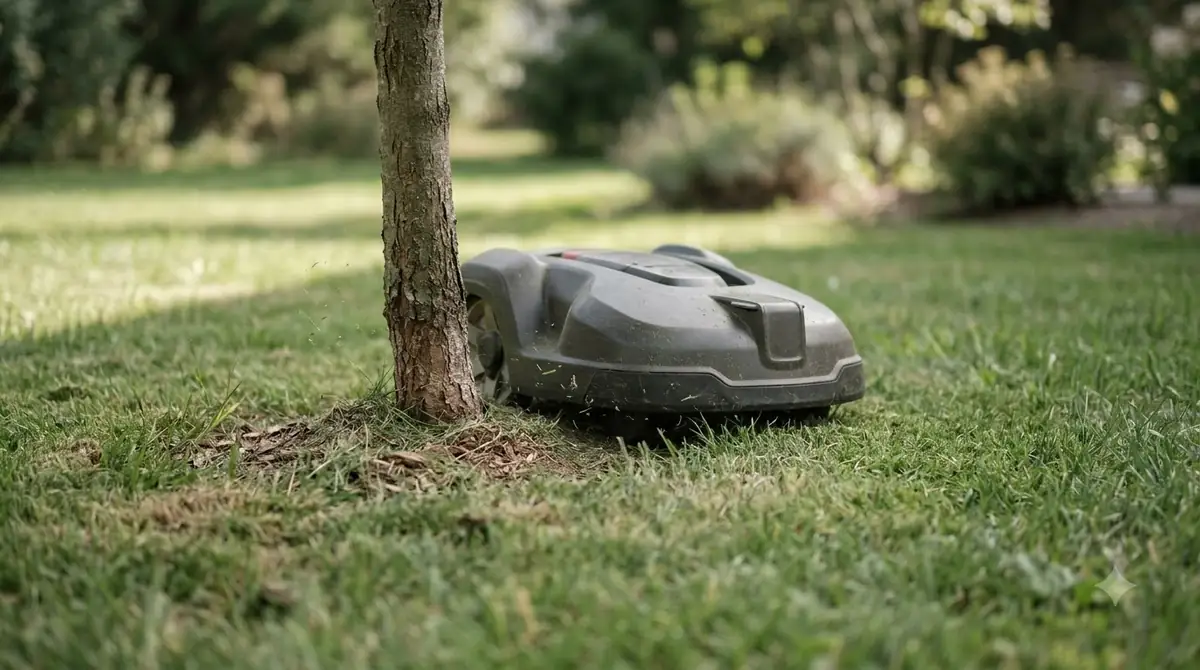
Mammotion’s mini and Yuka listings use different methods. The LUBA mini 2 AWD 1000 is described as tri-camera vision with NetRTK fusion navigation, the LUBA mini 2 AWD 1500 as 360 degree LiDAR, and the YUKA mini 2 1000 as LiDAR with AI vision, per the Mammotion homepage. The LUBA 2 AWD page we read does not name its positioning method.
A wireless boundary avoids digging, but the mower must know where it is to stay inside the mapped zone. A wire boundary does not depend on satellite signal, but it has to be installed. Our reading is to check your yard for tall trees and walls, because that is where GPS-only positioning is most likely to struggle.
Price range and what changes it
A sunseeker vs mammotion robot mower price comparison is unreliable because price moves with the model, the region, and the sale calendar, so this guide does not list a fixed US price for either brand. In an August 2025 review, The Gadgeteer listed the Sunseeker X7 at US$2,299, a figure that is over a year old and may no longer apply.
Compare the same model across the official store and a reputable retailer, and check whether the sale price includes the base station or charging dock. Mammotion’s current prices were not confirmed in this review.
Who each option suits
Based on the published specs, these are our readings rather than test results. Read them as a starting point for your own sunseeker vs mammotion robot mower shortlist.
- Large open yards: the X7’s 0.75 acre rating and RTK positioning fit a big lawn with clear sky.
- Yards under trees or beside walls: look at Mammotion’s LiDAR or vision models, since those rely less on satellite signal. Our RTK versus vision comparison explains the trade-off.
- Small lawns up to about 1,000 square meters: the V3 Plus’s 0.25 acre rating and Mammotion’s mini models both fit this size.
- Steep yards: compare the exact model’s slope rating for both brands, because the brand name does not decide this.
What to check before you buy
- Measure the lawn and its steepest section. Use the area and slope numbers from the model, not the brand average.
- Read the exact model’s spec page. Confirm maximum incline, cutting height, and mowing area.
- Check your sky view. Open sky suits RTK, while tree cover and walls favor LiDAR or vision systems.
- Decide on the boundary. Wireless saves digging, while a wire works without satellite signal.
- Read the warranty and return terms on the seller’s page before you pay.
Frequently asked questions
Which is better, Sunseeker or Mammotion?
In a sunseeker vs mammotion robot mower comparison, neither brand wins on every spec. The better fit depends on lawn size, slope, and whether GPS signal reaches your yard. Compare the exact models you are considering, not the brand name. If MOVA is also on your list, see our MOVA vs Mammotion robot mower comparison.
Do I need RTK for a robot mower?
Not always. RTK works best with a clear view of the sky. LiDAR or vision systems can handle tree cover better, so check the positioning method on the model’s page.
What slope can a robot mower handle?
Use the maximum incline from the official spec page, and keep a margin for wet or uneven ground. Sunseeker lists the V3 Plus at 42%, but the Mammotion slope figure should be checked on its own page.
Is a wireless boundary as reliable as a buried wire?
A wireless boundary avoids digging, but the mower relies on its positioning system to stay inside the mapped area. A buried wire does not depend on satellite signal, so it can suit yards with weak GPS.
Sources
- Best Robot Lawn Mowers (Sunseeker): V3 Plus incline, area, and cutting height.
- Sunseeker Orion X7 review (The Gadgeteer, Lee Shipman, August 2025): X7 area, cutting height, RTK and wireless boundary, and visual navigation.
- Mammotion homepage (Mammotion): Luba 2 AWD area range and positioning type by model.
 Up next8 min readReviews & CompareMammotion LUBA 3 AWD vs Sunseeker X7: Published Specs ComparedUpdated Nov 11, 2026
 9 min readReviews & CompareMammotion Luba 3 AWD vs Ecovacs GOAT A1600 RTK: Which Fits Your Lawn?Updated Nov 11, 2026
 8 min readReviews & CompareSunseeker X7 vs Sunseeker Elite X5: Honest Spec ComparisonUpdated Nov 11, 2026
 9 min readReviews & CompareSunseeker X7 Review: Specs, Slope, Shade and SetupUpdated Nov 11, 2026
 8 min readReviews & CompareSunseeker Elite X5 Review: Specs, Versions and LimitsUpdated Nov 11, 2026
 7 min readReviews & Compareeufy E15 vs eufy E18: Which Robot Mower Fits Your LawnUpdated Nov 11, 2026