
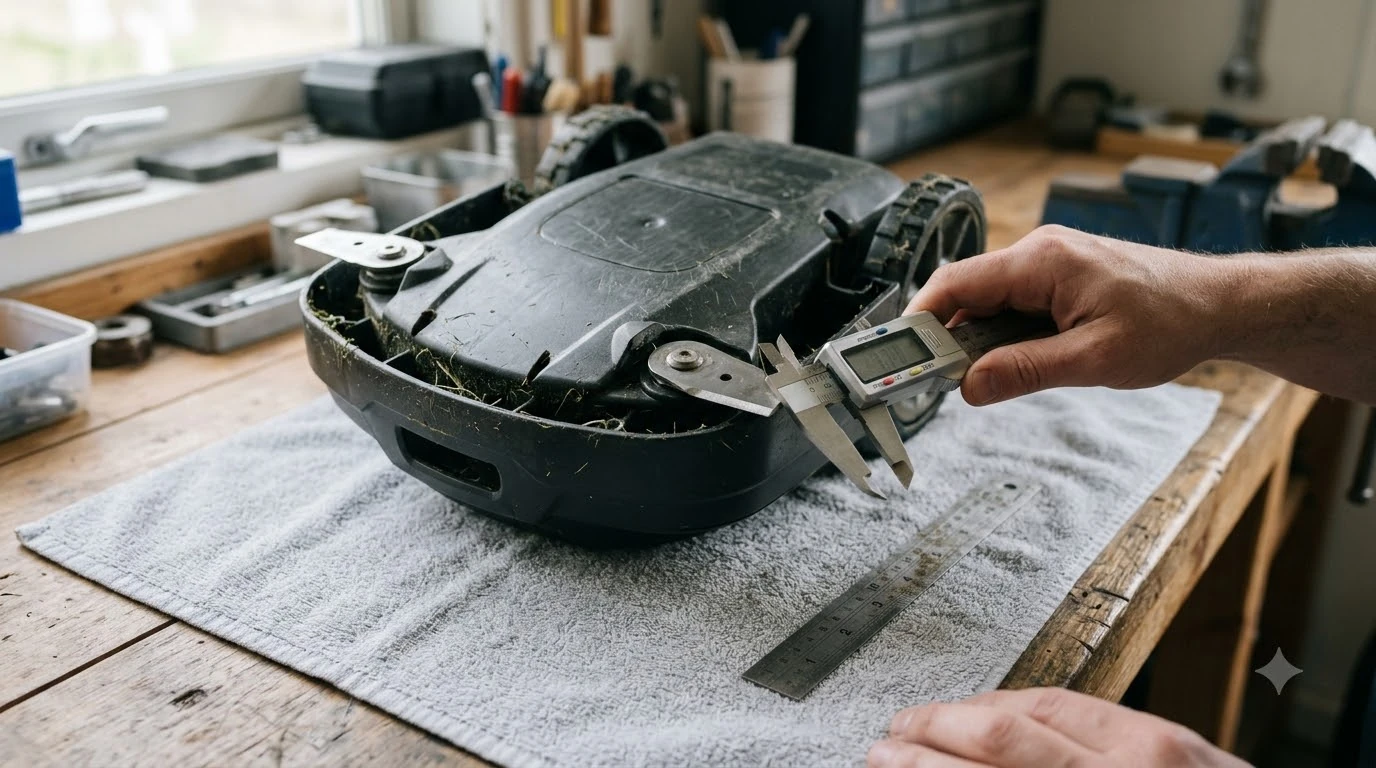

Sunseeker X7 vs Sunseeker Elite X5: according to the manufacturer’s own pages, the X7 has a wider cutting deck (up to 35 cm against 22 cm), a higher maximum cutting height (100 mm against 60 mm) and a higher slope rating (70% against 60%). The X5 is the smaller, lower-slope model, so it fits yards where those extra figures are not needed. Coverage and noise are not published the same way for both models, so check those figures before deciding.
The short answer
- Cutting width: X7 up to 35 cm with dual floating discs; X5 up to 22 cm with a single floating disc.
- Cutting height: X7 from 20 to 100 mm; X5 from 20 to 60 mm.
- Slope: X7 rated at 70% (35 degrees); X5 rated at 60% (30 degrees).
- Coverage: the X7 page lists up to 6,000 m²; the X5 page gives no area, and its Gen 2 successor is listed at 0.5 acres.
Sunseeker X7 vs Sunseeker Elite X5: what each manufacturer page publishes
Sunseeker Elite publishes a product page for each model, and those pages are the main source for the Sunseeker X7 vs Sunseeker Elite X5 figures below. The X7 page covers the X7 and X7 Plus together, so the page does not give separate numbers for the two versions. The X5 page is a single model page. Where a figure is missing from the manufacturer page, this article says so rather than filling it in from a retailer.
Cutting width and disc design
The cutting deck is the first physical difference. The X7 uses two floating cutting discs with a width of up to 35 cm, while the X5 uses one floating disc rated at up to 22 cm. A wider deck covers more grass per pass, which matters most on large open lawns. In the Sunseeker X7 vs Sunseeker Elite X5 comparison it also means a larger machine to store and fit through gates.
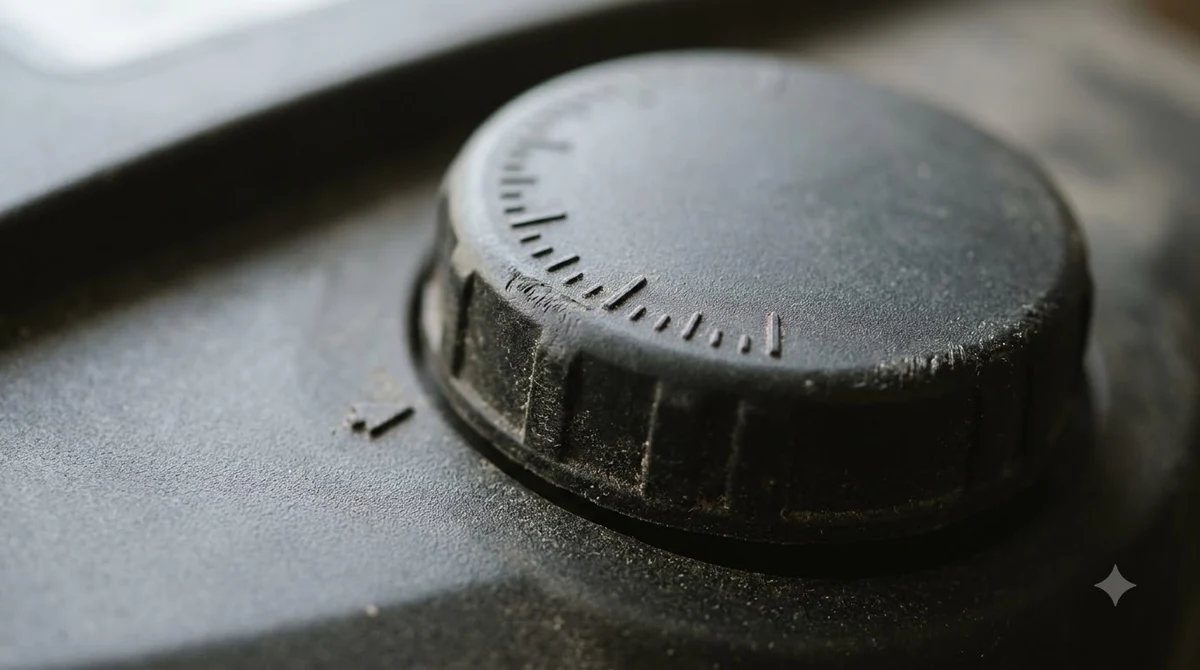
| Spec | Sunseeker X7 (manufacturer page) | Sunseeker Elite X5 (manufacturer page) |
|---|---|---|
| Cutting width | Up to 35 cm | Up to 22 cm |
| Cutting height range | 20 to 100 mm | 20 to 60 mm |
| Disc design | Dual floating discs | Single floating disc |
| Slope rating | 70% / 35° | 60% / 30° |
| Drive | All-wheel drive, permanent magnet motors | All-wheel drive, permanent magnet motors |
Cutting height range
Both models start at 20 mm. The X7 goes up to 100 mm, and the X5 stops at 60 mm. The X5 page says the floating disc adjusts its height to follow the contour of the lawn, but it does not say whether the setting is changed by hand or by motor. The X7 page describes the same floating behavior without a mechanism.
The height range matters because of the general mowing rule that university extension services repeat. Clemson Cooperative Extension advises that you remove no more than one-third of the grass height at any one mowing. Its table lists tall fescue at 2 to 3 inches in winter and 3 to 3.5 inches in summer, and centipedegrass at 1.5 to 2 inches. Our reading: a 100 mm ceiling gives more room to keep taller grass at a healthy height, while 60 mm may be enough for a lawn kept short; our note on the best mowing height for a robot-mowed lawn covers the rule in more detail.
Slope and drive system
Both models use all-wheel drive with independent front suspension and permanent magnet motors, according to their manufacturer pages. The slope rating is the main difference in this area: 70% (35 degrees) for the X7 against 60% (30 degrees) for the X5. The X5 page attributes its rating to the AWD design and off-road tires.
A higher slope rating is useful only if your lawn actually has steep sections (how slope ratings work). Measure the steepest part of the yard before you pay for the higher figure. The rating is a manufacturer maximum, so it does not guarantee that the mower will climb every slope in wet grass.
Coverage area: the figures do not agree
The X7 page lists a mowing area of up to 6,000 m², which is roughly 1.5 acres. A retailer listing for the same model gives a maximum area of 0.75 acres, which is about 3,035 m², so the two sources do not match. The X5 page does not give a coverage area at all. Sunseeker’s US page lists the X5 Gen 2 at up to 0.5 acres and the X7 Gen 2 at up to 1.5 acres, but those are newer models, and the page does not give a date for the figures.
Because the numbers disagree, measure your lawn first and compare it with the rated area of the model you are considering. A rating is a starting point, not a promise (how rated coverage is defined). Leave a margin, since a lawn at the rated limit will take longer to finish and the battery runs more often.
Navigation and obstacle detection
Both models use AONavi, which combines RTK satellite positioning with VSLAM visual mapping. Both pages also describe Vision AI with binocular cameras that it says can identify more than 200 types of obstacle. The X5 page adds AI-assisted mapping with virtual boundaries and no-go zones.
The practical question is whether you want to install a perimeter wire. Both pages present their mapping as wire-free, and the X7 page says you can draw a quick border in the app. Neither page mentions a perimeter wire, so check the setup instructions for the exact model you plan to buy, since the manufacturer’s wording is not identical across pages.
Noise levels
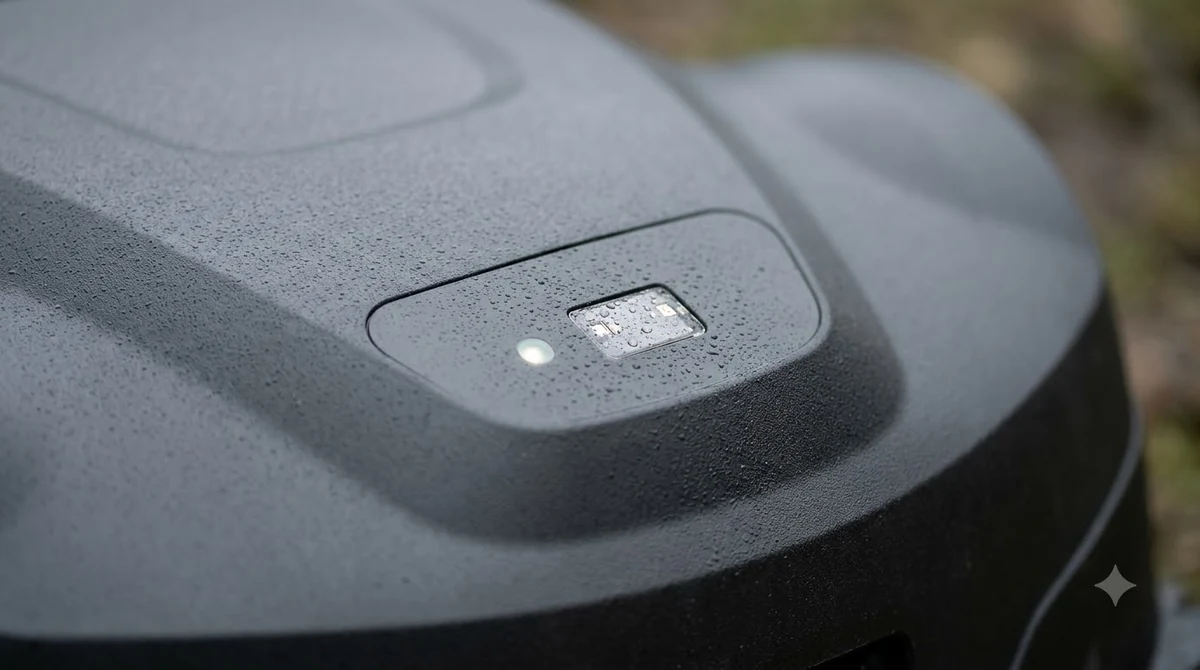
Noise is where the two manufacturer pages are weakest. The X7 page describes its motors as low noise but gives no decibel figure. A retailer listing gives the X7 a noise level of 60 dB. The X5 page also says only that its motors run with low noise and gives no decibel figure, so there is no published figure to compare between the two.
A decibel rating is only meaningful when the test conditions are known, and most manufacturers do not publish them. Our reading: if noise matters to your household or neighbors, ask the seller for a measured figure and the test method before you choose between the Sunseeker X7 vs Sunseeker Elite X5 models. For background, see how loud robot mowers are.
Price, included items and what to check
Sunseeker’s US page lists prices for the Gen 2 models but gives no “as of” date, and the pages for the original X5 and X7 show none. We do not quote a price here because we have not confirmed what is current as of 2026-11-10. Prices change often, so check the official store on the day you buy.
The X5 page lists what is in the box: the mower, a charging station, an RTK base station with its holder, and accessories including blades and screws (listed as 12). Confirm the included items for the exact version you buy, because the Gen 2 and original models do not share the same listing.
Who each option suits (our reading)
Choosing between the Sunseeker X7 and the Sunseeker Elite X5 comes down to lawn size, slope and noise. The X7 suits larger lawns with steeper sections, and anyone who wants the widest cutting deck and the highest height ceiling from the two. The X5 suits smaller or flatter lawns, where the 22 cm deck and 60% slope rating are enough. The X5 page also lists wire-free mapping, which may matter if you want to avoid laying a perimeter wire. If you are still choosing a brand, see how Sunseeker vs Mammotion robot mowers compare.
In both cases, base the Sunseeker X7 vs Sunseeker Elite X5 choice on your lawn size, your steepest slope and your noise limit, then read the setup and warranty terms for the exact model. The manufacturer pages do not publish warranty length, so that detail needs to come from the seller or the warranty policy linked on the site.
Frequently asked questions
Is the Sunseeker X7 wider than the Elite X5?
Yes. The manufacturer’s X7 page lists a cutting width of up to 35 cm, and the X5 page lists up to 22 cm. That is about 13.8 in against 8.7 in.
Which model has the higher slope rating?
The X7 is rated at 70% (35 degrees), and the X5 at 60% (30 degrees), according to the manufacturer pages. These are maximum ratings, so test the steepest part of your own yard before you rely on them.
Do the two models use the same navigation?
Both pages list AONavi, which combines RTK positioning with VSLAM visual mapping. Both also describe wire-free mapping, and neither mentions a perimeter wire, so confirm the setup for the exact model.
What lawn size does each model cover?
For Sunseeker X7 vs Sunseeker Elite X5 coverage, the X7 page lists up to 6,000 m² (about 1.5 acres), while a retailer listing says 0.75 acres. The X5 page gives no area, and the Gen 2 X5 is listed at up to 0.5 acres. Measure your lawn and leave a margin below the rated figure.
Sources
- Sunseeker Elite X7 product page (manufacturer): cutting width, height range, slope, mowing area, drive and navigation for the X7 and X7 Plus.
- Sunseeker Elite X5 product page (manufacturer): cutting width, height range, slope, drive, navigation, obstacle detection and box contents.
- Sunseeker Elite US page (manufacturer): Gen 2 mowing areas and the fact that prices are listed, with no date on the figures.
- FreshlyCharged Sunseeker X7 listing (retailer): 0.75 acre maximum area and 60 dB noise level.
- Mowing Lawns, Clemson Home and Garden Information Center (university extension): one-third mowing rule and grass height table.
 Up next8 min readReviews & CompareSunseeker Elite X5 Review: Specs, Versions and LimitsUpdated Nov 11, 2026
 9 min readReviews & CompareSunseeker X7 Review: Specs, Slope, Shade and SetupUpdated Nov 11, 2026
 8 min readReviews & CompareMammotion LUBA 3 AWD vs Sunseeker X7: Published Specs ComparedUpdated Nov 11, 2026
 9 min readReviews & CompareRobot Mower Spec Comparison: Coverage, Slope and NoiseUpdated Nov 11, 2026
 8 min readReviews & CompareRobot Mower Comparison Chart 2026: Which Specs Decide the ChoiceUpdated Nov 11, 2026
 7 min readReviews & CompareSunseeker vs Mammotion Robot Mower: Which Fits Your Lawn?Updated Nov 11, 2026