
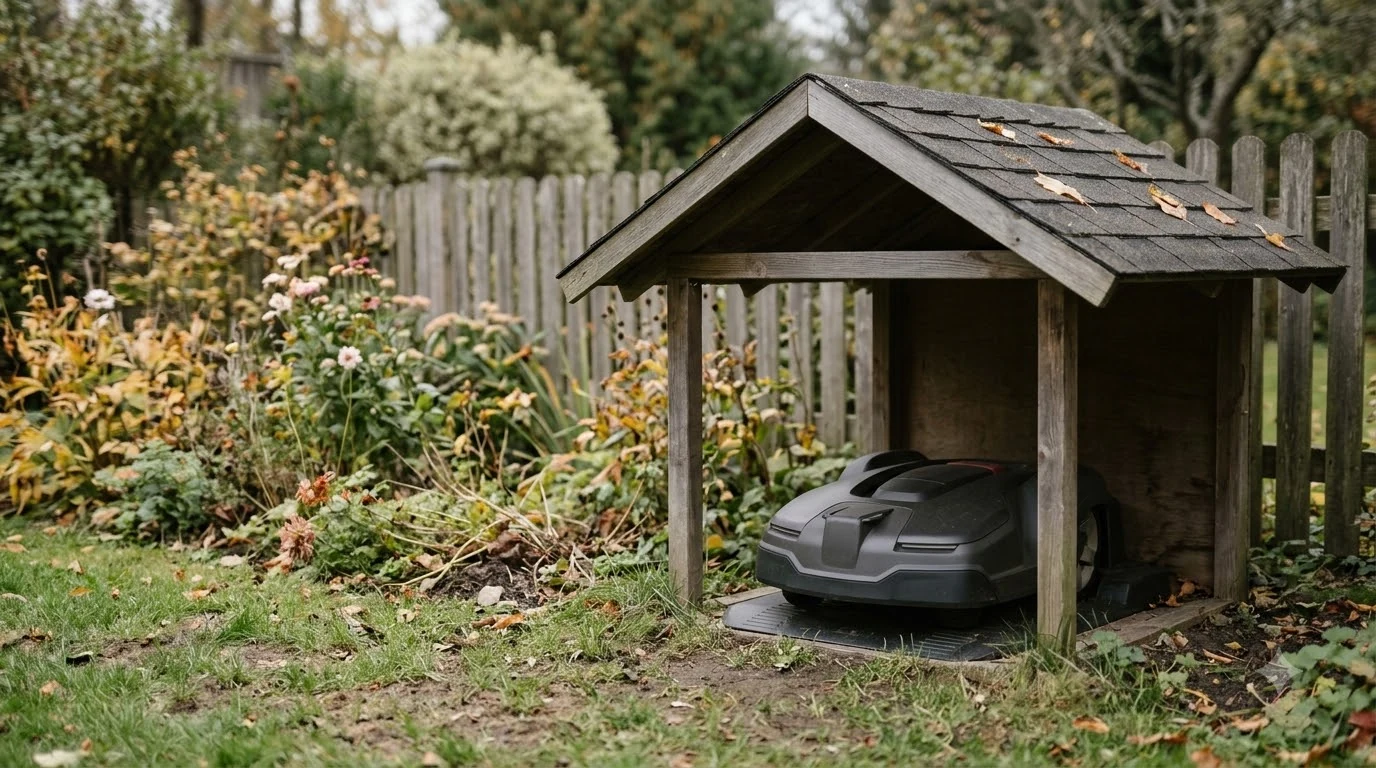

Robot mower dock indoors vs outdoors: for most mowers, the dock belongs outside in a sheltered spot, not in the house or garage. The dock needs level ground, a clear approach path, and power that stays dry. Indoor placement only makes sense if the dock is rated for it and the spot is dry, ventilated, and close to an outlet.
The short answer
- Outdoor, sheltered: the default for most docks. Put it under a hedge, along a north-facing wall, or under a canopy.
- Indoor: only if the maker says the dock is rated for indoor use. Standard outdoor docks are weatherproof, not designed for a living space.
- Garage or shed: a good option for shelter if the space is dry and ventilated, but the mower still needs a clear path in and out.
- Either way: keep the dock level, avoid low spots that collect water, and plan the power supply first.
Robot mower dock indoors vs outdoors: what the default is
Most robot mower docks are built for the yard. They are weatherproof, sit on the lawn, and rely on contact plates at the front. The Garden Robot Atlas installation guide describes the basic setup: the base station goes on level ground “so the mower docks squarely on the charging contacts,” with “several metres of clear run-up” in front of it. It also says the mower “docks poorly around corners.” The approach to the dock must be level, so robot mowers that cope with slopes are worth reviewing if the base sits on a gradient.
That guidance assumes an outdoor location. The guide says the station is weatherproof and recommends “some shelter from the worst sun and rain,” but it does not discuss indoor or garage placement at all. So the starting point is outdoors, with shelter, and any move indoors needs a check against the maker’s rules.
The outdoor case: shelter, sun, and water
Outdoors, the main concerns are sun, rain, and standing water. The Robot Lawn Mower Hub location guide says to choose “a sheltered, shaded area to protect from weather and extend the station’s lifespan,” and it recommends a spot that “naturally offers shelter, such as near a fence, wall, or under a canopy.” It also suggests shrubs or hedges as windbreaks, and warns against placing the station where water can pool.
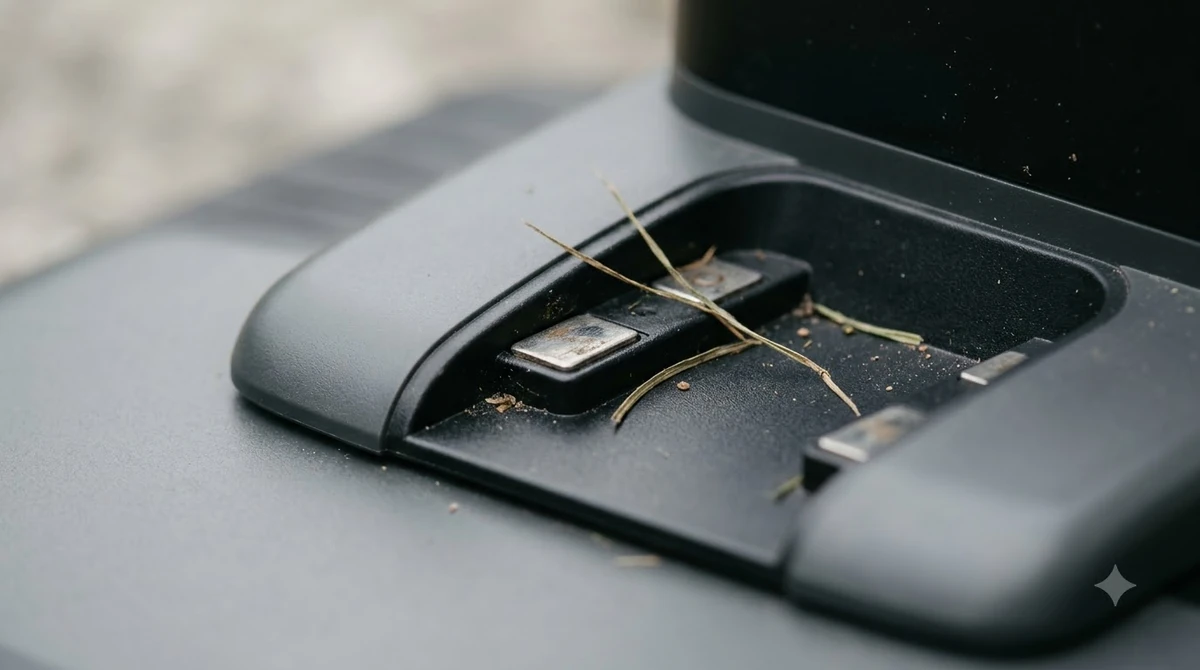
The Garden Robot Atlas guide makes the same point about low spots: standing water around the contacts can cause corrosion and intermittent charging. A dock on a dip or a poorly drained patch is a common cause of charging problems, so pick a raised, well-drained spot where the dock stays dry.
Heads up
Full sun is not ideal either. The Robot Lawn Mower Hub guide says a shaded, well-ventilated area helps prevent overheating, so a spot under a hedge or on the north side of a wall is usually a better choice than an open sunny patch.
The indoor case: when it can work
An indoor dock is only a sensible choice when the manufacturer says so. The reason is simple: a dock designed for the yard may not have the ventilation, insulation, or electrical rating for a room. Our reading is that the safe default is to check the manual before you move the dock inside. If the maker rates it for indoor use, the room should be dry, ventilated, and close to a standard power outlet that is protected by the right kind of circuit.
Keep the approach path in mind. An indoor dock almost always needs the mower to drive through a door or a garage opening, and that path needs to be level and free of corners the mower will struggle to turn in. If the approach is cramped, the mower may fail to dock reliably, even in a dry room.
The garage or shed option
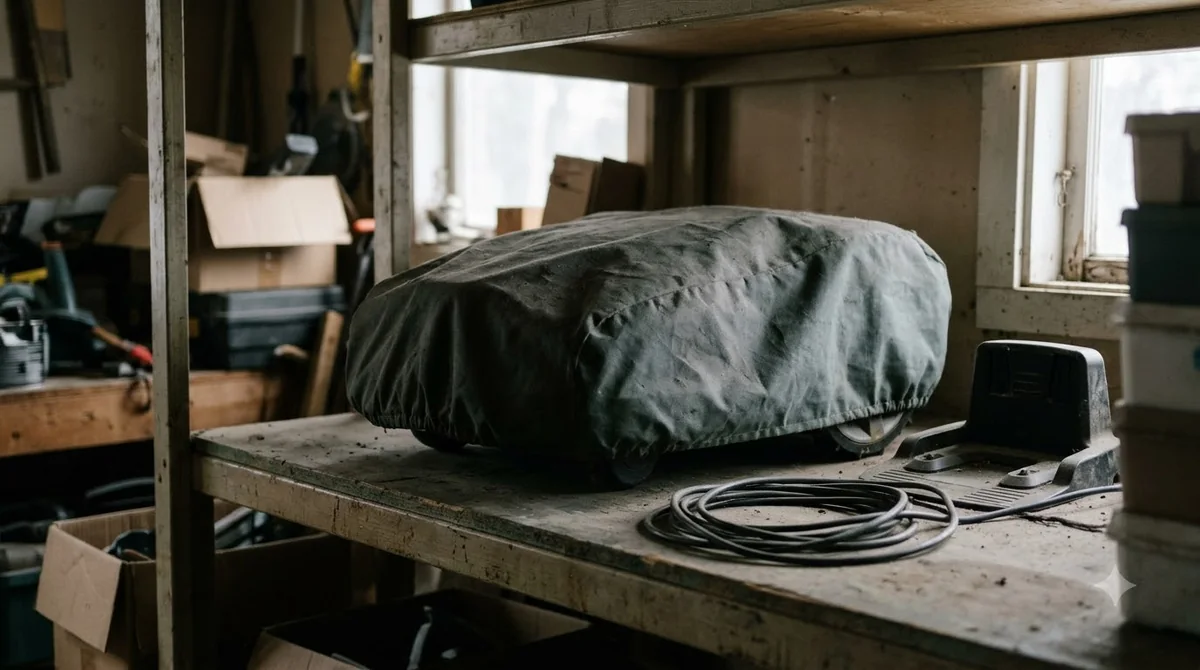
A garage or shed sits between the two cases. It keeps the dock dry and out of the worst weather, but it is still a space the mower must enter and leave. The Robot Lawn Mower Hub guide notes that a dock works best where it has a clear, obstacle-free path, so the doorway and the floor in front of the dock need to be kept clear.
A garage also changes the power question. Check that the outlet is close enough to reach without a long extension cord, and that it is protected in a way that suits outdoor-adjacent use. A shed with a damp floor or poor airflow is not a good home for a dock, even if it keeps off the rain.

Power, ground, and approach: the checks that matter either way
Whatever you choose, three things decide whether the dock works. The first is power. The Robot Lawn Mower Hub guide says to “position near a power source with minimal obstructions to ensure easy wiring and reliable charging,” and the Garden Robot Atlas guide asks for mains power “within reach of the supplied cable.” A short run keeps the cable from being a trip hazard or a weather risk. Station placement advice applies to most brands, while Eufy against Segway Navimow looks at how the two makers differ.
The second is ground. The dock should sit on flat, well-drained ground. The Robot Lawn Mower Hub guide prefers a flat, well-drained surface “to prevent shifting or sinking,” and the Garden Robot Atlas guide asks for level ground so the mower lines up with the contacts.
The third is approach. Give the mower a clear run in front of the dock, with no corners and no obstacles. Both guides say the mower docks poorly around corners, so a straight path matters more than the dock’s exact spot.
Robot mower dock indoors vs outdoors: how to decide
Start outside. Choose a level, well-drained spot that has some shelter from sun and rain, with a straight approach and a nearby outlet. Move the dock indoors only if the maker rates it for indoor use, and only if the room is dry and ventilated. If the garage or shed meets those tests and keeps the approach clear, it is a good middle option. Dock placement is a choice for every brand, and Ecovacs vs Dreame robot mowers compares two of them.
Before you buy, check the manual for the dock’s rating, the minimum approach distance, and any rules about shelter, power, and ground slope.
Frequently asked questions
Can a robot mower dock go indoors?
Only if the manufacturer rates it for indoor use. Standard docks are weatherproof for outdoor placement, so check the manual before moving one inside.
Should the dock be in full sun?
Usually not. A shaded, well-ventilated spot helps prevent overheating and extends the station’s life, so a hedge or a north-facing wall is a better choice than an open sunny patch.
Is a garage a good spot for the dock?
It can be, if the space is dry, ventilated, and the mower has a clear path in and out. Make sure the power outlet is close and suitable for the setup.
What goes wrong if the dock sits in a low spot?
Standing water around the contacts can cause corrosion and intermittent charging. Choose a raised, well-drained spot instead.
Sources
- Robot Lawn Mower Hub, charging station location guide: sun, shelter, power, ground, and approach path.
- Garden Robot Atlas, robot mower installation guide: level ground, run-up distance, weatherproofing, and standing-water risk.
 Up next6 min readReviews & CompareDreame A3 AWD Pro: What the Spec Sheets Say and Where Sources DisagreeUpdated Nov 16, 2026
 7 min readReviews & CompareRobot Mower Noise Level Comparison by Model and DistanceUpdated Nov 17, 2026
 7 min readReviews & Compare2WD vs AWD Robot Mower Traction: Which Grips BetterUpdated Nov 17, 2026
 7 min readReviews & CompareRTK vs GPS Robot Mower Accuracy: What the Difference MeansUpdated Nov 17, 2026
 6 min readReviews & CompareRobot Mower Battery Size Comparison: Capacity, Runtime and ChargeUpdated Nov 17, 2026
 7 min readReviews & CompareRobot Mower With App vs Without App: Which to BuyUpdated Nov 17, 2026