
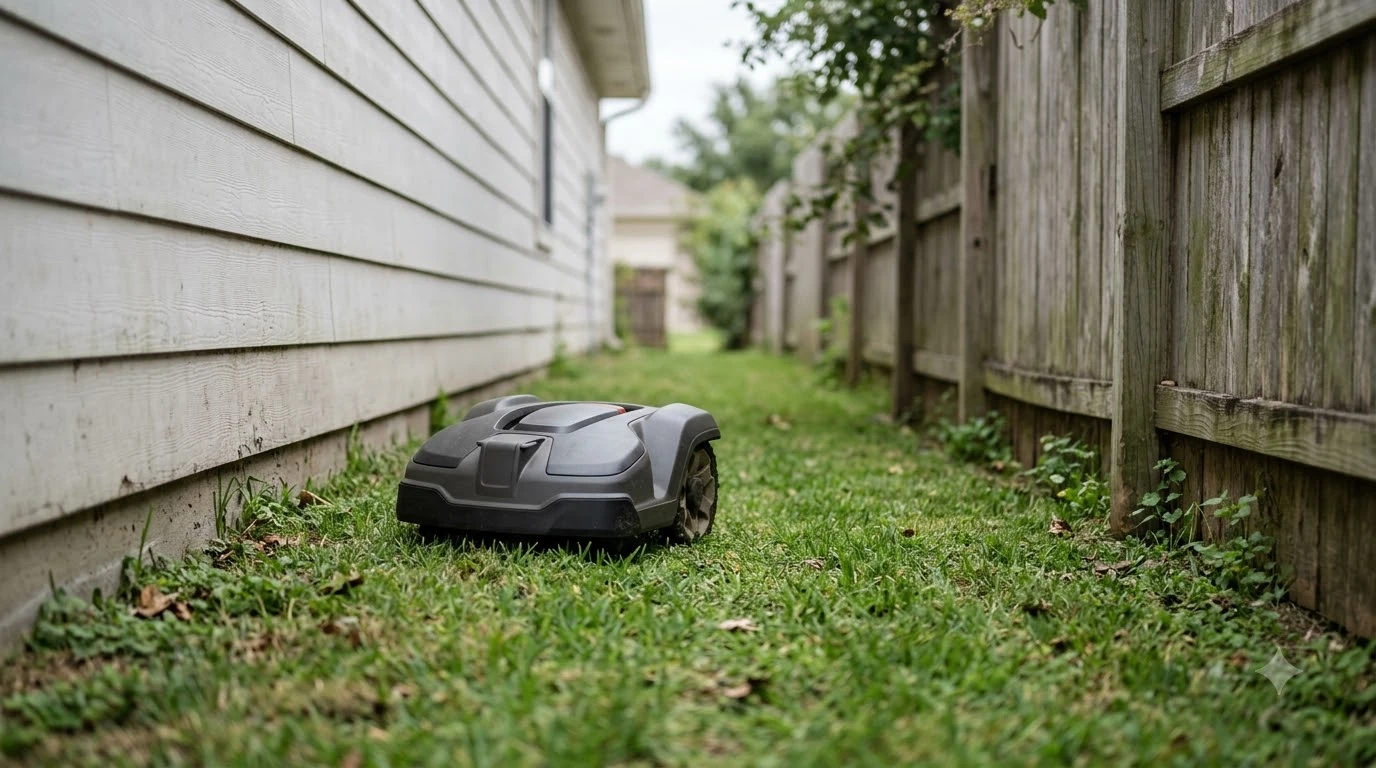

The best robot mower for a long narrow yard with a hedge is the one that can run a clean, repeatable path along the hedge line without driving over its roots. A narrow yard leaves little room to turn, and a hedge adds roots and branches the mower must avoid. Plan the path and the root zone first, then check the mower’s turning and boundary features.
The short answer
- Keep the mower off the root zone: NC State Extension says to avoid exposed tree and shrub roots with the mower.
- Mulch under the drip line: the ISA recommends a 2- to 4-inch layer of organic mulch under the drip line.
- Leave a mowed strip: a short clear strip between the lawn and the hedge is easier for the mower to run than a tight corner.
- Check turning and boundary: narrow yards need a boundary that keeps the mower from wedging against the hedge.
Best robot mower for a long narrow yard with a hedge: the layout problem
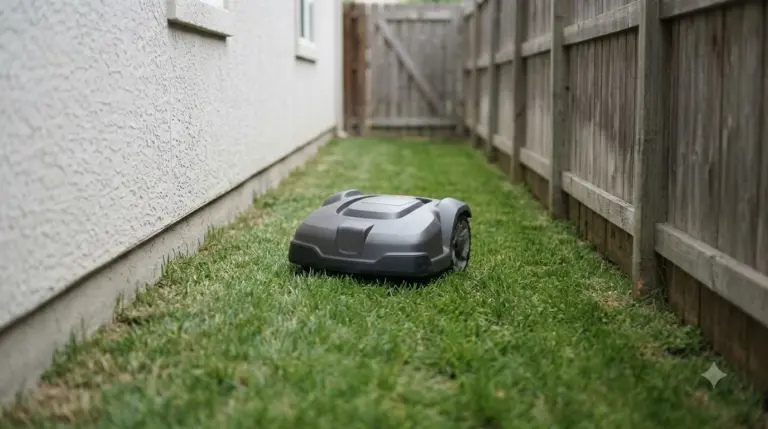
A long narrow yard with a hedge along one side has three problems at once. The path is tight, the turns are short, and the hedge sits on the ground where roots spread. Each problem affects a different part of the setup. None of the sources we read ranks robot mowers for this layout, so the advice below is our reading, built from extension guidance on roots and mowers. The wider question of tight side areas is covered in narrow side yard passage guidance, including how wire runs through them. Basic feasibility for slim properties is covered in narrow lawns and robot mowing, including turning room at each end.
Keep the mower away from the hedge roots
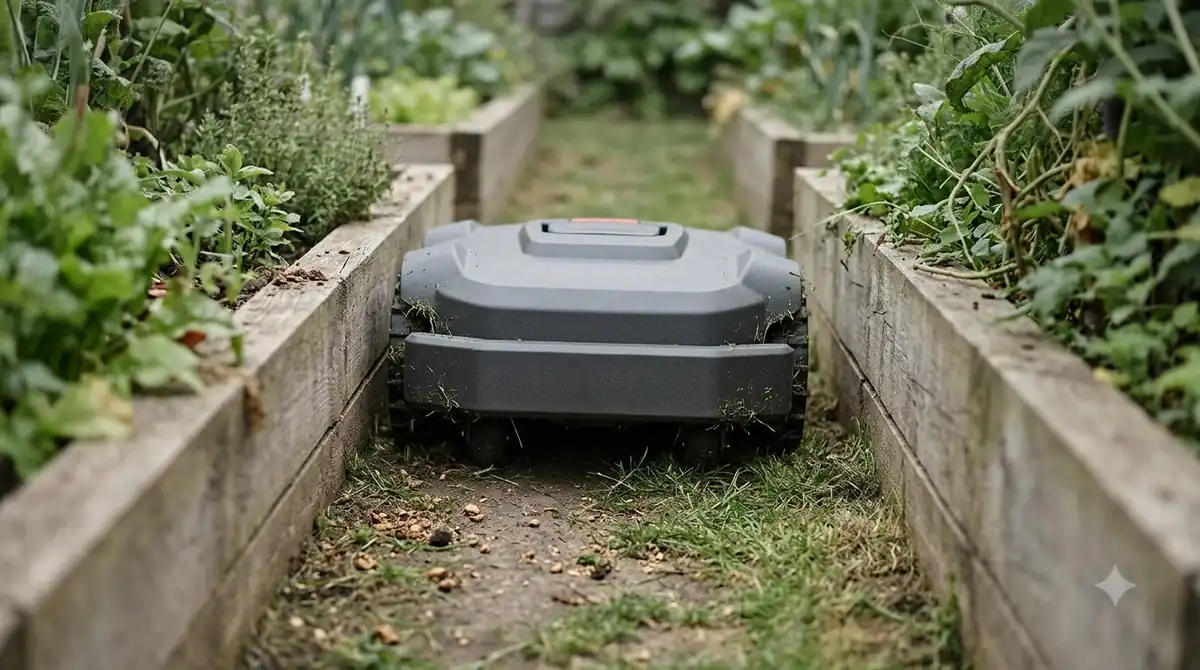
The main risk is the root zone, not the blade. Henderson County’s NC State Extension article on mowers and tree roots advises “If you see tree roots, avoid them with the mower.” The same article says mulch keeps mowers away from plants and recommends mulching the root zone out to the drip line rather than driving over it. Tight gaps between hedge and fence are covered in passages of two feet or less, with notes on what the mower can reach.
Shrub roots work the same way. The mower and its wheels can damage exposed roots, and that damage can stress the hedge over time. Where the hedge sits close to the lawn, the mowed strip should stop at the mulch edge.
Plan the path and the mulch edge
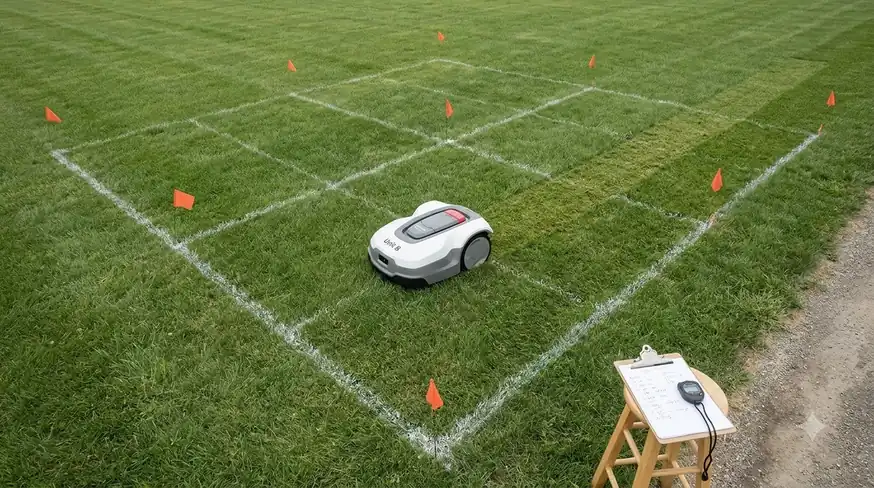
On a long narrow lawn, the mowed area is a strip, and the robot runs back and forth along it. A mulched band along the hedge keeps the mower out of the root zone and gives it a clear edge to follow. The ISA guidance quoted by the University of Washington recommends a 2- to 4-inch layer of wood chips, bark, or other organic material over the soil under the drip line. Narrow gates often link long yards with the rest of the lawn, and side gate clearance for mowers gives the figures.
- Mulch band: cover the root zone out to the drip line, so the mower has a clear, non-root edge.
- Mowed strip: keep a short clear strip between the mulch and the lawn, wide enough for the mower to turn without climbing the mulch.
- Far edge: use the fence or wall on the other side as the boundary, and check the gap the mower needs to pass.
Our reading is that a wider strip works better than a tight one, since the mower can turn in the strip instead of backing into the hedge. The exact width depends on the mower’s turning radius and the hedge’s spread, so measure both before deciding.
Turf and roots compete with each other
Grass and woody roots compete. The ISA excerpt on turf and trees states that “grass roots ordinarily occupy a much greater percentage of the soil volume than tree roots and outcompete them.” That is one reason lawn grass can thin under a hedge, and it is a reason to keep the mowed strip off the hedge’s root zone instead of trying to cut grass right up to the stems. Slightly wider paths open more model options, as mower picks for a three-foot path lists in detail.
The same source notes that competition is strongest when the lawn is new. A recently seeded or sodded strip beside a hedge needs extra time before it can hold up to a mower’s wheels.
Check the mower’s turning and boundary
Narrow yards punish a mower that cannot turn cleanly. A robot that wedges against the hedge will stop, reverse, and try again, which wears the path and can push it toward the roots. Check three things before buying: Minimum widths depend on the model, as how narrow a passage can be explains with published clearance figures. Turning and boundary checks matter on shared lawns too, as covered in robot mowers for a condo common lawn.
- Turning behavior. Look for a mower that reverses and turns in a short space, and confirm the strip is wide enough for that turn.
- Boundary placement. Set the boundary wire or virtual edge so the mower stops short of the mulch, not in it.
- Obstacle sensing. A hedge branch that hangs low can catch the mower; check whether the sensors stop it before it pushes into the branch.
Hedge trimming and the mower schedule
Keep the hedge trimmed back from the mowed strip so branches do not hang over the path. Trim on a schedule that keeps the robot path clear, and avoid cutting the hedge in the same week the mower runs its heaviest cut. Branches that fall on the lawn can jam the blades, so pick them up before each run.
Related reads: Mulched borders beside hedges need a physical edge, which mulch edges along a hedge describes for robot-mowed lawns.
Frequently asked questions
Can a robot mower run right up to a hedge?
Not safely over the roots. Keep the mower on the lawn strip, and mulch the root zone out to the drip line so the mower has a clear edge to follow.
How wide should the mowed strip be next to a hedge?
There is no single figure in the sources we read. Measure the mower’s turning space and the hedge’s spread, then leave enough room for the mower to turn without driving onto the mulch.
How deep should mulch be over hedge roots?
The ISA guidance quoted by the University of Washington recommends 2 to 4 inches of organic mulch over the soil under the drip line. Keep the mulch away from the stems.
Will a robot mower cut grass that grows under a hedge?
Grass under a hedge often thins because tree and shrub roots compete for water and nutrients. Mowing does not fix that. Mulch the root zone and keep the mower on the open lawn strip.
Sources
- Tree Health Alert: Mowers and Tree Roots (Henderson County Center, N.C. Cooperative Extension): avoiding roots with the mower and mulching the root zone to the drip line.
- Trees and Turf Roots (University of Washington Plant Amenities Library): turf and tree root competition, and the mulch and mower guidance quoted from ISA and NC State.
 Up next7 min readBy YardCan a Robot Mower Work in a Long Narrow Yard?Updated Nov 11, 2026
 8 min readBy YardRobot Mower for Narrow Side Yard Passages: What Widths Work?Updated Nov 11, 2026
 9 min readBy YardHow Long Does a Robot Mower Take to Mow an Acre?Updated Nov 11, 2026
 7 min readBy YardRobot Mower for a Lawn With a Narrow Side Gate: Width RulesUpdated Nov 14, 2026
 8 min readBy YardHow Do Robot Mowers Deal With Narrow Paths?Updated Nov 11, 2026
 8 min readBy YardHow Narrow Can a Robot Mower Passage Be? Simple 2026 RulesUpdated Nov 11, 2026