
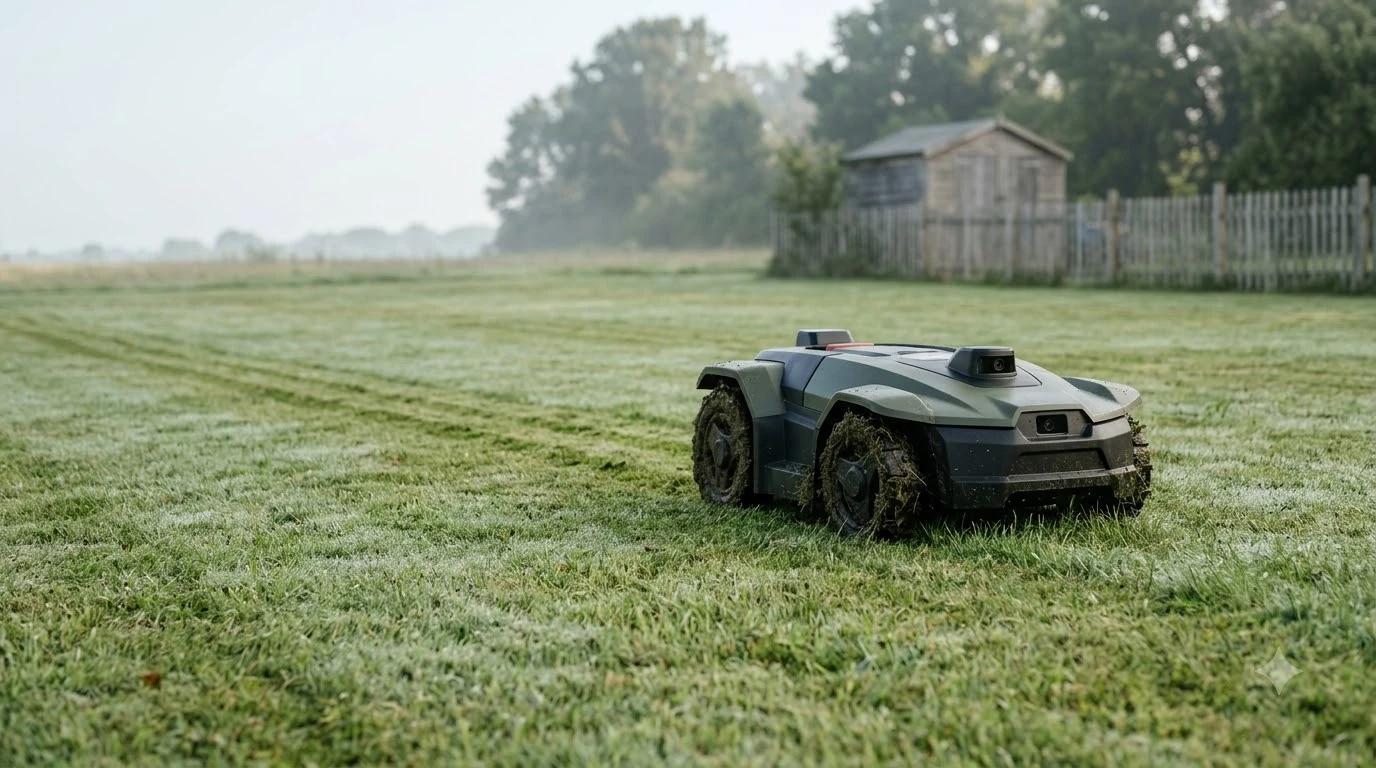

The best robot mower for kikuyu grass is one that can cut low, run often, and keep a tight boundary, because kikuyu spreads fast by runners and rhizomes. University of California turf guidance sets kikuyu at 1 to 1 1/2 inches and suggests mowing when it reaches 1 1/2 to 2 1/4 inches. The mower matters less than the schedule and the edge control, so this guide covers what to look for and what to expect.
The short answer
- Cutting height: look for a mower that can hold 1 to 1 1/2 inches on a regular basis.
- Run time: kikuyu grows quickly in warm weather, so plan on frequent short runs rather than one long weekly cut.
- Boundary: choose a model with a reliable perimeter setup or a strong edge-detection system, because kikuyu will try to cross any gap.
- Expectations: a robot mower helps keep kikuyu neat, but it does not stop the grass from spreading into beds and borders.
What kikuyu grass needs from a mower
Kikuyu is a warm-season grass that spreads by thick stems that root at the nodes, along with rhizomes 1 to 4 inches deep. Those traits make it a strong lawn grass in warm areas, but they also make it hard to hold in place. UC IPM describes kikuyu as an extremely aggressive perennial weed in turf, and says a single control method will usually not stop it. Kikuyu is a warm-season grass, and warm-season lawn picks and tradeoffs gives the broader view. Whether dense turf can be cut at all is covered in thick southern grass feasibility, with notes on blade height.
For mowing, the same guidance gives a practical target. UC’s recommended cutting height table lists 1 to 1 1/2 inches for kikuyu, and it suggests mowing when the grass reaches 1 1/2 to 2 1/4 inches. Staying in that band keeps the lawn dense without scalping the surface.
| Item | What the source says |
|---|---|
| Set the mower to | 1 to 1 1/2 inches (UC IPM recommended cutting height table) |
| Mow when turf reaches | 1 1/2 to 2 1/4 inches (same table) |
| Survival at low cuts | Kikuyu can survive cutting heights below 1/2 inch, per UC IPM kikuyugrass page |
| Unmowed height | About 30 inches, per UC IPM kikuyugrass page |
The gap between “survives below 1/2 inch” and “recommended at 1 to 1 1/2 inches” matters. A mower that cuts very low is not the same as a mower that keeps kikuyu healthy. Our reading is that the 1 to 1 1/2 inch range is the one to plan around for a lawn you want to keep dense.
Why run time matters more than cutting width
Kikuyu’s growth rate is the main reason to think about scheduling. UC IPM notes that the grass keeps growing at lower temperatures than bermudagrass, so it can stay green longer into the cooler part of the year. In warm months, a patch can spread quickly if it is left alone. Kikuyu grows quickly, and fast spring growth mowing frequency explains how often to run. Run time matters less on a small plot, where a robot mower on a tiny lawn raises different questions.

A robot mower that runs most days removes only a small amount of leaf each time. That fits the mowing-frequency logic in the UC guidance, which asks you to mow when the grass reaches the trigger height instead of waiting for a long gap. Our reading is that frequent short runs are a better fit for kikuyu than a single weekly pass, but the exact run count depends on your climate and how fast your lawn grows.
Heads up
Mowing kikuyu can stimulate flowering and lateral branching, because clipping removes the upright tips and pushes the plant to branch out. A mower that keeps the grass short may therefore produce a denser, more spread-out mat rather than a thinner one.
Keeping kikuyu inside the lawn
Because kikuyu spreads by stems and rhizomes, the biggest practical problem is the edge. Runners can cross a bed border, a path, or a gap in the perimeter, and then take root on the other side. UC IPM says mechanical and chemical methods are often ineffective on fine turf, and that hand removal is labor-intensive. That makes prevention the simpler route.
- Use a firm border: a metal or plastic edge set into the soil slows runners that run along the surface.
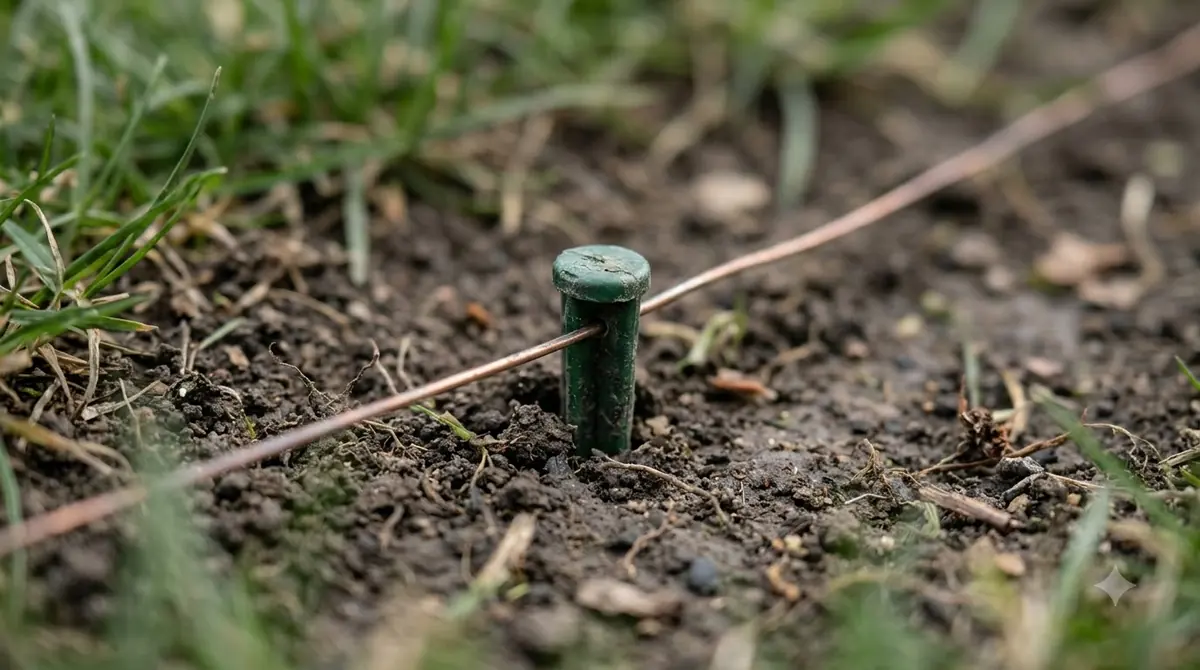
- Keep the boundary wire clear of runners: stems that grow over a wire can make a perimeter harder to read and can pull the wire out of place over time.
- Check the edges every few weeks: trim back any runners that have crossed a border before they root.
- Plan for an edge trimmer: robot mowers rarely cut right against a wall or bed, so a separate trimmer is usually needed.
Best robot mower for kikuyu grass: what to check before you buy
The spec sheet should answer three questions. First, can the mower hold a cutting height in the 1 to 1 1/2 inch range? Second, how does it handle a boundary, whether by wire, RTK, or a vision and lidar system? Third, how many hours does it need to cover your lawn at the frequency you plan to run it? A mower that cannot run often enough will fall behind a fast grass. Another thick warm-season turf is compared in Floratam height check, which covers the cutting-height question in detail.
It also helps to ask whether the blade system can cut evenly at low settings without leaving stripes or patches. Kikuyu’s thick mat can hold clippings, so look for a mower with a clean discharge and a deck that is easy to clean.
Finally, think about the long term. UC IPM suggests that once kikuyu covers about 40 percent of a turf area, it may be easier to manage it as the main turf rather than try to remove it. A robot mower can keep that turf tidy, but it will not reverse a lawn that has already spread into beds and borders.
Related reads: A low-growing warm-season grass is covered in carpet grass feasibility, with notes on cutting height and spread. Another coastal warm-season grass is covered in paspalum cutting notes, which explain cutting height and salt tolerance.

Frequently asked questions
What cutting height should a robot mower use for kikuyu grass?
UC’s recommended cutting height table lists 1 to 1 1/2 inches for kikuyu, and suggests mowing when the grass reaches 1 1/2 to 2 1/4 inches.
Can kikuyu grass survive very low mowing?
UC IPM says kikuyu can survive cutting heights below 1/2 inch. That does not mean it is healthy at those heights, so the recommended range is the safer target.
Does kikuyu grass need more mowing than other warm-season grasses?
Kikuyu keeps growing in cooler conditions than bermudagrass, so it can need regular cutting for a longer part of the year. Our reading is that a robot mower should run often enough to stay near the trigger height.
Can a robot mower stop kikuyu from spreading into beds?
No. A robot mower keeps the lawn short, but it does not block runners. Physical edges and regular checks of the borders do more to limit spread.
Sources
- UC IPM, Recommended cutting height (University of California): kikuyu set mower 1 to 1 1/2 inches, mow when 1 1/2 to 2 1/4 inches.
- UC IPM, Kikuyugrass (University of California): survival at cuts below 1/2 inch, growth habit, rhizomes, control difficulty, and the 40 percent guidance.
 Up next8 min readBy YardRobot Mower for a Clay Soil Lawn That Stays Wet: What to Look ForUpdated Nov 12, 2026
 8 min readBy YardRobot Mower That Works Under Trees Without RTK: What to Look ForUpdated Nov 11, 2026
 6 min readBy YardBest Robot Mower for Cool Season Grass: Match Your Cut HeightUpdated Nov 14, 2026
 8 min readBy YardBest Robot Mower for Bermuda Grass: What to CheckUpdated Nov 17, 2026
 6 min readBy YardBest Robot Mower for Floratam Grass: Height and ScheduleUpdated Nov 17, 2026
 6 min readBy YardBest Robot Mower for Thick Southern Grass: 3 to 4 Inch CheckUpdated Nov 17, 2026