
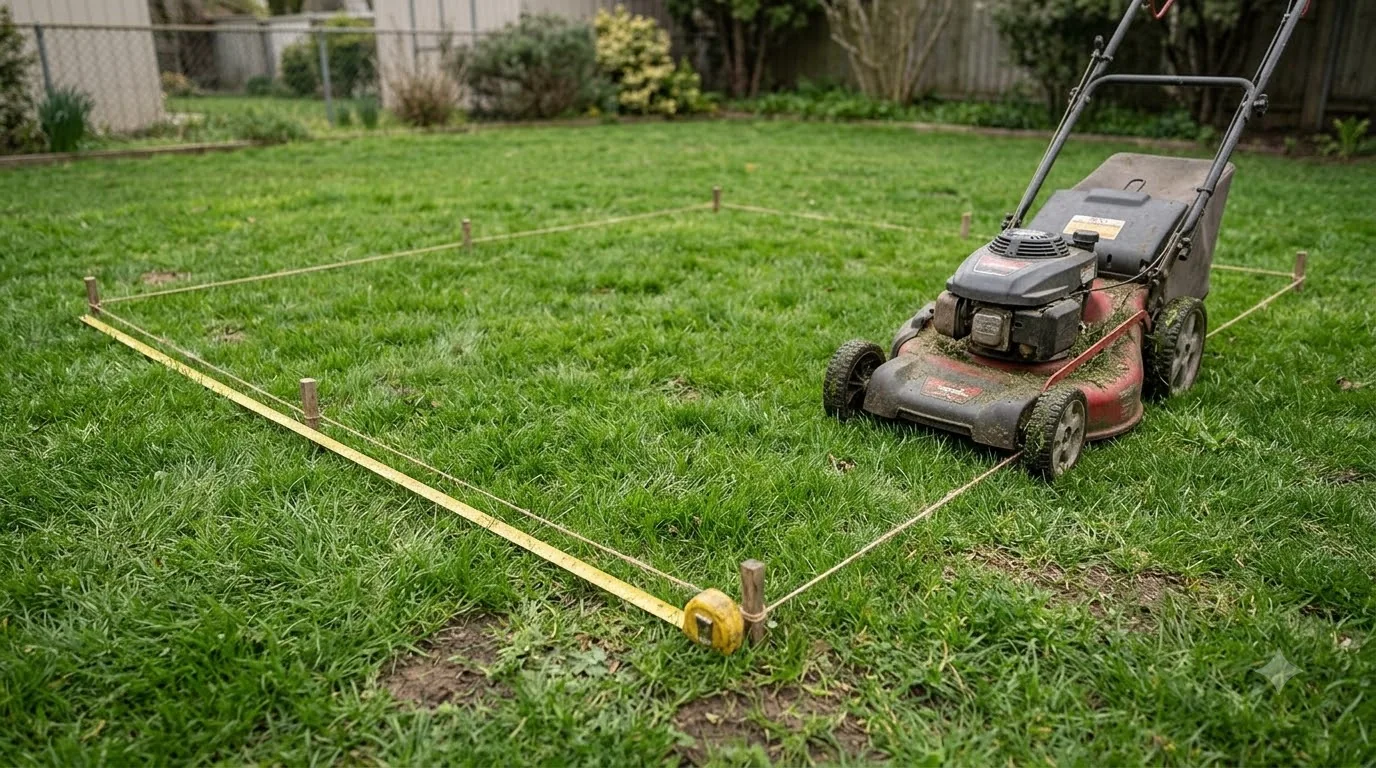

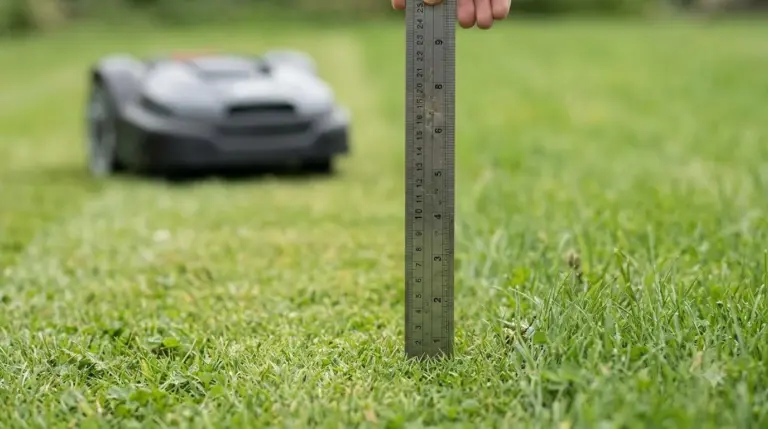
The best robot mower for cool season grass is one whose blade can sit at the height your grass species needs. For Kentucky bluegrass alone, extension guidance puts the cut at about 1.5 to 2.5 inches. For tall fescue, or a bluegrass and fescue mix, the range moves up to roughly 2.5 to 3.5 inches. Check the mower’s height range against those numbers before you compare anything else.
The short answer
- Kentucky bluegrass alone: 1.5 to 2.5 inches, per NC State Extension and UC IPM.
- Tall fescue or a bluegrass and fescue mix: about 2.5 to 3.5 inches, per NC State Extension.
- Heat, drought, and shade: cut toward the higher end of the range.
- The one-third rule: never remove more than one-third of the leaf height in a single mowing.
Best robot mower for cool season grass: cut height by grass type
Cool season grasses are usually cut higher than warm season grasses because their leaves and crowns are built for cooler weather. The two university sources below agree on Kentucky bluegrass but differ on tall fescue, so the table shows both rather than averaging them. Before choosing a model, it helps to confirm whether robots can handle cool-season lawns at all and which height ranges they can reach. Fine fescue needs a different minimum height setting, and the fine fescue mower recommendations explain which models allow it.
| Grass | Recommended height | Source |
|---|---|---|
| Kentucky bluegrass, planted alone | 1.5 to 2.5 inches | NC State Extension |
| Kentucky bluegrass mixed with tall fescue | 2.5 to 3.5 inches | NC State Extension |
| Tall fescue | 2.5 to 3.5 inches | NC State Extension |
| Kentucky bluegrass | 1.5 to 2.5 inches | UC IPM |
| Tall fescue | 1.5 to 3 inches | UC IPM |
The gap on tall fescue is the main thing to notice. NC State’s range starts at 2.5 inches, while UC IPM’s starts at 1.5 inches. If your lawn is mostly tall fescue, a mower that can hold 2.5 to 3 inches covers both sources. Our reading is that the higher setting is the safer default for a home lawn, since it leaves more leaf area for the grass to recover between cuts.
Why cool season grass is cut higher
Cool season grass grows most in spring and fall and slows in summer heat. A taller blade gives the plant more leaf area to photosynthesize with, and it shades the soil, which helps keep the root zone cooler and moister. Tall fescue grows in clumps rather than a spreading mat, and the bunch-type tall fescue mower shortlist covers how that changes the cutting-height needs.
NC State is specific about the tall fescue case. It says tall fescue “perform[s] best when mowed at a height of 3.5 inches, and should never be mowed shorter than 2.5 inches.” The same page says Kentucky bluegrass mixed with tall fescue should be mowed at 2.5 inches or higher.
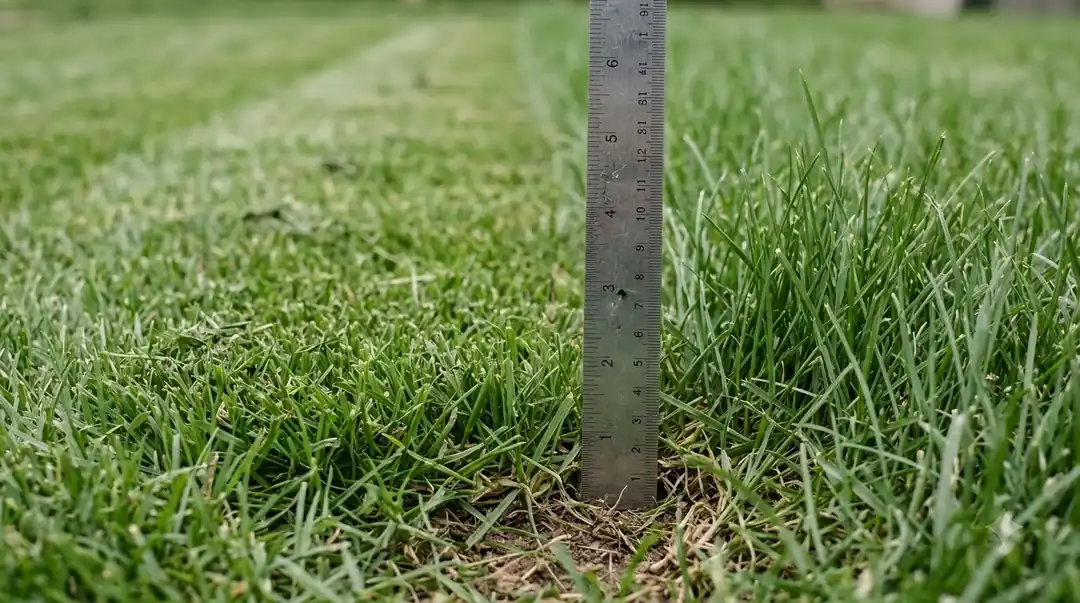
For a robot mower, this matters more than it does for a push mower. A robot cuts on a fixed schedule, so a blade set too low will remove leaf tissue every time it runs, not just on the weekend.
Mow higher in summer heat and shade
Summer is the season when cool season grass needs the most protection from the mower. The general rule is to raise the blade when temperatures climb or rain is short. Perennial ryegrass stress in summer heat is covered in ryegrass lawn mower choices, including the heights that reduce scalping.
- Heat and drought: UC IPM recommends cutting higher to make cool season turf more tolerant of drought and heat.
- Dormancy: NC State advises mowing high to help a lush lawn go dormant when it will not be watered. Brown leaves during dormancy are normal.
- Shade: shade lawns also benefit from a higher cut, and UC IPM lists shade among the conditions for raising the setting.
NC State does not give a separate mowing height for shaded lawns. It notes that tall fescue is a good choice for medium shade, which is a grass-choice point rather than a height rule.
The one-third rule and how often the mower should run
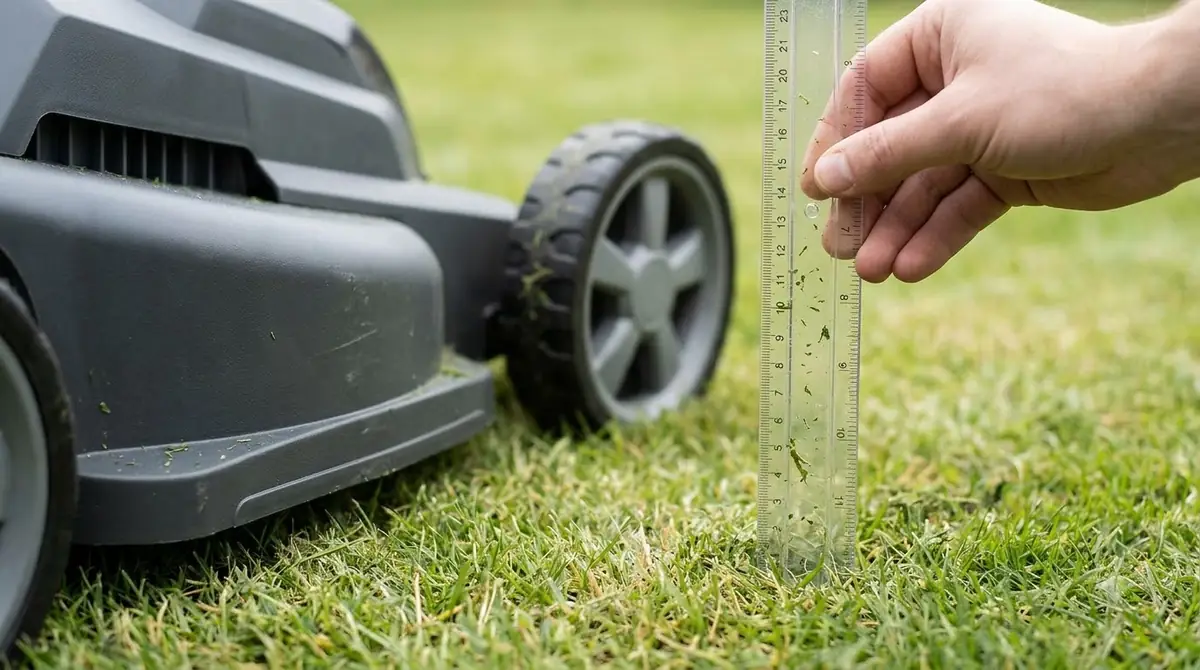
The one-third rule is the simplest check on a cut. Never remove more than one-third of the leaf height in a single mowing. NC State describes it as no more than one-third of the leaf surface coming off at once, and UC IPM states it the same way. Another popular cool-season species has its own range, shown in Kentucky bluegrass cutting height settings for a robot mower.
Robot mowers handle this well when they run often and cut a little each time. Growth picks up in fall, so the schedule may need to tighten then, as UC IPM notes. Running the mower more often also keeps the clippings small enough to break down on the lawn.
What to check before you buy a robot mower
Use the grass species first, then the features. These are the points we would check on any spec sheet: Lawn size matters as much as grass type, so see how robot mowers on very small lawns perform before choosing.
- Cutting height range. Confirm the minimum and maximum setting cover the range for your grass, especially the 2.5 to 3.5 inch band if you have tall fescue.
- Adjustment method. Find out whether the height changes by hand at the mower or through the app, and how many steps it has.
- Yard shape and slope. A yard with many shaded or sloped areas puts more demands on navigation and on how often the mower must run.
- Blade and service schedule. A dull blade tears grass, which stresses cool season turf in heat. Check how the manufacturer recommends blade replacement.
Dates and product specifications change, so confirm the current figures on the manufacturer’s page before buying. Prices are not included here.
Related reads: Bluegrass is the other common cool-season species, and Kentucky bluegrass and robot mower compatibility covers how well it tolerates frequent trimming.
Frequently asked questions
What height should a robot mower cut Kentucky bluegrass?
NC State Extension and UC IPM both give about 1.5 to 2.5 inches for Kentucky bluegrass planted alone. Cut toward the top of that range in summer heat or shade.
Is tall fescue cut at the same height as bluegrass?
Usually not. NC State gives 2.5 to 3.5 inches for tall fescue, and UC IPM gives 1.5 to 3 inches. Tall fescue is generally set higher than Kentucky bluegrass.
Why do the extension sources give different numbers?
The sources describe different lawn mixes, climates, and goals. A single range may not fit every lawn, so use the lower end for a dense, healthy lawn and the upper end for a stressed one.
How often should a robot mower run on cool season grass?
Run it often enough that each cut removes only a small part of the leaf height. UC IPM notes that growth picks up in fall, so the schedule may need to tighten then.
Sources
- Extension Gardener Handbook: Lawns (NC State Extension): mowing heights by grass type and the one-third rule.
- Mowing cool-season turf (UC IPM): cut heights for Kentucky bluegrass and tall fescue and advice on heat and shade.
 Up next8 min readBy YardCan a Robot Mower Cut Cool Season Grass?Updated Nov 11, 2026
 9 min readBy YardCan a Robot Mower Cut Warm Season Grass? Heights and LimitsUpdated Nov 11, 2026
 8 min readBy YardCan a Robot Mower Cut Centipede Grass? Heights and LimitsUpdated Nov 11, 2026
 7 min readBy YardBest Mowing Height for Kentucky Bluegrass by SeasonUpdated Nov 11, 2026
 9 min readBy YardBest Robot Mower for Warm Season Grass: 2026 ChecklistUpdated Nov 12, 2026
 8 min readBy YardHow Often to Mow Bermuda Grass by SeasonUpdated Nov 11, 2026