
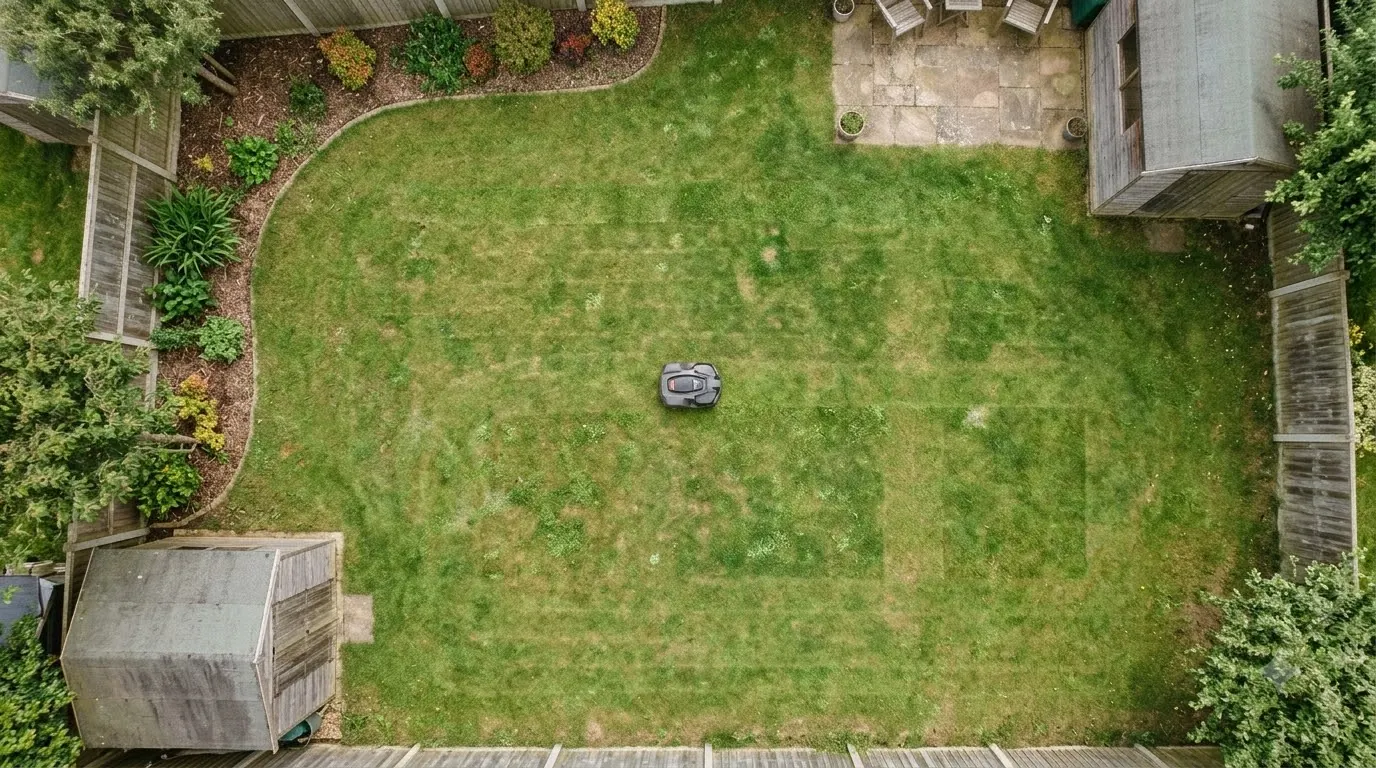

For a robot mower concrete basketball pad edge, the lip where the pad meets the lawn is the part to plan for. The mower is designed to stay on grass, and a concrete pad is a hard surface it should not drive onto. The safe approach is to keep the wire a short distance back from the pad edge and treat the pad itself as a no-go island.
The short answer
- Keep the mower on grass: the pad should sit outside the working area.
- Leave a margin: place the wire a few inches onto the lawn so the wheels turn before they reach the edge.
- Check the height: a small lip can be a problem for a low-clearance mower, so test the first runs.
- Use an island for the hoop base: the post and base can be wired as an obstacle if they sit in the grass.
Why the pad edge matters more than the hoop
The hoop itself is usually simple to handle. The post and base sit in one spot, and a mower can be wired around them with a small island. The harder question is the concrete pad, because it is a flat hard surface beside the grass, often with a step or lip at the edge. A robot mower that drifts onto a pad can lose traction, bump the edge, or get stuck where it cannot turn cleanly. Pads and hoops are part of a play-area layout, and yards with kids toys and equipment gives the broader guidance. The pole itself is another obstacle, and hoop poles on a mowed lawn covers how to mark it.
Our reading is that a concrete basketball pad is a no-go surface, not an obstacle. That changes how you set the wire. An obstacle needs a loop around it. A pad needs a boundary line that keeps the mower on the grass side of the edge.
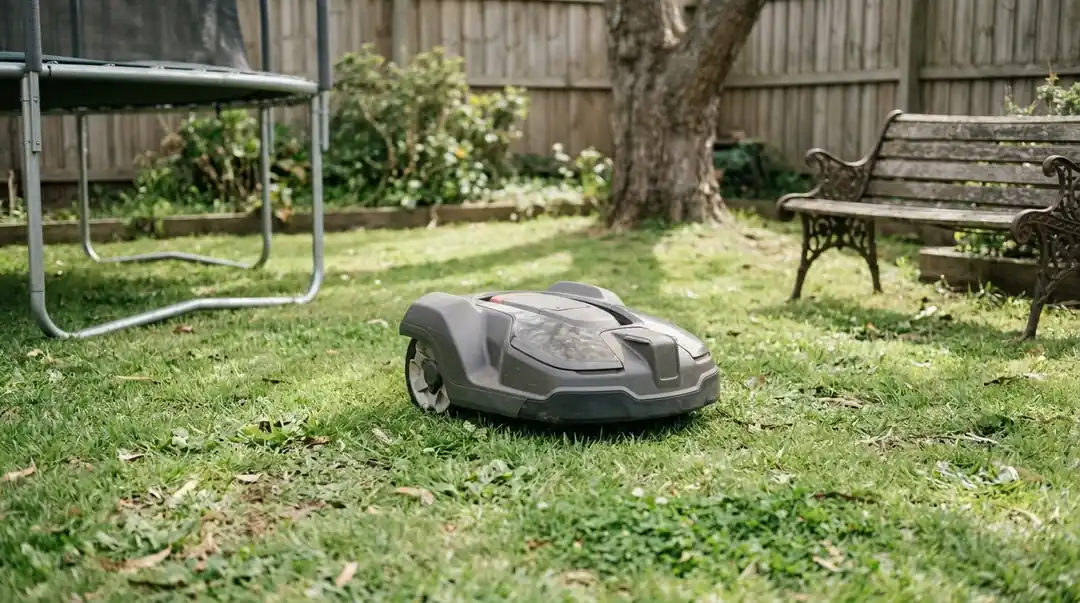
How to set the boundary for a robot mower and a concrete basketball pad edge
The setup is the same whether you use a wired system or a map-based app. Work through these steps before you run a full schedule: Edges around large play items are explained in trampoline frames and robot mowers.
- Mark the pad edge. Use spray paint or a rope to show the exact line where concrete meets grass.
- Set the wire back. Lay the wire a few inches onto the lawn, not on the pad, so the mower has room to turn.
- Wire the hoop base as an island. If the post sits in the grass, loop the wire around it, keeping the two ends close so they cancel the signal.
- Run a supervised test. Watch the mower approach the edge from several directions and confirm it turns before the wheels reach the concrete.
Husqvarna’s guide to creating islands in a boundary wire explains the loop method and warns that the two wires must not cross, or the mower will not recognise the island. The same guide does not give a distance from the obstacle, so the margin you choose is a judgment call that you should test.
Heads up
Do not rely on a physical lip to stop the mower. Some lips are too low for a mower to notice, and some wheels can climb a small step. Use the wire or a map boundary as the real stop.
Where robot mowers usually go wrong at a pad edge
Most problems happen at the corners of the pad and at the spot where the mower turns along the edge. If the wire is too close, the mower can clip the concrete as it turns. If the wire is too far, the mower may leave a strip of uncut grass that looks untidy. Check both ends of the pad, because the corners are where the mower has the least room to swing. Goals are another hard-edged feature on a play lawn, which soccer goal fencing on the lawn describes. Concrete edges also occur along sidewalks, as paved sidewalk edges and robot mowers explains.
Also watch for the hoop base. A heavy base can sit slightly raised above the grass, and a mower can bump it at speed. Loop the base with a small island and keep the mower’s speed setting modest near the pad if your model allows it.
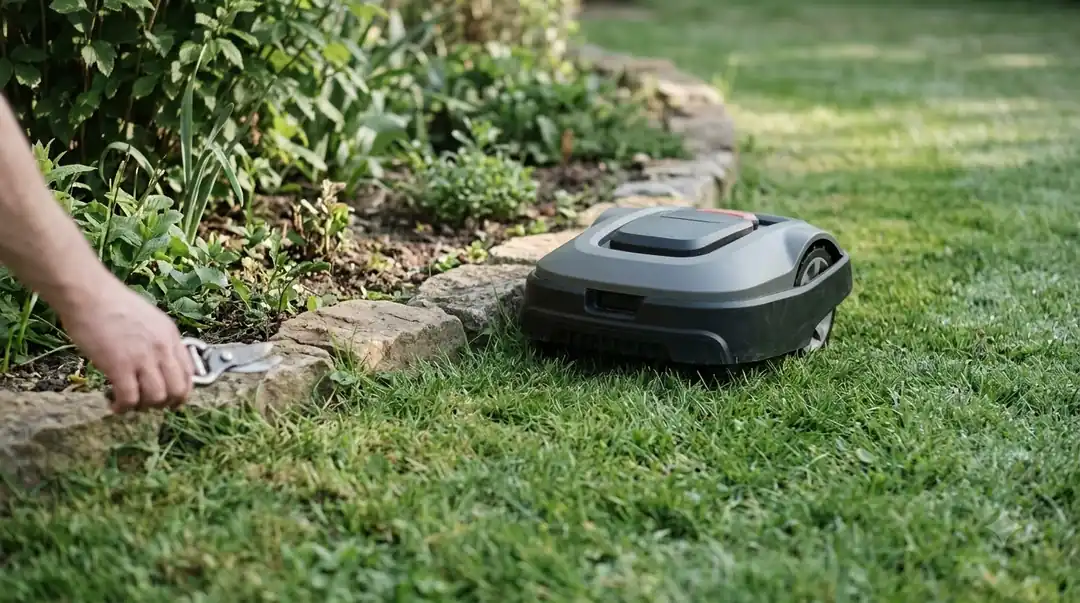
Edges can also shift over time. Soil can settle, grass can grow over a border, and pad edges can crack. Re-check the line every few weeks, especially after heavy rain or a season of use.
Keeping the pad area tidy
A tidy pad edge makes the setup easier to maintain. Trim the grass along the pad by hand at the start of the season, so the mower meets a clean line. Remove loose balls, leaves, and debris from the pad before each scheduled run, since a ball rolling onto the lawn can pull the mower off its path. If the pad sits next to play equipment, playset yard mower shortlist lists models that cope with it.
For a stay-out approach in an app, Husqvarna’s documentation on stay-out zones explains how to draw a zone on the map. A zone is useful for changing the boundary later, but it does not replace a physical wire near a drop.
Related reads: Large paved areas can split a lawn into zones, as lawns divided by a driveway describes.
Frequently asked questions
Can a robot mower drive onto a concrete basketball pad?
It should not be allowed to. Keep the pad outside the working area with a boundary wire or a map boundary, so the mower turns on the grass before reaching the concrete.
How far back from the pad edge should the wire go?
Place the wire a few inches onto the lawn rather than on the edge. The exact distance depends on the mower and the turning radius, so test the setup on a supervised run and adjust.
Should I wire the hoop post as an island?
If the post sits in the grass, an island keeps the mower from bumping it. Loop the wire around the base and keep the two wire ends close together so they do not cross.
Is a stay-out zone enough for a pad edge?
It can help with a simple layout, but a zone is a map instruction and not a physical barrier. For a pad with a drop or lip, a boundary wire is the more reliable stop.
Sources
- How to create islands in a boundary wire installation (Husqvarna): loop method and the rule that the wires must not cross.
- Creating stay-out zones with AIM technology (Husqvarna): how zones are drawn and where they can go.
 Up next8 min readBy YardHow Does a Robot Mower Handle a Patio? Wire and Edge RulesUpdated Nov 12, 2026
 9 min readBy YardCan a Robot Mower Work Around a Basketball Hoop?Updated Nov 12, 2026
 8 min readBy YardRobot Mower for a Lawn with an RV Parking PadUpdated Nov 13, 2026
 9 min readBy YardSetting Up a Robot Mower for a Yard with a Gravel Parking Pad TransitionUpdated Nov 19, 2026
 7 min readBy YardRobot Mower for a Lawn With a Sloped Ditch: Where to Set the BoundaryUpdated Nov 14, 2026
 6 min readBy YardRobot Mower and Wood Chips Under a Swing Set: Keep It Off the ChipsUpdated Nov 14, 2026