
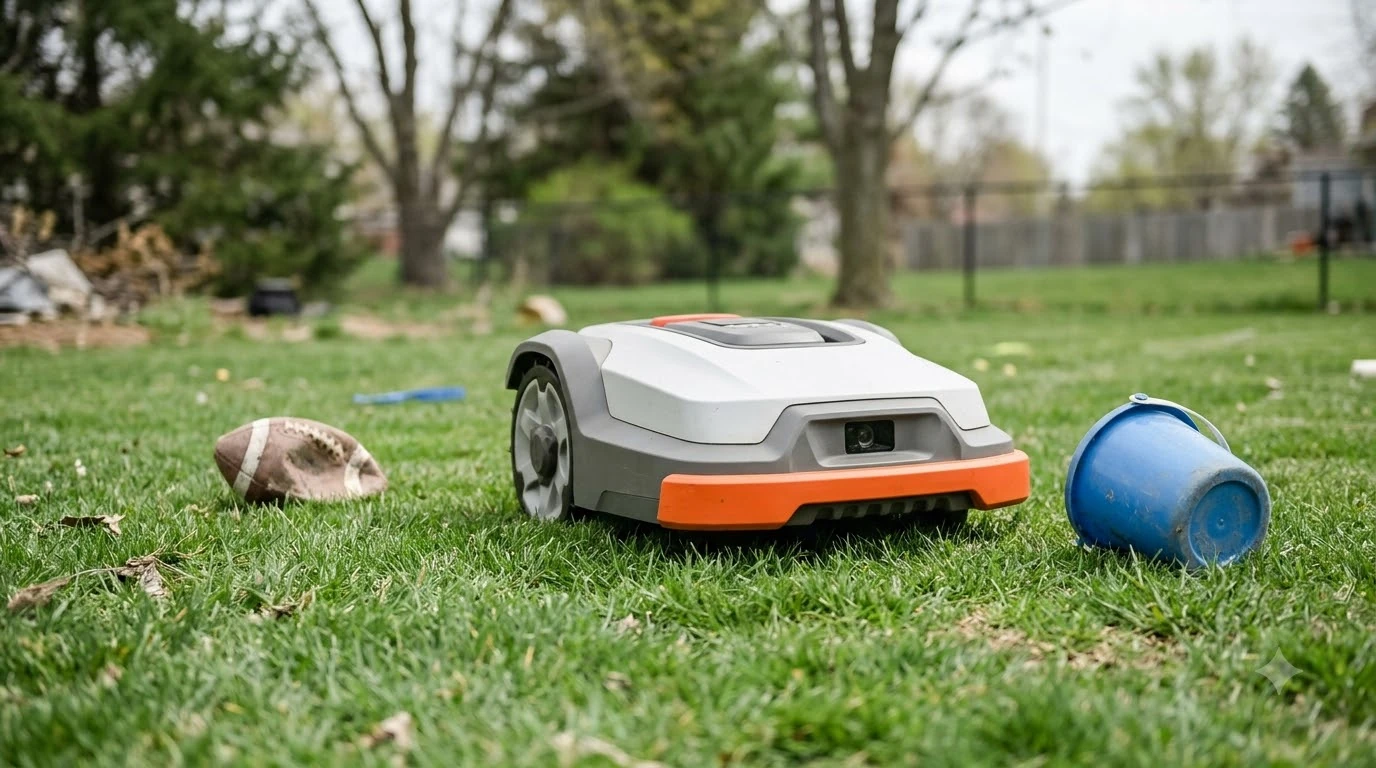

The best robot mower for Idaho lawns is the one that fits a cool-season lawn, a dry summer and a short, cold-weather mowing window. Idaho yards are dominated by cool-season grasses, mainly Kentucky bluegrass, so the mower needs a height range that reaches the upper end of the cool-season band and a schedule that follows growth rather than the calendar. This guide covers what to check and why, drawing on university extension guidance.
The short answer
- Set the height for cool-season grass: Kentucky bluegrass is commonly kept between about 2 and 3.5 inches, and the summer cut sits higher.
- Size by usable lawn: subtract beds, trees, sprinkler zones and hardscape before trusting a rated area.
- Plan for the short season: the mowing window opens after spring growth starts and closes in the fall, so the mower should be easy to store.
- Check slopes and rough ground: many Idaho lots have banks, foothills and uneven edges.
- Choose the boundary for the layout: physical wire or virtual boundary, depending on beds and trees.
Cool-season grass sets the cut
Most Idaho lawns are cool-season turf, and the grass type drives the height. Purdue’s optimum table lists Kentucky bluegrass at 2.0 to 3.5 inches and tall fescue at 3.0 to 4.0 inches, while the University of Wisconsin extension describes an ideal height of around three inches for Kentucky bluegrass. The shared message is that cool-season lawns are kept well above the scalped look that some owners aim for. Idaho shares its cool-season grass and short mowing season with the northern states, so the Midwest robot mower recommendations make a useful baseline. Because cool-season turf is kept taller than warm-season grass, confirm the adjustable cutting height range of any model you shortlist.
Iowa State Extension gives a seasonal split for Kentucky bluegrass: about 2.5 to 3 inches in spring and fall, and 3 to 3.5 inches in the summer months, when the extra leaf area shades the crowns and helps the grass handle heat and dryness. Our reading is that an Idaho lawn should follow the same pattern, with a moderate spring cut, a higher summer cut and a gentle fall finish.
Heads up
Do not set the mower low to make the lawn look tidy in a dry summer. A short cut on a dry lawn leaves less leaf to feed the roots and invites browning. If the grass has grown tall after a cool spell, lower the height over a few mowings rather than in one pass.

Size the mower to the usable lawn
Idaho lots often include a mix of turf, shrub beds, sprinkler zones, a garden and mature trees. The rated area on a spec sheet assumes open ground, so the figure you need is the usable turf area after the obstacles come out. Measure the grass you will actually mow, then pick a model with margin above that figure. Idaho yards often resemble those in neighboring states, so robot mower options for Utah lawns show how lot size and water limits interact.
| Factor | What to check | Why it matters in Idaho |
|---|---|---|
| Usable turf area | Measure after beds, trees and garden | Sprinkler zones and beds cut the area the mower can cover |
| Height range | Minimum and maximum cut height | Cool-season grass needs a higher band and a summer step-up |
| Slope rating | Inside-area and boundary slope limits | Banks and foothill lots can be steeper than they look |
| Boundary method | Physical wire, virtual boundary, or both | Affects install effort around beds and sprinkler heads |
| Storage and winter | Where the mower and dock can be kept | Cold winters mean the mower goes into storage |
Our reading is that a margin of around 20 percent above the usable turf area is sensible. Obstacles and irregular edges slow a mower, and extra capacity lets it finish within its scheduled windows.
Timing the season from spring to fall
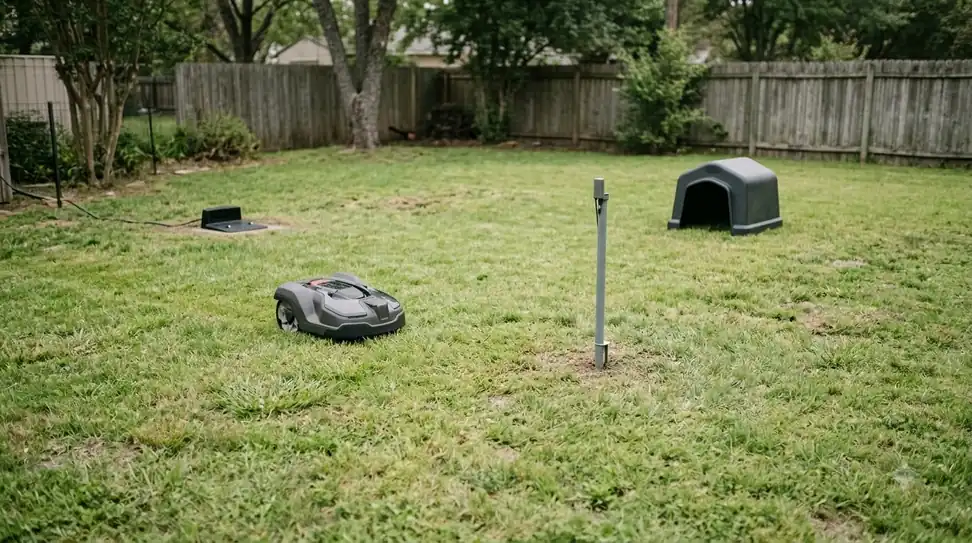
The mowing season in Idaho is shaped by cold winters and a short spring ramp-up. Extension guidance generally ties mowing to growth rather than to a date. The University of Wisconsin extension advises mowing based on the rate of grass growth rather than a weekly calendar, expecting more frequent mowing in a cool, wet spring and less often in drier summer weather. For a damp spring start, Pacific Northwest lawn guidance is a useful comparison when you plan early-season mowing frequency.
- Start when the grass grows. Begin once the lawn needs cutting, not on a fixed date.
- Set the spring height. Use the moderate part of the cool-season range.
- Raise the height in summer. Move toward the upper end once the heat and dry spells arrive.
- Respect the one-third rule. Never remove more than one-third of the leaf at a time.
- Finish the fall cut and store the mower. Keep mowing while the grass grows, then bring the mower in before the first hard freeze.
Dry summers and irrigation
Summer dryness is the big difference from wetter parts of the country. A cool-season lawn in a dry spell stops growing, and the sprinkler schedule may not match the mower’s schedule. Coordinate the two so the mower does not run over wet, soft soil right after irrigation, which can leave ruts and clumps of clippings. Where irrigation runs on a schedule, read about sprinkler timing for robot mowers so the mower avoids freshly watered turf.
During a dry spell, our reading is to reduce mowing frequency and keep the cut high rather than trying to hold a tight, short look. A robot mower that makes small, frequent trims is well suited to this, because it avoids the large, stressful cuts that a dry lawn cannot take.
Slopes, edges and boundary wire
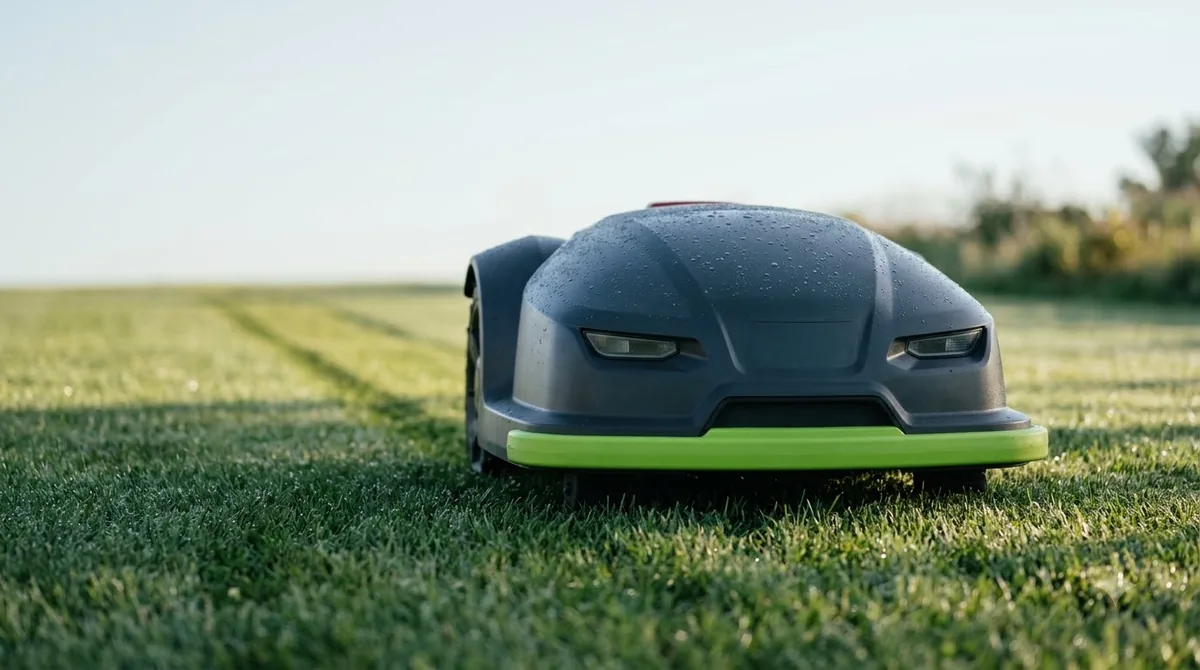
Many Idaho yards have banks, rockeries, drainage swales or a slope near the fence line. Read both slope numbers on a spec sheet, the one for the inside of the cutting area and the one for the boundary. A mower that struggles on a slope will leave untrimmed patches that look worse than a manual pass. If you would rather skip a buried loop, look at how reliable wireless mowers are before choosing a wire-free system. Slopes, edges and boundary wire matter on smaller northeastern lots too, and mowing New Jersey lawns with a robot is covered in a companion guide.
A physical perimeter wire gives a clear edge around beds and sprinkler heads, which helps a mower stay off planting areas. A virtual boundary can be faster to set up on an open lot. Our reading is that a yard with many beds and sprinkler heads benefits from a physical edge, while a plain rectangular lawn can use the simpler method.
What to check before you buy
Before you order, confirm the usable turf area against the rated area, check the height range against cool-season grass, read both slope ratings, and ask how the mower handles winter storage. Check whether replacement blades and the charging dock are available locally, because a robot mower spends its working life outdoors through dust, heat and rain.
Plan the installation around the layout before the purchase. Sprinkler heads, garden edges and tree roots all need to be mapped so the boundary is placed correctly the first time.
Related reads: Cold regions also need an off-season plan, so see the steps for storing a robot mower over winter.
Frequently asked questions
What cut height should Kentucky bluegrass have in Idaho?
Most sources place it between about 2 and 3.5 inches. Iowa State Extension suggests 2.5 to 3 inches in spring and fall and 3 to 3.5 inches in summer.
When should a robot mower start in the spring?
Start when the grass is growing and needs cutting, not on a fixed date. Extension guidance ties mowing to growth rate rather than the calendar.
Should I mow a dry lawn shorter in summer?
No. Raise the cut instead. Taller leaf area shades the crowns and supports deeper roots during heat and dry spells.
Do I need a physical boundary wire?
Not always. A physical wire helps in yards with many beds and sprinkler heads. A virtual boundary can work on simpler, open lots.
Sources
- Purdue Turfgrass Science, Turf 101: Optimum mowing heights for turf (university extension): optimum ranges for Kentucky bluegrass and tall fescue.
- Iowa State University Extension, summer mowing height FAQ (university extension): spring, fall and summer heights for Kentucky bluegrass.
- UW-Madison Extension, Mowing can make or break lawns (university extension): ideal height around three inches, the one-third rule, and mowing by growth rate.
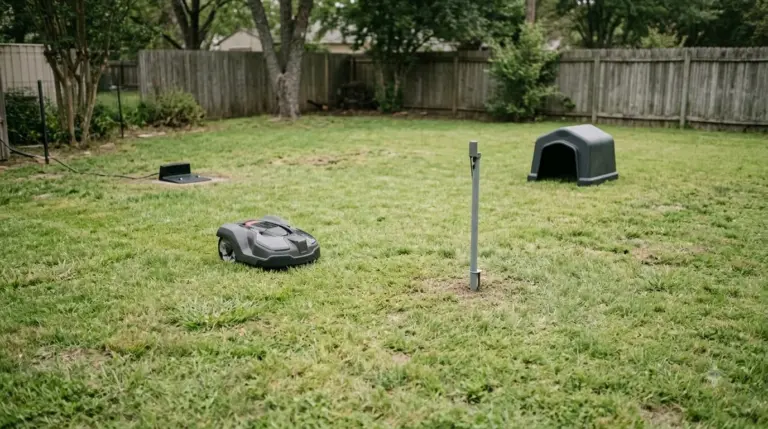
 Up next8 min readBest Robot MowersBest Robot Mower for Wisconsin Lawns: Cool-Season Cut GuideUpdated Nov 18, 2026
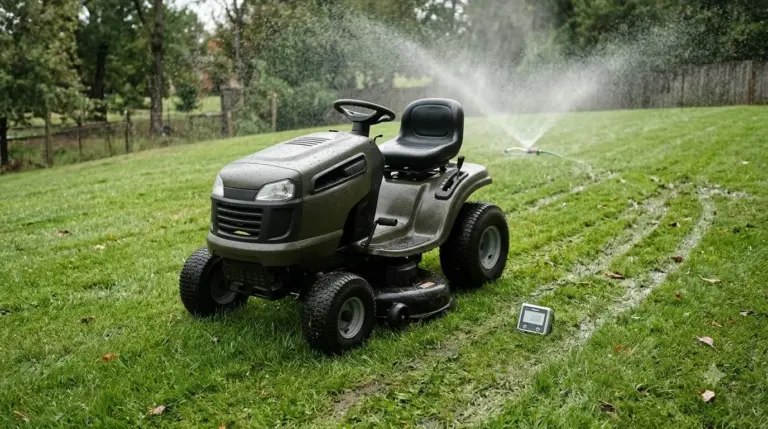
 7 min readBest Robot MowersBest Robot Mower for a Lawn with Short Growing SeasonUpdated Nov 18, 2026
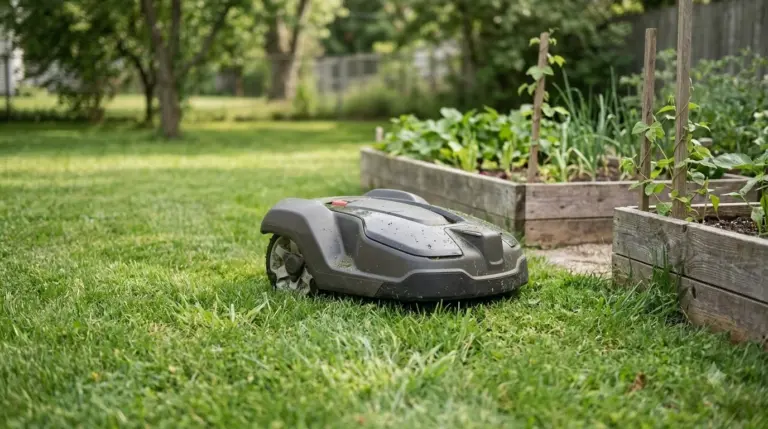
 7 min readBest Robot MowersBest Robot Mower for Oregon Lawns: Wet Season GuideUpdated Nov 14, 2026
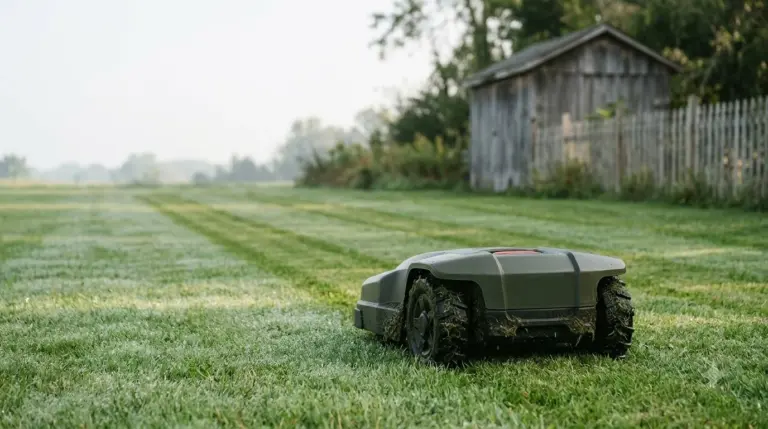
 7 min readBest Robot MowersBest Robot Mower for Alabama Lawns: Grass and Height GuideUpdated Nov 13, 2026
 9 min readBest Robot MowersBest Robot Mower for Oklahoma Lawns: Grass and Heat GuideUpdated Nov 18, 2026
 6 min readBest Robot MowersBest Robot Mower for the Carolinas: Match the GrassUpdated Nov 14, 2026