
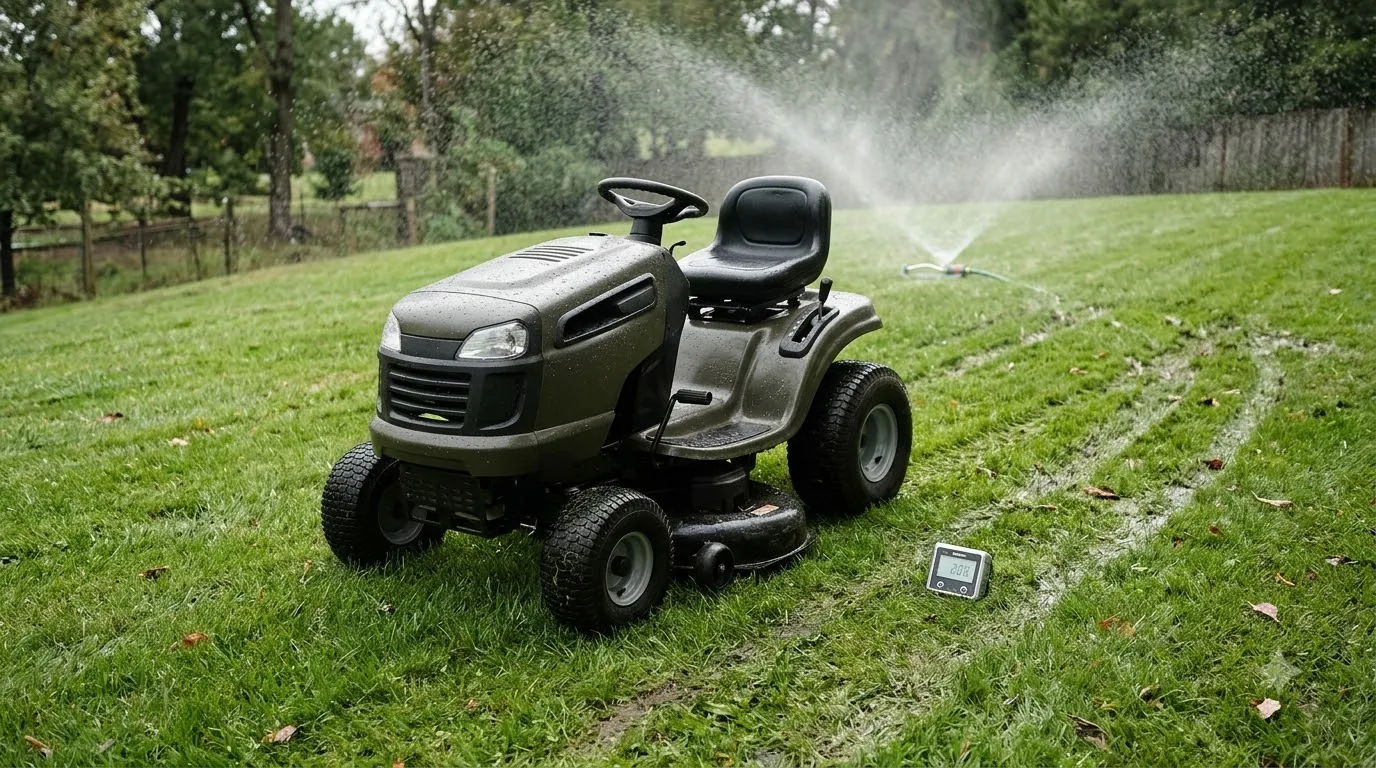

For most Oregon lawns, the best robot mower is the one that keeps its grip on wet, soft ground and handles a rain-heavy schedule, not the one with the biggest cutting area. A long wet season puts more strain on wheels, the deck and the charging dock than a dry-climate yard does. The points below come from manufacturer guidance we read, plus our reading of how that guidance applies to Oregon, as of November 2026.
The short answer
- Choose traction over size. Eufy says wet turf reduces wheel grip, so a mower can slip on inclines and lose its position.
- Mow in dry windows. Eufy says cutting wet grass is generally discouraged, because damp blades can tear the grass instead of cutting it cleanly.
- Keep the rain sensor on. Eufy says disabling it is “not recommended for regular use.”
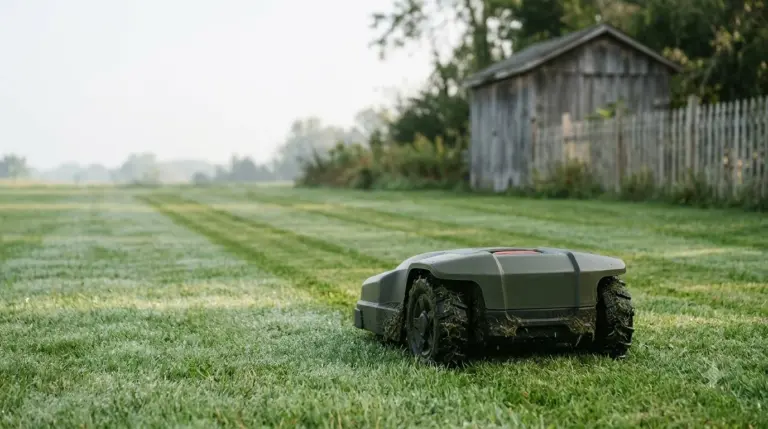
- Plan for clippings and debris. Wet clippings cling under the deck, so the mower needs cleaning after wet sessions.
Why a wet season changes the choice for Oregon lawns
Oregon’s wet months are a different test from a dry summer. Grass that stays damp for weeks does not cut the same way it does in July. Eufy’s guidance on wet grass says that heavy, wet blades lean over, so the mower cannot cut them to a consistent height, and that damp grass can be torn rather than cleanly cut, which “leaves the grass vulnerable to diseases and pests.” Oregon’s wet climate differs from inland states, but the Midwest regional robot mower overview shows how the main checks apply elsewhere. A long wet season changes the shortlist, so review robot mowers built for rainy weather before you decide.
The same guidance warns about saturated ground. Repeated wheel passes can form ruts, especially near the perimeter or the charging dock. Our reading is that an Oregon owner should think of the dock area as the first place to watch for damage, because the mower returns there over and over in the same spot. A dock on a dry, level pad with some drainage is easier to live with than one set in a low corner.
Traction and slopes matter more than cutting width
Most Oregon yards are not flat. A lawn that is level in dry weather can feel steep when the ground is soft. Robomow’s guide to robot mowers for large areas says that traction wheels “improve grip on slopes and in wet conditions,” and it advises checking each model’s maximum gradient, since an overwhelmed mower can stall or slide. Coastal and valley lawns in neighboring states face similar rain, so Pacific Northwest robot mower picks are a close match. Traction and slopes matter more than cutting width in wet regions, and a robot mower for Indiana lawns applies that principle to a Midwest yard.
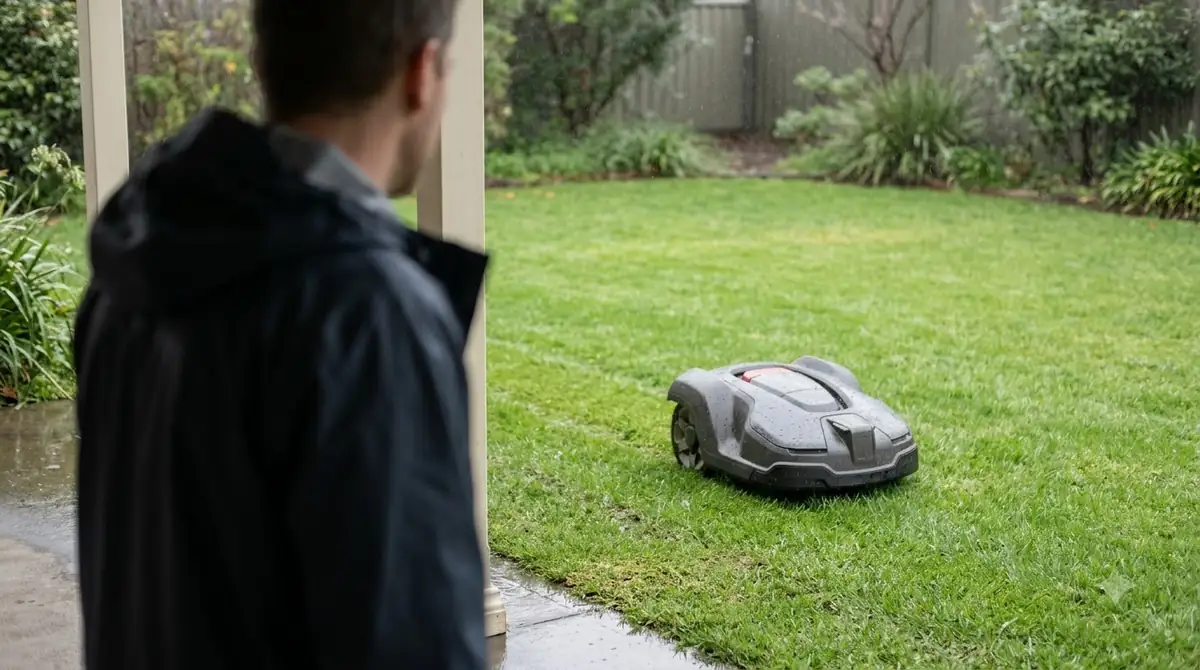
Eufy warns that slipping can confuse the mower’s positioning system and create a risk of sliding toward garden beds or a pond. If your yard has a bank near water, the wet-season slope is the number to check first, not the advertised cutting area.
Rain sensors and the mowing schedule
Many mowers detect moisture and send themselves back to the dock. Eufy’s article notes this rule is mainly there to protect the quality of the cut, since most units tolerate water. Some apps let you adjust sensitivity, so the mower can keep working in light drizzle and dock in heavy rain. That is a better setting for a wet region than turning the sensor off. Rain sensors change when the mower leaves the dock, and how a rain sensor affects mowing is covered in a separate guide. Rain sensors and the mowing schedule matter in wet climates, and a robot mower for Wisconsin lawns covers the colder end of the same problem.
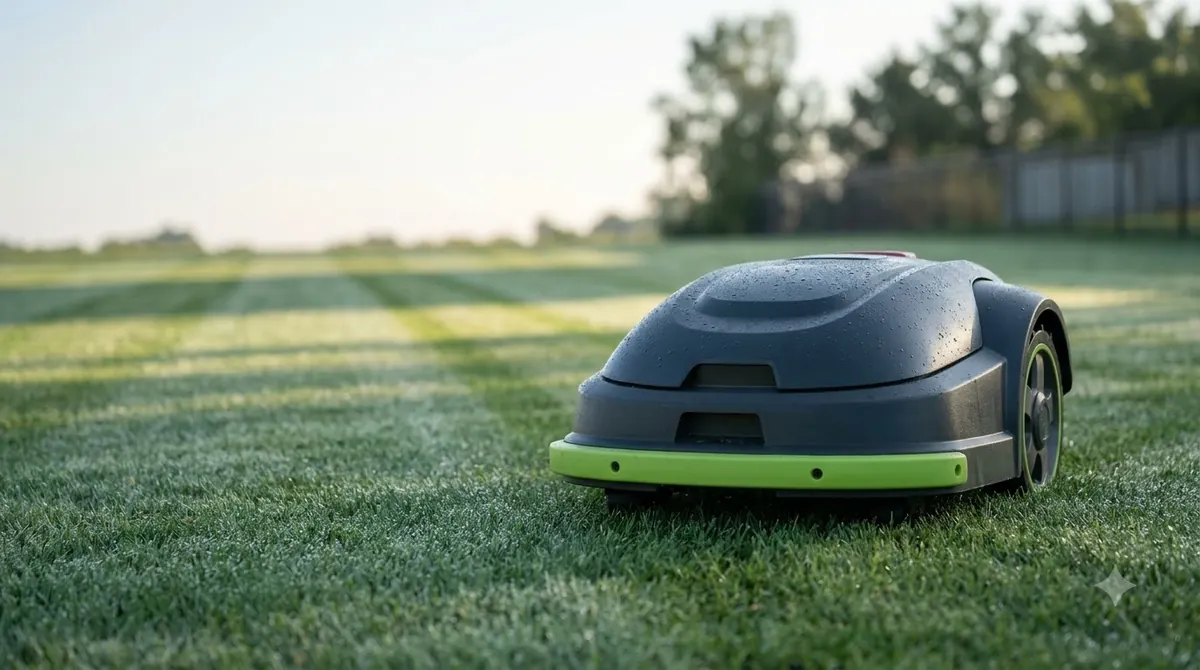
Eufy advises scheduling mowing for dry windows and mowing a little more often during dry spells, rather than waiting and catching up after several wet days. Morning dew can keep grass wet, so late morning or early afternoon often gives cleaner results. Our reading is that for Oregon, the schedule matters as much as the mower model: a mower set to run through a wet week will spend more time on damp grass than one that waits for a dry window.
Moss, clippings and cleaning the underside
Wet clippings stick together and cling under the deck. Eufy says this can slow the blades, drain the battery faster and leave clumps that can smother healthy grass, so the deck needs more frequent cleaning after wet sessions. The Mammotion seasonal guide makes a similar point for the cooler months, advising owners to remove fallen leaves, twigs and mud from the underside, wheels and sensors, because moisture-soaked debris can rust metal parts and block sensors. Clippings and moss build up under the deck, so it is useful to know how robot mowers with dual blades handle cleaning and cutting.
Moss is a separate question. We did not find a source that measures moss growth in Oregon, so we do not put a number on it. Our reading is that a lawn that stays soggy is the one most likely to lose ground to moss, and that a mower with strong traction is less likely to make the bare, slippery spots where moss takes hold. Fix drainage first where you can.
What to check before you buy for an Oregon yard
Use this list to narrow the field before you buy.
- Traction system. Look for all-wheel drive or strong, wide traction wheels, and check the wet-slope claim in the manual.
- Maximum gradient. Compare the slope rating in the manual to the steepest bank in your yard.
- Rain sensor settings. Confirm the sensitivity can be changed and that the mower can be kept from docking in light rain.
- Dock placement. Plan a dry, level pad with room for the mower to enter and leave.
- Cleaning access. Check that the deck and wheels are easy to reach after wet mowing.
The best robot mower for Oregon lawns is the one you can keep clean, on a schedule that waits for dry weather, with the grip to climb your wettest slope. Check those three before you compare brands.
Frequently asked questions
Can a robot mower cut wet grass in Oregon?
It can, but manufacturers generally discourage it. Eufy says cutting wet grass is generally discouraged because damp blades can tear the grass and wet clippings clump under the deck. Our reading is that the safer approach is to wait for dry windows.
Should I turn off the rain sensor?
Usually not. Eufy says disabling it is “not recommended for regular use.” If the sensor docks the mower too often, adjust its sensitivity in the app instead of turning it off.
What matters most for a sloped, wet yard?
Traction and the maximum gradient in the manual. Robomow says traction wheels improve grip on slopes and in wet conditions, and it warns that an overwhelmed mower can stall or slide.
Does moss stop a robot mower from working?
We did not find a source that measures this for Oregon. Our reading is that a soggy, poorly drained lawn is more likely to slip and build up moss, so drainage and a mower with good traction help more than any single setting.
Sources
- Eufy, robot lawn mower and wet grass (manufacturer): guidance on wet cutting, slipping, clippings and rain sensors.
- Robomow, mowing robots for large areas (manufacturer): traction wheels, gradient checks and dock placement.
- Mammotion, seasonal maintenance tips (manufacturer): cleaning the underside, wheels and sensors after wet weather.
 Up next8 min readBest Robot MowersBest Robot Mower for Idaho Lawns: Cool-Season Grass GuideUpdated Nov 18, 2026
 8 min readBest Robot MowersBest Robot Mower for Wisconsin Lawns: Cool-Season Cut GuideUpdated Nov 18, 2026
 7 min readBest Robot MowersBest Robot Mower for a Lawn with Short Growing SeasonUpdated Nov 18, 2026
 7 min readBest Robot MowersBest Robot Mower With Bluetooth-Only Control: What to CheckUpdated Nov 14, 2026
 7 min readBest Robot MowersBest Robot Mower for a Lawn with a Pergola: What to CheckUpdated Nov 14, 2026
 8 min readBest Robot MowersRobot Mower Buying Checklist for First-Time OwnersUpdated Nov 17, 2026