
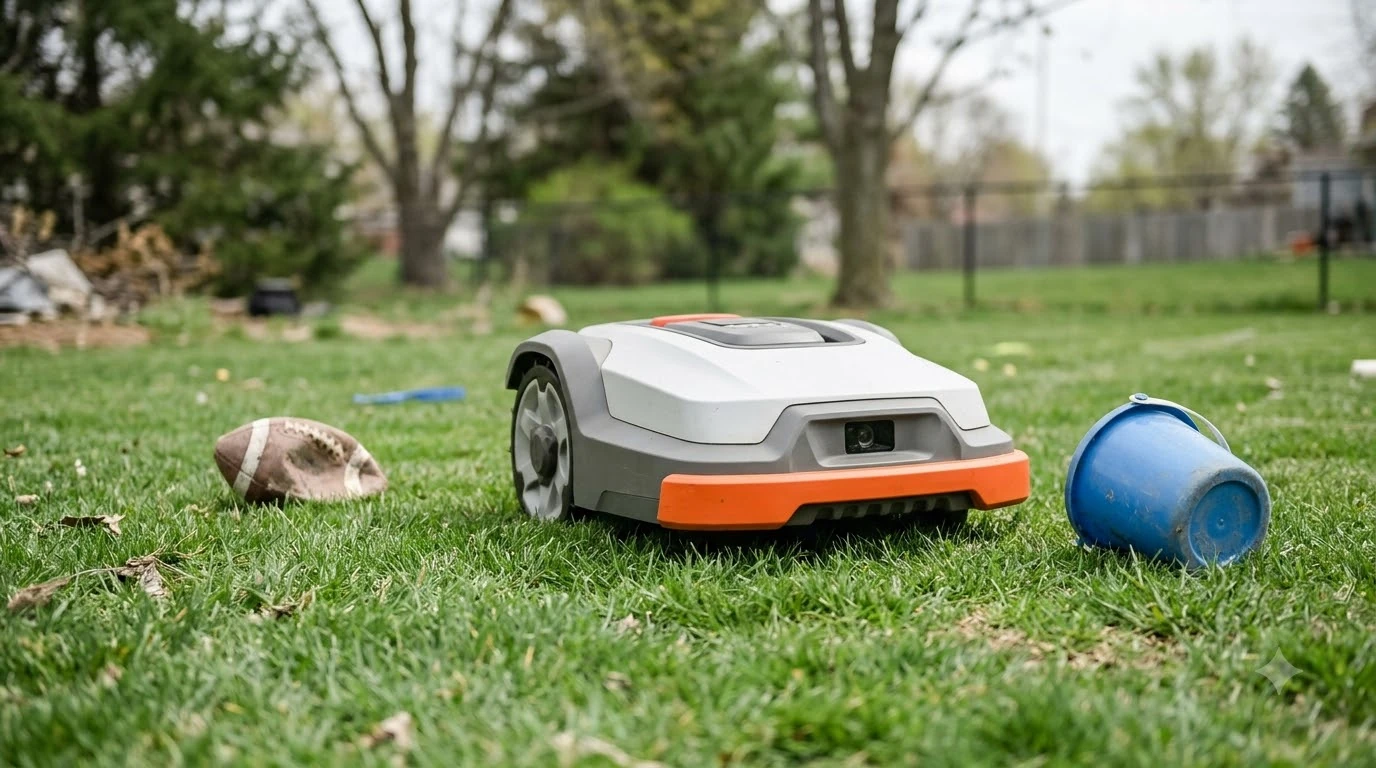

The best robot mower for a lawn with a pergola is one that senses obstacles reliably and can get around posts without a wide clearance. A pergola adds posts, shade, and sometimes a patch of grass that the sun barely reaches. Those three things test a mower in different ways, so the right choice depends on how the posts are laid out and how much of the lawn sits under the structure.
The short answer
- Look for obstacle sensing that can detect thin posts and footings, not just large objects. Camera or LiDAR systems are generally better suited to this than bump sensors alone.
- Measure the gap around each post and compare it with the passage width the boundary setup allows.
- Plan for shade under the pergola, which often means grass that grows more slowly and needs a higher cutting height.
- Keep the boundary away from the footings so the mower does not repeatedly bump the same post.
Why a pergola is harder than an open lawn
An open lawn lets a robot mower run straight lines and make broad turns. A pergola breaks that pattern. Each post is a small obstacle that must be detected and avoided, and the mower may have to thread between two posts or follow the edge of a paved patio that runs underneath. Posts are also thin, which is harder for some sensing systems to see than a flower pot or a garden hose. A pergola adds obstacles and shade, so robot mowers for tricky lawn layouts show the wider options. Hard-surface edges nearby are covered in mowing a lawn with a patio.
Shade is the other factor. Turf under a structure gets less light than turf in the open, and University of California IPM guidance on mowing notes that shade is one reason to cut turf higher, since taller grass shades the soil and holds moisture better. A lawn under a pergola therefore often needs a higher cutting height than the rest of the yard, which is a setting most owners do not expect to change for a robot mower.
Best robot mower for a lawn with a pergola: what to check
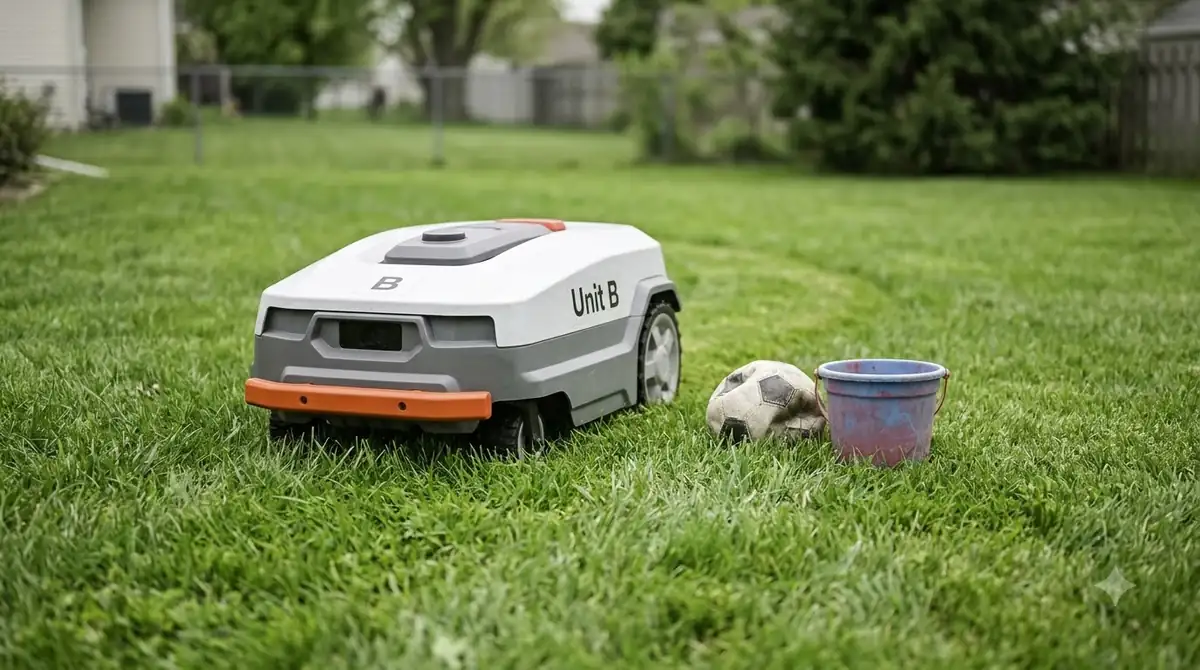
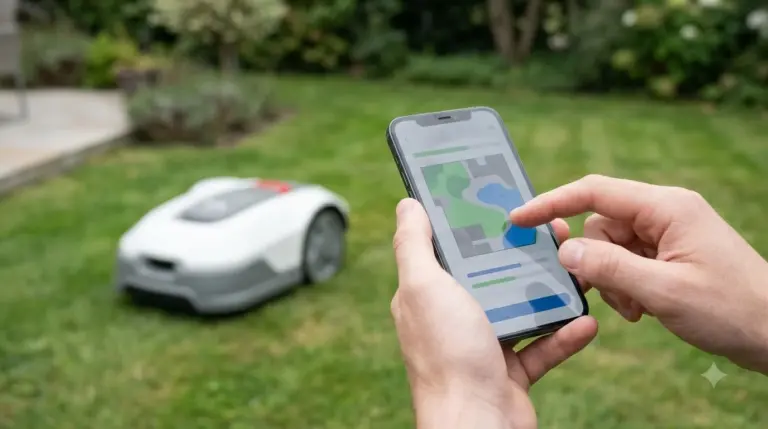
Start with the obstacle system. Robomow’s comparison of boundary wire and grass sensors explains how different approaches find edges and obstacles, and the same thinking applies to posts. A mower that relies mainly on a boundary wire will not see a post until it bumps into it, so the wire must be placed to keep the mower clear of the footing. A mower with camera or LiDAR sensing can, in principle, react to the post itself, but it still needs enough light and a clean lens to do so reliably. Remote scheduling varies by model, so review app control features to ask about.
Next, check the physical size of the mower and the passage it needs. Husqvarna’s support article on creating passages in a boundary wire installation shows that passage width depends on how the boundary is laid out, and that a narrow gap can be made to work with the right wire spacing. If the gap between two posts is narrower than the mower’s body or the minimum passage width, the mower will simply skip that area, so measure every gap before you buy.
How to lay out the boundary for a pergola lawn
Keep the boundary wire at least a short distance away from each post footing rather than running it tight against the concrete. That leaves room for the mower to turn and reduces the number of collisions with the same post. Where posts line a walkway, plan a clean corridor instead of trying to fit the mower through a gap that barely clears the chassis. The corridor can be a few inches wider on the side where the mower enters, which makes it easier for the mower to find its path.
Also think about the patio under the pergola. A paved surface is usually a no-go zone, so the boundary should exclude it cleanly. If the mower is meant to reach the grass under the structure, check that it can enter and leave the area without getting stuck at the edge of the paving.
Set the cutting height for shaded grass
For the best robot mower for a lawn with a pergola, the cutting height matters as much as the sensors. Overhead cover can affect navigation, so read the page on robot mowers on tree-covered lawns before you set the boundary.
Turf under a pergola usually grows thinner and more slowly than turf in full sun. Our reading is that you should set the mower higher than the rest of the lawn in that zone, then lower it only if the grass stays dense. Robomow’s guidance on ideal cutting height for robotic lawnmowers stresses that the height should match the grass type and the amount of light it receives, not a single standard number. If your mower allows zone-based height settings, use them; if not, set the height for the shaded area and accept a slightly longer cut in the sun.
Avoid cutting more than about a third of the blade height in one pass. Taking too much off stresses shaded turf, and a robot mower that runs often can remove grass steadily if the height is set too low.
Questions to ask before you buy
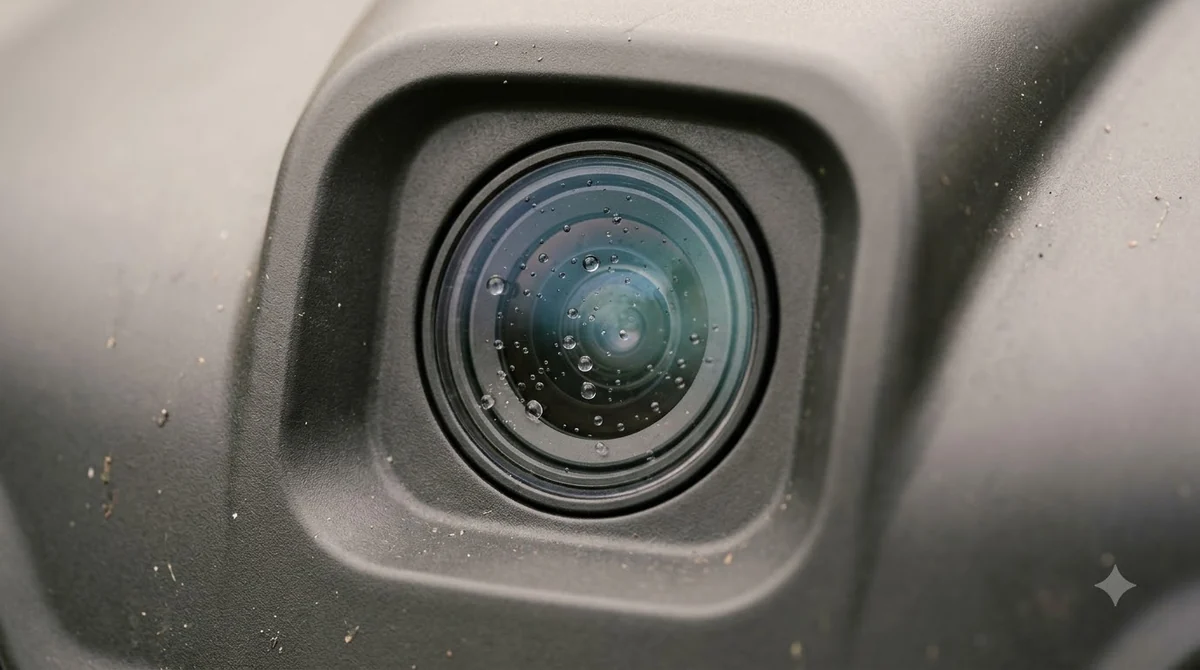
Ask the seller how the mower detects posts, whether it needs a boundary wire under the pergola, and what the minimum passage width is for the model. Ask whether the sensing system works in low light, since shade under a structure can reduce the image quality of a camera-based system. Finally, ask how the mower recovers when it gets stuck, because a repeated stop at the same post is one of the most common complaints from owners of mowers with a structure in the yard.
If you are comparing the best robot mower for a lawn with a pergola, a vague answer is a warning sign. The seller should be able to explain the detection method and the passage width for your layout. A clear, specific answer about obstacle detection and passage width is a better sign than a list of features that does not address your layout.
Related reads: Add-ons can help in tricky lawns, so see accessories worth considering for outdoor mowers.
Frequently asked questions
Can a robot mower go under a pergola?
Many can, as long as the gap between posts is wide enough for the mower and the boundary is set to allow the route. Check the passage width and the sensing system before assuming it will work.
Do I need a boundary wire near pergola posts?
It depends on the system. Wire-based mowers use the wire to keep clear of posts, while sensor-based mowers can react to posts directly. Either way, plan the boundary so the mower does not repeatedly hit the same footing.
Should I cut grass under a pergola higher?
Usually yes. Shade slows grass growth and thins turf, so a higher cutting height helps the grass hold up better than a height set for full sun.
Will a robot mower damage a pergola post?
Contact with the posts is a risk when the boundary is too tight or the sensors miss thin posts. Protecting the footings with a boundary offset and checking the mower’s obstacle detection reduces that risk.
Sources
- UC IPM, University of California (university extension): mowing height and shade.
- Husqvarna support (manufacturer): passage width and boundary wire layout.
- Robomow (manufacturer): boundary wire compared with grass sensors.
- Robomow (manufacturer): ideal cutting height for robotic mowers.
 Up next6 min readBest Robot MowersBest Robot Mower With Apple HomeKit Support: What to CheckUpdated Nov 14, 2026
 7 min readBest Robot MowersBest Robot Mower With Bluetooth-Only Control: What to CheckUpdated Nov 14, 2026
 6 min readBest Robot MowersBest Robot Mower for a Yard with a Rain Garden: What to CheckUpdated Nov 14, 2026
 6 min readBest Robot MowersBest Robot Mower With Replaceable Battery: What to CheckUpdated Nov 14, 2026
 7 min readBest Robot MowersBest Robot Lawn Mower Memorial Day Sale: What to Check FirstUpdated Nov 17, 2026
 7 min readBest Robot MowersBest Robot Mower for People with Allergies: What to CheckUpdated Nov 17, 2026