
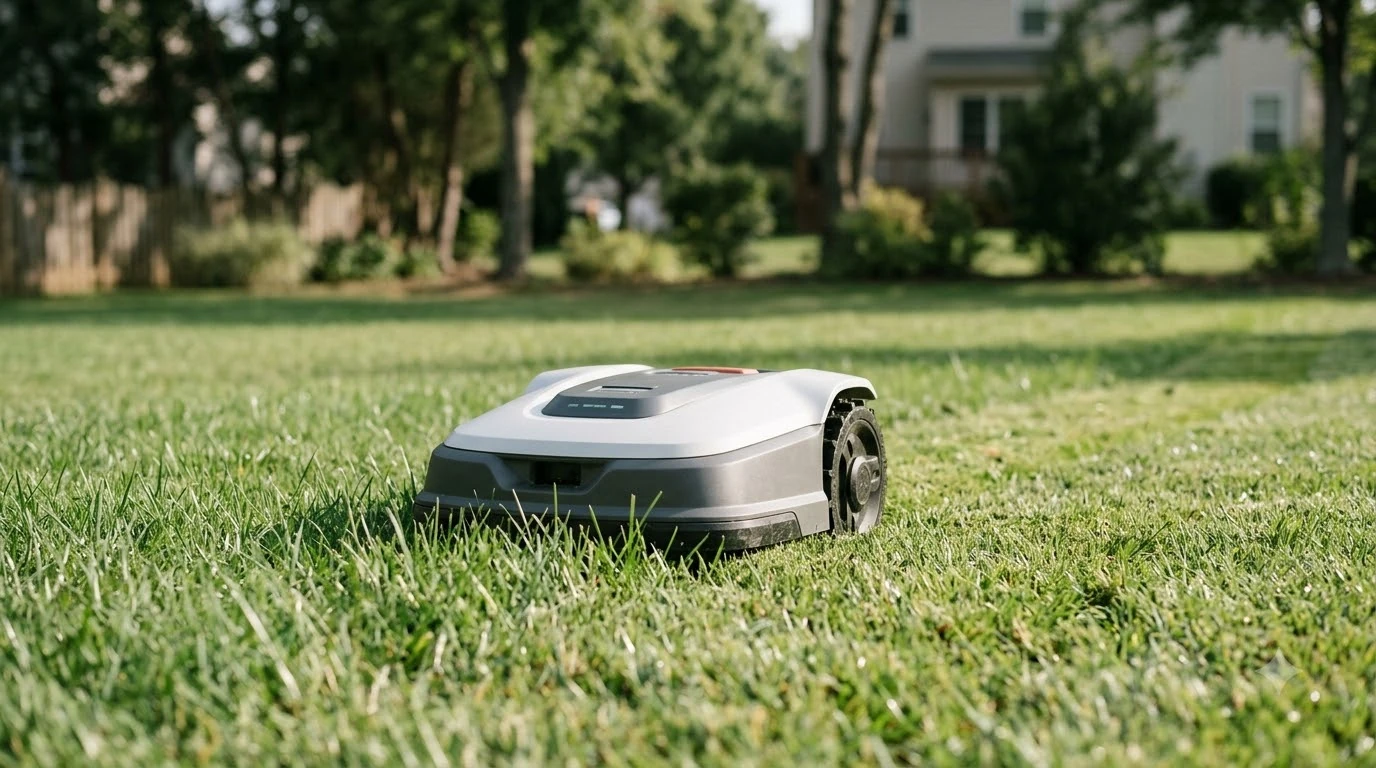

The best robot mower for Utah lawns is one that cuts high, copes with dry heat, and handles the slopes and clay common along the Wasatch Front. Utah State University Extension says common lawn grasses can be mowed at 2 to 4 inches, and recommends about 3 inches in hot, dry weather to improve drought and heat tolerance. This guide covers what to check before you buy, how Utah’s climate and soil change the job, and how to set the mower so it doesn’t scalp a stressed lawn.
The short answer
- Cutting height: look for a mower that reaches 3 inches or higher, since USU recommends about 3 inches for drought and heat.
- Shade: shaded areas should be cut higher than sunny ones, so the mower needs a range that lets you set different heights.
- Dry weather: frequent short runs remove less grass at a time and reduce stress on thirsty turf.
- Slopes and soil: check slope rating and wheel grip, because many Utah yards are on hillsides or heavy clay.
Why Utah’s dry heat changes the cutting height
Utah summers are hot and dry, and lawns under that stress need a taller blade. USU Extension recommends mowing at about 3 inches to help turf handle heat and drought, and advises keeping the grass taller in summer than in cooler months. A taller leaf also shades the soil and helps keep moisture in place. Utah sits west of the Midwest, but the guide to robot mowers for Midwest lawns gives general regional context. A dry-summer region is covered in mowers for California lawns for readers who want more detail on the subject.
For a robot mower, this means the lowest setting matters less than the top of the range. Many models can cut low, but a Utah lawn in July is better off at 3 inches or more. Before you buy, check that the highest setting reaches at least that height, and that the mower can raise the deck during the hottest weeks.
Heads up
USU notes that a lawn growing a little over 4 inches should not be cut below 3 inches in one pass. Following the one-third rule protects the grass from being cut too short all at once.
Grass types you will find in Utah lawns
Utah lawns are a mix of cool-season grasses, such as Kentucky bluegrass, and some warm-season species in the warmer south, such as buffalograss. USU’s basic turfgrass guidance lists common lawn species, including buffalograss, as suited to a 2 to 4 inch mowing height. The extension page does not give a separate number for Kentucky bluegrass, so use the 2 to 4 inch range as the starting point and adjust to the grass you actually have. A neighbouring state with similar climate is covered in mowers for Idaho lawns. High-altitude lawns are covered in mowers for Colorado lawns alongside the guidance above.
| Situation | Height guidance from USU | What to look for in a robot mower |
|---|---|---|
| Common Utah lawn grasses | 2 to 4 inches | A cutting range that covers 2 to 4 inches |
| Hot, dry summer | About 3 inches for heat and drought tolerance | A top setting of at least 3 inches |
| Shaded areas | Higher than sunny areas | Separate height settings or zones |
These numbers are a starting point, not a fixed rule. A lawn that has just been seeded or sodded needs time to establish before you move to the lowest height, so begin higher and lower the setting step by step over several weeks.
Slopes, clay soil, and water restrictions
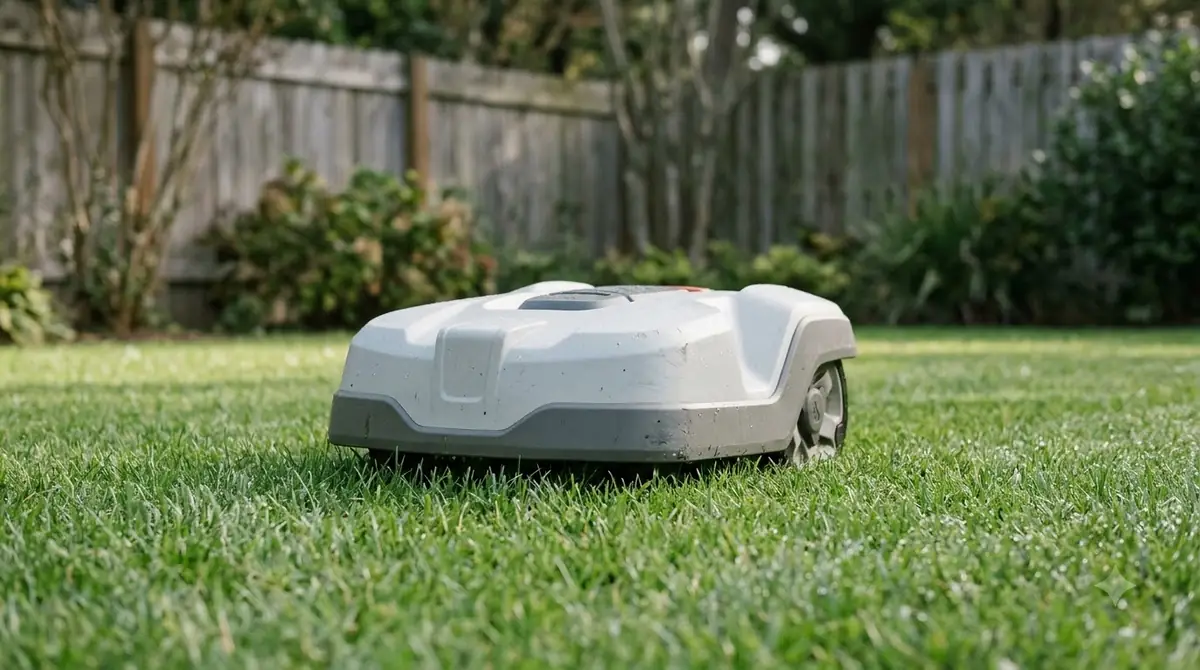
Many Utah yards sit on slopes, and some have heavy clay that drains slowly. A robot mower has to climb hills without slipping and has to handle wet patches after spring runoff. Look for a stated slope rating, strong drive wheels, and a deck that rises over lumps and dips so it does not scalp the high spots. Clay-heavy ground is discussed in mowing lawns on clay soil as a useful companion to the points in this section.
Water matters too. Water use can be limited in some areas during dry spells, and a lawn stressed by drought is more likely to thin out when cut short. Keeping the mower at a higher setting and running it often helps the turf hold up with less water. Our reading is that a model with a wide height range and frequent, short cuts will do the most for a water-conscious lawn.
Mowing schedule through a Utah season
USU’s guidance follows the one-third rule: never remove more than one-third of the blade length at once. A robot mower that runs several times a week keeps each cut small, which meets that rule without any measuring. In spring and fall, the grass grows faster and a mower can run more often. In July and August, the mower can still run, but the cutting height should be raised. Western conditions vary, as mowers for Oregon lawns shows to round out the picture for this topic. Cold springs are discussed in cold springs and short mowing seasons if you want to read further before deciding.
- Spring. Start the mower when growth begins. Cut at about 3 inches to remove winter growth without scalping.
- Early summer. Run the mower often enough that you never remove more than a third of the blade length.
- Hottest weeks. Raise the height toward 3 inches or a little more, and keep the mower running on a regular schedule.
- Fall. Lower the setting gradually as growth slows, then stop when the grass goes dormant.
Shade, trees, and uneven spots
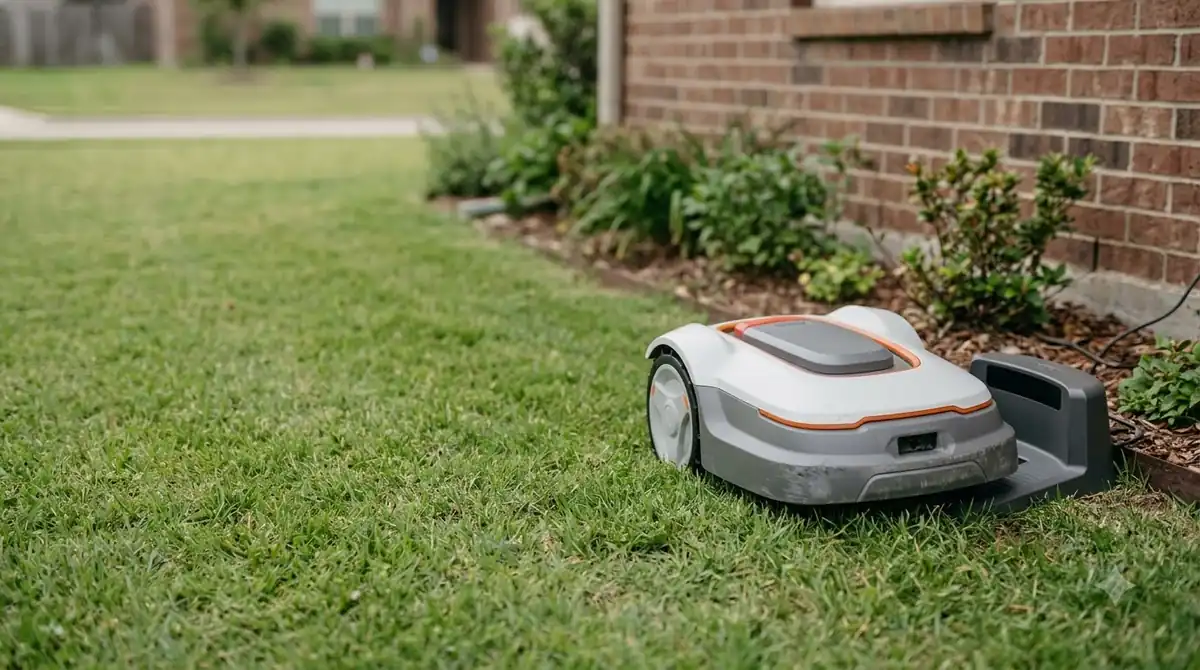
Shaded lawns under mature trees or along north-facing walls grow slower and need a higher cut. USU advises mowing shaded areas higher than sunny areas to add leaf area for capturing light. If your mower can set one height for the whole lawn, the shaded zones may thin out, so look for a model that supports zones or lets you set a higher blade position for those areas. Shade and moisture are covered in mowers for Pacific Northwest lawns for anyone comparing the options in more depth.
Trees and garden beds also create tight boundaries. Plan the boundary wire route around them before you buy, and check how the mower handles narrow passages. A mower that stays on course in tight corners saves you from manual trimming later.
Best robot mower for Utah lawns: what to check before you buy
For a Utah lawn, check the cutting height range, the slope rating, the drive system, and the boundary setup. Also ask how the mower handles wet ground and whether its deck can rise above uneven turf. Compare these against the actual layout of your yard, including any hills, shade, and clay patches, rather than the headline features on the box.
Finally, think about storage. Utah winters are cold in the north and mild in the south, so a sheltered spot out of direct sun and frost will protect the battery and charging dock through the season.
Frequently asked questions
What height should a robot mower cut at in Utah?
Utah State University Extension says common lawn grasses can be mowed at 2 to 4 inches. In hot, dry weather, USU recommends about 3 inches to improve drought and heat tolerance.
Should I cut shaded areas higher in Utah?
Yes. USU advises mowing shaded areas higher than sunny areas, because the extra leaf area helps the grass capture light.
How often should a robot mower run on a Utah lawn?
Run it often enough that each cut removes no more than one-third of the blade length. In spring and fall that usually means several runs a week, and in peak summer you can keep the same schedule with the height raised.
Will a robot mower handle the slopes and clay in Utah yards?
It depends on the model. Check the stated slope rating, the drive wheels, and how the deck follows uneven ground. Clay that drains slowly can make wet patches hard to cut, so pause the mower when the lawn is saturated.
Sources
- USU Extension, Basic Turfgrass Care (university): 2 to 4 inch mowing height for common lawn grasses, about 3 inches for drought and heat, higher cutting for shade, and the one-third rule.
- USU Extension, Southeast Utah Turfgrass Management Calendar (university): taller mowing in hot weather, as shown in its search summary.
 Up next8 min readBest Robot MowersBest Robot Mower for Minnesota Lawns: What to Check Before You BuyUpdated Nov 18, 2026
 6 min readBest Robot MowersRobot Lawn Mower Sale: 4 Checks Before You Buy in 2026Updated Nov 18, 2026
 7 min readBest Robot MowersBest Robot Lawn Mower for 1.5 Acres: What to Check Before You BuyUpdated Nov 16, 2026
 7 min readBest Robot MowersBest Wire-Free Robot Mower Under $1200: What to Check Before You BuyUpdated Nov 16, 2026
 7 min readBest Robot MowersBest Robot Lawn Mower 2027: What to Check Before You BuyUpdated Nov 16, 2026
 9 min readBest Robot MowersRobot Mower Emergency Stop Button: What to Check Before You BuyUpdated Nov 12, 2026