
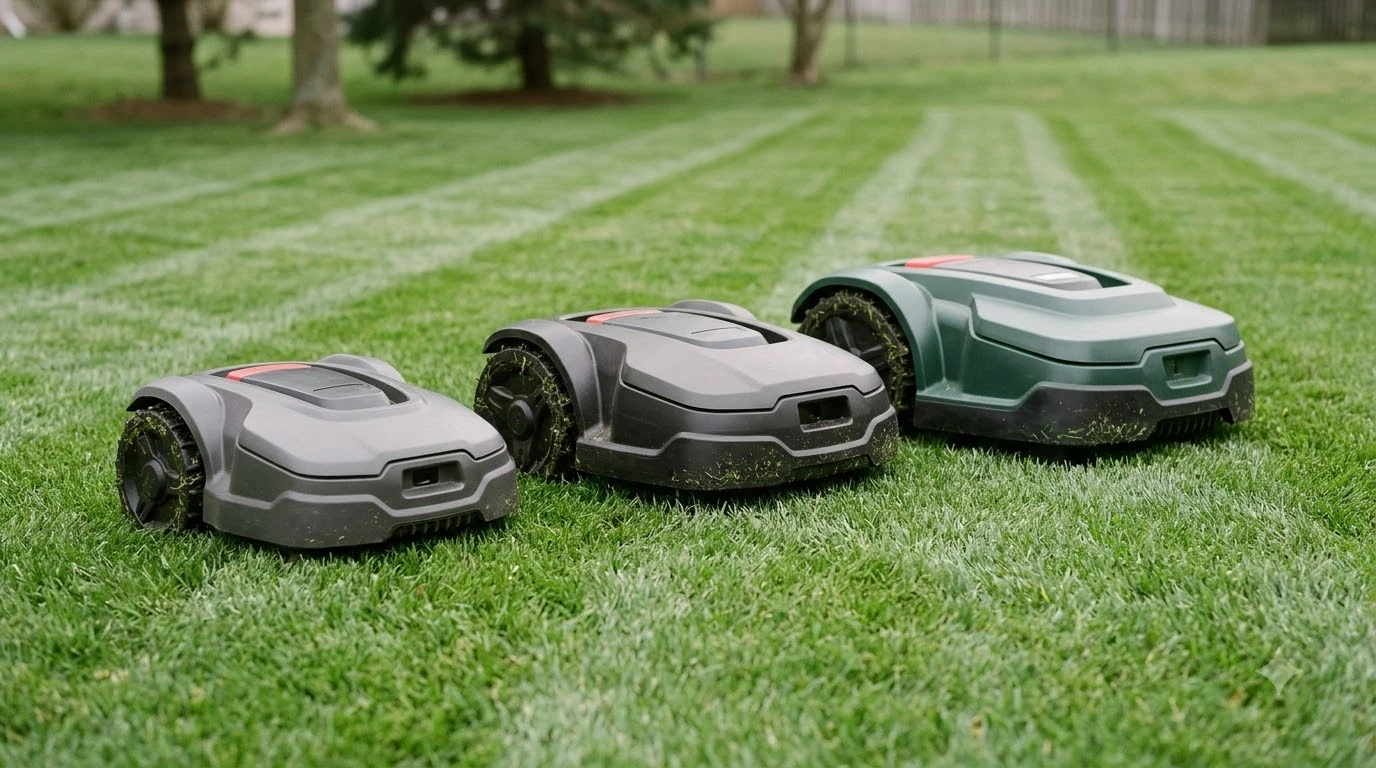

What is a frost guard on a robot mower? It is a setting that keeps the mower parked when the temperature is at or below about 5 °C (41 °F), so it does not cut frozen or frost-covered grass. Husqvarna’s frost guard uses this 5 °C (41 °F) threshold. The exact behaviour depends on whether the mower has a built-in temperature sensor or relies on the weather forecast, so check which one your model uses before you rely on it.
The short answer
- Frost guard: a setting that stops scheduled mowing in cold weather.
- Threshold: Husqvarna uses 5 °C (41 °F) or below as the point where the mower stays parked.
- Forecast version: the Smart Routine parks the mower when the forecast predicts temperatures below 5 °C.
- Sensor version: the mower checks the reading at its scheduled start, delays by one hour, and rechecks hourly.
- Why it matters: frost makes grass more fragile, and frozen blades can be damaged under a mower’s weight.
What is a frost guard and what it does
A frost guard is a rule that stops the mower from starting when the ground is likely to be frozen or covered in frost. Without it, a robot mower follows its normal schedule no matter what the morning is like. With it, the mower waits until conditions improve and then resumes on its own. Frost limits fit into the wider year, which seasonal lawn care schedule for robot mowers lays out month by month.
The idea is simple, but the trigger can differ between models. Some mowers use the weather forecast, while others read a temperature sensor on the body. Those two methods do not always agree, so the frost guard is only as reliable as the input it uses.
The 5 °C (41 °F) threshold and how it is applied
Husqvarna’s current support pages use 5 °C (41 °F) as the threshold for frost guard. On models with a sensor, the rule works like this: if the reading is 5 °C (41 °F) or below when a start is scheduled, the mower delays starting by one hour. While it waits, it checks the temperature every hour at its scheduled times, and it resumes once the reading is above 5 °C (41 °F).
On models without a sensor, Husqvarna’s Smart Routine parks the mower when the forecast predicts temperatures below 5 °C (41 °F), and the mower returns to its charging station. The forecast can differ from the actual conditions on the lawn, so a cold morning after a mild forecast may still catch you out.
Sensor versus forecast: which one your mower uses
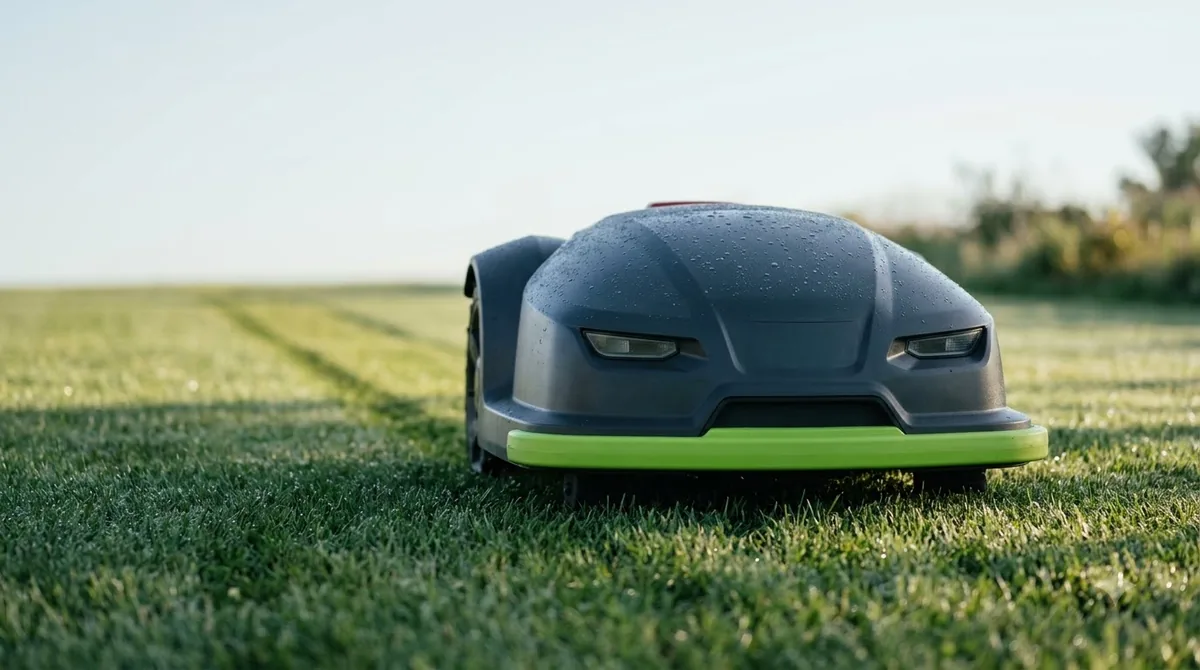
The sensor version reads the temperature where the mower is, although the reading comes from inside the chassis and may differ a little from the outside air. The forecast version reacts to a prediction, not to the grass. Our reading is that the sensor version is the better guide for a yard that stays cold in shade or low ground while the rest of the area warms up.
Check the app or manual for your model. A sensor-equipped mower usually shows the frost guard option under its operation settings, and the Smart Routine is not offered on those models. If you are not sure, switch the feature on and watch the first cold morning.
Why frost matters for the lawn and the blades
Frost makes grass more sensitive to wear. Ice crystals on the leaf can fracture under foot traffic, and our reading is that the same effect can damage leaf blades when a heavy machine rolls over them. Mississippi State Extension has long warned against walking on frozen turf for this reason, and the same logic applies to a mower that runs on frosty grass. Skipping mowing on frosty mornings relates to turf stress, discussed in how robot mowing affects lawn health. Frozen grass is hard on cutting edges, so blade change interval for worn edges shows when to swap them.
A mower that cuts frozen grass may also leave a ragged, bruised finish that browns more quickly. That is why many owners pause mowing until the frost has cleared, rather than cutting early in the morning when the grass is still stiff.
Heads up
A frost guard protects the lawn only when it works. Check the setting after a software update or a change of charging station, because a reset can switch it off without warning.
Frost guard and battery cold
Frost guard is about the grass, but cold also affects the battery. Many manufacturers give a separate temperature range for charging and storage, and that range is often narrower than the range for mowing. If you live where winter goes below freezing, read the charging and storage limits in the manual as well as the frost guard setting. For one model-specific example of battery replacement, see replacing a Luba battery.
Setting up a frost guard for the cold months
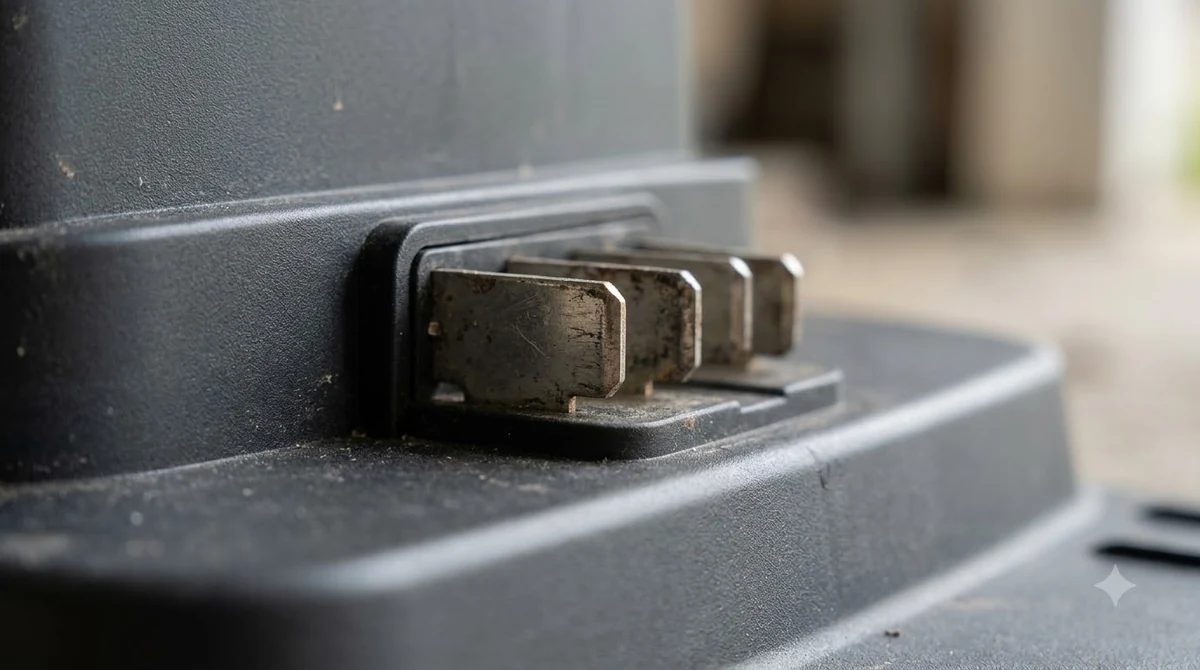
- Find the setting. Look for frost guard or a similar cold-weather option in the operation or schedule menu.
- Choose the method. Use the sensor if your model has one. Use the Smart Routine or forecast option if it does not.
- Set the schedule. Keep the start times in the warmer part of the day when the frost guard can see the change.
- Watch the first cold morning. Confirm the mower stays parked and resumes when the temperature rises.
- Plan for winter. Check the manual’s storage and charging limits before the first hard freeze.
Related reads: After the frost setting is on, how to set a robot mower schedule explains how the weekly windows fit around it. Frost guard is one of several features that change how the mower behaves, and robot mower edge mode explained covers another one in plain terms. Frost guard is one of several scheduling and mode features, and how spot mowing works on robot mowers is a useful companion read.
Frequently asked questions
What is a frost guard on a robot mower?
It is a setting that keeps the mower parked during cold weather, so it does not cut frost-covered or frozen grass. Husqvarna uses 5 °C (41 °F) as the threshold.
What temperature does frost guard use?
Husqvarna’s support pages use 5 °C (41 °F) or below. The sensor version delays starting by one hour and rechecks hourly. The Smart Routine parks the mower when the forecast predicts temperatures below 5 °C.
Is the sensor better than the forecast?
The sensor reads conditions where the mower is, so it can react to a cold patch even when the forecast is mild. The forecast option does not need a sensor, but it can miss local frost.
Why should I avoid mowing frosty grass?
Ice crystals can fracture under foot traffic and damage leaf blades, and a mower rolling over frost can leave a ragged, bruised finish. Waiting until the frost clears is the safer choice.
Sources
- Husqvarna support: protect your lawn with Automower frost guard options (manufacturer): gave the 5 °C (41 °F) threshold, the sensor delay and the hourly recheck.
- Mississippi State Extension: don’t tread on your frozen lawn (university extension): explained how ice crystals fracture leaf blades under foot traffic.
 Up next7 min readLearnWhy Does My Robot Mower Leave Stripes in the Lawn?Updated Nov 13, 2026
 7 min readLearnWhy Does My Robot Mower Take So Long to Finish?Updated Nov 13, 2026
 6 min readLearnWhy Does My Robot Mower Leave Tire Marks on the Dock Area?Updated Nov 13, 2026
 7 min readLearnWhy Does My Robot Mower Wheels Slip on Grass?Updated Nov 13, 2026
 7 min readLearnHow to Calibrate a Robot Mower CompassUpdated Nov 13, 2026
 6 min readLearnWhat Is a Passage on a Robot Mower Map?Updated Nov 13, 2026