
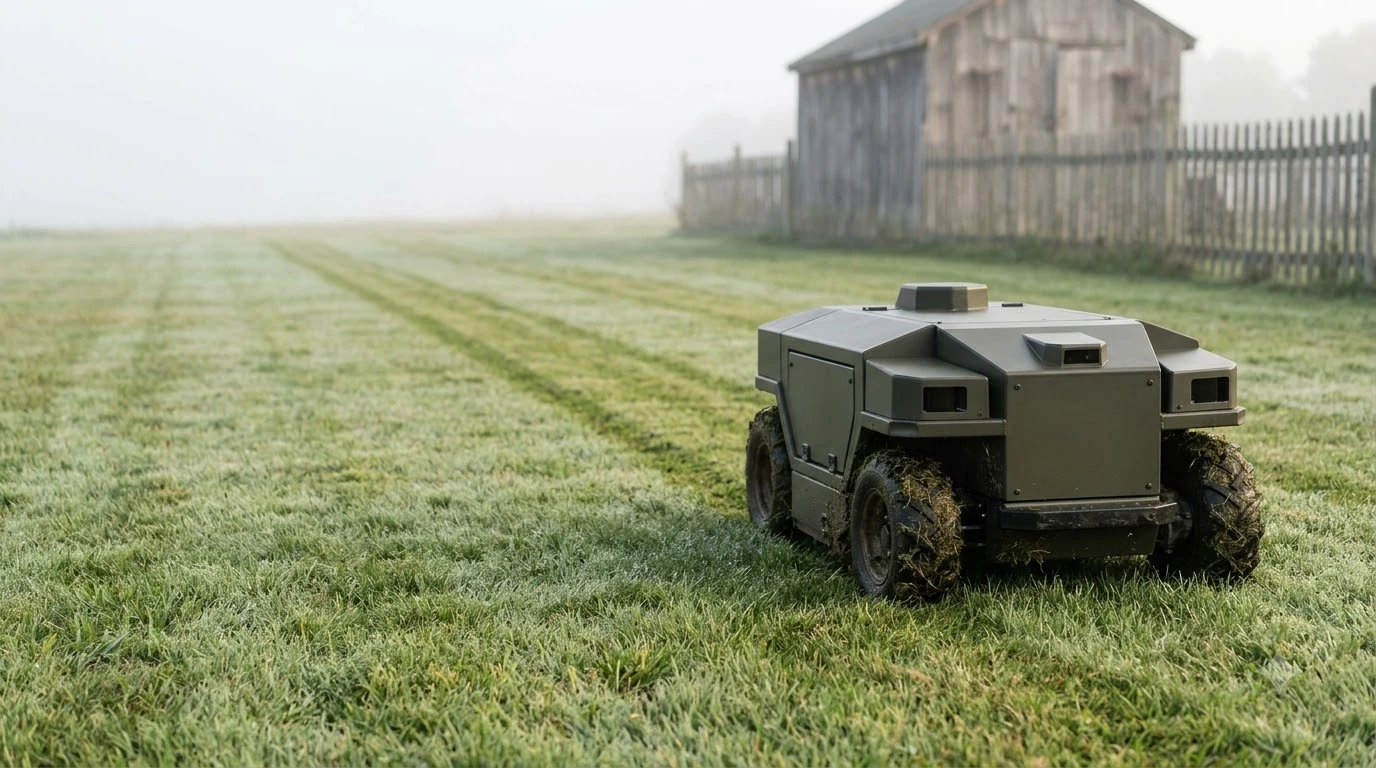

Why does my robot mower leave stripes in the lawn? Usually because the mower follows a parallel pattern, which lays the grass in one direction each session. Many robot mowers use a random path and leave a tidy lawn with almost no visible lines. If you do see stripes, the cause is most often the mowing pattern setting, the direction the mower keeps running, or a lawn that leans one way after repeated passes.
The short answer
- Random mode sends the mower straight until it hits the boundary or an obstacle, then turns to a new heading. It usually leaves little striping.
- Parallel or chequerboard mode cuts in straight rows, which is the setting most likely to produce visible stripes.
- Triangle mode turns 60 degrees between sessions, so its stripes are less visible than parallel mode.
- Traditional mowers bend grass with rollers, which is a different process from a robot’s blade-only cut.
- Quick check: look at the pattern setting in the app before changing anything else.
Why a robot mower usually does not stripe
Most people picture stripes from a traditional mower with a rear roller. The roller bends the grass blades in one direction, and the light then reflects differently on each strip. A robot mower usually has no roller, so it does not bend the grass in the same way. Mammotion, a robot mower maker, describes traditional mowing as the method that bends grass in one direction to create stripes, while robotic mowing cuts from multiple angles and gives a clean, uniform look with minimal striping.
Random navigation is the reason. A mower that runs straight until it meets the boundary wire, an obstacle, or a sensor alert turns to a new heading each time. Over many sessions the passes cross in many directions, so no single direction dominates. That is why a random-mode lawn often looks even.
Parallel patterns create the striped look
Parallel mode is the one that does produce stripes. Husqvarna describes its systematic mowing as cutting the grass in parallel tracks, which creates a striped effect on the lawn. The mower starts each session from the same spot and heads the same way, so every pass lies in the same direction. Mammotion describes the same zigzag of straight, parallel rows. Owners who want the striped look can read getting stripes with a robot mower for the settings that make it more likely. Whether mowers follow straight lines at all is answered in mowers that mow in straight lines with the reasons behind it. Repeated parallel passes can press the grass into lines, which is closely related to how robot mower lawn tracks form along a regularly used path.
The effect is intended. Parallel and chequerboard patterns are chosen for a neat, lined look, and Husqvarna notes that those two patterns produce visible stripes or lines. The trade-off is that the same direction is repeated, so the grass tends to lean the same way over time and the stripe can look darker or lighter depending on the light.
Triangle and grid patterns reduce the stripe
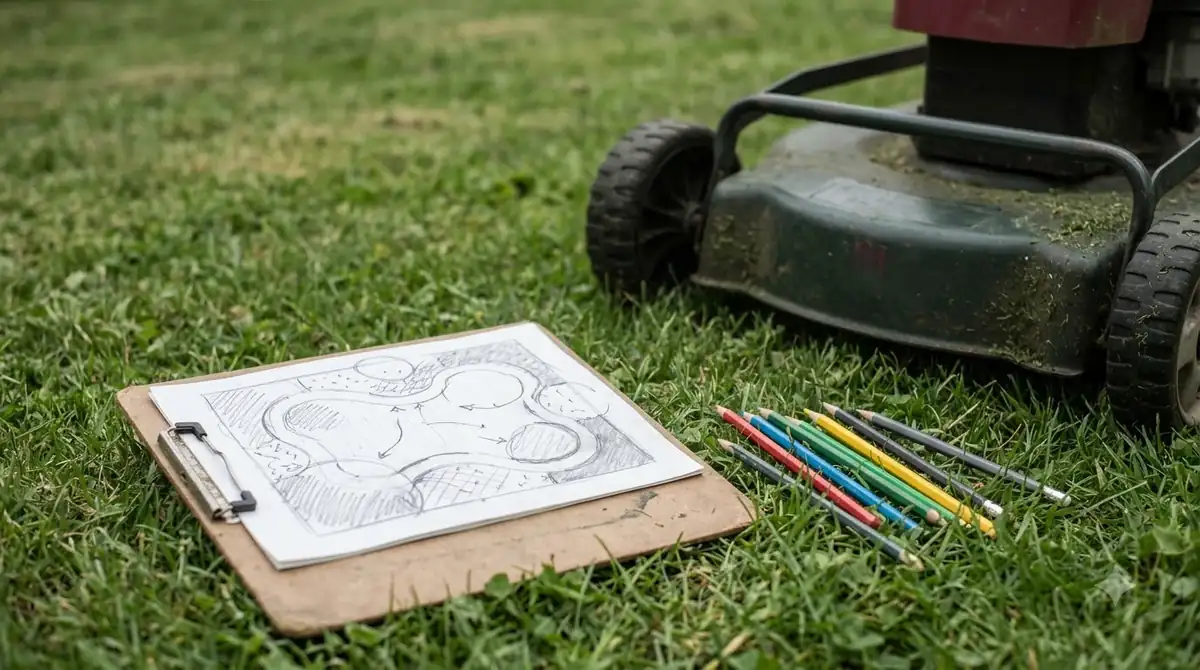
Triangle mode changes the angle between sessions. Husqvarna says the mower mows at a 60-degree angle from the previous session, forming a triangle pattern, and that the stripes are less visible than with parallel or chequerboard patterns. Grid patterns cross horizontal and vertical passes, which also spreads the direction of the grass. Cut width changes how overlapping passes look, as how cutting width shapes the pattern explains with a simple example.
If your goal is an even look with no lines, switching from parallel to triangle or random is the simplest change. You do not need to change the blades or the cutting height to test it. Give the mower a week or two in the new mode, because a pattern only shows up after several sessions.
Lawn condition and grass lean
Stripes also depend on the grass itself. A lawn that leans in one direction shows a light and dark band whichever way the mower goes, and wet or dewy grass can make the bands more obvious. Mammotion says robotic mowing promotes upright growth because the grass is cut from many angles. Patchy shading can also come from uneven cutting, which uneven cutting patterns lists with possible causes and fixes. Grass that has grown long leans differently, and handling long grass before mowing describes how to deal with it.
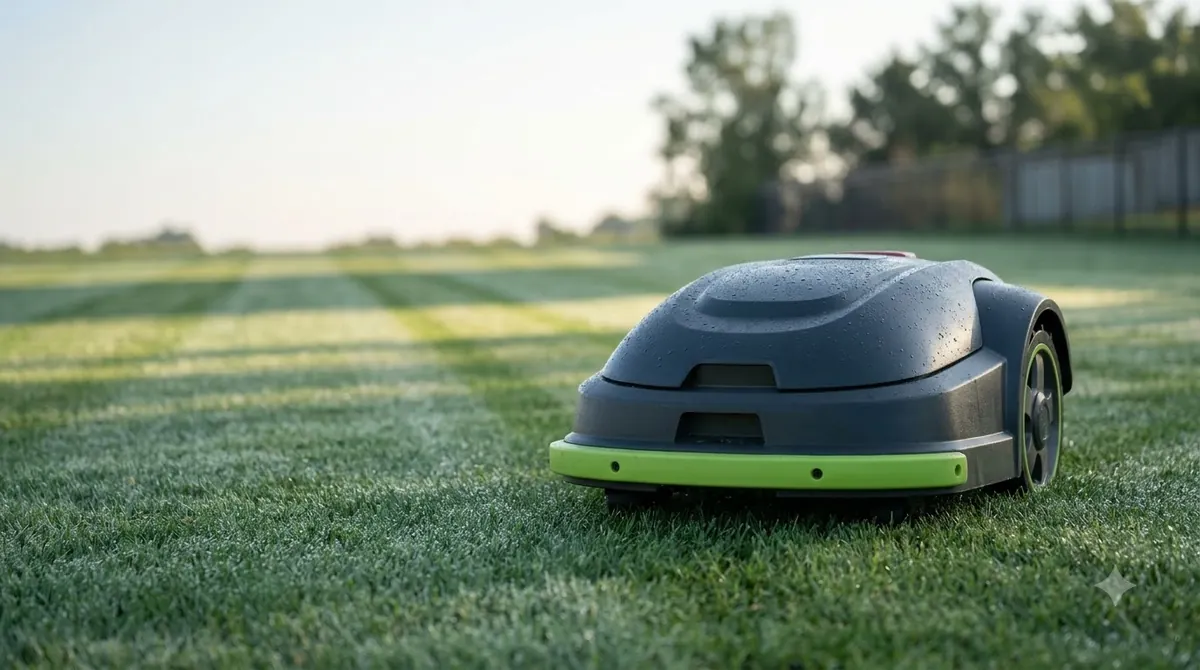
Mowing height and frequency matter too. Cutting very short to force a pattern is not a good idea, because it puts the grass under stress. Our reading is that a healthy lawn at a steady height shows fewer stripes than a thin lawn cut low, and that the pattern is easier to see on a dense lawn in good light.
Slopes and uneven ground
On a slope, the pattern can cause wear on the grass. Our suggestion is to run the pattern straight up the slope rather than across it, since passes across a hill tend to wear a line into the turf. If you see bare lines on a hill, change the pattern direction before changing anything else, since a wheel track can look like a stripe.
Wheel tracks are a separate problem from stripes. Repeated passes on the same line can press the soil and leave ruts, which show up as darker or lighter lines. If the lines follow the wheel path and not the pattern, the issue is ground compaction rather than the mowing pattern.
Checklist before you change the mower
- Pattern. Check whether the app is set to parallel, chequerboard, triangle, or random, and try triangle or random first if you want no lines.
- Direction. On a slope, we suggest running the pattern straight up the hill to reduce wear.
- Grass. Keep the lawn healthy and at a steady height, and avoid cutting it very short.
- Ground. If lines follow the wheel path, look for compaction or ruts and fix the soil before changing the pattern again.
- Time. Give a new pattern several sessions before judging the result.
Most stripe questions come down to the pattern setting. Changing that one setting resolves most cases, and only a few need a closer look at grass or soil.
Frequently asked questions
Do all robot mowers leave stripes?
No. Random-mode mowers usually leave a fairly even lawn with little striping. Stripes appear mainly when the mower uses a parallel or chequerboard pattern, and the strength of the stripe depends on the grass and the light.
How do I get stripes with a robot mower?
Choose a parallel or chequerboard pattern in the app, and keep the mowing direction the same across sessions. Manufacturers describe these patterns as producing visible stripes. Some owners also add a roller or striping kit, though that is a separate accessory.
Why are the stripes uneven or patchy?
Uneven stripes usually come from grass that leans, wet or dewy grass, or ruts from repeated wheel passes on one line. Check whether the lines follow the pattern or the wheel path, then adjust the pattern or the ground.
Can stripes harm the lawn?
A pattern itself is not harmful, but repeated passes on slopes can wear the grass. Running the pattern straight up a hill, rather than across it, is a sensible way to limit that wear. Keep the grass healthy and the cutting height steady.
Sources
- What is Systematic Mowing? (Husqvarna): parallel and chequerboard patterns produce visible stripes, triangle mode is less striped, and the slope advice.
- Lawn mowing patterns for robotic lawn mowers (Mammotion): random, parallel, and grid patterns, and how traditional and robotic mowing affect grass lean.
 Up next6 min readLearnWhy Does My Robot Mower Leave Tire Marks on the Dock Area?Updated Nov 13, 2026
 7 min readLearnWhy Does My Robot Mower Leave Clumps of Grass?Updated Nov 13, 2026
 8 min readLearnWhy Does My Robot Mower Leave Unmowed Circles Around Trees?Updated Nov 19, 2026
 7 min readLearnWhy Does My Robot Mower Take So Long to Finish?Updated Nov 13, 2026
 7 min readLearnWhy Does My Robot Mower Start Mowing at the Wrong Time?Updated Nov 13, 2026
 7 min readLearnWhy Does My Robot Mower Wheels Slip on Grass?Updated Nov 13, 2026