
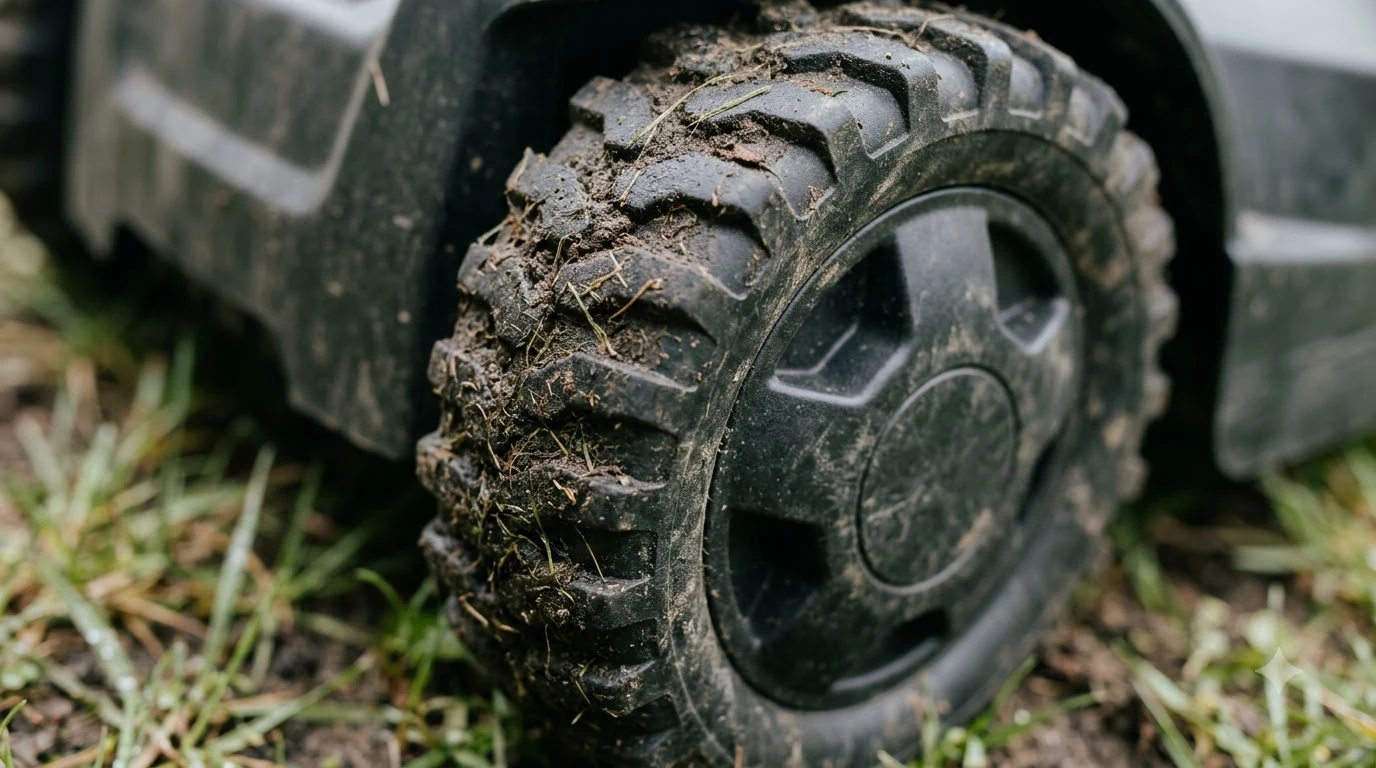

Why does my robot mower spin its wheels when turning? Most residential robotic mowers use differential steering, where one drive wheel slows, stops, or reverses while the other pushes forward, creating lateral scrub and momentary traction loss on damp, sloped, or worn turf. When tire tread packs with wet clippings or meets soft soil at the edge of a mowing row, that twisting force overcomes surface grip and causes the wheel to slip instead of roll cleanly. Understanding how steering geometry, yard moisture, and tire condition interact lets you stop bald turnaround patches before they spread across your lawn.
The short answer
- Differential turning physics: Most two-wheel-drive and conventional all-wheel-drive robot mowers pivot by slowing or locking the inside wheel while driving the outside wheel, forcing the tire to twist sideways against the grass.
- Wet or slick grass blades: Morning dew, irrigation, or recent rain sharply reduces tire grip, turning normal pivot friction into a wheel spin that tears shallow turf roots.
- Clogged treads and worn lugs: Damp clippings and mud pack between rubber tread blocks, smoothing the tire surface so it slides rather than bites during directional changes.
- Slopes and uneven ground at boundaries: Turning near a hillside, dip, or exposed tree root shifts weight off one drive wheel, reducing downward pressure right when torque peaks.
- Caster drag or loose wheel hubs: A front caster jammed with debris or a drive wheel slipping on its axle hub forces the working wheel to work harder and spin out mid-turn.
How differential steering causes wheel spin in turns
Unlike a passenger car with a steering rack, almost every residential robot lawn mower steers by varying the speed and direction of its independent drive wheels.
In a standard two-wheel-drive rear-wheel-drive mower, the unit changes direction at a boundary wire or virtual perimeter by slowing, stopping, or reversing the inner drive wheel while the outer drive wheel continues powering forward. As explained in technical breakdowns of all-wheel-drive robot mower turning physics, slowing the inside wheels while driving the outside wheels forces the slower tires to drag laterally across the turf rather than roll smoothly along an arc. That sideways dragging is known as wheel scrub.
When the grass is dry and the lawn is level, moderate wheel scrub simply bends the grass blades and leaves a faint pattern. However, the moment surface friction drops or resistance rises, the outer drive wheel breaks traction and spins in place, or the inner locked wheel gouges a small divot as it pivots. Even four-wheel-drive models that rely on skid-style differential turns experience this lateral shear force unless they use independent four-wheel steering assemblies that reorient each wheel in the direction of travel.
Environmental and turf conditions that trigger slipping
Your lawn surface changes throughout the day, and minor shifts in moisture or soil firmness often explain why a mower turns cleanly in the afternoon yet spins its wheels every morning.
Turfgrass research and lawn-care industry estimates indicate that traction on wet or damp grass drops significantly compared to dry conditions, which makes morning dew and post-rain schedules the leading triggers for turning spin. Water acts as a lubricant between rubber lugs and leaf blades. At the same time, saturated topsoil loses shear strength, allowing a pivoting tire to twist grass crowns loose from the rootzone rather than push off firm ground.
Slope transitions and boundary edges compound the problem. Most robotic mowers perform their sharpest turns right at the perimeter of the yard or around flower beds and trees. If your perimeter sits on an incline, a drainage swale, or a bumpy border over tree roots, one drive wheel temporarily carries less weight during the turn. With less downward force pressing the tire into the turf, the motor’s rotational torque exceeds available grip and the wheel spins freely.
| Symptom at the turn | Most likely cause | Primary fix |
|---|---|---|
| Wheels spin on flat lawn in early morning | Dew or overnight irrigation slicking the grass blades | Shift mowing schedule to late morning or afternoon |
| Curved scuff marks or bare spots at row ends | Repeated sharp zero-radius pivots in the same spots | Enable wide or rolling turn modes and rotate mowing angles |
| One wheel spins while mower fails to pivot | Trapped debris in front caster or loose drive wheel hub | Clean caster bearings and inspect axle hub tightness |
| Mower digs ruts on a sloped border | Weight transfer off uphill wheel exceeding slope grip | Move perimeter slightly off the break of the slope |
Mechanical issues on the mower to inspect first
Before changing your yard layout or buying aftermarket traction accessories, inspect the mower’s wheels and undercarriage for buildup or hardware wear.
According to Husqvarna Automower wheel drive troubleshooting guidance, entangled grass, mud, and debris around the drive wheels are primary culprits behind wheel drive errors and erratic wheel behavior. When wet clippings pack tightly into the tread grooves, the tire loses its mechanical bite and behaves like a smooth slick. Packed debris behind the wheel hub can also create drag on one side, forcing the opposite wheel to apply extra torque and slip during turns.
Front swivel casters deserve equal attention. On three-wheel and four-wheel differential mowers, the unpowered caster wheels must swivel freely to follow the arc set by the drive wheels. If hair, twine, dried mud, or grass wraps around a caster axle or seizes its bearing, the caster drags sideways across the grass during a turn. That extra resistance stalls the mower’s pivot and causes the rear drive tires to spin out.
Heads up
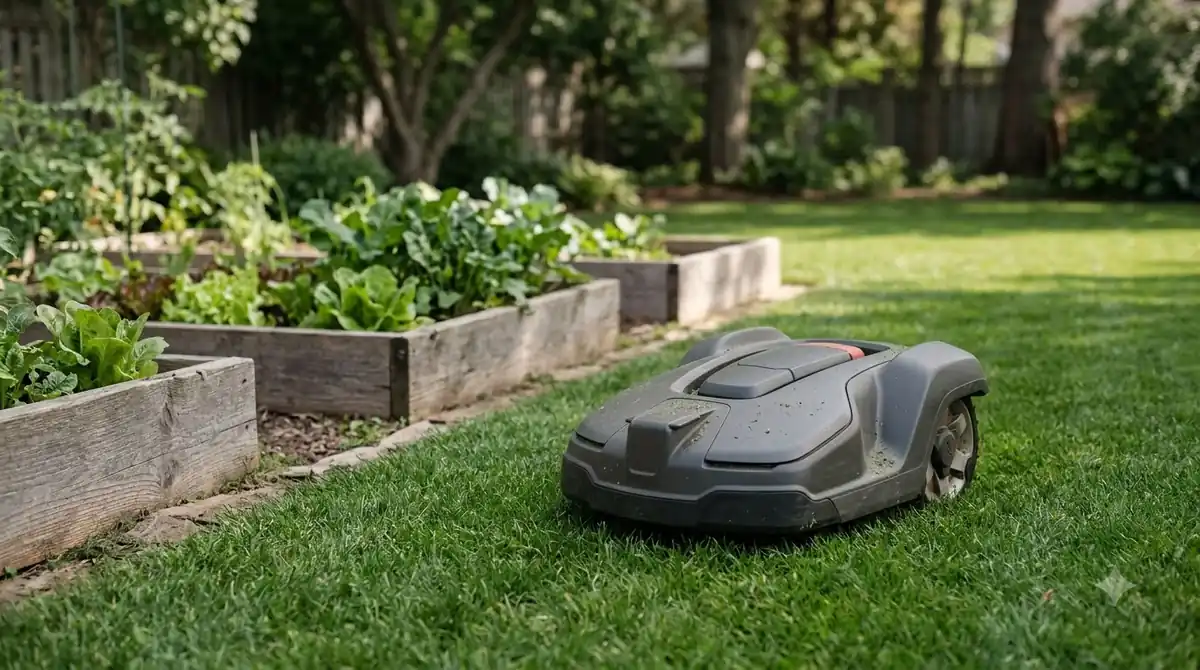
Always power off the robot mower completely and engage any safety lock before flipping the chassis or reaching near the wheels and cutting disc. Even with the blades stopped, rotating a drive wheel by hand can generate back-current or pinch fingers against the wheel arch.
Step-by-step fixes to stop your robot mower from spinning its wheels
You can eliminate most turning wheel spin by combining quick mechanical cleaning with smart scheduling and boundary adjustments.
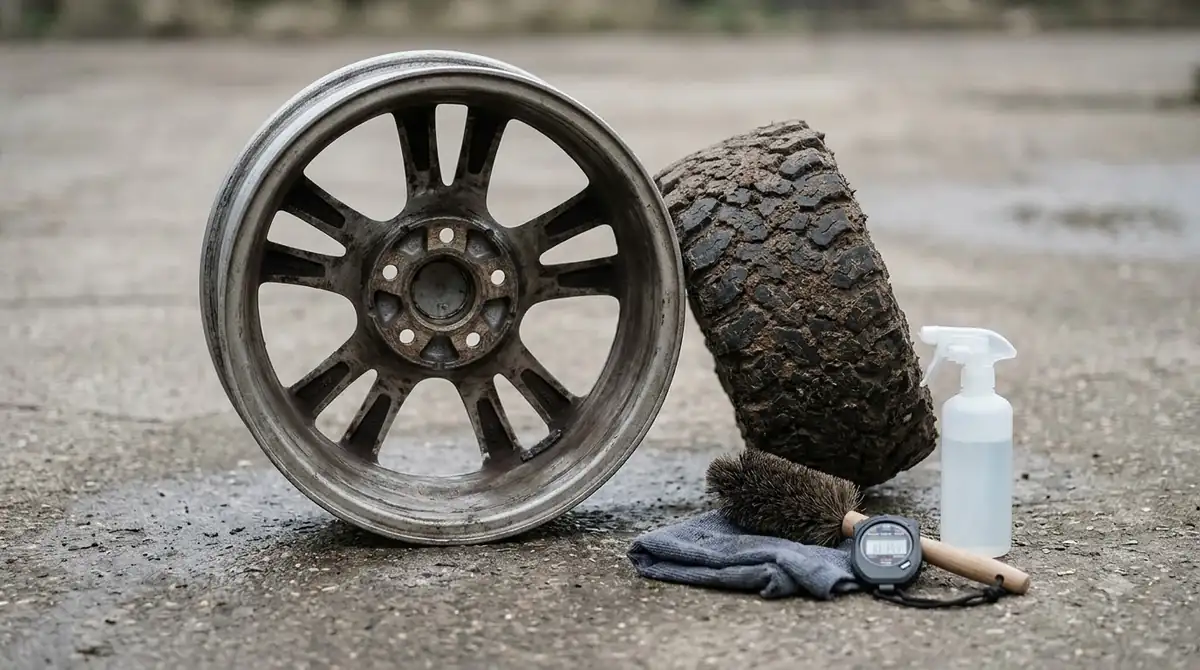
- Clean the drive treads and caster assemblies. Power down the mower, turn it over on a soft surface, and clear all caked mud and grass clippings from the drive wheel lugs, wheel wells, and front swivel casters. Spin each caster by hand to confirm it rotates and swivels without resistance.
- Check wheel hub hardware for play. Grasp each drive wheel and rock it gently side to side while checking the center fastener. If a wheel wobbles on its shaft or turns independently of the motor hub, tighten the axle nut or inspect the hub splines for wear.
- Adjust your schedule to skip wet turf. Set your mower’s timer so it starts after morning dew evaporates and pauses during or immediately after rain. If your model includes a rain sensor or weather-sync feature, enable it so the mower docks before wet blades reduce traction.
- Switch to gentler turn settings and rotate mowing angles. In your mower’s app, select wider, rolling turn options rather than tight zero-radius pivots if available. For systematic-path mowers, rotate the mowing direction between sessions so turns do not repeatedly stress the exact same turf spots.
- Refine perimeter placement on slopes and rough edges. If the mower spins out at the same sloped corner every run, move the boundary wire or virtual perimeter a short distance onto flatter ground, or fill shallow ruts with topsoil so both drive wheels maintain even ground contact.
- Upgrade to high-traction wheels or wheel brushes if needed. For yards with persistent damp shade or gentle grades within the mower’s rated limit, manufacturer terrain kits with deeper treads, added wheel weight, and integrated wheel brushes help keep lugs clear and improve bite without resorting to aggressive metal spikes that can shred healthy grass.
Frequently asked questions
Why does my robot mower spin its wheels only at the edge of the lawn?
The edge of the lawn is where the mower executes its sharpest directional changes while often dealing with uneven soil, exposed roots, or slight slopes along borders. Combining maximum turning torque with reduced tire contact causes the drive wheel to slip right at the perimeter.
Should I put metal spikes on my robot mower wheels to stop slipping?
Metal spikes add grip on steep or damp slopes, but they also puncture and tear turfgrass crowns when the mower pivots in place. Start by cleaning treads, adjusting schedules for dry grass, or using manufacturer rubber terrain wheels before trying metal spikes.
Can a failing wheel motor cause my mower to spin in circles?
Yes. If one wheel motor, gearbox, or hub connection fails while the other continues driving, the mower will repeatedly pivot or spin in tight circles instead of tracking straight. Check for obstructions and loose wheel fasteners first, then contact manufacturer support if one drive wheel lacks power.
Do all-wheel-drive robot mowers ever spin their wheels when turning?
Conventional all-wheel-drive mowers that use differential steering still scrub and occasionally slip their inside wheels during tight turns on soft or wet grass. Only models with independent four-wheel steering that angle all wheels into the turn eliminate lateral wheel scrub.
Sources
- Wheel drive problem — Automower error message (Husqvarna Support): referenced for official troubleshooting steps regarding entangled grass and debris around drive wheels.
- Does an All-Wheel Drive Robot Mower Tear Up Your Lawn? (Romow): referenced for the mechanics of differential turning, lateral wheel scrub, and repeated turnaround wear on residential turf.
- MF2129 Turfgrass Mowing, Professional Series (Kansas State University Research and Extension): referenced for turfgrass management principles on slowing down for turns, making gradual turns, and rotating mowing patterns to reduce wheel wear.
- Common Robot Lawn Mower Problems and How to Fix Them (ANTHBOT): referenced for common causes of wheel spin on wet grass, slopes, and uneven ground.
 Up next6 min readLearnWhy Does My Robot Mower Spin in Circles? Causes and FixesUpdated Nov 14, 2026
 9 min readLearnWhy Does My Robot Mower Stop When Crossing Patio Pavers?Updated Nov 19, 2026
 7 min readLearnWhy Does My Robot Mower Lose WiFi When the Garage Closes?Updated Nov 19, 2026
 7 min readLearnWhy Does My Robot Mower Wheels Slip on Grass?Updated Nov 13, 2026
 7 min readLearnDoes a Robot Mower Charger Need Its Own Circuit Breaker?Updated Nov 12, 2026
 8 min readLearnWhy Does My Robot Mower Leave Unmowed Circles Around Trees?Updated Nov 19, 2026