
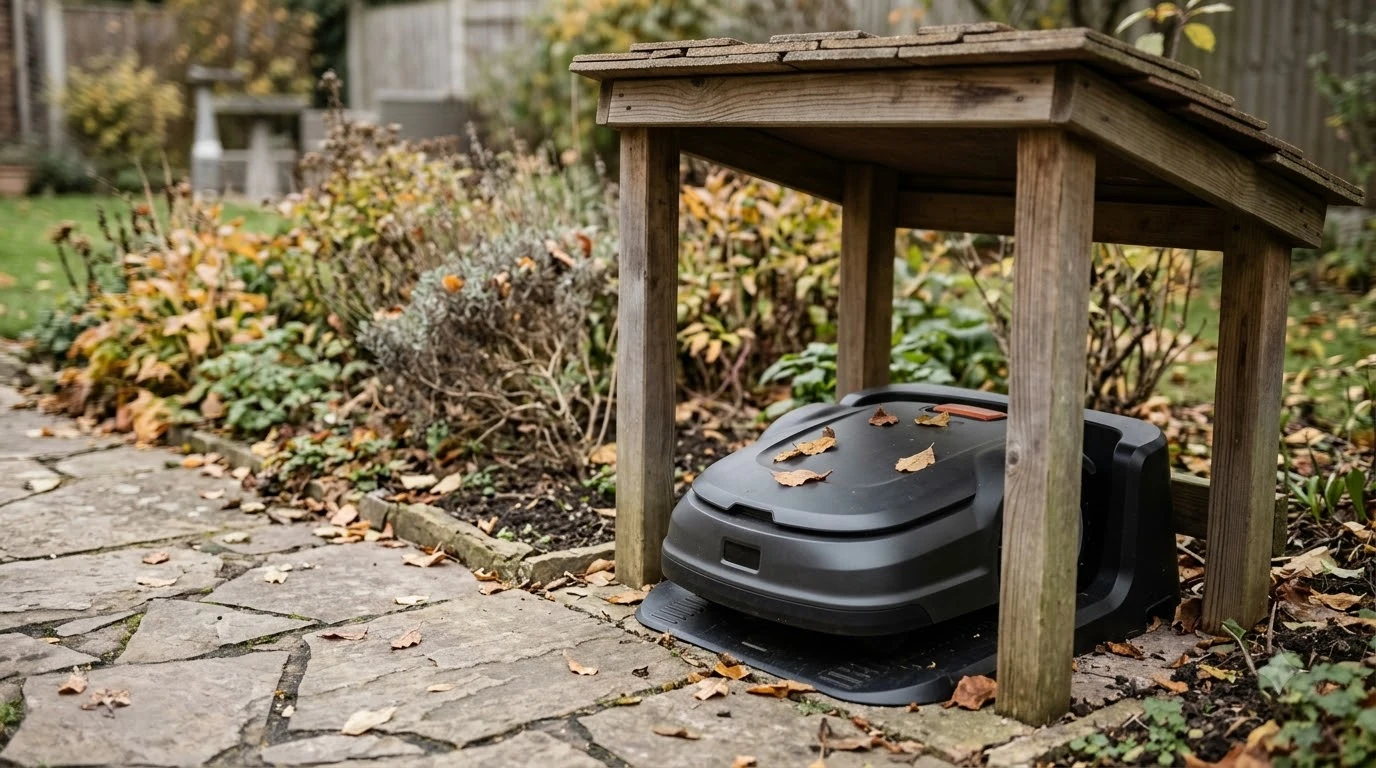

Does a robot mower charger need its own circuit breaker? The manufacturer guidance we could read does not require a dedicated breaker or give a breaker rating. What it does call for is a protected outdoor outlet, no power strip or extension cord, and open airflow around the power supply.
The short answer
- No dedicated breaker is specified in the Husqvarna US guide or the Toro charging station manual we read.
- GFCI protection matters because outdoor outlets are required to have GFCI protection under the NEC, according to CPSC.
- Skip extension cords and power strips. Toro says not to plug its charging station into either one.
- Check first. Confirm the outlet and its breaker with your mower’s manual and a qualified electrician if you are unsure.
Does a robot mower charger need its own circuit breaker? What the manuals say
Does a robot mower charger need its own circuit breaker? None of the robot mower manuals we could read give a dedicated breaker requirement or an amperage rating for the charger. The Husqvarna US charging station guide covers where to place the station and how to keep the power supply cool. It does not address the circuit the outlet sits on.
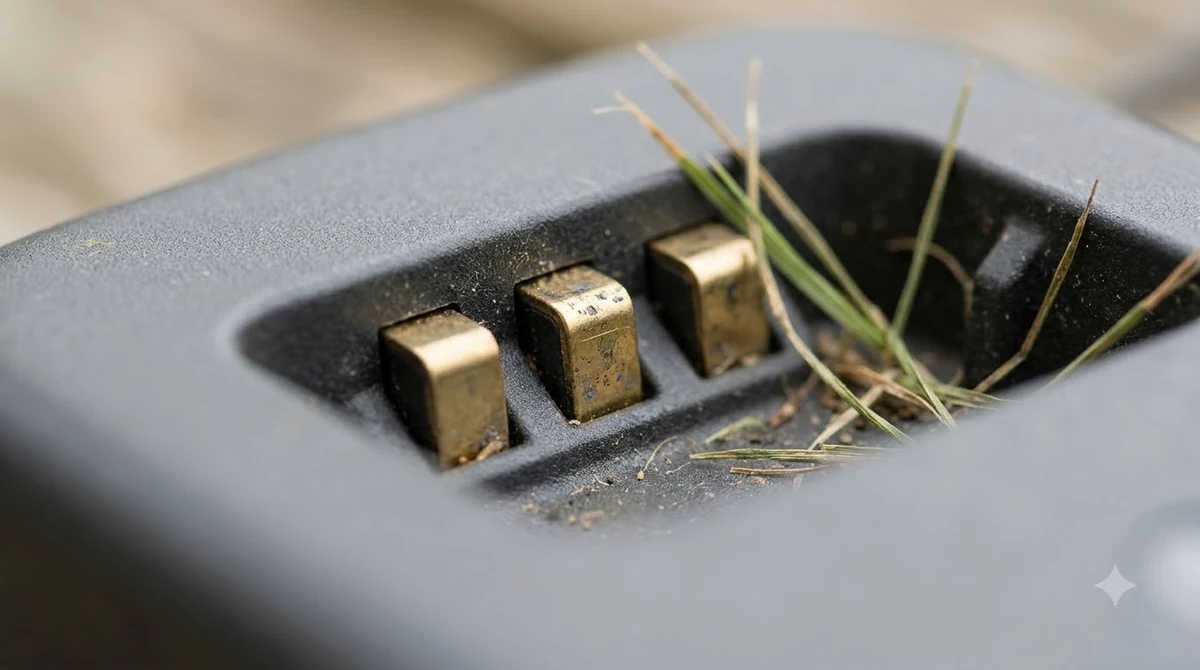
The Toro charging station manual is written for a commercial model, not a consumer robot mower. It lists a 120 VAC input and calls for professional installation. Use it as a reference point for the rules, not as a spec for your own mower.
Why GFCI protection matters more than the breaker
A standard breaker protects the wiring from overload. A GFCI protects a person. According to the CPSC GFCI fact sheet, a GFCI detects a current difference as small as 0.006 A and cuts power quickly, which is why it is the main shock protection for outdoor outlets.
| Protection | What it guards against | Where it fits |
|---|---|---|
| Circuit breaker | Overloaded wiring and overcurrent | Panel, one per circuit |
| GFCI receptacle or breaker | Current leaking to ground, such as through a person | Outdoor and wet-area outlets |
| Portable GFCI | The same leakage risk where the outlet has no GFCI | Between the outlet and the equipment |
CPSC says outdoor receptacles have required GFCI protection under the NEC since 1973. It also recommends a portable GFCI when running a mower, hedge trimmer or edger. Our reading is that a GFCI outlet is a better first check than the breaker rating alone. A GFCI should be tested after installation, at least monthly, and again after any power failure. If you need a cover for the outdoor receptacle, see the best GFCI outlet cover for a robot mower; for what happens when power drops, see what a robot mower does during a power outage.
Why power strips and extension cords are ruled out
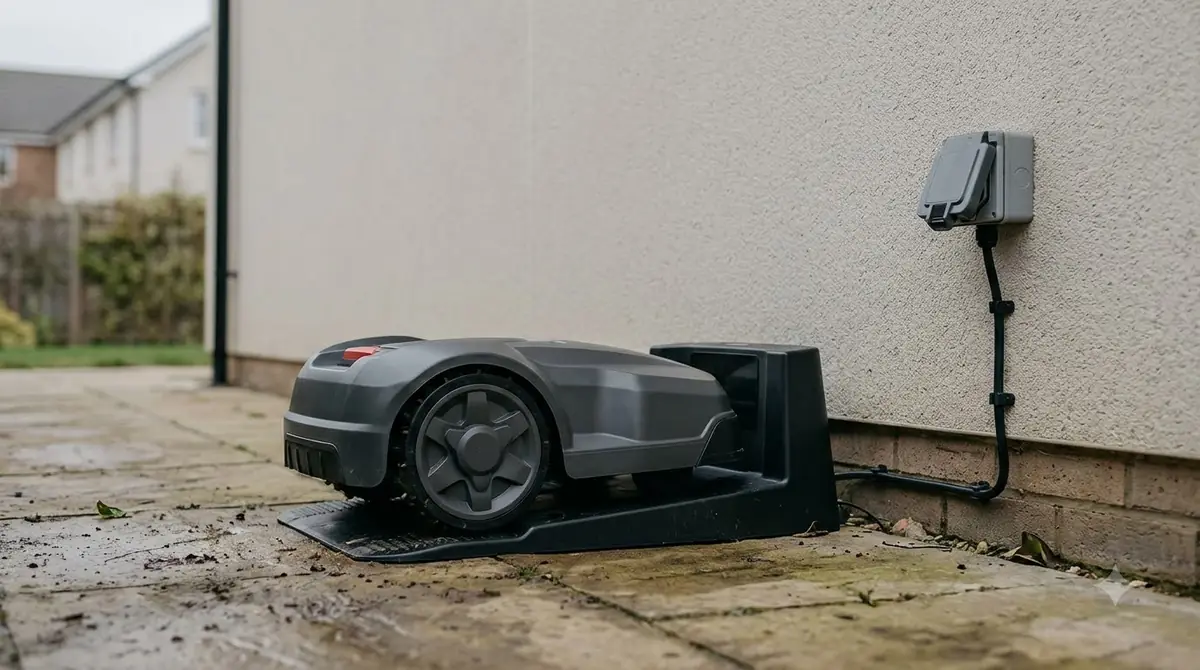
The Toro manual says not to plug its charging station into a power strip or an extension cord. Our reading is that the safer setup is a protected outlet within reach of the charger, so no cord is needed. If a cord is unavoidable, what the makers allow for an outdoor extension cord is worth reading first.
- Power strip: Toro’s rule applies, and our reading is that a strip can be overloaded by other devices.
- Extension cord: CPSC says to use only cords labeled for outdoor use, and Toro says not to use one with the station.
- Fixed outlet: our reading is that a permanent GFCI outlet close to the charger is the safer setup.
How to check whether your charger outlet has its own circuit
If you are asking whether a robot mower charger needs its own circuit breaker at your house, you can often work out the circuit without opening anything. Start with the outlet itself and the panel, then decide whether to bring in help.
- Find the breaker. Check the panel directory, or switch one breaker off at a time until the outlet loses power, then label it.
- List the loads. Note what else plugs into that circuit, such as a freezer, pump or heater.
- Test the GFCI. Press the test button and reset it. If the outlet is not GFCI protected, plan for one.
- Call an electrician if unsure. CPSC says circuit and receptacle GFCIs should be installed by a qualified electrician, and when in doubt, call one.
Where the charger should sit
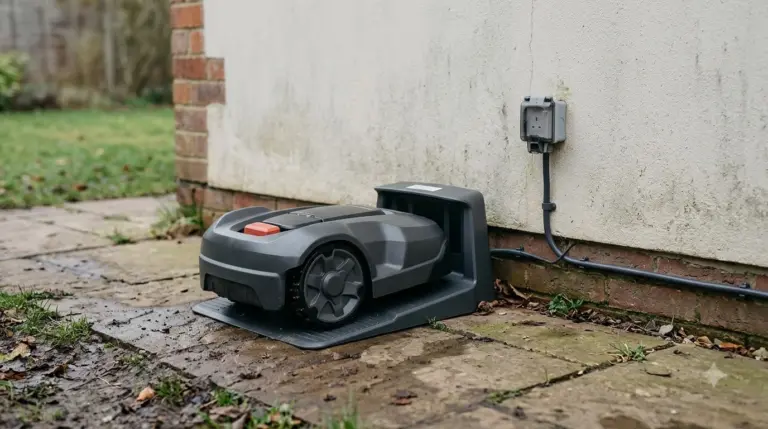
Place the charging station near a power outlet, keep the power supply out of any enclosed box, and leave the sides open for airflow. These rules come from Husqvarna’s US guide. Our reading is that they matter most in a hot garage or a sealed shed; what the manuals say about covers for a charging station covers the weather side.
- Power supply: keep it out of enclosed boxes and allow ventilation to avoid heat build-up.
- Water: the Toro manual sets a 15 m (49 ft) distance from the water edge for its commercial model, so check your own manual for the number.
- Obstacles: the same manual asks for obstacles over 6 m (19.7 ft) away from the station.
What to check before you install the charger
Before you run a new outlet or move the charger, confirm the basics in one pass. Each check is simple, and each one can prevent a trip or a shock.
- The power rules in your mower’s manual for the charging station.
- An outdoor outlet with GFCI protection, tested monthly.
- No power strip or extension cord between the outlet and the charger.
- Cords labeled for outdoor use if any cord is unavoidable.
- A qualified electrician for any new circuit or receptacle work.
So does a robot mower charger need its own circuit breaker? The manuals we read do not say so. A GFCI-protected outdoor outlet, no power strip or extension cord, and a qualified electrician for any new circuit work matter more, and a weatherproof outlet box helps keep the connection dry. This is general information, not installation advice for your home, so follow your mower’s manual and local code.
Frequently asked questions
Can a robot mower charger be plugged into a regular outlet?
Outdoor outlets are required to have GFCI protection under the NEC, according to CPSC. Manuals also rule out power strips and extension cords. Check that the outlet is GFCI protected before you use it for the charger.
Do I need an electrician to install the outlet?
CPSC says circuit and receptacle GFCIs should be installed by a qualified electrician. When in doubt, call one. A qualified electrician can also confirm whether the outlet already has its own circuit.
How often should I test the GFCI?
CPSC recommends testing a GFCI after installation, at least monthly, and after any power failure. The test button should trip the outlet, and you should reset it afterward.
Does a robot mower charger need its own circuit breaker on a shared outlet?
The manuals we read do not state this requirement. Our reading is that a circuit shared with other heavy loads is worth checking with an electrician before you rely on it for the charger.
Sources
- Husqvarna Automower charging station guide (manufacturer): placement, enclosed box and ventilation.
- CPSC GFCI fact sheet (U.S. government): trip sensitivity, outdoor GFCI rule, testing and installation.
- CPSC extension cords and power strips (U.S. government): outdoor-rated cords only.
- Toro charging station manual (manufacturer, commercial model): no power strip or extension cord, input and distance rules.
 Up next6 min readLearnWhy Does My Robot Mower Keep Going Back to the Charger?Updated Nov 14, 2026
 9 min readLearnWhy Does My Robot Mower Spin Its Wheels When Turning?Updated Nov 19, 2026
 7 min readLearnHow Much Maintenance Does a Robot Mower Need?Updated Nov 13, 2026
 8 min readLearnHow Often Does a Robot Mower Need to Charge?Updated Nov 11, 2026
 8 min readLearnHow to Dispose of an Old Robot Mower and Its BatteryUpdated Nov 12, 2026
 10 min readLearnCan a Robot Mower Charger Run on a Generator?Updated Nov 11, 2026