
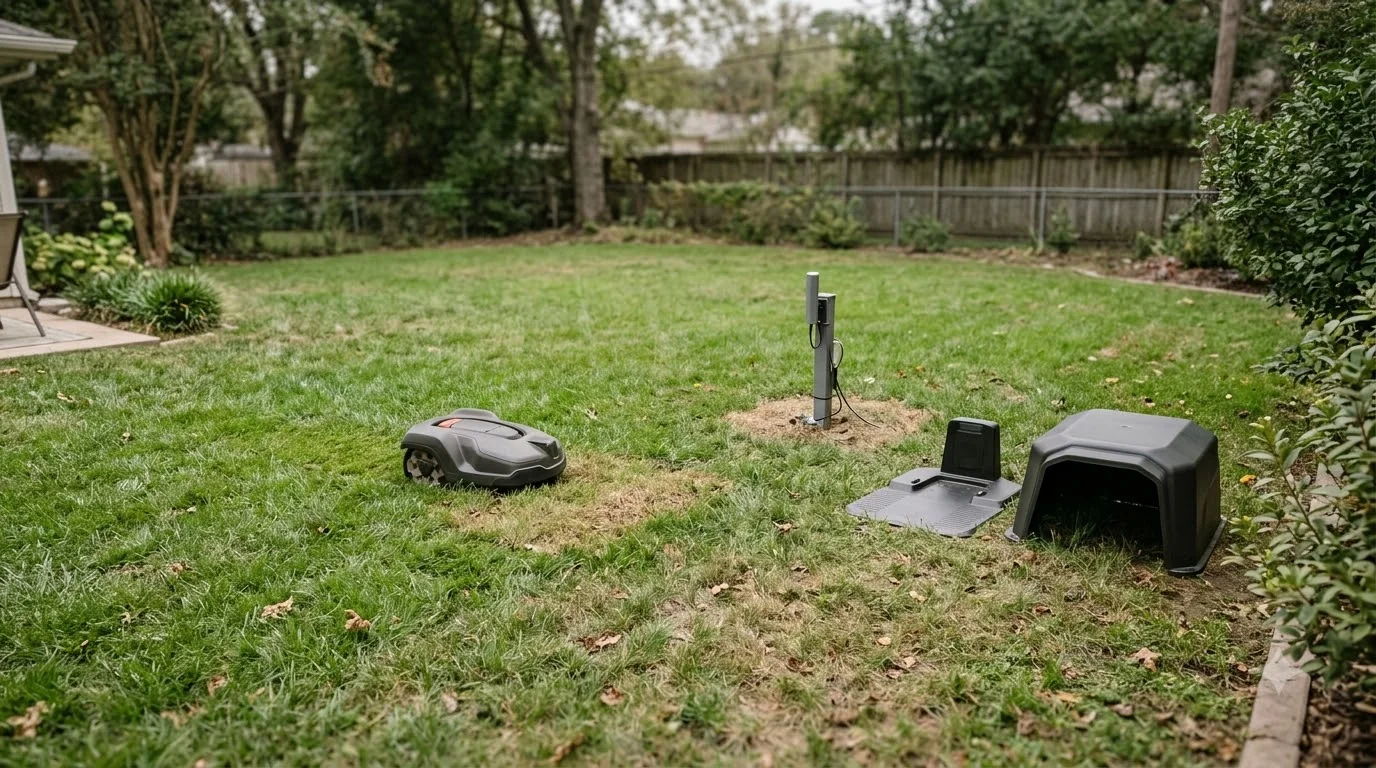

The best RTK antenna for robot mower depends on the mower you own, not on one universal pick. Some mowers rely on a reference station you place in the yard, while others use network RTK and need no local antenna at all. As of 2026-11-10, the choice comes down to compatibility, service availability and placement.
Check your mower’s manual first, then decide between a local station and network RTK. Placement rules matter as much as the hardware when you pick the best RTK antenna for robot mower use, because trees, walls and roofs can block the satellite signals the mower depends on.
The short answer
- Network RTK: no local antenna is needed where the service is offered, according to Navimow.
- Local reference station: place it in an open area, at least 3 meters (10 feet) from any wall or tree, per Mammotion.
- Roof mounting: Ecovacs allows it when the spot stays unobstructed.
- Spec sheets: accuracy claims from antenna makers are vendor claims, so check them against placement rules.
Choosing the best RTK antenna for robot mower: network or local
Navimow says that a mower using Network RTK needs no local antenna. Its page states, “With Network RTK support, there’s no need to install any local antenna,” and adds that access is included at no extra cost, with the required cellular data provided free of charge. In practice, the correction data arrives over a cellular connection, so the yard itself carries no station. If the acronym is new, our guide on what RTK stands for on a robot mower explains it, and the NTRIP explainer for robot mowers covers the correction data side.
Availability is the catch. Navimow asks owners to enter a postal code to check whether the service is live in their area. Where it is not, the page offers to notify you when it launches locally. Our reading is that a Network RTK mower only makes sense if your postal code is covered, so check that before comparing hardware.
| Option | What goes in the yard | What to check |
|---|---|---|
| Network RTK | Nothing, according to Navimow | Postal code coverage and cellular data terms |
| Local reference station | A station with its own antenna, per Mammotion’s install guide | Open sky, clearances, mounting and power |
Mower brands use different correction systems, so the antenna has to match the mower. Read the manual or support page for your exact model before buying any accessory. An antenna that does not match the mower’s receiver setup will not improve the fix, and a generic part is harder to verify than the brand’s own kit.
Where to place the RTK reference station
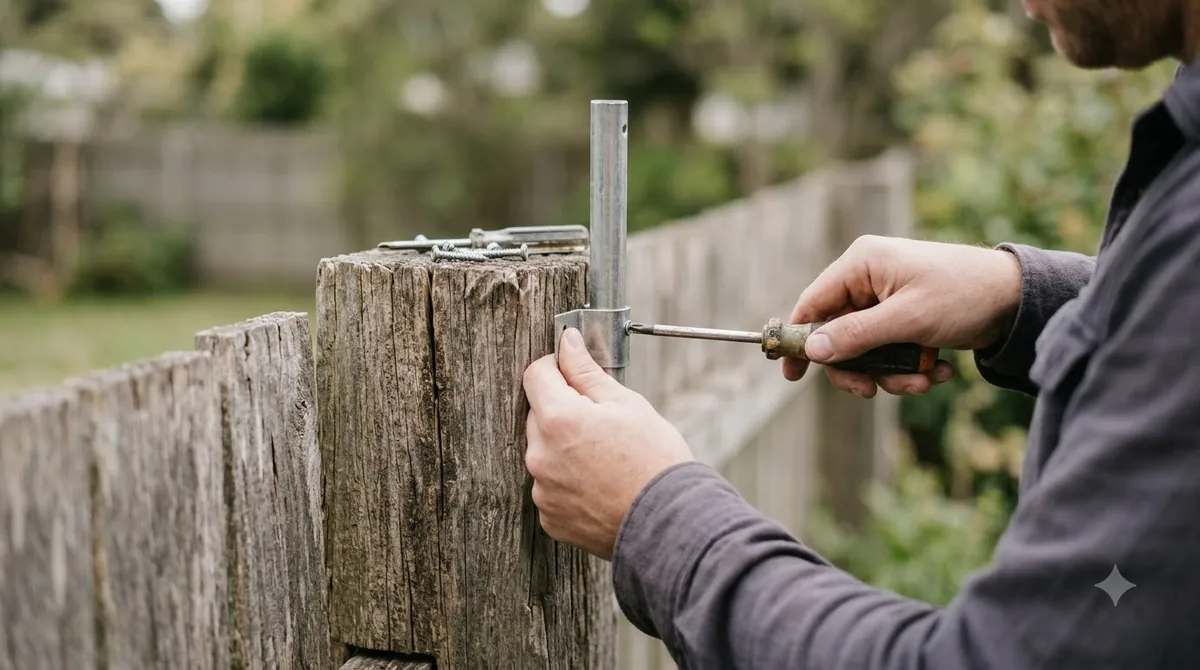
The station must stand in an open area, and at least 3 meters (10 feet) from any wall or tree. For a local setup, the best RTK antenna for robot mower use is the one that sees open sky from where you can mount it. Mammotion’s installation guide says the station needs an open area to receive satellite signals, and it advises avoiding roofs or trees that could block them. The same guide recommends a wall or roof position for O-shaped or U-shaped lawns, or for owners with more than one lawn.
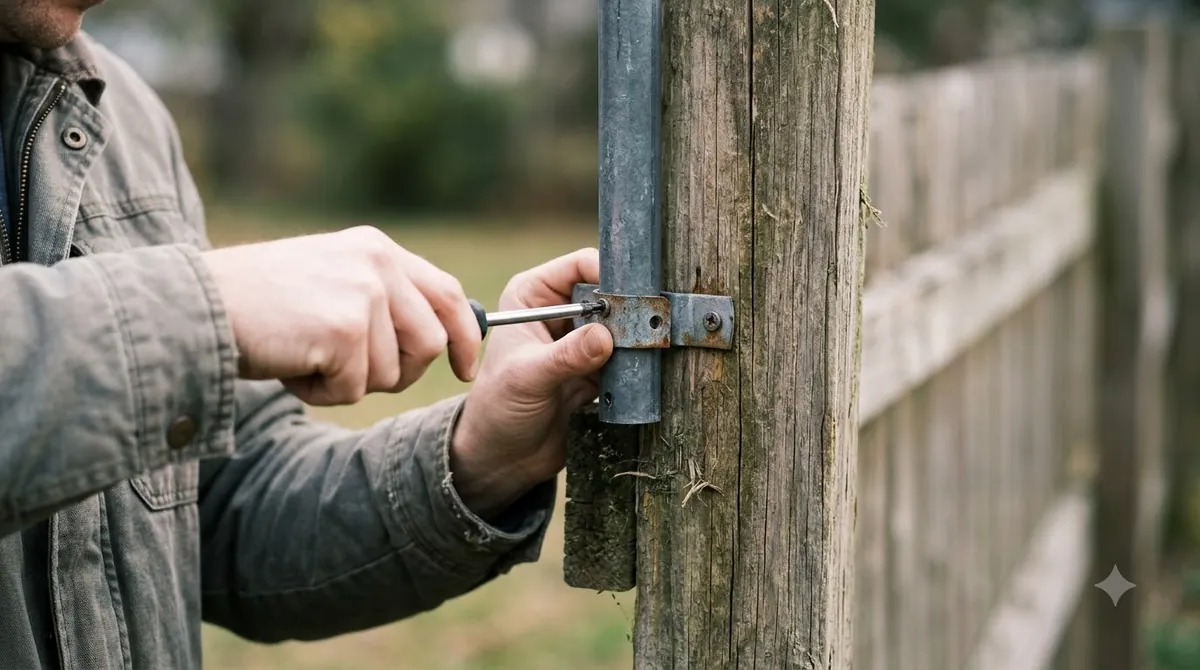
Mammotion also lists spots to avoid: the corner of an L-shaped building, a narrow path between two structures, and any position under a tree. Use these as hard limits before you start drilling or staking anything. Our guide on whether robot mowers need a clear view of the sky covers the same issue from the yard side.
- Open area: flat open ground, or an unobstructed wall or roof.
- Clearance: at least 3 meters (10 feet) from walls and trees.
- Sky view: survey-grade receiver guidance from Emlid asks for a clear view 30 degrees above the horizon, with buildings, trees and cars kept out of that view.
Emlid lists fields, hilltops and rooftops as good locations for its survey receivers, and forests, urban areas and positions close to the ground as poor ones. Emlid also notes that a ground plane, such as a metal plate or a car roof, can reduce multipath reflections from the ground. Survey receivers differ from mower kits, so treat the 30-degree figure as a general principle for sky view rather than a mower specification.
Heads up
Mammotion’s guide gives no minimum mounting height. Do not assume a specific height is required, and instead judge the spot by whether the sky above it stays clear.
Mounting height and how to confirm the signal
Ecovacs says a reference station can go on a roof or other high place, but only when the spot stays open and free of obstructions. Its guidance names houses and trees as the main blockers, and it asks owners to keep the area around the station clear as far as possible. The page gives no height or distance figure, so use the open-sky rule as your guide.
Once the station is in place, confirm the signal before you rely on the mower’s navigation. Ecovacs describes a simple check:
- Place the station. Choose an open, unobstructed spot away from houses and trees.
- Power it on. After moving the station, power it on and wait one minute before reading the light.
- Read the indicator. A steady RTK light means the position signal is stable, according to Ecovacs.
- Re-check after changes. If a tree grows nearby or you move the station, repeat the light check.
Ecovacs also warns that a mount placed high needs careful handling for safety, so plan the work before climbing.
GNSS antenna specs to read with care
Harxon, a GNSS hardware maker, says its antennas support full-band positioning and can deliver centimeter-level accuracy, but these are vendor claims without published test conditions. The source is a partner article on Future Farming, written as promotional content rather than independent testing, so read its numbers as claims.
The article says that fusing RTK with sensors such as ultrasonic, IMU or vision can give centimeter-level position accuracy in real time, without giving an exact figure. For its HX-CSX231A antenna it claims millimeter-level accuracy. Those figures describe the product in ideal conditions, and they do not replace the placement rules above.
- Constellations: the article lists full-band support covering GPS, GLONASS, Galileo and BeiDou, among others.
- Antenna height: its low-profile radio antenna is about 10 mm tall, against nearly 20 cm for a traditional whip antenna.
- Detuning: OEM antennas can detune from the local environment, which the article says Harxon addresses with custom tuning.
Our reading is that a shorter multi-band antenna is useful only if the mower’s own receiver accepts it. Read the spec against your model’s compatibility list, not in isolation, whichever RTK antenna for robotic mower you are weighing.
What to check before you buy
Confirm mower compatibility, network RTK coverage for your postal code, and a clear open spot before you pay for any antenna. Those three checks rule out most wrong purchases, and our comparison of a robot mower with a base station versus without shows how the two approaches differ.
- Confirm the method. Find out in the manual whether the mower uses network RTK or a local station.
- Check coverage. If the brand offers network RTK, enter your postal code before buying hardware.
- Choose a spot. Pick an open location with at least 3 meters (10 feet) from walls and trees.
- Confirm the signal. Wait one minute after power-on and look for a steady light before you trust the mower’s navigation.
Our reading: network RTK suits owners in covered postal codes who want no outdoor hardware, while a local station suits yards outside coverage. If you go local, the walkthrough on how to set up an RTK robot mower covers the next steps. Either way, the best rtk antenna for robot mower is the one that matches your mower’s system and has a clear view of the sky.
Frequently asked questions
Does a robot mower need an RTK antenna at all?
Not always, so the best RTK antenna for robot mower owners may be none. Navimow says a Network RTK setup needs no local antenna, but that depends on whether the service is available in your area. Where it is not, a local reference station is the usual route. Check the mower’s manual to see which method your model supports.
Can trees block an RTK reference station?
Yes. Mammotion advises placing the station away from trees and at least 3 meters (10 feet) from any tree or wall. Trees can block satellite signals, which weakens the fix. If a tree grows near the station, move the station or repeat the light check after the change.
Can I mount an RTK station on the roof?
Ecovacs says high installation is allowed when the area stays open and unobstructed. Its page gives no height figure, so keep the spot clear of nearby houses and trees. Pay close attention to safety when you mount a station high.
How do I know the RTK signal is working?
Wait one minute after powering the station, then check the indicator light. Ecovacs says a steady RTK light means the position signal is stable. Our reading is that a flickering light points to a blocked view, so recheck the placement before relying on the mower.
Sources
- Network RTK (Segway Navimow): no local antenna needed, no extra cost, postal code availability check.
- How to install RTK reference station (Mammotion support): open-area placement, 3 m clearance, spots to avoid, wall or roof for O and U lawns.
- Can I install the RTK Reference Station on the roof or other high places? (Ecovacs support): roof conditions, obstructions, one-minute wait and steady light check.
- Antenna placement (Emlid documentation): 30-degree sky view, ground plane and multipath guidance, for survey-grade receivers.
- GNSS antennas for robotic lawn mowers (Future Farming, vendor-authored partner article): antenna claims, constellation support and antenna height, read as vendor claims.
 Up next8 min readGearBest Fertilizer for Robot Mowed Lawn: How to Choose the Right TypeUpdated Nov 11, 2026
 9 min readGearRTK Antenna Wall Mount Bracket: What to Check Before You BuyUpdated Nov 11, 2026
 8 min readGearBest Cordless String Trimmer for Robot Mower Edges: How to ChooseUpdated Nov 11, 2026
 8 min readGearWhere to Mount an RTK Base Station for a Robot MowerUpdated Nov 11, 2026
 10 min readGearRTK Base Station Power Cable Outdoor: What to Check FirstUpdated Nov 11, 2026
 8 min readGearBest Weatherproof Enclosure for RTK Base Station: 6 Checks Before You BuyUpdated Nov 11, 2026