
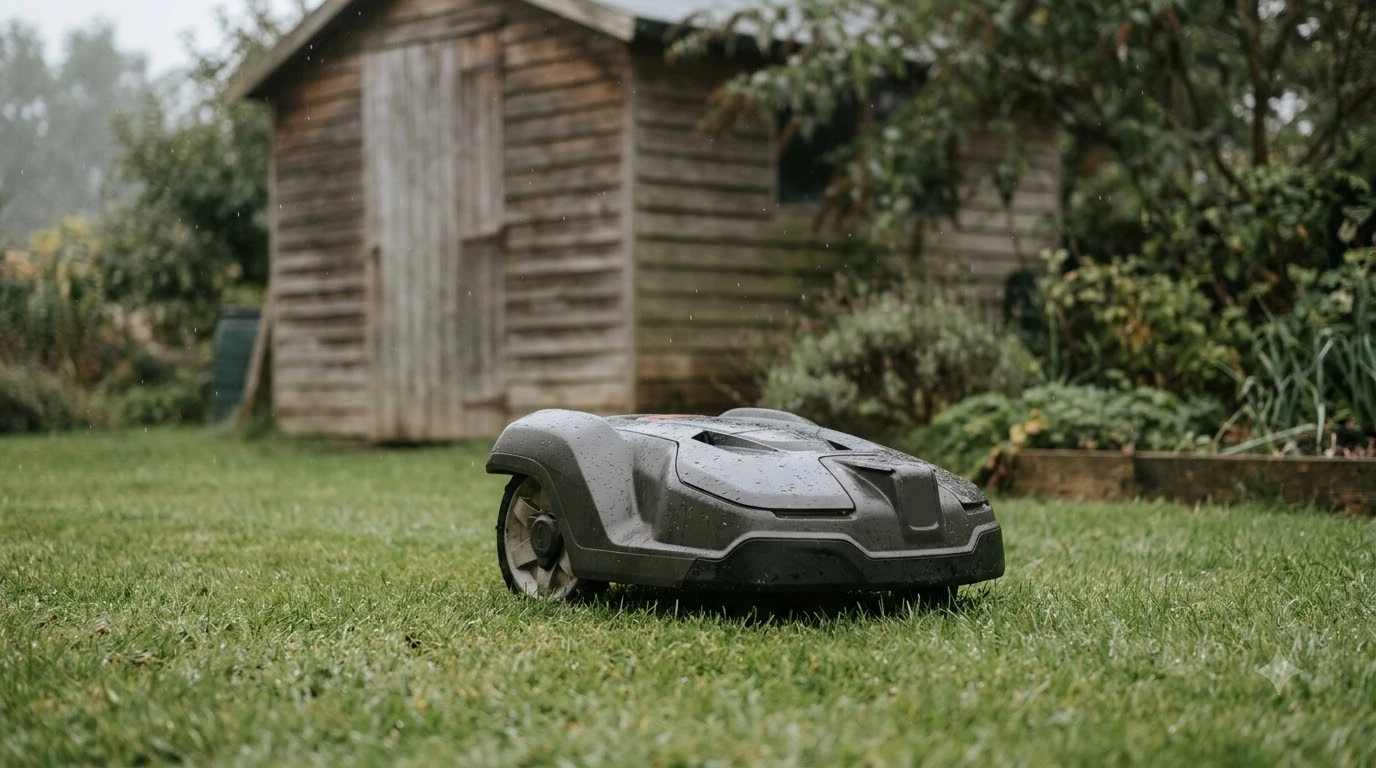

Should you fertilize a lawn mowed by a robot mower? Usually yes, but at a lower rate than a lawn whose clippings are bagged. Fine clippings from frequent cutting return nitrogen to the turf, and extension research credits them with supplying roughly a quarter to a third of the seasonal fertilizer need. Most lawns still need a yearly feeding.
The short answer
- Yes, usually. A robot mower returns clippings, which lowers the fertilizer you need, but rarely to zero.
- Savings: Virginia Tech cites up to one-third of the seasonal nitrogen need, and Missouri studies cited by Illinois Extension put it at 25 percent.
- Still needed: a yearly application, timed to the seasonal windows your grass species uses.
- Check first: a soil test every three or four years, the mowing height, and whether clippings stay dry.
Why clippings reduce the need for fertilizer
Grass clippings are mostly leaf tissue, and they break down quickly once they reach the soil. When you leave them on the lawn, the nitrogen in them goes back to the turf instead of leaving in a bag. Penn State Extension describes a three-year study in which Kentucky bluegrass clippings held 46 to 59 percent of the nitrogen applied as fertilizer, and it concludes that when clippings are returned to the lawn, you can reduce fertilizer applications.
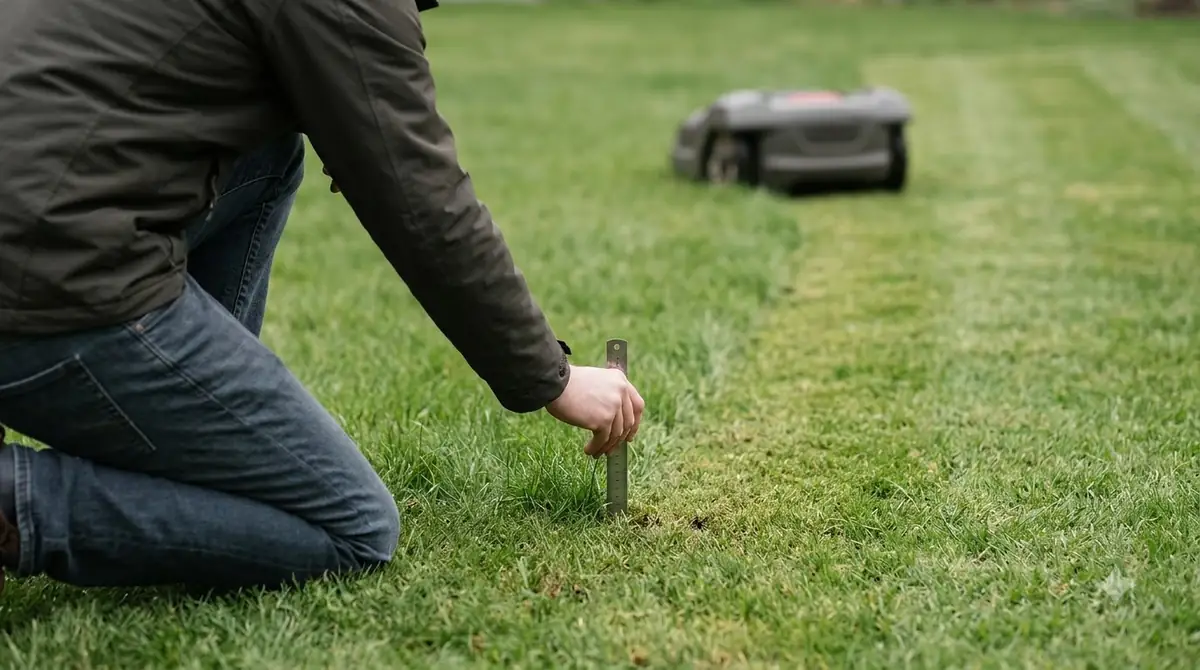
Clippings also do not build up thatch. Penn State states that because turf clippings are composed mostly of leaf tissue that decomposes rapidly, they do not contribute to thatch. That point matters for robot mowers, which cut often and leave a steady layer of fine clippings on the surface.
How much fertilizer clippings can replace
Extension figures range from about a quarter to one-third of the seasonal fertilizer total, so no single number applies to every lawn. The sources below are the ones we read in full for this guide.
| Source | What it reports | Figure |
|---|---|---|
| Missouri studies, cited by Illinois Extension | Clippings can supply part of a lawn’s total fertilizer needs | About 25 percent |
| Virginia Tech, publication 430-011 | Up to one-third of the seasonal nitrogen requirement can be met by returning clippings | Up to one-third |
| Virginia Tech, publication 430-402 | Research indicates the seasonal total can often be reduced by one-third when clippings are recycled | About one-third |
| Illinois Extension | As much as 50 percent of applied nitrogen is removed when clippings are collected | Up to 50 percent removed |
The sources disagree a little because clippings vary. Virginia Tech puts dry clippings at 2 to 5 percent nitrogen, while Illinois Extension uses about 4 percent. Wet clippings also work less well. Virginia Tech notes that wet clippings do not filter through the turf canopy as easily as dry ones, and they can mat down on the surface. Our reading is that a robot mower’s frequent, small cuts usually leave clippings dry enough to recycle, but a lawn that stays wet for days needs closer attention.
Why robot mowers make grasscycling easier
A robot mower runs often and removes only a small amount of leaf each pass, which is the pattern extension guides recommend for grasscycling. Virginia Tech’s rule of thumb is to mow often enough that at any one mowing only one-third of the leaf height is removed. A robot that runs every day or two follows the one-third mowing rule almost automatically, so the clippings stay short enough to fall between the grass blades. Our explainer on how a mulching robot mower works covers the clipping side in more detail.
Robot mower makers make the same case. Husqvarna’s UK fertilizer guide says that a convenient way to return nutrients to your lawn is to use a robotic lawn mower, and it says frequent mowing produces fine clippings that break down naturally. That is a manufacturer statement, and the page does not give a fertilizer reduction figure. We found no independent study that measures fertilizer savings for robot mowers specifically, so the best estimate comes from the grasscycling research above. So should you fertilize a lawn mowed by a robot mower less than a bagged lawn? The research says yes, by roughly a quarter to a third.
Our reading: a robot mower gives you the grasscycling benefit without extra work, but it recycles only the nutrients the grass has already taken up. It does not correct a soil that is short on phosphorus, potassium or lime, and that is what a soil test is for. For the wider picture, see whether robot mowers make lawns healthier.
Should you fertilize a lawn mowed by a robot mower every year?
Most lawns still need a yearly application, and a soil test shows which nutrients to add. Virginia Tech states that the lawn will still require a yearly application of fertilizer to look its best, so grasscycling reduces fertilizer rather than replacing it. Virginia Tech also notes that where clippings are regularly collected, higher rates of nitrogen and potassium are needed, which is the reason the savings come from leaving clippings in place.
Soil tests are the most useful tool for deciding what to add, but they have a limit. Penn State advises soil tests every two or three years and says that applying phosphorus, potassium and lime according to soil test recommendations makes nitrogen use more efficient. Virginia Tech suggests testing every three or four years.
Virginia Tech adds that a soil test cannot reliably evaluate a turf’s nitrogen requirement, so set the nitrogen rate from the grass species, the season and how much clippings return, and use the label rate on the product you buy. So should you fertilize a lawn mowed by a robot mower on a fixed calendar? Not blindly: let the species, the season and the soil test set the plan.
Timing and mowing height
Penn State recommends mowing at the suggested height for the predominant turfgrass in the lawn. Its table lists 2.5 to 3.5 inches for Kentucky bluegrass, perennial ryegrass and fine fescues, and 3.0 to 3.5 inches for tall fescues. Setting the robot to that range keeps the one-third rule easy to follow, because a robot that runs often removes only a little leaf each time. Our guide to the best mowing height for a robot-mowed lawn covers the settings in more detail.
Timing depends on the grass. Virginia Tech says cool-season grasses in Virginia are best fertilized from mid-August through early November, while warm-season grasses perform best when fertilized between April 1 and August 15. The same publication warns that very aggressive spring nitrogen programs are counterproductive. Penn State’s turfgrass guide lists mid to late spring, late summer and late fall as the usual application windows. Check which of these matches your grass before you schedule a feed. Should you fertilize a lawn mowed by a robot mower in spring? Only if your grass species uses that window.
What to check before you skip fertilizer
Skip an application only after a recent soil test and a look at the lawn’s growth show that the nutrient is not needed. This checklist answers should you fertilize a lawn mowed by a robot mower for your own yard, using the sources above.
- Check the last soil test. If it is older than three or four years, test again before deciding.
- Confirm the robot mows often. Frequent cutting keeps clippings short and easy to return.
- Keep the height in range. Use the suggested height for your grass species.
- Avoid cutting when the lawn is wet. Wet clippings do not filter through the canopy as easily as dry ones, as covered in running a robot mower on wet grass.
- Feed on the seasonal window. Use the timing for your grass type and the rate on the product label.
Scope boundary: the answer to should you fertilize a lawn mowed by a robot mower assumes the robot mows regularly. If the mower has been parked for weeks, or if the clippings are collected or bagged, the clippings argument weakens and the yearly feed matters more.
Frequently asked questions
Should I fertilize a lawn mowed by a robot mower every year?
Usually yes. Virginia Tech states that the lawn will still require a yearly application of fertilizer to look its best. Clippings lower the amount you need, but they rarely remove the need for a feed altogether.
Do robot mower clippings replace all fertilizer?
No. Clippings recycle nutrients the grass has already taken up, and extension sources describe them as reducing fertilizer rather than replacing it. A soil test shows whether phosphorus, potassium or lime are also short.
Do grass clippings from a robot mower cause thatch?
Penn State says they do not. Turf clippings are composed mostly of leaf tissue that decomposes rapidly, so they do not contribute to thatch. Frequent, small cuts from a robot mower keep the clippings short and easy to break down.
How often should I test my soil?
Penn State advises testing every two or three years, and Virginia Tech suggests every three or four years. A soil test is useful for phosphorus, potassium and lime, but Virginia Tech says it cannot reliably set the nitrogen rate.
Sources
- Recycling Turfgrass Clippings (Penn State Extension): nitrogen recovery from clippings, fertilizer reduction and thatch.
- Mowing To Recycle Grass Clippings (Virginia Tech Extension, 430-402): one-third seasonal reduction, dry clippings nitrogen range, one-third height rule and the yearly feed.
- Lawn Fertilization in Virginia (Virginia Tech Extension, 430-011): seasonal nitrogen totals, timing and soil test limits.
- Recycle Your Grass Clippings (University of Illinois Extension): clippings nitrogen content and the Missouri 25 percent figure.
- Turfgrass Fertilization: A Basic Guide for Professional Turfgrass Managers (Penn State Extension): soil test interval, nutrient use and application windows.
- How-To’s and Guides: Fertilise your lawn (Husqvarna, manufacturer): robotic mowers returning nutrients, labeled as a manufacturer statement.
 Up next7 min readLearnBest Mowing Height for a Robot Mowed LawnUpdated Nov 11, 2026
 9 min readLearnRobot Mower Pros and Cons: What Owners Should Weigh Before BuyingUpdated Nov 11, 2026
 8 min readLearnWho Should Not Buy a Robot Mower?Updated Nov 11, 2026
 9 min readLearnShould I Buy a Robot Lawn Mower? Who It Suits and Who Should Skip ItUpdated Nov 11, 2026
 8 min readLearnWhat Temperature Can a Robot Mower Work In?Updated Nov 11, 2026
 7 min readLearnDo Robot Mowers Work in Hot Weather? Temperature Limits ExplainedUpdated Nov 11, 2026