

How long do robot mower batteries last? Most last about 2 to 5 years, and charge cycles and heat matter more than the calendar. Manufacturers rarely publish one firm number, so the ranges below come from the brand pages we read. Plan for a replacement somewhere in that window.
On most models a worn pack is a replaceable part rather than the end of the mower, and cycle count, heat and storage decide how quickly it wears.
The short answer
- Typical life: about 2 to 5 years in manufacturer estimates.
- Cycle rating: roughly 500 to 800 full charges for lithium-ion, and 1,000 to 2,000 for LiFePO4.
- Biggest threats: heat, running the pack down to empty, and sitting at full charge for long periods.
- Replacement: usually a battery swap, done by the owner or a dealer, rather than a new mower.
How long do robot mower batteries last on average
Brand estimates cluster around 3 to 5 years, with Husqvarna at 2 to 4 years and Robomow’s lithium-ion average at 4 years. Husqvarna says its batteries have been shown to last, on average, around 2 to 4 years, although that page does not name a study or source for the figure.
Robomow’s table lists an average lifespan of 4 years for lithium-ion, 5 years for LiFePO4 and 6 years for NiMH, and it assumes a replacement interval of 2 to 5 years for lithium-ion. Ecovacs says robot mower batteries normally last around 3 to 5 years, depending on usage and battery type.
Eufy’s lawn mower guide, which covers mowers in general rather than robots only, is more optimistic for lithium-ion, citing an average of 5 years and sometimes up to 10. The same page also says in its FAQ that a battery should be replaced every three years, so the brand’s own figures do not agree. The spread suggests that real life depends heavily on how the mower is used, so treat 2 to 5 years as the planning range.
Why charge cycles matter more than calendar age
Battery wear is counted in charge cycles, and a lithium-ion pack is typically rated for 500 to 800 of them. Robomow’s battery guide lists the same range for lithium-ion, 1,000 to 2,000 cycles for LiFePO4 and 350 to 500 for NiMH, and notes that some newer lithium-ion packs can handle up to 2,000 cycles before capacity drops.
Eufy gives LiFePO4 up to 3,000 cycles, but only when the pack is used at 80 percent depth of discharge, which is a different test condition from the others. Cycle ratings are only comparable when the test conditions match.
The number of cycles you use depends on your yard. Robomow explains that an undersized mower, one that runs almost continuously, needs many charges in a short time, and that this shortens battery life. Husqvarna says a large lawn mowed daily wears the battery faster than a small lawn mowed twice a week. Our reading is that a mower sized with headroom above your lawn spends less time cycling, which is the most practical lever a buyer controls before purchase. Charging also draws power, and we cover how much electricity a robot mower uses separately.
Robomow’s table compares battery life by chemistry, and it is the clearest side-by-side view we found.
| Chemistry | Average life (Robomow) | Cycle rating (Robomow) | Operating temperature (Robomow) |
|---|---|---|---|
| Lithium-ion | 4 years | 500 to 800 | 10 to 35 °C (50 to 95 °F) |
| LiFePO4 | 5 years | 1,000 to 2,000 | 10 to 40 °C (50 to 104 °F) |
What shortens robot mower battery life
The brand pages agree on what shortens battery life, although they describe the causes in different words. Heat, deep discharge and long periods at full charge come up most often. How long do robot mower batteries last in a hot yard? Shorter, if the pack runs and charges in heat.
- Heat. Eufy’s guide says excessive heat can make lithium-ion batteries overheat and shorten their lifespan.
- Full charge. Ecovacs says repeatedly charging to 100 percent can shorten battery life.
- Total drain. Ecovacs also warns that letting the battery drain completely can shorten its life, and Robomow advises against letting it fully discharge.
- An undersized mower. Constant running means frequent charging, which wears the pack faster.
- Big lawns mowed daily. Husqvarna and Ecovacs both name daily mowing of a large lawn as the fastest route to wear.
Cold also matters. Eufy notes that extreme cold can cause a battery to lose power faster, so a pack that runs short in winter weather is not necessarily failing.
Signs the battery is wearing out
The clearest sign of an aging battery is a mower that returns to its charging station more often or takes longer to recharge. If you are unsure how that return trip normally works, read how robot mowers return to the charging station. Husqvarna lists a mower that is not spending enough time on the lawn and returns to the station too often as a sign of an aging battery. Ecovacs describes the same pattern as a battery that recharges more often or takes longer to charge.
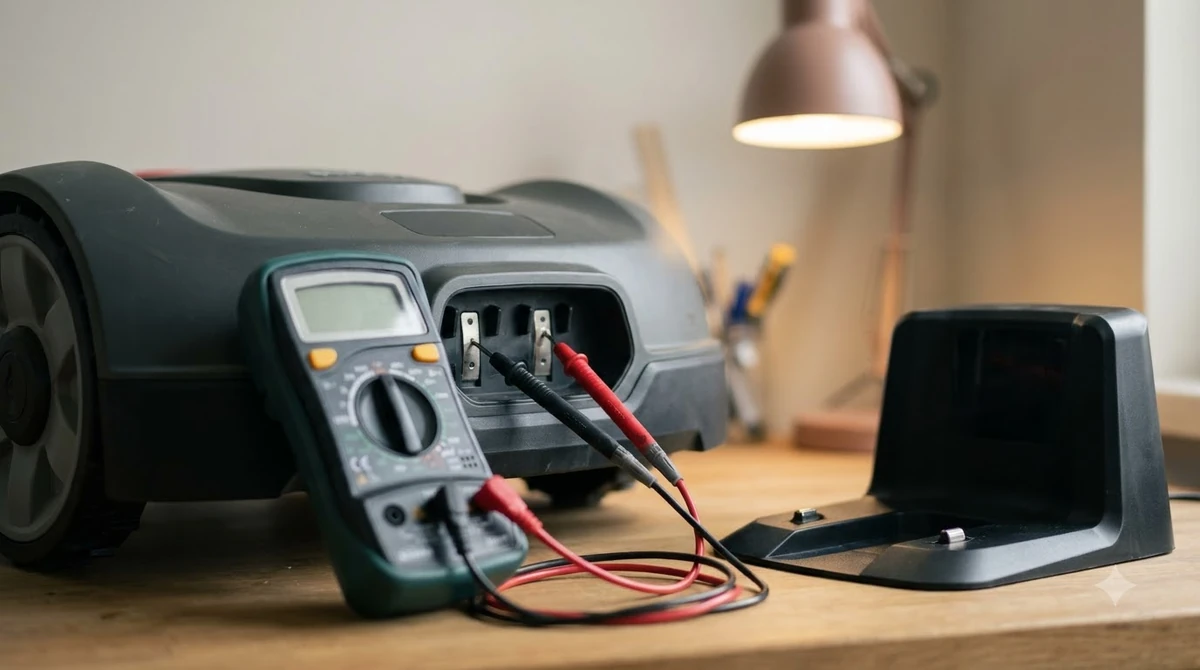
Ecovacs also advises stopping use of the mower if the battery can’t hold a charge. Robomow gives a self-discharge rate of 6 to 8 percent per month for lithium-ion. Our reading is that a pack that drains noticeably faster while parked deserves a closer look, even though some self-discharge is normal.
How to help the battery last longer
Keep the charging station shaded, avoid midday summer sun, and store the mower with a moderate charge through winter to protect the pack. Each step below addresses one of the stresses named above.

- Shade the charging station. Husqvarna recommends a shaded or cool location, which helps the battery run reliably for longer.
- Avoid midday summer sun. Robomow advises against mowing in the midday summer sun and placing the charging station in shade.
- Do not run the pack to empty. Robomow says not to let the battery fully discharge, so a mower that is not mowing should stay on its charging station.
- Store with a moderate charge. Before winterizing, Robomow says to charge a manually charged battery to about 80 percent and store the robot horizontally.
- Store indoors, cool and dry. Eufy advises storing lithium-ion batteries partially charged, in a cool, dry place away from direct sunlight and extreme temperatures.
Husqvarna also says replacing the blades every couple of months reduces power consumption, which eases the load on the battery. For the full off-season routine, see our guide on how to store a robot mower for winter. Our reading is that these steps mostly reduce heat and deep cycles, the two stresses the sources describe most often.
Replacing the battery and what it costs
A worn battery is usually a replaceable part, and Robomow describes it as an expendable part that owners can usually replace themselves. So how long do robot mower batteries last before a swap is due? The brand range of 2 to 5 years is the working answer, and for most owners the practical end of that window is a swap, not a new mower. Husqvarna says an authorized dealer can replace the battery quickly and easily.
Robomow gives a one-year manufacturer warranty on its batteries, so check the warranty before you pay for a swap. Our robot mower warranty guide explains what to look for in those terms. We did not find a battery replacement price on the pages we read that we can confirm, so no dollar figure appears here. Check the brand’s parts page or a dealer for the current price for your model.
Ecovacs puts the overall service life of the whole mower at around 5 to 10 years with good care. A battery swap in the middle of that range usually makes more sense than replacing the mower. Our reading is that if the body, blades and wheels are sound, a new battery is the more economical fix.
Frequently asked questions
How long do robot mower batteries last in years?
Most brand estimates fall between 2 and 5 years. Robomow’s lithium-ion average is 4 years. Actual life depends on heat, how often the pack cycles, and how large the lawn is compared with the mower’s rating.
Is it normal for a robot mower battery to fail after two years?
It can happen, especially if the mower runs almost continuously on a lawn larger than its rating or sits in heat. Husqvarna’s range starts at 2 years, so a failure at that point is at the low end of brand estimates. Check the warranty terms before deciding what to do next.
Can I replace a robot mower battery myself?
Robomow describes the battery as an expendable part that users can usually replace themselves. Husqvarna says an authorized dealer can do the replacement quickly. Read your model’s manual and warranty terms before opening the housing.
Does leaving the mower on its dock all summer hurt the battery?
Heat is the main concern. Eufy notes that excessive heat can make lithium-ion batteries overheat and shorten their lifespan, and Robomow advises placing the charging station in shade. A shaded dock and avoiding midday sun both reduce that stress.
Sources
- How long does the battery of a robotic lawnmower last? (Robomow): lifespan and cycle ratings by chemistry, operating temperatures, storage and replacement interval.
- Battery life of a robot lawn mower: how to get more out of your Automower (Husqvarna): average battery life, charging station location and dealer replacement.
- What’s the Lifespan of a Robot Lawn Mower? (Ecovacs): 3 to 5 year battery range, end-of-life signs and habits that shorten life.
- How Long Do Lawn Mower Batteries Last? (Eufy): lithium-ion lifespan and cycle figures, heat and storage guidance. It covers lawn mowers in general.
 Up next9 min readBest Robot MowersHow Long Do Robot Lawn Mowers Last?Updated Nov 11, 2026
 8 min readBest Robot MowersHow Loud Are Robot Lawn Mowers? A Simple Guide to dB LevelsUpdated Nov 11, 2026
 8 min readBest Robot MowersDo Robot Mowers Trim Edges?Updated Nov 11, 2026
 8 min readBest Robot MowersDo Robot Mowers Work in the Rain? Sensors, Delays and LimitsUpdated Nov 11, 2026
 9 min readBest Robot MowersAre Robot Mowers Safe for Kids and Pets?Updated Nov 11, 2026
 8 min readBest Robot MowersRobot Mower IP Rating Explained: What IPX4, IPX5 and IPX6 MeanUpdated Nov 11, 2026