
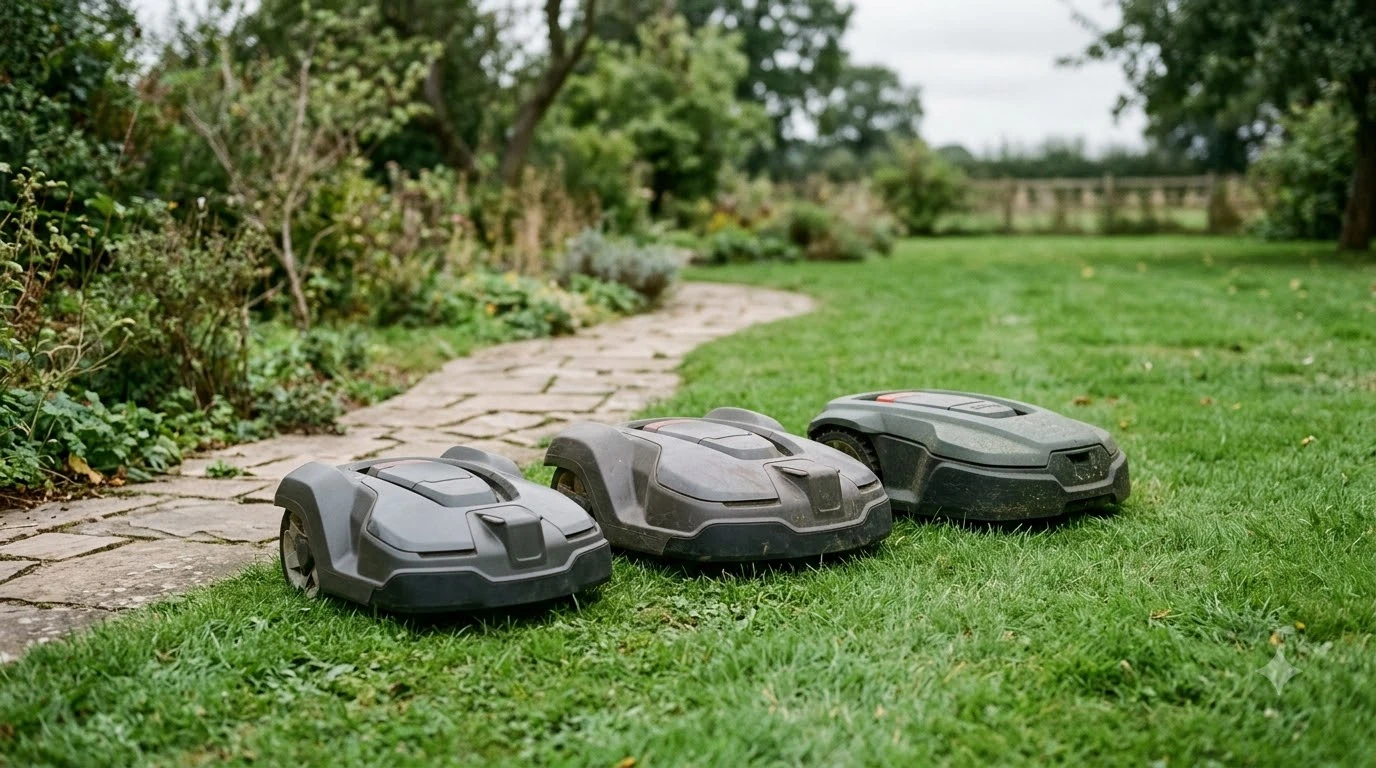

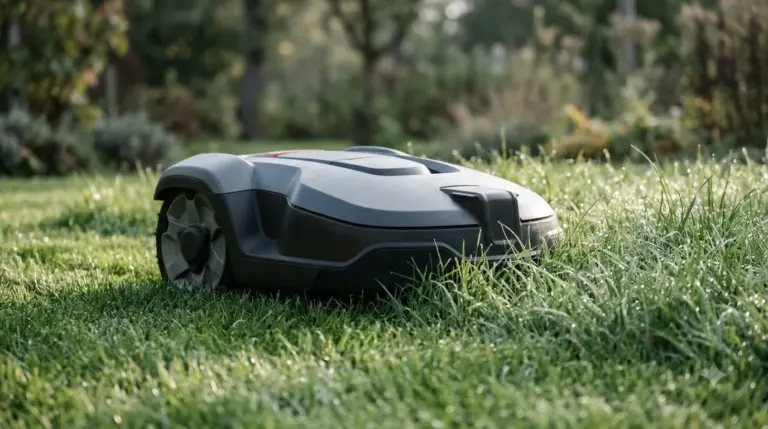
Can a robot mower cut St. Augustine grass? Yes. As of 2026-11-09, UF/IFAS researcher Bryan Unruh reports that robot mowers held St. Augustinegrass at a 2.4-inch cut, below the 3 to 4 inches recommended for most warm-season grasses.
Standard St. Augustine lawns are rated for 2.5 to 4.0 inches with a rotary mower, so the 2.4-inch result sits below that band. Check the lowest setting on any model and the cultivar name on your sod or seed tag before you decide.
The short answer
- Can it cut it: yes, in a University of Florida study that held the grass at 2.4 inches.
- Standard cultivars: cut at 2.5 to 4.0 inches. Dwarf types: below 3 inches.
- Schedule: robot mowers take daily light cuts, while conventional mowing runs about weekly.
- Before you buy: check the lowest setting, the dock area and the design origin of the model.
Can a robot mower cut St. Augustine grass at a low height?
Yes, according to a UF/IFAS news report from June 2026 on robot mowers. Bryan Unruh, associate center director at the UF/IFAS West Florida Research and Education Center, describes the robotic mower’s lower cut height as 2.4 inches for St. Augustinegrass. The report cites the 3 to 4 inch range as the recommendation for most warm-season grasses, and the UF/IFAS report on robot mowers is the source for both numbers.
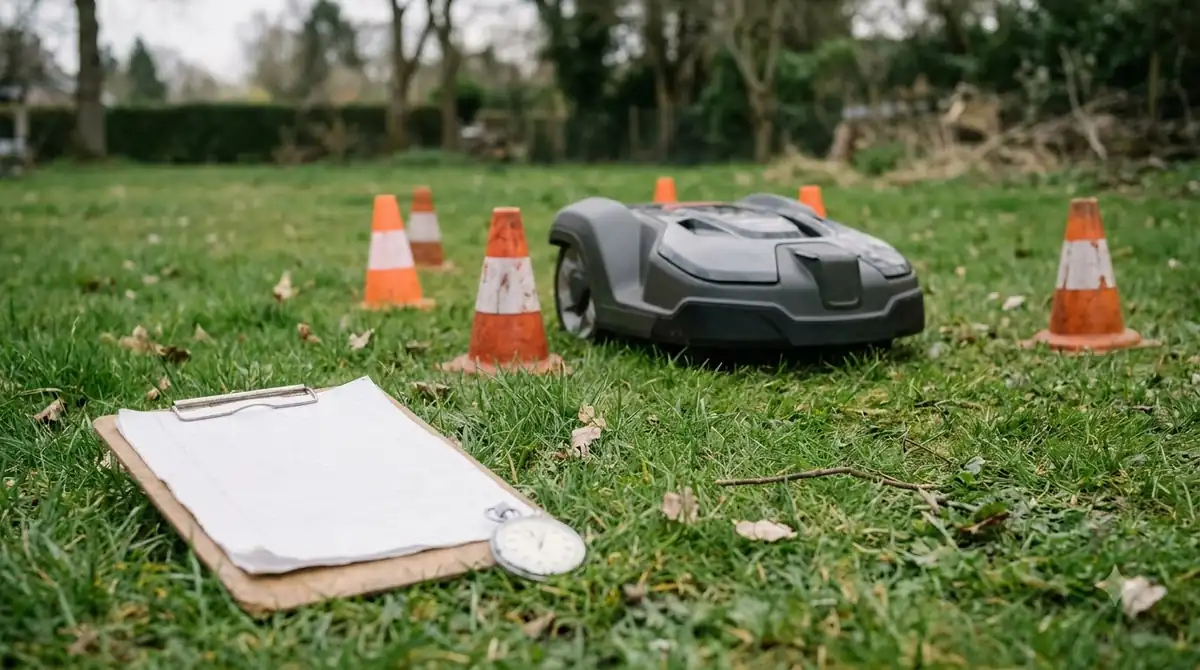
The mowing pattern was the other part of the comparison. Conventional mowing ran about every seven days and removed roughly a third of the blade each time. The robotic approach used daily light cuts, taking off a small amount of grass at each pass.
Daily robotic mowing produced denser, healthier turf, according to the same report, and the turf was more resistant to pests and disease than turf under conventional mowing. The article gives no sample sizes, trial length or measurements for density, so read those results as descriptive rather than precise.
St. Augustine mowing height for standard and dwarf cultivars
Standard St. Augustine grass sits at 2.5 to 4.0 inches with a rotary mower, and named dwarf types should stay below 3 inches. The UF/IFAS mowing guide gives the range in a table, and Clemson HGIC lists the same St. Augustinegrass band as 2.5 to 4 inches. Those figures are the baseline for any robot mower setting.
| Cultivar or test | Cut height | Source detail |
|---|---|---|
| Standard St. Augustinegrass | 2.5 to 4.0 inches | UF/IFAS mowing guide, rotary mower |
| Dwarf types | Below 3 inches | Seville, Jade, Palmetto, Delmar |
| Robot mower in the UF/IFAS study | 2.4 inches | Tested by Bryan Unruh |
Our reading is that the 2.4-inch study result falls below the 2.5-inch floor for standard lawns. A robot set that low suits a dwarf lawn, but a standard lawn should stay at 2.5 inches or higher unless the cultivar has been confirmed as a dwarf type.
Cultivar matters more than the mower brand. The same yard can fall into either band, so the tag on the sod or seed is the first input, before the dial on the mower. Clemson HGIC lists standard cultivars at 3 to 4 inches and dwarf cultivars at about 2.5 inches, and its cultivar table places Captiva, Delmar, Jade, Sapphire and Seville at 2 to 3 inches. Its cultivar notes also differ from the UF/IFAS table on a few names, so check both sources before you set a height.
Cutting too low carries a real cost. The UF/IFAS guide warns that removing too much shoot tissue at one time, called scalping, can cause long-term damage to the turf. Clemson HGIC adds that mowing St. Augustinegrass too short stresses the turf and makes it thin. A robot with a low fixed floor needs the same caution as a push mower, as the guide on what happens if you cut grass too short explains.
Mowing too high has its own problem. Clemson HGIC says a high cut can lead to a thatch problem and disease, because the lower canopy stays wet. The useful range is therefore a band, not the lowest setting the dial allows.
Why daily light cuts fit St. Augustine grass
The one-third rule limits how much blade a single cut can remove, and UF/IFAS says the growth rate of the lawn, not a fixed day count, decides how often to mow. Its table lists 5 to 14 days between mowings for St. Augustinegrass. The one-third rule for mowing grass applies to every turf type.
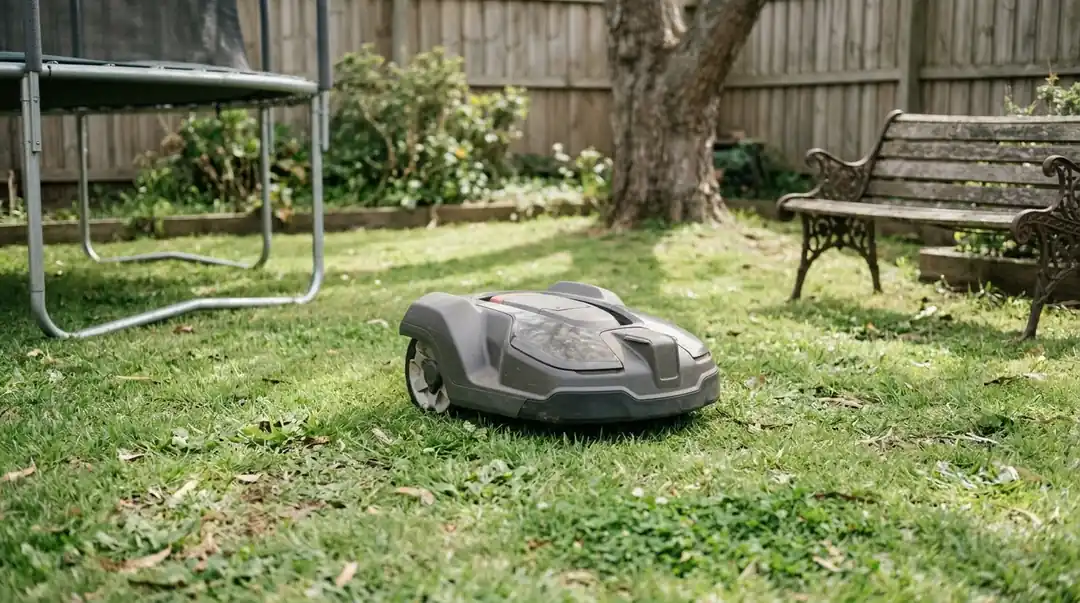
A robot mower fits this pattern because it removes a small amount at each pass. That is the logic behind the daily light cuts in the UF/IFAS report. The key comparison is simple:
- Conventional: about every seven days, with roughly a third of the blade removed per cut.
- Robotic: daily light cuts, with a small amount removed each time.
- Rule: no more than one-third of the blade height removed in one mowing.
Our reading is that a robot working inside the one-third limit does not need to run every day on a slow lawn. It should run often enough that the grass never grows past the point where one pass would break the rule.
Season matters as much as the schedule. A UF/IFAS blog post on mowing quotes Kruse that hot, humid weather is the most important time of year to mow frequently. The same post names the two biggest mistakes as mowing too low and not often enough, which is the balance a robot’s schedule has to strike.
Shade, dormancy and pests
Turf under stress should be cut higher, and shade counts as stress. Clemson HGIC’s mowing guide says to mow turfgrass under stress, such as heat, drought or shade, at a higher level of cut. So can a robot mower cut St. Augustine grass in shade? Yes, but the setting should go up in a shaded yard rather than letting the mower cut lower. The guide to mowing height for shade grass covers shaded lawns more broadly.
Dormancy changes the schedule. The UF/IFAS page on St. Augustinegrass says the grass goes into winter dormancy in many parts of the state, and in Central and North Florida it advises reducing watering and not fertilizing during the cool months. Our reading is that a robot should run less while the lawn is dormant, then return to a regular schedule when the grass greens up.
St. Augustinegrass is the most shade-tolerant warm-season grass, according to Clemson HGIC, although it still needs 4 to 6 hours of sun to thrive. A UF/IFAS blog post recommends raising the cut by half an inch in shaded areas compared with the rest of the yard. Cultivar choice matters here too, because Clemson HGIC describes Floratam as poor in shade and says Palmetto thins under heavy shade.
Chinch bugs are the most difficult pest of the grass, according to the same UF/IFAS page. Damage often starts in grass that is water-stressed or in full sun, so a robot that keeps the turf at a steady height does not replace watering and pest checks.
Clippings and blade care
Clippings can stay on the lawn, and a sharp blade matters on a robot as much as on any mower. The UF/IFAS mowing guide says to leave clippings on the lawn, and it notes that regular mowing keeps clippings from building up as thatch.
Clemson HGIC puts clippings at about 4 percent nitrogen, which it calls basically a 4-1-3 fertilizer. It also says to mow with a sharp blade, because a dull blade turns the leaf tip brown at the point of impact. Clemson adds that sharp blades cut cleanly and heal faster, so the blade check belongs on the same calendar as the schedule.
The UF/IFAS guide adds two habits that apply to any mower. Mow in a different direction each time to reduce wear patterns and the chance of scalping. It also says never to mow wet turf with a rotary mower, because clippings can clog the machine. That rule is written for rotary mowers, and the UF/IFAS robot report found no negative effects from rain, so check the wet-weather guidance in the model’s manual.
Caveats before you buy a robot mower for St. Augustine grass
UF/IFAS says most robot mowers were designed for European lawns and cool-season grasses, so check the cut range and the docking area before buying. The report lists these points for Florida lawns:
- Design origin: most models were built for European lawns and cool-season grasses, so confirm that the lowest setting covers your cultivar.
- Fire ants: docking stations attract fire ants, and UF/IFAS recommends routine insecticide treatment near the dock.
- Lightning: ground the docking stations or connect them to surge protection.
- Rain: the report found no negative effects from running the mowers in rainy conditions, and a separate guide asks do robot mowers work in the rain in general.
- Evidence: the turf health findings are qualitative, with no sample sizes given.
Can a robot mower cut St. Augustine grass at your cultivar’s height? Ask that before buying. Our recommendation is to run a robot on one zone for a full season before committing the whole lawn to its schedule. That gives you a record of the height, the cut frequency and the turf response in your own yard. For model choices, see the guide to robot mowers for warm-season grass.
Frequently asked questions
Can a robot mower cut St. Augustine grass in shade?
Yes, but raise the cut. Clemson HGIC says to mow turf under stress, including shade, at a higher level of cut. The UF/IFAS news report does not address shade, so keep the setting above the lowest option and check the grass height often.
Should I set a robot mower below 2.5 inches for St. Augustine grass?
Only for a dwarf type. UF/IFAS lists standard St. Augustinegrass at 2.5 to 4.0 inches and names Seville, Jade, Palmetto and Delmar as the dwarf types that should be mowed below 3 inches. Confirm the cultivar on the tag before you go lower.
Do robot mowers work in the rain on St. Augustine lawns?
UF/IFAS reports no negative effects from running robot mowers in rainy conditions. Rain is not the main risk in that report. Lightning is a separate concern, so ground the docking station or connect it to surge protection.
Can a robot mower cut St. Augustine grass well enough to be worth it?
It can be, if the cut range fits your cultivar and the schedule matches the lawn’s growth. UF/IFAS reports denser, healthier turf in its study, but gives no measurements. Base the decision on your height band, the dock location and the fire ant risk.
Sources
- Robot mowers (UF/IFAS news, June 2026): 2.4-inch robotic cut, daily light cuts, docking station and lightning notes, rain findings, design origin.
- Mowing Your Florida Lawn (UF/IFAS): one-third rule, St. Augustinegrass height table, dwarf cultivars, mowing frequency, clippings.
- St. Augustinegrass (UF/IFAS): winter dormancy and watering advice, chinch bugs.
- Mowing Lawns (Clemson Home and Garden Information Center): warm-season heights, cut height under stress, blade sharpness, clippings nitrogen.
- St. Augustinegrass (Clemson Home and Garden Information Center): shade tolerance, cultivar notes, standard and dwarf heights, scalping and thatch.
- Time to mow more (UF/IFAS blog): mowing frequency in hot weather, the St. Augustinegrass 4-inch example, shade height adjustment.
 Up next8 min readBy YardBest Mowing Height for St Augustine GrassUpdated Nov 11, 2026
 9 min readBy YardHow Often to Mow St. Augustine GrassUpdated Nov 11, 2026
 9 min readBy YardWhat Happens If You Cut Grass Too Short?Updated Nov 11, 2026
 9 min readBy YardCan a Robot Mower Cut Bermuda Grass?Updated Nov 11, 2026
 7 min readBy YardRobot Mower Wet Grass: Can You Cut It and When to WaitUpdated Nov 11, 2026
 8 min readBy YardCan a Robot Mower Cut Cool Season Grass?Updated Nov 11, 2026