
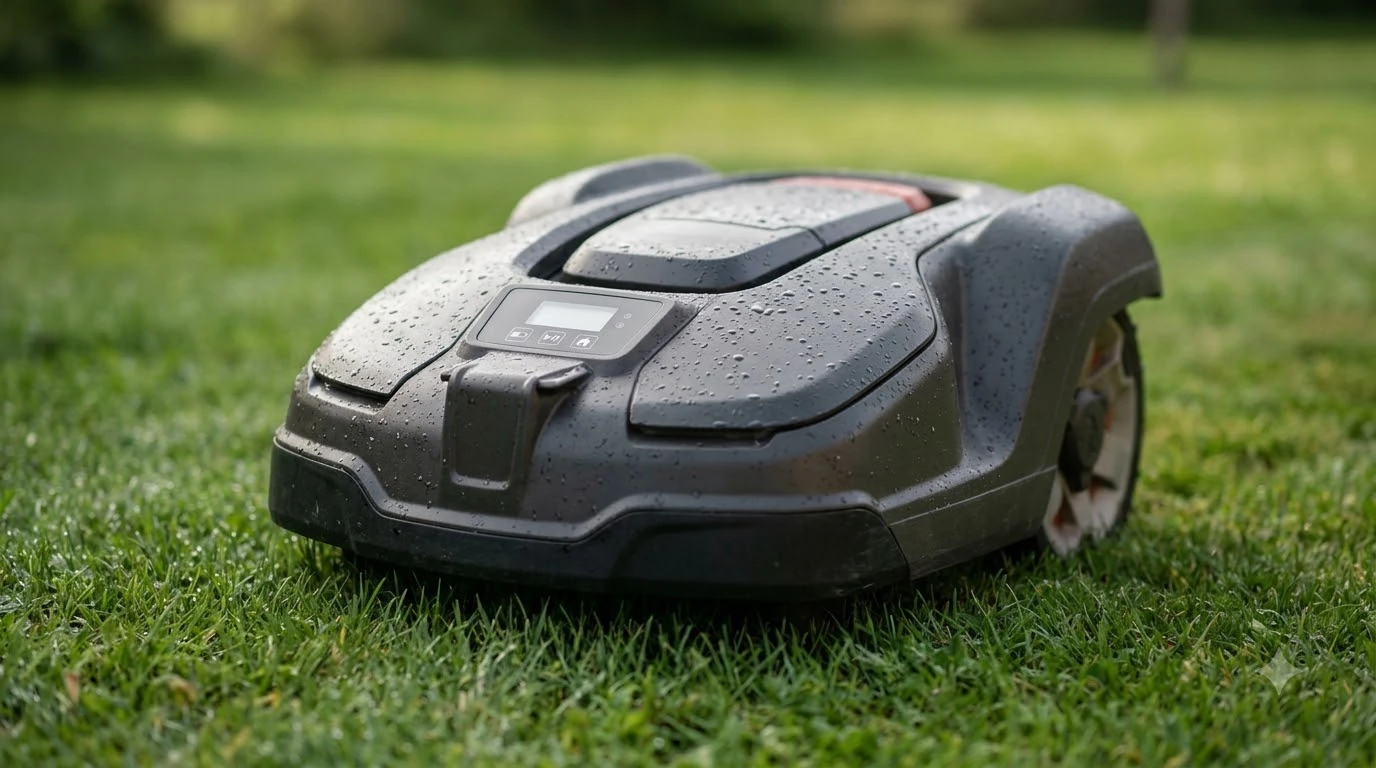

A robot mower for soggy lawn needs three things: an IPX5 or higher water rating, a rain sensor you can set, and no-go zones over the low spots that hold water. Ratings describe the mower’s body, not how it handles saturated ground, so check the spec sheet and the manual before you buy. If the letters are new to you, start with the IP rating a robot mower should have.
The short answer
- Check the IP rating. IPX5 is the level vendor guides call a sensible starting point.
- Look for a rain sensor with an adjustable delay, so the mower stays in its base while the ground dries.
- Map no-go zones over low spots, steep drops and unstable turf.
- Wait after rain. Husqvarna advises at least 24 hours before mowing wet grass.
What wet ground does to a robot mower
Saturated ground loses grip and softens, so wheels can spin, sink and leave ruts, which is why a robot mower for soggy lawn use needs more than a water rating. Soil is most fragile when it is wet. According to CSU Extension’s soil compaction guide, soils are more prone to compaction when wet.
Anker, a robot mower brand, says wheels can lose grip more easily on slopes or soft ground, and that heavily saturated grass may damage the turf underneath. Husqvarna’s no-drive troubleshooting lists wheels that spin without moving as a common cause, with wet grass making a slope slippery.
CSU Extension also names traffic over the soil as the major cause of compaction, and notes that moist soil can reach 75 percent of its maximum compaction the first time it is stepped on. Husqvarna says many robot mowers are certified to operate in the rain and are usually lightweight enough not to cause soil compaction, so the bigger risk is wheel slip and ruts rather than weight.
Our reading: the IP rating covers water hitting the body. It does not tell you how the wheels behave on mud, so the ground condition matters as much as the rating. For the wheel side of the problem, see why robot mower wheels slip on grass.
Read the IP rating before anything else
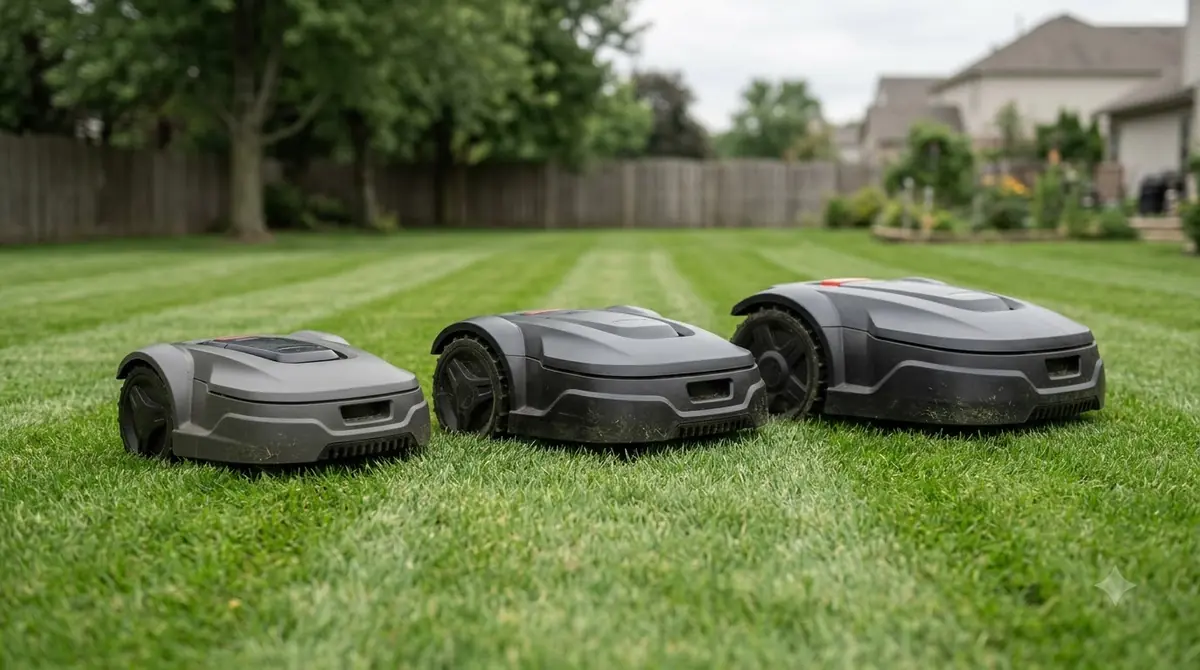
An IP rating is the first spec to read for a robot mower for soggy lawn use: it shows how well the body resists water, and each step up adds protection. Consumer NZ notes that the higher the number, the greater the protection. An X in the first digit means dust resistance was not tested, so an IPX5 mower has been checked for water only.
| Rating | What the vendor says it protects against | Fit for a soggy lawn (our reading) |
|---|---|---|
| IPX4 | Splashes from any direction | Light drizzle and damp grass, not heavy rain |
| IPX5 | Low-pressure water jets | The sensible minimum for most gardens |
| IPX6 | Stronger water jets and heavier rain | Better suited to frequent wet weather |
| IPX7 | Temporary immersion | Rare on robot mowers, and no guarantee for puddles |
Anker’s guide warns that heavy downpours, flooded lawns and standing water can still cause problems. Our reading is that a rating helps the body survive rain, but it does not make a flooded lawn safe to cut.
Look for a rain sensor you can adjust
A rain sensor sends the mower back to its base when rain starts, and the mower resumes once the weather clears. Fewer than half of the models that Consumer NZ tested had a rain sensor, so it is not a standard feature.
Ecovacs advises enabling the rain sensor with a delay, so the mower waits after rain stops. Anker says some models let owners adjust rain sensitivity in the app. Our reading: a longer delay gives wet ground more time to dry, which matters more on a soggy lawn than on a lawn that drains well.
Match slope and cutting height to your lawn
Consumer NZ tested mowers on slopes of 19 degrees, about 35 percent, and found some models claimed to handle up to 39 degrees, about 80 percent. Some manuals say the maximum claimed slope should be used for short spells only.
Those slope figures are for dry grass. Anker notes that wheels lose grip more easily on soft ground, so a claimed limit is a ceiling, not a wet-weather rating. Consumer NZ also reports that mowers usually cut better in dry conditions.
Tall grass needs a different setup. Ecovacs advises trimming below 10 cm with a normal mower before the first robot run. Our reading is that this matters more on a wet lawn, where an overgrown patch is harder for the wheels to handle.
Plan no-go zones and fill the low spots first
Low spots, steep drops and unstable turf are the places a soggy lawn most often traps a robot, so plan the zones before you buy a robot mower for soggy lawn use. Eufy’s stuck guide recommends marking low sprinkler heads, steep drops and unstable turf as no-go zones in the app. The basics are in what a no-go zone is on a robot mower.

- Fill small holes. Ecovacs advises checking stuck spots for small holes and filling them.
- Repair ruts. Eufy advises letting the area dry and repairing ruts before the next run.
- Let the cutting area dry. Husqvarna’s no-drive guidance says to let the cutting area dry before resuming.
Our reading: no-go zones only work if you draw them over the real wet patches, so walk the lawn after rain and mark the spots that hold water. If a drainage ditch splits the yard, look at a robot mower bridge for a drainage ditch, and for rainy regions see the robot lawn mower picks for Pacific Northwest lawns.
How long to wait after rain
Husqvarna advises waiting at least 24 hours after rain, and longer after heavy rain or on overcast days. Strong sun can dry a lawn in a few hours. The Husqvarna guide on wet grass also suggests a footprint test: if you can see footprints, the lawn needs more time.
CSU Extension describes a squeeze test for soil. If a ball of soil only reshapes under pressure, the soil is too wet to work. Our reading is that a soggy lawn that still squelches underfoot should be left for another day.
What to check in a robot mower for soggy lawn
- Confirm the IP rating. Look for IPX5 or higher, and note whether the first digit is an X.
- Check the rain sensor. Make sure it exists and that the delay can be set.
- Read the slope figure and the manual. Note any rule about running on the maximum slope for short spells only.
- Plan the no-go zones. Mark low spots, holes and steep drops before the first run.
- Look for grip and weight data. The sources we read did not give weight or wheel-design figures, so check the spec sheet for those.
Treat ratings as the manufacturer’s claim, not a guarantee for saturated ground. If you need a robot mower for soggy lawn conditions, the cautious choice for a yard that stays soggy for days is a model with a stated IP level, an adjustable rain delay, and a manual that allows wet-weather use.
Frequently asked questions
Can a robot mower cut wet grass?
Manufacturers advise waiting. Husqvarna recommends at least 24 hours after rain, and longer after heavy rain or on overcast days. Wet grass also makes the mower more likely to slip on slopes.
Is IPX5 enough for a soggy lawn?
IPX5 is the level Anker’s guide calls a sensible starting point for most gardens. Consumer NZ notes that a higher number gives more protection. The rating covers the body, not saturated turf, so check the rain sensor and manual too.
Do I need a rain sensor if a mower is rated for water?
Our reading is yes. A rain sensor returns the mower to its base when rain starts. Consumer NZ found that fewer than half of the models it tested had one, so it is worth checking before you buy.
What if my lawn floods every spring?
Keep the mower off standing water. Anker says its mowers are not designed to sit in puddles or flooded areas. Mark the wettest patches as no-go zones, and let the lawn dry before the mower resumes.
Sources
- How to buy the best robot lawn mower (Consumer NZ): IP rating meaning, rain sensor prevalence, slope tests.
- Soil compaction (CSU Extension): wet soil compaction and the squeeze test.
- Can you mow wet grass? (Husqvarna): 24-hour wait, footprint test, ruts.
- No-drive error message (Husqvarna support): wheel spin and slippery slopes.
- Are robot lawn mowers waterproof? (Anker, vendor): IPX tiers, standing water, grip on soft ground.
- Robot mower FAQ (Ecovacs): rain sensor delay, trim height, filling holes.
- Robot lawn mower stuck: causes and fixes (Eufy, vendor): no-go zones and ruts.
 Up next8 min readBy YardBest Robot Mower for a Townhouse Yard: Layout Checks Before You BuyUpdated Nov 13, 2026
 9 min readBy YardBest AWD Robot Mower for Hilly Backyard: 6 Things to Check Before You BuyUpdated Nov 13, 2026
 7 min readBy YardBest Robot Mower for Perennial Ryegrass: What to Check Before You BuyUpdated Nov 11, 2026
 9 min readBy YardRobot Lawn Mower for a 30 Percent Slope: What to Check Before You BuyUpdated Nov 11, 2026
 7 min readBy YardRobot Lawn Mower for a 25 Percent Slope: What to Check Before You BuyUpdated Nov 11, 2026
 8 min readBy YardRobot Lawn Mower for a 35 Percent Slope: What to Check Before You BuyUpdated Nov 11, 2026