
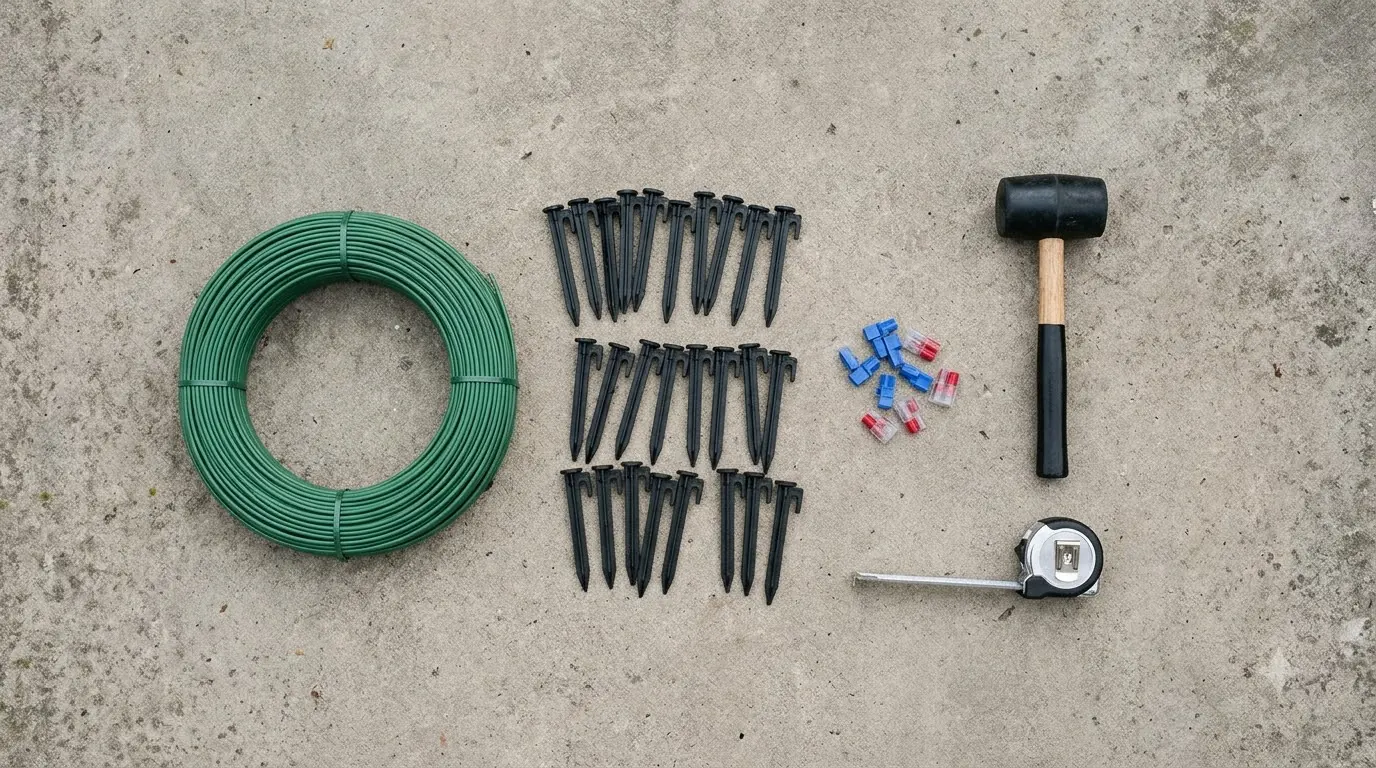

Choosing the best wire laying machine for robot mower work starts with burial depth. Manufacturer guides generally put the boundary wire at 3 to 7 cm, with 4 to 5 cm as the usual target. A tool that holds that depth evenly protects the cable from weather and from scarifying.
Pegging the wire on the surface is the simpler start, and it lets you test the mower first. The best wire laying machine for robot mower setups only pays off once the layout is final, and our guide on how to install a robot mower boundary wire shows the order of work.
The short answer
- Depth: 3 to 7 cm, with 4 to 5 cm the usual target according to Robomow.
- Too shallow: 1 to 2 cm can let the wire resurface during scarifying.
- Stakes: about every 1 m in Anker’s guidance, and 50 to 80 cm in one retailer guide. Husqvarna’s guide wire page says to stake the whole path but gives no number.
- Test first: run the wire pinned to the surface for 2 to 3 weeks before you bury it.
Best wire laying machine for robot mower: what it does
A wire laying machine cuts a narrow channel in the turf so the boundary wire can sit below the grass. Our reading is that the main value of these tools is repeatable depth, not speed alone. A retailer guide describes burying the wire with an edger or a wire-laying machine as a job that takes about an afternoon.
The sources we read do not give a blade depth or cutting width for a specific machine. The numbers in this article describe the wire, so check the tool’s own manual before you rent or buy one.

Burial depth: 3 to 7 cm, with 4 to 5 cm the target
Robomow gives a general laying depth of 3 to 7 cm and calls about 4 to 5 cm optimal. Robomow’s depth guide also warns that a wire laid only 1 or 2 cm deep can resurface the next time you scarify.
The same guide says a wire buried too deep carries a risk of signal interference, so going deeper does not add protection. Anker’s install steps match the same range, with a furrow of 3 to 5 cm and a maximum of 7 cm.
Our reading is that the best wire laying machine for robot mower jobs gives a more even channel than a spade over a long perimeter, though a hand edger can work on short runs. For edging options, see our guide to lawn edging to bury robot mower wire. Robomow notes that there are tools for sinking the cable evenly at depth, and an even channel is easier to keep consistent along the whole loop.
Stake spacing: 50 cm to 1 m
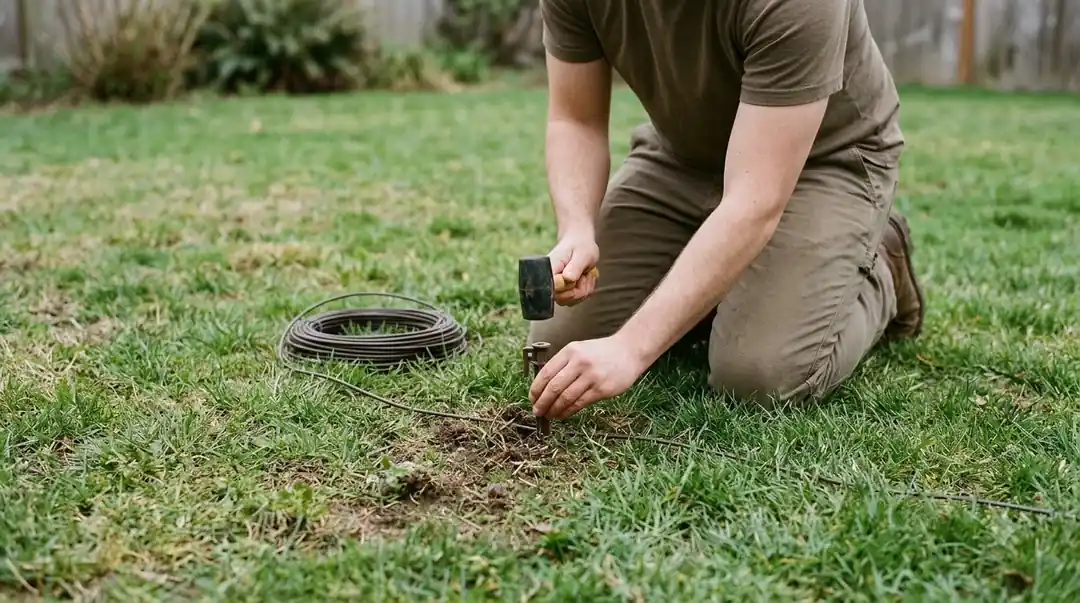
Stakes or staples hold the wire in place while the channel is open and during the test run. Husqvarna’s guide wire page says to secure the wire with stakes along its entire path, but the pages we read give no spacing number. Our guide to robot mower wire pegs covers peg count and spacing for surface wire.
Anker’s guide uses pegs or lawn hooks every 1 m for an above-ground install. The table below puts the sources side by side, because the depth ranges do not agree.
| Source | Depth | Stake or peg spacing | What to note |
|---|---|---|---|
| Robomow depth guide | 3 to 7 cm; 4 to 5 cm optimal | Not stated in that guide | 1 to 2 cm can resurface during scarifying |
| Anker install guide | 3 to 5 cm; maximum 7 cm | Pegs or lawn hooks every 1 m | Pin the wire for 2 to 3 weeks before burying |
| Husqvarna guide wire page | Not stated in the article we read | Stakes along the entire path; no number given | The alternative is to bury the guide wire |
| Retailer guide (lawnmowers.com, Oct 2026) | 2 to 5 cm | 50 to 80 cm | Grass can grow over the wire within 3 to 4 weeks |
Depth ranges differ across these sources, so follow the manual for your own mower and treat the retailer’s 2 to 5 cm as a narrower reading of the same idea.
Buried or pegged: when a machine is worth it
Burying is optional, and the choice depends on how often you scarify and how long the layout will stay put. Anker notes that a buried wire is protected from the elements and garden tools, which is why burying suits people who scarify their lawns regularly. If a buried wire later fails, our page on how to find a break in robot mower wire explains how to trace it.
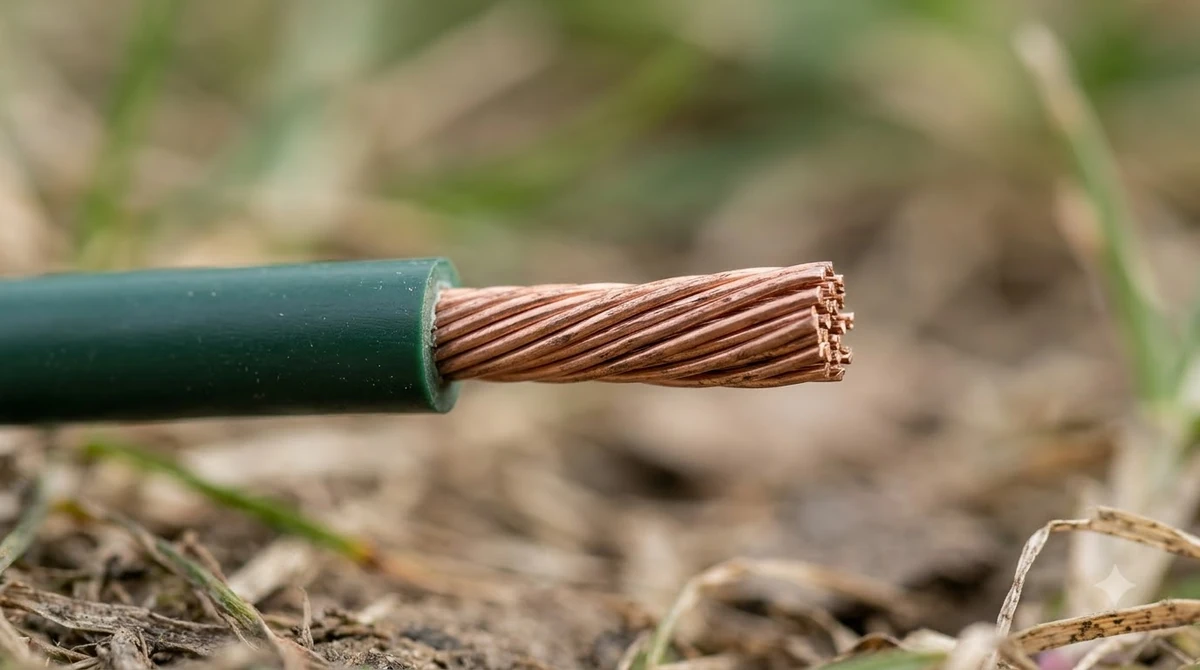
Burial gives protection, but it costs an afternoon of trenching and, for long runs, the time to use a machine correctly. Pegs take less time up front, but the retailer guide reports that grass can grow over the wire within 3 to 4 weeks, so you will need to check them.
Our reading is that a machine is worth the time for a long perimeter, a lawn you scarify each year, or a layout you do not expect to change. A small yard that you test and then leave pegged may not need one.
Heads up
Do not bury the wire until the mower has run a full test with the wire on the surface, usually 2 to 3 weeks. Changing the route after burial means digging it up again.
Steps to bury the wire after the test run
Bury the wire only after the mower has followed the full loop correctly, then cut a channel of about 3 to 5 cm and seat the wire in it.
- Test the layout. Pin the wire on the surface for 2 to 3 weeks and confirm the mower follows the loop without leaving it.
- Mark the route. Keep the pegs you used for the test in place so the channel follows the tested path.
- Open the channel. Cut a channel 3 to 5 cm deep, with 4 to 5 cm as the target, using a wire laying machine or a hand edger.
- Seat the wire. Press the wire into the channel so it lies flat at an even depth along the whole run.
- Close the slot. Firm the soil and turf back over the wire, then run the mower once more to confirm the loop still works.
What the sources do not tell you
No manufacturer spec we read gives the blade depth or cutting width of a wire laying machine, so the depth numbers above describe the wire, not a particular tool. Before you choose the best wire laying machine for robot mower work, check the tool’s own manual for its depth setting and compare it with the 3 to 7 cm range.
Our reading is to aim for 4 to 5 cm. That target sits inside all three depth ranges above: Robomow’s 3 to 7 cm, Anker’s 3 to 5 cm, and the retailer’s 2 to 5 cm.
Frequently asked questions
How deep should robot mower boundary wire be buried?
Manufacturer guides generally put the wire at 3 to 7 cm. Robomow calls about 4 to 5 cm optimal, and Anker’s install steps give a furrow of 3 to 5 cm with a maximum of 7 cm. Check your model’s manual before you cut the channel.
How far apart should boundary wire stakes be?
Husqvarna’s guide wire page says to place stakes along the whole path but gives no spacing number. Anker’s guide uses pegs or lawn hooks every 1 m, and a retailer guide suggests 50 to 80 cm. Closer spacing on curves is a reasonable choice (our reading), but these sources do not set a tighter rule.
Do I have to bury the boundary wire?
No. Burying is optional, and pinned wire works for a test run and for many lawns. Burial protects the cable from weather and garden tools, which matters most if you scarify the lawn regularly.
What happens if the wire is buried too shallow?
Robomow warns that a wire laid only 1 or 2 cm deep can resurface the next time you scarify. Going deeper than the range is not the fix either, because a wire buried too deep carries a risk of signal interference.
Sources
- How deep must the boundary wire be laid for robotic mowers? (Robomow): 3 to 7 cm range, 4 to 5 cm optimal, 1 to 2 cm resurfacing risk, signal interference when too deep.
- Robot lawn mower boundary wire installation (Anker, Eufy): furrow of 3 to 5 cm with a 7 cm maximum, pegs every 1 m, 2 to 3 week test run, protection from weather and tools.
- How to lay a guide wire in an Automower installation (Husqvarna Ireland): stakes along the entire guide wire path, or bury it.
- Robotic mower boundary wire setup guide (lawnmowers.com, 12 Oct 2026): 2 to 5 cm depth, 50 to 80 cm stakes, grass growing over the wire within 3 to 4 weeks.
 Up next7 min readGearRobot Mower Wire Stapler Tool: Pegs, Tension and Staple DepthUpdated Nov 20, 2026
 7 min readGearHow to Change Worx Landroid Blades in 7 Simple StepsUpdated Nov 19, 2026
 7 min readGearDoes Cold Weather Hurt a Robot Mower Battery? 3 RulesUpdated Nov 20, 2026
 6 min readGearRobot Mower Winter Storage Bag: 3 ChecksUpdated Nov 14, 2026
 6 min readGearRobot Mower Lawn Edging Strips: 3 Simple Setup StepsUpdated Nov 14, 2026
 6 min readGearRobot Mower Ramp for Truck Bed: 3 Smart Loading ChecksUpdated Nov 20, 2026