
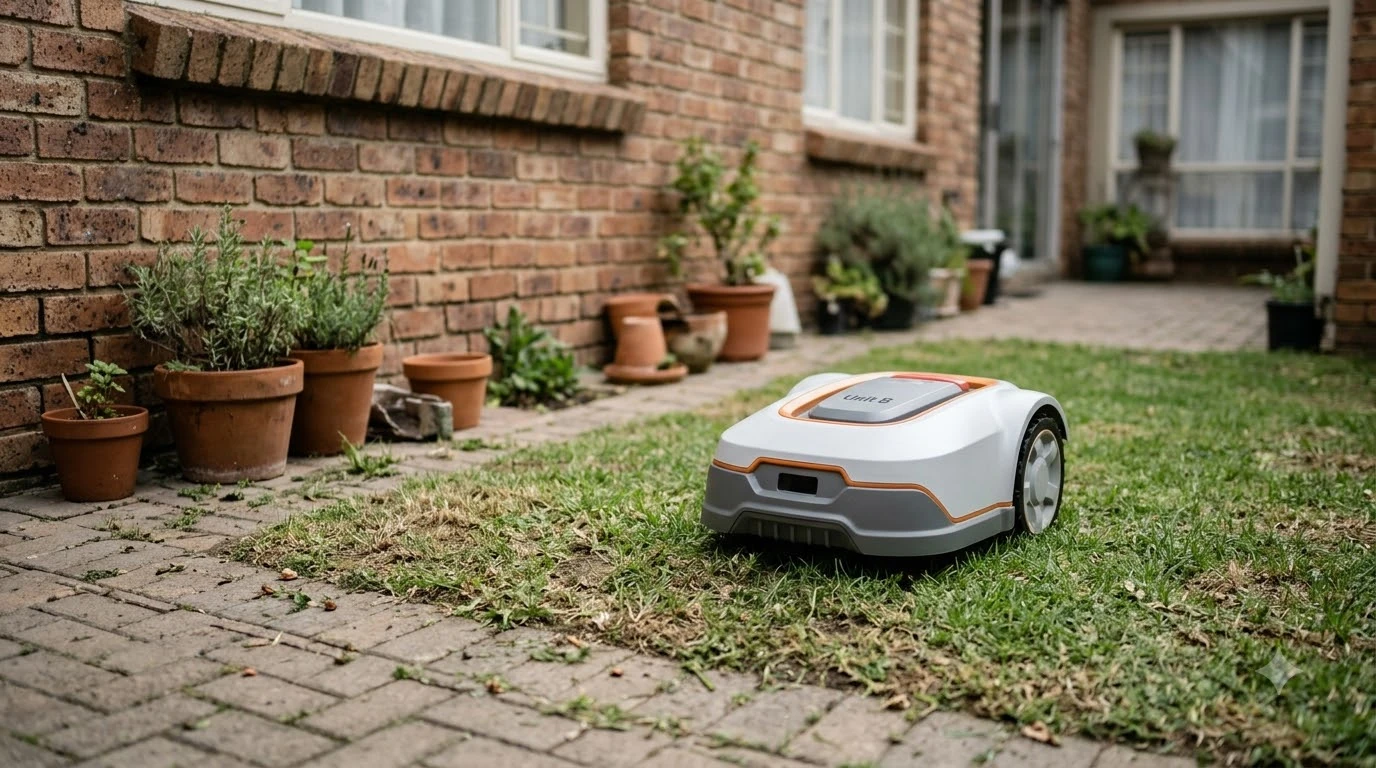

The best robot lawn mower for Pennsylvania lawns is the one whose highest cutting setting reaches the height your grass needs, and that suits your slopes and boundary setup. Penn State Extension’s turfgrass guide for Pennsylvania covers cool-season grasses, including Kentucky bluegrass, perennial ryegrass, tall fescue and fine fescues, with set heights that run from about 1.5 to 3 inches. No independent Pennsylvania test names a winner, so this guide explains what to check before you buy.
The short answer
- Match the grass first. Penn State Extension lists 1.5 to 2.5 inches for Kentucky bluegrass and 2.0 to 3.0 inches for tall fescue.
- Check the top setting. Robomow’s typical robot range tops out at about 2.4 inches, while some of its models reach about 3.9 inches. Compare that number with the grass, not the lowest setting.
- Cut higher in hot, humid weather. Penn State advises keeping Kentucky bluegrass at 2.0 inches or above during hot, humid conditions.
Which grasses Pennsylvania lawns are usually built on
Penn State Extension’s species guide gives a set height for each common cool-season grass. The numbers differ from grass to grass, so one mower setting will not suit every lawn. The table below uses the Penn State figures, which is why they are the reference for a Pennsylvania yard.
| Grass | Penn State set height | Note from the same guide |
|---|---|---|
| Kentucky bluegrass | 1.5 to 2.5 inches | Keep at 2.0 inches or above in hot, humid weather |
| Tall fescue | 2.0 to 3.0 inches | Suggested mowing heights |
| Perennial ryegrass (improved varieties) | 1.5 to 2.5 inches | Golf fairways are cut lower, 0.75 to 1.0 inch |
| Fine fescues | 2.0 inches or above | Perform well at 2.0 inches or above |
The Penn State species page shows an update date of November 10, 2016, so check the current Penn State Extension pages before you set a mower for a new lawn. Ohio State Extension gives wider ranges for some of the same grasses, for example 2 to 4 inches for Kentucky bluegrass, so use the extension source for your own state when you can. Our guide to Kentucky bluegrass cutting height covers that grass in more detail.
Match the mower’s top cutting height to your grass
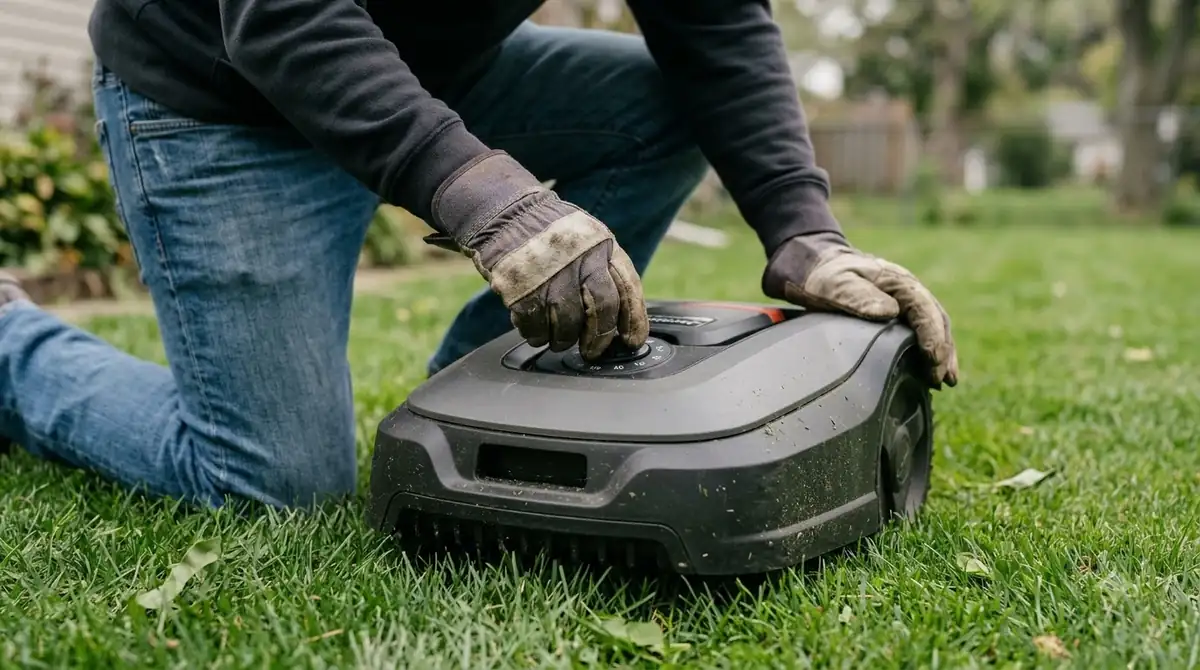
A robot mower cannot cut higher than its highest setting, so for the best robot lawn mower for Pennsylvania lawns the top number on the spec sheet matters more than the bottom one. Robomow’s blog says many robot mowers cut between 20 and 60 mm, about 0.8 to 2.4 inches, and that some models go up to 100 mm, about 3.9 inches. The eufy E-series lists a cutting range of 25 to 75 mm, or 1 to 3 inches.
- Kentucky bluegrass at 1.5 to 2.5 inches sits inside most of the ranges above.
- Tall fescue at 2.0 to 3.0 inches needs a top setting of about 3 inches. Our reading: a mower whose top setting is 2.4 inches will not reach the upper end of Penn State’s tall fescue range.
- Fine fescues at 2.0 inches or above need a top setting of at least 2 inches.
A University of Florida IFAS publication notes that most autonomous mowers were developed for Europe, where cool-season grasses dominate, and that they are typically set below 2.5 inches. Our reading: a model that cuts at 2.5 inches or lower may need extra attention in a yard where you want the grass taller.
Summer heat and humidity: raise the cut
Hot, humid summers slow cool-season grass, and the cut needs to rise with them. Penn State says Kentucky bluegrass should stay at 2.0 inches or above in hot, humid conditions. UC IPM advises cutting cool-season turf higher for heat, drought and shade, and Iowa State University Extension lists 3 to 3.5 inches for Kentucky bluegrass in summer.
- One-third rule. Never remove more than a third of the leaf blade length in one cut. OSU Extension and UC IPM both give this rule, and it applies to any mower.
- Frequent, light cuts. A robot mower that runs often removes only a little at a time. Our reading: that pattern fits the one-third rule better than one long weekly cut, provided the mower can hold the height you need.
- Preliminary research. A University of Connecticut trial of autonomous mowers found 2.25 inches gave the best results for tall fescue and Kentucky bluegrass. The university calls the results preliminary, so treat them as a direction, not a final answer.
Slopes, boundary wire and yard edges
Boundary setup and slope rating decide whether the best robot lawn mower for Pennsylvania lawns covers your yard, and they vary more than the brand name suggests. Robomow’s installation guide places the boundary wire about 35 cm (about 14 inches) from walls and tall stones, about 10 cm from beds or hedges, and buries it 4 to 5 cm deep. It also asks for passages wider than 70 cm.
Boundary type can change within one brand. Husqvarna’s US product page lists the 435X AWD with physical wire only, the 560 and 580 EPOS with virtual boundaries only, and the 410, 420 and 440 iQ with physical or virtual wire. Check the boundary type on the specific model, not on the brand page.
Slope ratings also come in different units. Husqvarna’s steep-slope guide lists standard models at about 25 to 50 percent in the work area but only about 10 to 25 percent near the boundary wire, while the eufy E-series lists a maximum slope of 18 degrees. An 18-degree slope is about 32 percent, so convert both numbers to the same unit before you compare them; robot mower slope ratings explained shows how.
Cold weather and winter storage
Manufacturers set temperature limits for charging, operating and storage, and those limits matter for the best robot lawn mower for Pennsylvania lawns whenever it sits out in cold weather. The table compares what three manufacturers and one brand’s support pages state.
| Brand | Temperature limit | Winter rule |
|---|---|---|
| Husqvarna Automower | Operates 0 to 50 C (32 to 122 F) | Store in a dry place above freezing; charge fully and switch off before storage |
| Husqvarna Frost Guard | Parks the mower when the scheduled start is 5 C (41 F) or below | Rechecks hourly while parked, then starts above 5 C |
| Mammotion | Storage between -10 and 40 C (14 to 104 F) | Move indoors below -10 C (14 F); charge to at least 80% before storage |
| Ecovacs GOAT | Battery protection below 0 C or above 55 C | Advises against mowing frosted lawns and not recommended in winter |
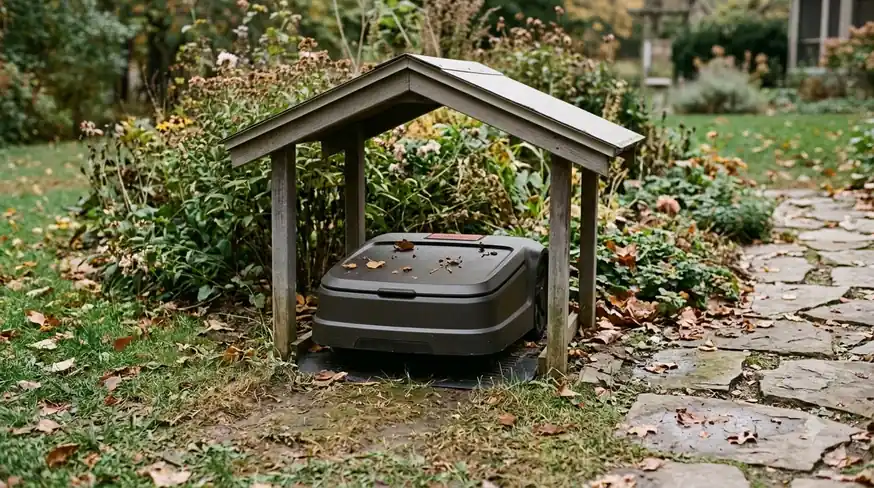
Our reading: choose a model whose manual gives both an operating limit and a storage limit. Before the first hard freeze, plan where the mower and its charging station will go, and keep the battery charged to the level the manual specifies; see robot mower winter storage for a step list.
Best robot lawn mower for Pennsylvania lawns: what to check before you buy
- Top cutting height. Compare the highest setting with the grass range in the Penn State table above.
- Rated area. The eufy E15 is rated for up to 800 square meters (about 0.2 acre), and the E18 for up to 1,200 square meters (about 0.3 acre). Pick a rating above your lawn size, and check the manual for work-area capacity.
- Boundary type. Confirm whether the model uses physical wire, virtual boundaries or both.
- Slope in one unit. Convert percentages and degrees before you compare models.
- Temperature limits. Read the operating, charging and storage limits in the manual.
- Noise and hours. Robomow notes that 60 dB or less usually does not cause quarrels with neighbors, and that the sound drops by about 6 dB for each doubling of distance (more in how loud robot mowers are). Ecovacs notes that early-morning or evening mowing can disturb neighbors and may break local noise rules.
- Theft protection. The eufy E-series lists GPS and 4G tracking. Husqvarna’s theft guide notes that many home insurance policies cover robotic mowers as standard, so check your own policy; robot mower theft protection covers the other options.
Our reading is that the best robot lawn mower for Pennsylvania lawns is the model whose published top height, slope limit, boundary type and temperature limits fit your yard. Confirm each figure in the current manual before you buy.

Frequently asked questions
Can a robot mower cut tall fescue in Pennsylvania?
For the best robot lawn mower for Pennsylvania lawns on tall fescue, Penn State Extension suggests 2.0 to 3.0 inches for tall fescue, so the top setting should reach about 3 inches. The ranges in this guide top out between 2.4 and 3.9 inches, so check the spec sheet of each model.
Should I raise the mower in summer?
Yes, for cool-season grass. Penn State advises keeping Kentucky bluegrass at 2.0 inches or above in hot, humid weather, and UC IPM advises cutting higher for heat, drought and shade.
Do robot mowers need winter storage?
Storage rules depend on the model. Husqvarna advises a dry place above freezing, and Mammotion gives a storage range of -10 to 40 C. Read the manual for your model and follow its storage and charging limits.
Does one brand’s boundary type fit every model?
No. Husqvarna’s US listings show physical wire on some models, virtual boundaries on others, and both on a third group. Check the boundary type on the specific model before you buy.
Sources
- Turfgrass Species for Pennsylvania (Penn State Extension): set heights for Kentucky bluegrass, tall fescue, perennial ryegrass and fine fescues; page dated November 10, 2016.
- Lawn Mowing, fact sheet HYG-5816 (Ohio State University Extension): cutting ranges for neighboring-state comparison and the one-third rule.
- Mowing cool season grasses (UC IPM): one-third rule and cutting higher for heat, drought and shade.
- What is the correct mowing height for a lawn in summer? (Iowa State University Extension): summer and spring/fall heights for Kentucky bluegrass.
- UConn research shows autonomous mowers make the cut (UConn Today): preliminary trial results.
- EP667, robotic mowers and cool-season turf (UF/IFAS Extension): autonomous mowers designed for cool-season grass, typical cut below 2.5 inches.
- What is the ideal cutting height for a robotic lawnmower (Robomow): typical cutting ranges for robot mowers.
- Laying the lawn boundary wire (Robomow): wire distances, burial depth and passage width.
- How loud is a robotic mower (Robomow): sound level and distance.
- eufy Robot Lawn Mower E-series (manufacturer): cutting range, rated area, slope and tracking.
- Husqvarna robotic lawn mowers (manufacturer): boundary type by model.
- At what temperature can I use, charge and store my Automower (Husqvarna support): operating temperature range.
- Optimise an Automower installation for steep slopes (Husqvarna support): work-area and boundary slope limits.
- Protect your lawn with Automower Frost Guard options (Husqvarna support): 5 C threshold.
- Complete winter storage guide (Husqvarna support): storage above freezing.
- Winter storage (Mammotion support): storage range and move-indoors threshold.
- Ecovacs GOAT FAQ (manufacturer): battery temperature protection and winter mowing advice.
- My Automower has been stolen, what should I do (Husqvarna support): insurance note.
 Up next8 min readBest Robot MowersBest Robot Lawn Mower for Virginia Lawns: What to Check Before You BuyUpdated Nov 14, 2026
 9 min readBest Robot MowersBest Satellite Navigation Robot Lawn Mower 2026: What to Check Before You BuyUpdated Nov 11, 2026
 10 min readBest Robot MowersBest Robot Lawn Mower Under $1000: What to Check Before You BuyUpdated Nov 12, 2026
 7 min readBest Robot MowersBest Robot Lawn Mower Under $3000: What to Check Before You BuyUpdated Nov 14, 2026
 9 min readBest Robot MowersBest Robot Lawn Mower Under $700: What to Check Before You BuyUpdated Nov 12, 2026
 8 min readBest Robot MowersBest Robot Lawn Mower Under $5000: What to Check Before You BuyUpdated Nov 12, 2026