
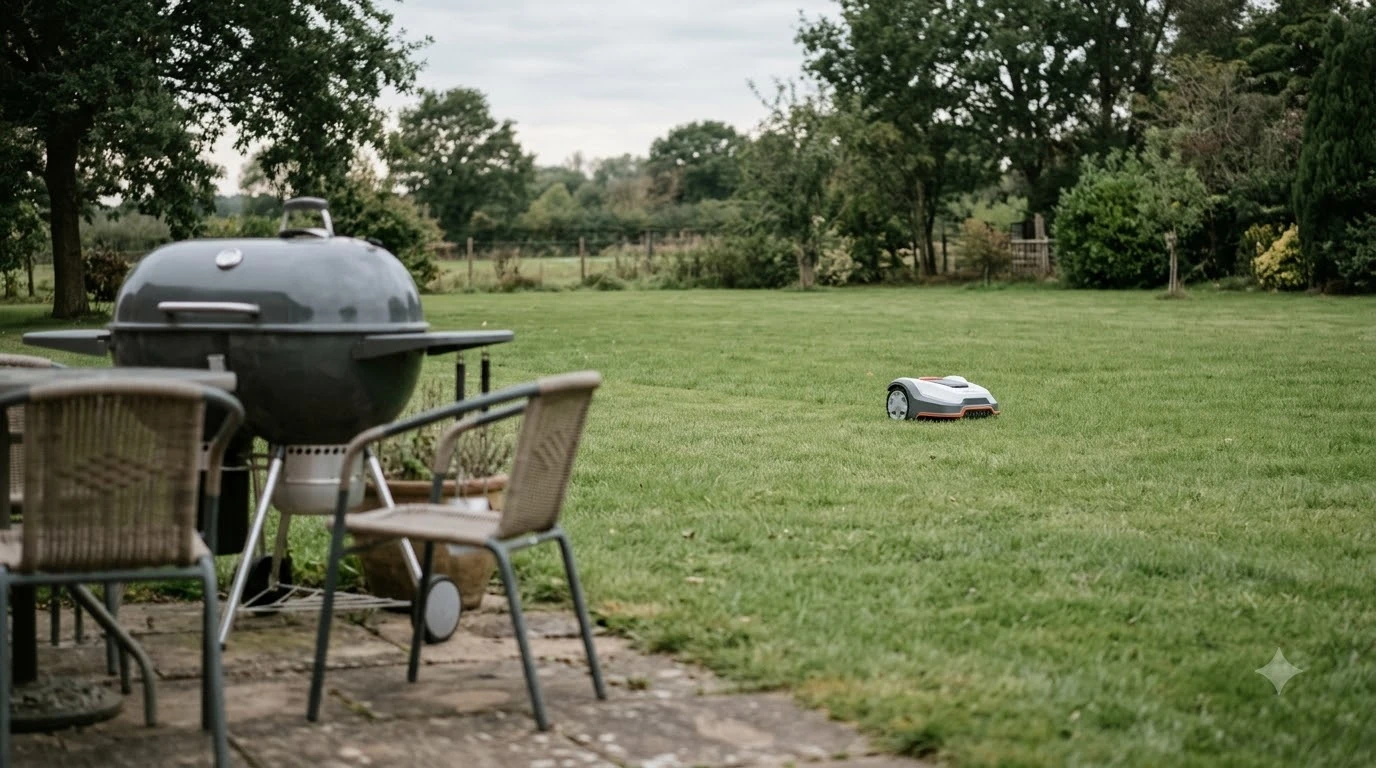

The best robot lawn mower for the southeast lawns is the one whose cutting range, temperature limits and shade tolerance match your grass. Most southeast yards grow warm-season grass, which has its own mowing heights and heat needs. As of 2026-11-12, the specs below come from extension pages and manufacturer support pages, not from hands-on tests.
The short answer
- Grass first: identify St. Augustinegrass, zoysiagrass, centipedegrass or bermudagrass, because each needs a different cutting height.
- Height range: confirm the mower can cut at the low and high end of your grass’s range.
- Temperature: compare the published operating range with your local summer highs and winter lows.
- Shade: if trees cover the yard, plan for a higher cut and check the grass’s sun needs before you shortlist the best robot lawn mower for the southeast lawns.
What grass grows in southeast lawns
Most lawns across the southeast are warm-season grass, which grows fastest in hot weather and goes dormant or thin when cold or dry. The common choices are St. Augustinegrass, zoysiagrass, centipedegrass and bermudagrass. Each one has its own mowing height and tolerance profile, so the grass type is the first filter when you look for the best robot lawn mower for the southeast lawns.
Because the grass changes the cutting height, a single robot mower setting rarely fits every yard. Check the grass before you check any model.
Coastal yards add one more filter when you pick the best robot lawn mower for the southeast lawns. UF/IFAS lists St. Augustinegrass and zoysiagrass as the best choices for homeowners with salt-exposed lawns. Centipedegrass, the other common southeast grass, is usually cut at 1.5 to 2 inches according to Clemson HGIC. In central and north Florida, UF/IFAS says St. Augustinegrass goes dormant in cool months, when you should reduce watering and skip fertilizer.
Mowing height for warm-season grass
Clemson HGIC gives typical mowing ranges for warm-season turf, and the one-third rule applies to all of them: remove no more than one-third of the grass height at any one mowing. Cutting more at once can stop roots from growing.
| Grass | Typical mowing height | Source note |
|---|---|---|
| St. Augustinegrass (standard) | 3 to 4 inches | Clemson HGIC |
| St. Augustinegrass (dwarf) | about 2.5 inches | Clemson HGIC |
| Zoysiagrass (most varieties) | about 2 inches | Clemson HGIC |
| Zoysiagrass (some cultivars) | down to about 0.5 inch | Clemson HGIC |
| Common bermudagrass | 1 to 2 inches | Clemson HGIC, LSU AgCenter |
| Hybrid bermudagrass | 0.5 to 1.5 inches | Clemson HGIC |
Clemson HGIC lists centipedegrass at 1.5 to 2 inches. Heat and drought can call for a higher cut, so a robot mower set once in spring may need a different height by midsummer.
For the best robot lawn mower for the southeast lawns, the range matters more than any single number. Standard St. Augustinegrass needs a much higher cut than common bermudagrass, so a yard with this grass needs a mower that can set a high cut (see how often to mow St. Augustinegrass). Zoysiagrass is the opposite case: some cultivars can be cut very low, while others sit near 2 inches, as our zoysia grass cutting height guide explains.
LSU AgCenter describes homeowner mowing in the growing season as about once a week, or 3 to 4 times a month. Our reading is that frequent light cuts from a robot mower can keep each cut within the one-third rule. For the best robot lawn mower for the southeast lawns, the stress rule matters most in July and August. Clemson also says to raise the cut during stress. For zoysiagrass, the advice is to raise the height slightly during high heat or lack of rain and keep it raised until the stress ends. A robot mower with a simple height setting makes that change quick.
Heat and rain limits for the southeast lawns
Robot mower operating ranges are the first numbers to check for the best robot lawn mower for the southeast lawns. They are published in both Celsius and Fahrenheit, and brands do not all match. Husqvarna lists operation and storage between 0 and 50 C (32 to 122 F) on its Australian support page. Navimow lists an operating range of 0 to 40 C (32 to 104 F) for its H2 and X4 models. These are the figures to compare with your local temperatures, because a mower with a narrower range may stop working on the hottest days.
Zoysiagrass grows best at roughly 80 to 95 F, so hot weather is not the only issue in the southeast. Growth patterns like this shape which best robot lawn mower for the southeast lawns fits a given yard. Drought and heat both push warm-season grass toward stress, and Clemson advises mowing higher during that period.
Rain is a separate question. UF/IFAS reports no negative effects from running a robot mower in rainy conditions, but that is a general finding, so check your model manual for its own wet-weather rules. Our guide on whether robot mowers work in rain covers the manual side.
| Point to compare | Published figure | Source |
|---|---|---|
| Husqvarna operation and storage | 0 to 50 C (32 to 122 F) | Husqvarna AU support |
| Navimow H2 and X4 operation | 0 to 40 C (32 to 104 F) | Segway Navimow |
| Zoysiagrass growth optimum | roughly 80 to 95 F | Clemson HGIC |
| Robot mower in rain | no negative effects found | UF/IFAS |
Shade and trees in southeast yards
Shade is one of the hardest conditions for warm-season turf, and many southeast yards sit under large trees. Shade changes the answer for the best robot lawn mower for the southeast lawns, because it affects the grass first and may affect navigation too. St. Augustinegrass is the most shade-tolerant warm-season grass, but it still needs 4 to 6 hours of sun to thrive. Clemson notes that Floratam will thin in direct relation to the amount of shade it receives.
When a lawn is heavily shaded, the practical steps are simple:
- Mow higher, because Clemson advises a higher cut under shade, which also suits a mower with a high cut range.
- Look for the best robot lawn mower for the southeast lawns with a cut range that covers the shade setting you need.
- Pick a shade-tolerant grass if you can still reseed or overseed, and read the mowing height for shade grass notes first.
- Check that the mower’s sensors and boundary setup handle tree cover and overhanging branches.
What to check before you buy the best robot lawn mower for the southeast lawns
Our reading of the sources above is that a buyer looking for the best robot lawn mower for the southeast lawns should work through the specs in this order, before comparing any brand names:
- Grass type and cut range: the mower must reach your grass’s range, including the high cut for standard St. Augustinegrass.
- Temperature limits: compare the published operating range with your highest summer temperature.
- Shade and sun: note how much direct sun the yard gets and whether trees will affect navigation.
- Lawn size and shape: match the mower’s coverage to the area you measured, using our guide to choosing a robot mower by lawn size.
- Boundary setup: plan the perimeter setup around beds, trees and edges before you buy.
- Summer battery care: keep the charging station in shade if your manual recommends it.
Checking these points in order keeps your search for the best robot lawn mower for the southeast lawns grounded in published specs rather than marketing claims. Because the published heights and temperature limits differ by brand and by model, confirm each figure in the current manual before you buy. The best robot lawn mower for the southeast lawns is the one whose published specs match your grass and your climate, not the one with the longest feature list.
Frequently asked questions
Which robot mower is best for the southeast lawns?
No single model is the best robot lawn mower for the southeast lawns in every yard. Start with grass type, cut range, temperature limits and shade, then compare the models that fit those specs.
Can a robot mower cut St. Augustinegrass?
Clemson HGIC lists standard St. Augustinegrass at 3 to 4 inches and dwarf types at about 2.5 inches. The mower must be able to set a cut in that range before it is a fit for this grass.
Does rain stop a robot mower?
UF/IFAS reports no negative effects from running a robot mower in rainy conditions. Check your model manual, since wet-weather rules can differ between brands.
Do robot mowers work in summer heat?
They work within a published operating range, such as 0 to 50 C for Husqvarna and 0 to 40 C for Navimow. Compare that range with your local summer highs before you buy the best robot lawn mower for the southeast lawns.
Sources
- St. Augustinegrass (Clemson HGIC): mowing height, sun needs and shade thinning.
- Zoysiagrass (Clemson HGIC): mowing height, heat optimum and drought notes.
- Mowing lawns (Clemson HGIC): one-third rule and typical warm-season heights.
- Mowing rule (LSU AgCenter): bermudagrass height and the one-third rule.
- Salt-tolerant lawngrasses (UF/IFAS Gardening Solutions): St. Augustinegrass and zoysiagrass for salt-exposed yards.
- Mowing your Florida lawn (UF/IFAS): St. Augustinegrass rotary height.
- Robot mowers (UF/IFAS News): no negative effects found from rainy-weather operation.
- Husqvarna Automower temperature support (Husqvarna): operation and storage range.
- How Navimow decides whether to mow (Segway Navimow): operating range for H2 and X4.
 Up next8 min readBest Robot MowersBest Robot Lawn Mower for Tennessee Lawns: What to Check FirstUpdated Nov 11, 2026
 8 min readBest Robot MowersBest Robot Lawn Mower for New Jersey Lawns: What to Check FirstUpdated Nov 14, 2026
 8 min readBest Robot MowersBest Robot Lawn Mower Under $1500: What to Check FirstUpdated Nov 12, 2026
 7 min readBest Robot MowersWhich Dreame Robot Mower Should I Buy? Limits to Check FirstUpdated Nov 13, 2026
 8 min readBest Robot MowersBest Robot Lawn Mower for Arizona Lawns: What to Check FirstUpdated Nov 11, 2026
 9 min readBest Robot MowersBest Robot Lawn Mower for Thin Patchy Grass: What to Check FirstUpdated Nov 16, 2026