
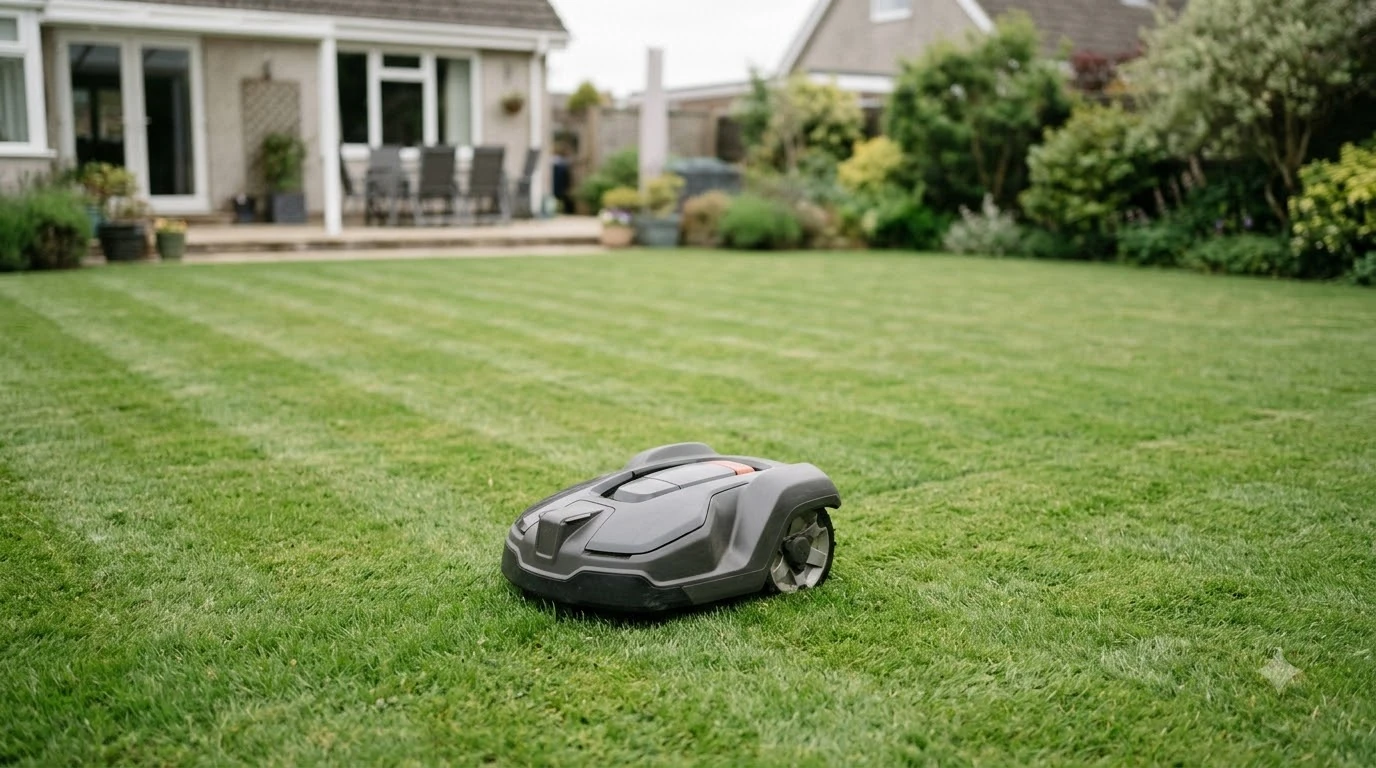

What is mowing efficiency on a robot mower? It is how much lawn the mower actually cuts per hour, after time spent turning, searching and charging is taken out. Manufacturers publish it as an area rate, such as about 1,938 ft² per hour for one Ecovacs model in its efficient mode, but the real figure depends on the lawn, as of Nov 2026.
The short answer
- What it measures: area cut per hour, net of navigation and charging time.
- Typical published range: Segway lists 80 to 120 m² (0.02 to 0.03 acre) per hour for its Navimow i110N.
- Biggest drag: obstacles, long or dense grass, and an aging battery.
- Pattern matters: systematic mowing overlaps less than random mowing, according to Mammotion.
The sources we read do not share one formal definition, so each one answers “what is mowing efficiency on a robot mower” in its own way. Some use a rated area rate, some use the share of time spent actually cutting, and some add cut quality. Reading the number well means knowing which definition is behind it.
What is mowing efficiency on a robot mower?
Mowing efficiency is the effective area a robot covers in a given time. The rated figure assumes the mower is cutting for the whole period, so the real output is lower once it stops to turn, search for its boundary, or return to the dock.
Husqvarna describes the same split in its support material. Operating time covers cutting, searching and charging, so not all of the scheduled time becomes cutting time, and the split depends on the layout, grass growth and battery age (Husqvarna’s work area capacity guide).
Area-per-hour figures from manufacturers
Area per hour is the number most brands publish, and it is useful for comparing models on the same basis. Ecovacs lists its GOAT O1000 RTK at about 1,507 ft² per hour in delicate mode and about 1,938 ft² per hour in efficient mode, and rates the same model for lawns up to 1/4 acre (Ecovacs GOAT O1000 RTK page).
Segway’s support article gives a different kind of benchmark. For the Navimow i110N it lists 80 to 120 m² (0.02 to 0.03 acre) per hour of capacity and a typical mowing time of about 60 minutes per full charge (Segway Navimow efficiency support article).
| Source | What it publishes | Figure |
|---|---|---|
| Ecovacs GOAT O1000 RTK | Delicate mode rate | about 1,507 ft² per hour |
| Ecovacs GOAT O1000 RTK | Efficient mode rate | about 1,938 ft² per hour |
| Segway Navimow i110N | Area capacity per hour | 80 to 120 m² per hour |
| Segway Navimow i110N | Typical mowing per full charge | about 60 minutes |
These numbers are not directly comparable, and the way makers define coverage differs too (see robot mower coverage ratings explained). One is a mode-based rate, the other a capacity range with a charge-time benchmark. Our reading is that the rate tells you the ceiling, and the charge figure tells you how often the mower leaves the lawn to recharge.
What lowers mowing efficiency
Most of the gap between the rated rate and the mowing efficiency on a robot mower you see in practice comes from conditions outside the mower. Segway says its ideal cutting area assumes a perfectly smooth lawn with no obstacles, and it names long or dense grass, battery condition and settings or hardware as causes of lower efficiency.
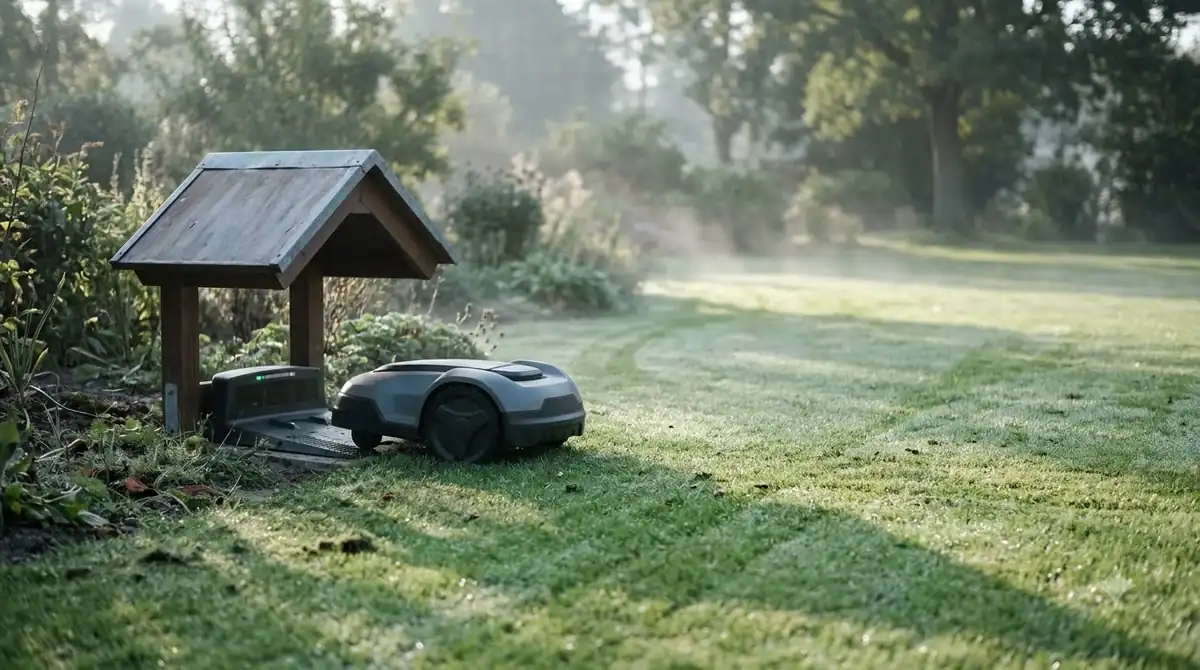
Robomow puts a number on it. For an average garden, it lists slopes, tough or fast-growing grass, weather, obstacles and layout, and says some of these situations can reduce area output by about 30 percent. Its guidance also notes that an aging battery means more trips back to the charger, so total mowing time rises over the life of the battery (Robomow’s mowing time guide). For the charging side, see how often a robot mower needs to charge.
Heads up
The 30 percent figure is a manufacturer estimate for an average garden, not an independent test result. A lawn with many obstacles or steep slopes may lose more.
How cutting pattern changes efficiency
The path a mower follows changes mowing efficiency on a robot mower, because it sets how much ground is covered per hour. Mammotion describes its random pattern as straight runs in which the mower travels until it meets a boundary wire, an obstacle or a sensor alert, then turns. It calls this less efficient, with more overlap and no predictable path, though it notes that random mowing eventually reaches full coverage if it runs often enough. Our guide to robot mower mowing patterns covers each type in more detail.
Systematic patterns use navigation such as GPS or RTK to cut in organized rows. Mammotion says this is far more efficient, reducing overlap and finishing faster. Its zigzag variant is described as highly efficient with minimal battery waste, while its chessboard grid trades speed for thoroughness (Mammotion’s mowing pattern article).
Speed also plays a part. Eufy says most robot mowers move at 0.5 to 2 mph, and it describes spiral mowing, which starts in the middle and works outward, as commonly used because it reduces the number of turns (Eufy’s mowing efficiency tips).
How testers measure it
Independent testers often measure efficiency through run time and charge time rather than a rated area, so their results answer a slightly different question than a spec sheet does. CHOICE, an Australian consumer organization, scores running efficiency from how long a mower runs while cutting an area and how long it takes to recharge. That running efficiency makes up 10 percent of its performance score (CHOICE’s robot lawnmower test method).
CHOICE scores cut quality separately, across standard, damp, long, uneven and sloping lawns. It checks how evenly the mower cuts, how well it mulches cuttings back into the lawn, whether it misses spots, and whether it leaves wheel marks. The page does not publish numeric thresholds or a formula that turns run time into a score.
Comparing mowing efficiency between two mowers
Start by checking which definition each brand uses when it answers “what is mowing efficiency on a robot mower” in a spec table. A rated area per hour, a battery-based mowing time and a tested run time are three different measures, and they should not be read as one column. Daily limits matter too, as covered in robot mower run time per day. Next, check whether the figure assumes a flat, obstacle-free lawn, since Husqvarna’s figures assume continuous operation on a flat area.
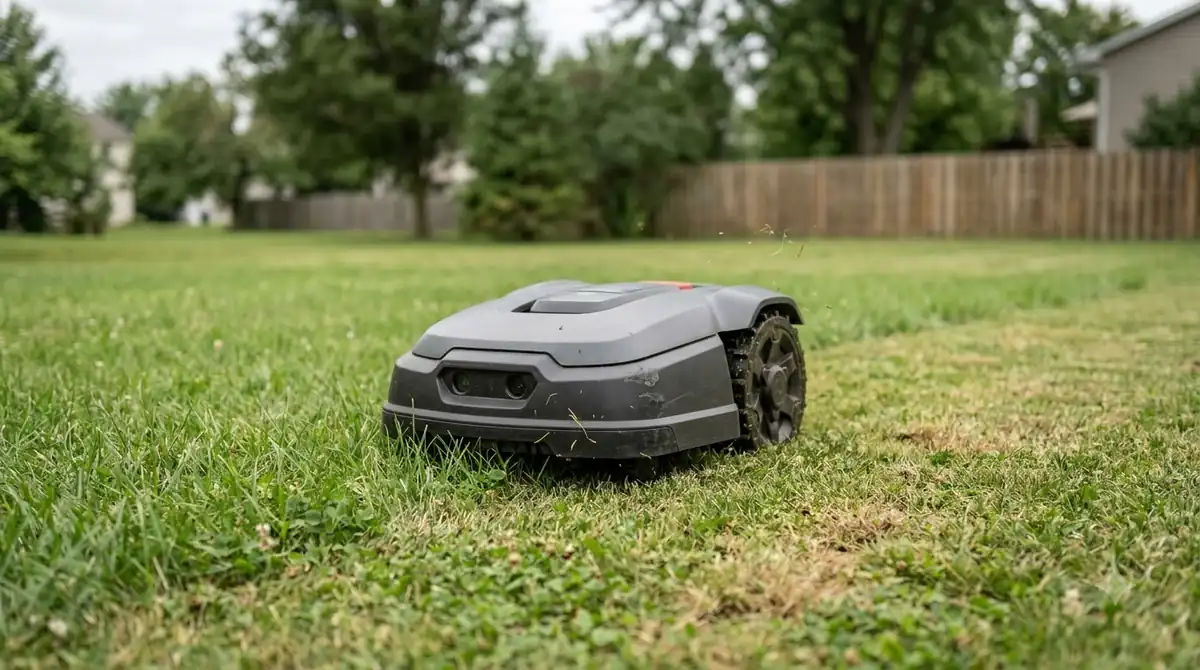
Our reading is to match the figure to your lawn. A larger yard with slopes needs a realistic rate, not the best case, and a yard with many beds needs a systematic pattern and a mower that handles turns well. Pick the model whose rated rate and charge time both cover your daily schedule with margin.
Frequently asked questions
Is mowing efficiency on a robot mower the same as battery life?
No. Battery life is how long a charge lasts. Mowing efficiency is how much area the mower cuts in that time, after turns, searches and charging trips are counted.
What is mowing efficiency on a robot mower in plain terms?
It is the area the mower actually cuts per hour, once turns, searches and charging trips are taken out. Brands define and publish it differently, so compare figures only on the same basis.
What is a good mowing efficiency rate?
There is no universal benchmark. Published rates vary by model, and some brands list two modes. Compare figures only when they use the same unit and the same assumptions.
Does a random pattern waste time?
Mammotion describes random mowing as less efficient, with more overlap, but says it reaches full coverage if it runs often. A systematic pattern usually finishes sooner.
Can efficiency drop over time?
Yes. Robomow says an aging battery means more charging trips and longer total mowing time, and Segway lists battery condition among the factors that lower efficiency.
Sources
- Ecovacs GOAT O1000 RTK product page (manufacturer): used for the delicate and efficient mode rates and the 1/4 acre coverage claim.
- Segway Navimow efficiency support article (manufacturer): used for the capacity range, charge benchmark and efficiency factors.
- Mammotion mowing pattern article (manufacturer): used for the random and systematic pattern comparison.
- Robomow mowing time guide (manufacturer): used for the 30 percent output loss and battery aging.
- Husqvarna work area capacity guide (manufacturer): used for the definition of capacity and the operating time split.
- CHOICE robot lawnmower test method (consumer publisher): used for how running efficiency and cut quality are measured.
- Eufy mowing efficiency tips (manufacturer): used for typical speed and spiral mowing.
 Up next8 min readLearnCrabgrass Control With a Robot Mower: What Mowing Height DoesUpdated Nov 12, 2026
 6 min readLearnWhat Is Zone Mowing on a Robot Mower?Updated Nov 13, 2026
 7 min readLearnWhy Does My Robot Mower Start Mowing at the Wrong Time?Updated Nov 13, 2026
 7 min readLearnWhat Is Spot Mowing on a Robot Mower and How Does It Work?Updated Nov 13, 2026
 6 min readLearnHow to Stop a Robot Mower from Mowing Flower BedsUpdated Nov 13, 2026
 7 min readLearnBest Mowing Height for a Robot Mowed LawnUpdated Nov 11, 2026