
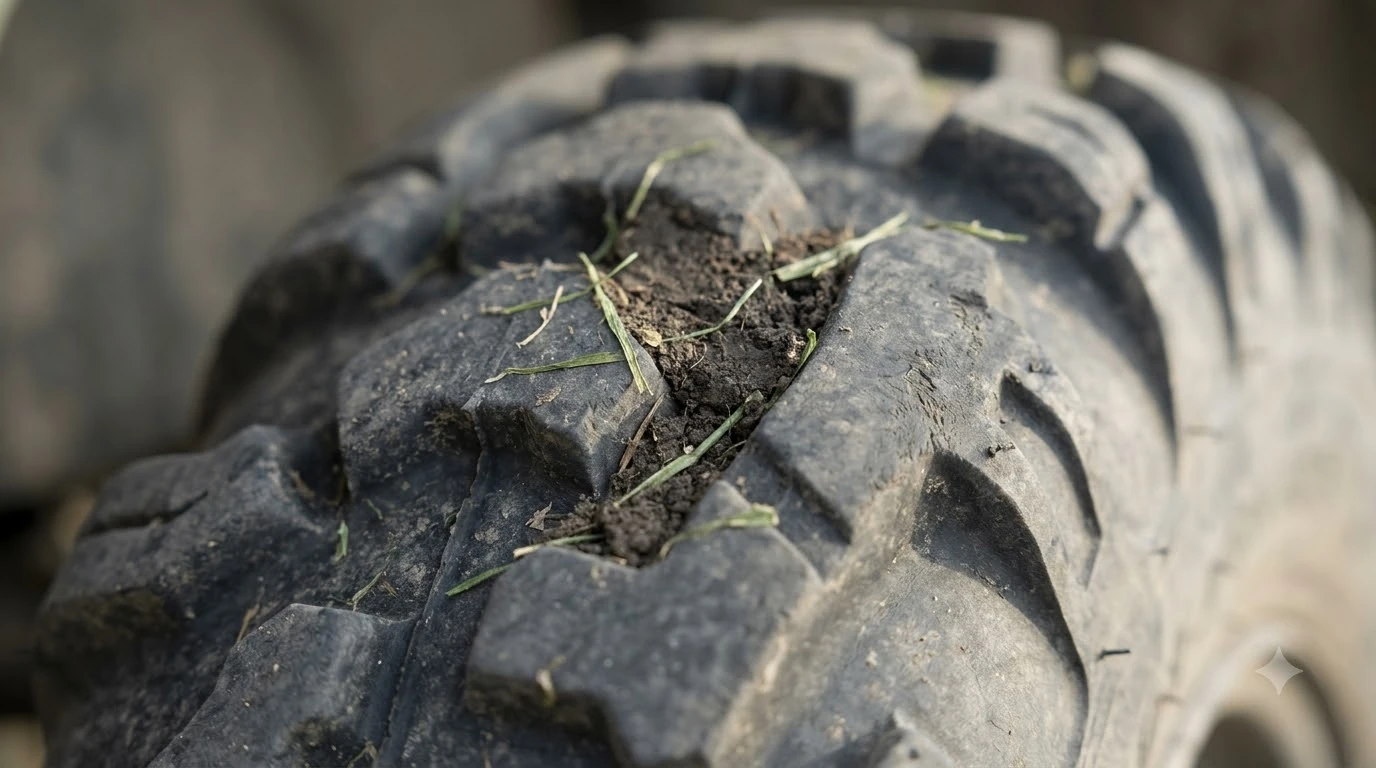

The right robot mower for clay soil lawn that stays wet has good wheel grip, a rain response that sends it back to base, and a cutting height you can raise. Wet clay softens, compacts and cuts traction, so these settings matter more than on sandy soil. This guide covers what to check in a mower and in your yard, using Husqvarna, Anker (Eufy) and Colorado State University Extension sources, as of Nov 2026.
The short answer
- The risk: on saturated clay, a robot mower can slip, leave ruts and compact the soil.
- The wait: at least 24 hours after rain, and longer after heavy rain or on clay.
- The mower: look for wheel grip, a rain response that returns it to the charging station, and an adjustable cutting height.
- The yard: check low spots and shade before you buy, because poorly drained areas stay wet longest.
- The soil: aerate clay once or twice a year after watering well, and limit foot traffic to set paths.
What wet clay does to a robot mower
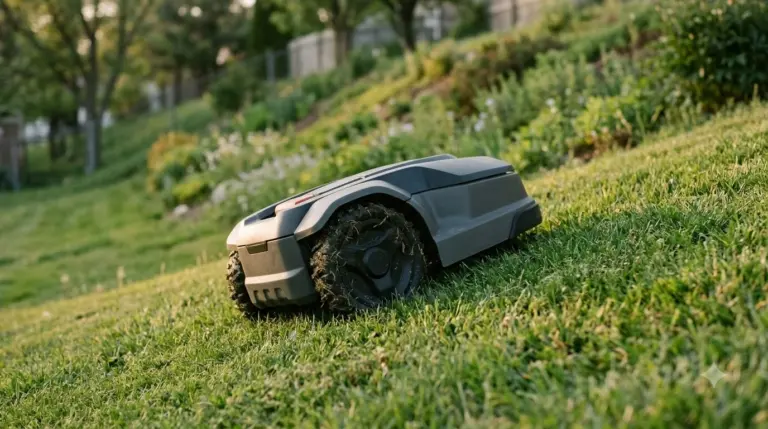
A robot mower for clay soil lawn that stays wet faces three risks: slipping wheels, ruts and compacted soil. Clay holds water, and wet soil loses strength. Anker’s guide says waterlogged soil has less strength and can be compressed by mower wheels, and that soft ground can reduce traction for mower wheels. Husqvarna adds that wet soil is softer and more vulnerable to compaction from the weight of a mower.
Compaction matters because it lasts. Husqvarna notes that compacted soil restricts root growth, which makes it harder for grass to take up water and nutrients. Robot mowers are usually light enough that they carry a low compaction risk, so the bigger problem on wet clay is usually wheel grip. Anker says very wet lawns can give robot mowers reduced wheel grip, muddy tracks and uneven cutting.
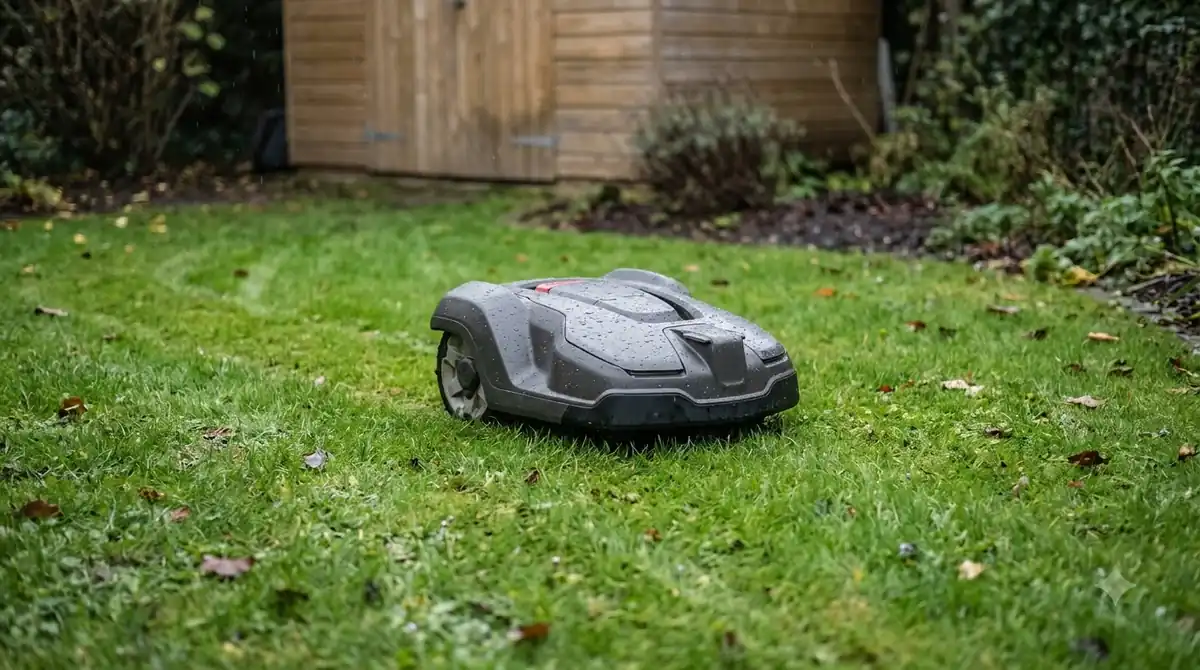
- Wheel slip: the mower loses grip, cuts unevenly and may stall.
- Ruts: track marks that stay after the lawn dries and need repair, as covered in robot mower wheel ruts and brown patches.
- Compaction: packed soil that limits roots and water uptake over time; the same idea applies to a compacted soil lawn.
Robot mower for clay soil lawn that stays wet: features to check
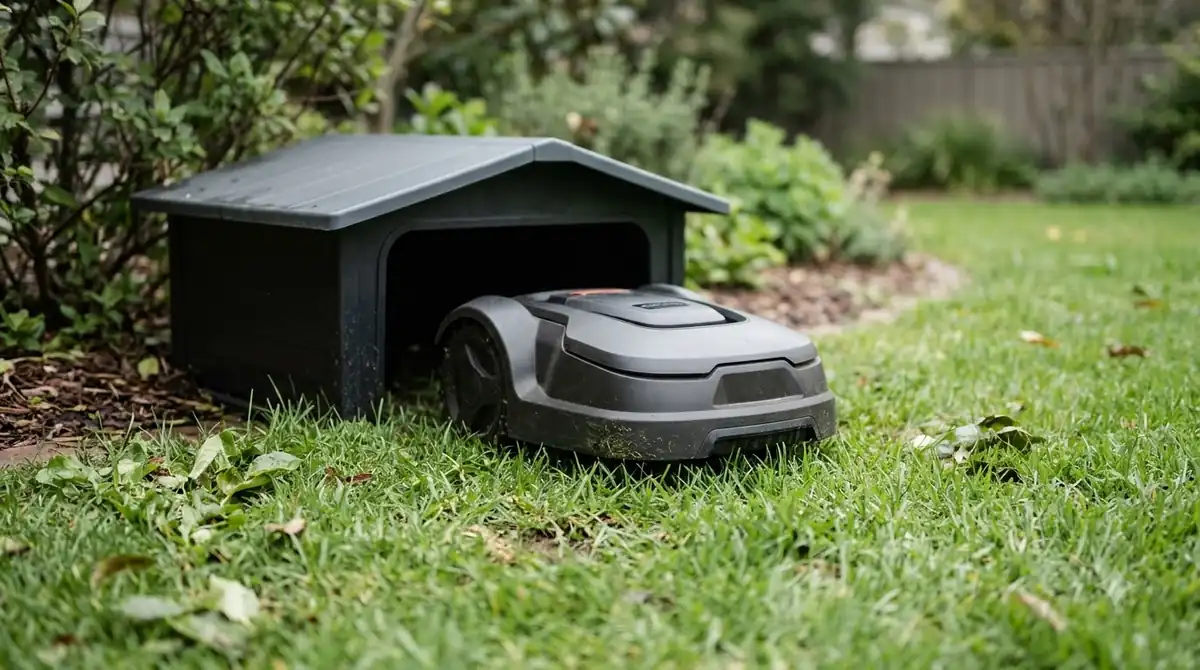
Compare models on the points in the table below. Use it as a checklist for the manufacturer’s spec page and manual, not as a ranking. Spec sheets often list slope and drive type under dry conditions, so treat those figures as a starting point rather than a promise for saturated clay.
| Feature | Why it matters on wet clay | What to check |
|---|---|---|
| Wheel grip and tread | Soft ground reduces traction, so grip decides whether the mower slips on saturated soil | Tread design and drive type on the spec page |
| Rain response | Many robot mowers use rain sensors to pause mowing or return to the charging station | Whether a rain sensor is standard, and how it is set in the app or manual |
| Cutting height | Wet grass is cut more safely when set higher, which avoids tearing and clumping | The minimum and maximum height range |
| Turning | Wide turns put less sideways force on soft turf and reduce wheel damage | Boundary layout that avoids tight corners in wet low spots (our reading) |
| Weight | Husqvarna notes heavier mowers carry more compaction and rut risk in wet conditions | Mower weight on the spec sheet |
The rain response deserves a closer look. Anker’s guide says many robot mowers pause and return to the charging station when it rains, but it does not explain how the sensor works. Check the manual for the exact trigger before you rely on it.
When to run a robot mower on wet clay
With a robot mower for clay soil lawn that stays wet, wait at least 24 hours after rain before mowing, and longer after heavy rain, because clay can stay wet for a day or two after steady rain. Husqvarna’s wet grass guide gives the 24-hour rule, and Anker’s clay guidance gives the longer range. Our note on whether robot lawn mowers can mow in the rain covers the rain side of the question.
- Do a footprint test. If your footsteps leave visible marks in the soil, wait longer.
- Count the hours. Anker notes that steady or heavy rain may need 24 to 48 hours or longer, especially on clay soil.
- Check the low spots. Shaded or poorly drained areas can stay wet well after the open parts of the lawn look ready.
- Raise the cutting height. Husqvarna advises a higher setting on wet grass, because cutting too short causes tearing, clumping and strain on the mower.
- Schedule after the wait. Our reading: set the mower to run after the ground firms up, not on the day it rains.
Anker’s FAQ gives shorter waits for light rain, but its main article says clay may need 24 to 48 hours. On clay, the longer figure is the safer guide. Husqvarna also notes that heavy rain or overcast weather may need a longer wait.
Check the yard before you buy
Before you buy a robot mower for clay soil lawn that stays wet, walk the lawn after a rain and look for places where water sits. Poorly drained areas stay wet well after the rest of the lawn is ready, and those spots are where a mower is most likely to slip.
- Low spots where water collects after rain.
- Shaded corners that dry slowly.
- Standing water near the charging station, which is a poor spot to dock; check your manual for where the station should sit.
- Existing ruts or spongy patches, which should be repaired before any mower runs.
Heads up
Our reading: place the charging station on the highest, firmest spot you have, so the mower does not need to drive through standing water to dock.
Fix the lawn so any mower works better
Soil compaction is hard to undo once it sets in, so most of the work is prevention. Lighter ground behaves differently, as the guide to a robot mower for a sandy soil lawn shows. Colorado State University Extension says traffic over the soil is the major cause of compaction, and that clayey soil should keep routine traffic on selected paths.
CSU recommends aerating at least once or twice a year, and watering well first so the plugs come out at least three inches long. Its squeeze test is useful before you work the soil: if a ball only reshapes under pressure, the soil is too wet. On some clay soils there may be only a few days, or even hours, between too wet and too hard.
For ruts that have already formed, Husqvarna suggests aerating the area. Anker adds that shallow tracks are easier to lift once the soil is moist rather than saturated, using a garden fork.
Frequently asked questions
Can a robot mower damage a wet clay lawn?
Yes. A robot mower for clay soil lawn that stays wet can slip on saturated ground. Saturated clay can let the wheels slip and leave ruts that stay after the lawn dries. Husqvarna and Anker both list ruts and compaction as the main risks, so waiting for the ground to firm up is the simplest protection.
Should I turn off the rain sensor?
Anker says many robot mowers use rain sensors to pause mowing and return to the charging station. Our reading: keep the sensor on during wet spells. It responds to rain, not to soil moisture, so the wait rule still applies on the days after rain. See our list of robot mowers with a rain sensor for models that advertise one.
How long after rain should I wait?
For a robot mower for clay soil lawn that stays wet, Husqvarna advises waiting at least 24 hours after rain, and longer after heavy rain or overcast weather. Anker notes that steady or heavy rain may need 24 to 48 hours or more on clay soil, so the longer figure is the safer guide.
What should I do if the wheels spin on clay?
Stop the mower, let the lawn dry, and check for ruts or spongy patches. Anker suggests lifting shallow tracks with a garden fork once the soil is moist rather than saturated, and CSU advises aerating after watering well.
Sources
- Can you mow wet grass (Husqvarna): the 24-hour wait, footprint test, ruts, compaction and cutting height on wet grass.
- Can you cut wet grass (Anker, Eufy): traction on soft ground, waterlogged soil, rain response and clay wait ranges.
- Soil compaction (Colorado State University Extension): clay traffic, wet soil, the squeeze test and aeration.
 Up next8 min readBy YardWill a Robot Mower Get Stuck on a Clay Soil Lawn That Stays Wet?Updated Nov 11, 2026
 7 min readBy YardRobot Mower for a Lawn With Heavy Clay Soil: Timing and HeightUpdated Nov 14, 2026
 8 min readBy YardRobot Mower That Works Under Trees Without RTK: What to Look ForUpdated Nov 11, 2026
 9 min readBy YardCan a Robot Mower Stay Under a Carport? Summer Yes, Winter NoUpdated Nov 12, 2026
 7 min readBy YardBest Robot Mower for Kikuyu Grass: What to Look ForUpdated Nov 17, 2026
 7 min readBy YardDo Robot Mowers Slide on Wet Slopes? Limits and Grip FactsUpdated Nov 10, 2026