
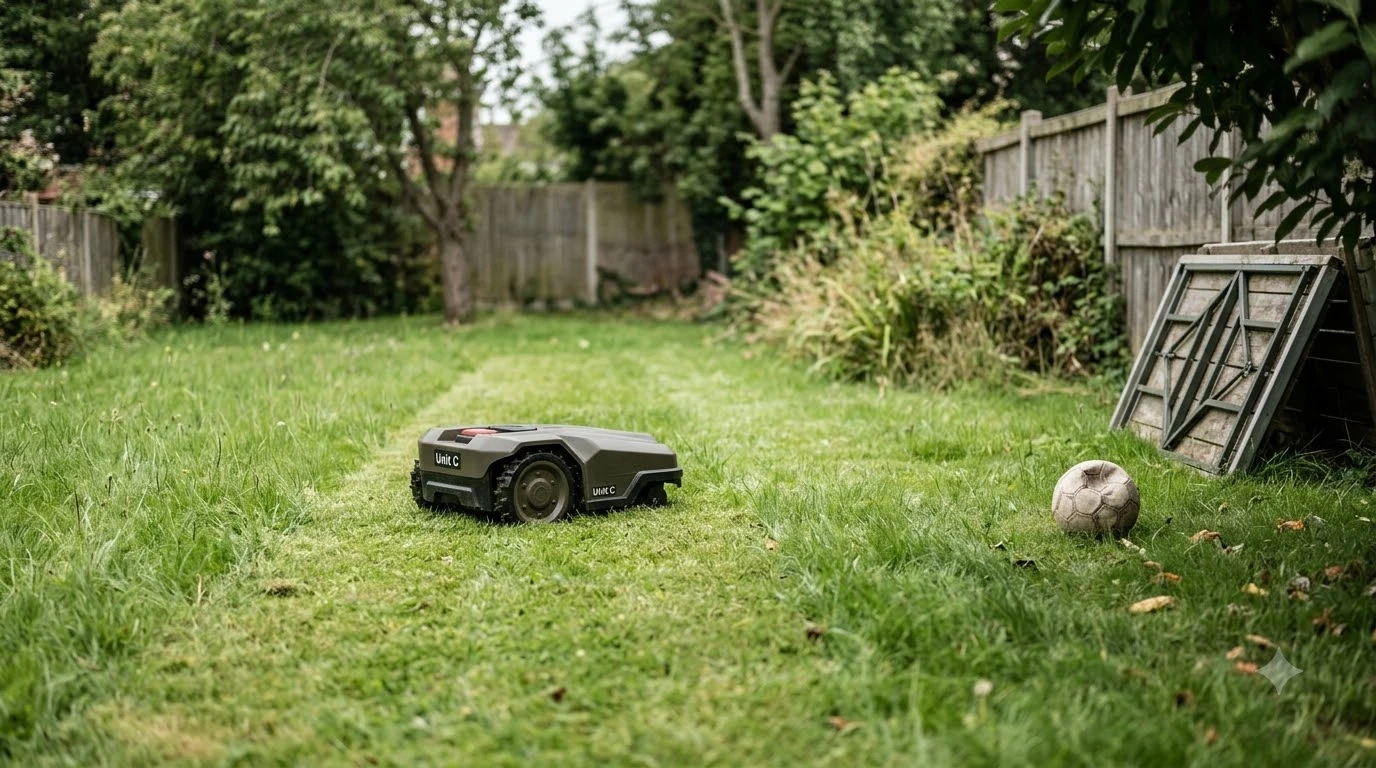

Segway Navimow H2 pros and cons center on navigation. The wire-free LiDAR system is the main strength, while the lack of edge trimming and higher standby power use are the main weak points, according to the published review we read. Rated area and running costs decide whether it fits your yard.
The short answer
- Pro: LiDAR, network RTK and vision navigation, with no perimeter wire and no RTK base antenna.
- Pro: Six blades, 12 spare blades in the box, and IP66 water resistance.
- Con: No edge-trimming feature, so borders need hand work.
- Con: The reviewer measured about 13 W standby power and calls the price relatively high.
What the Navimow H2 is
The Navimow H2 is a wire-free robot lawn mower from Segway’s Navimow brand, built around LiDAR navigation. Navimow’s H-series page describes the line as robot lawn mowers without a perimeter wire, and the review’s data sheet puts the H2 at about 16 kg with a footprint of 62.4 by 44.5 by 29.5 cm.
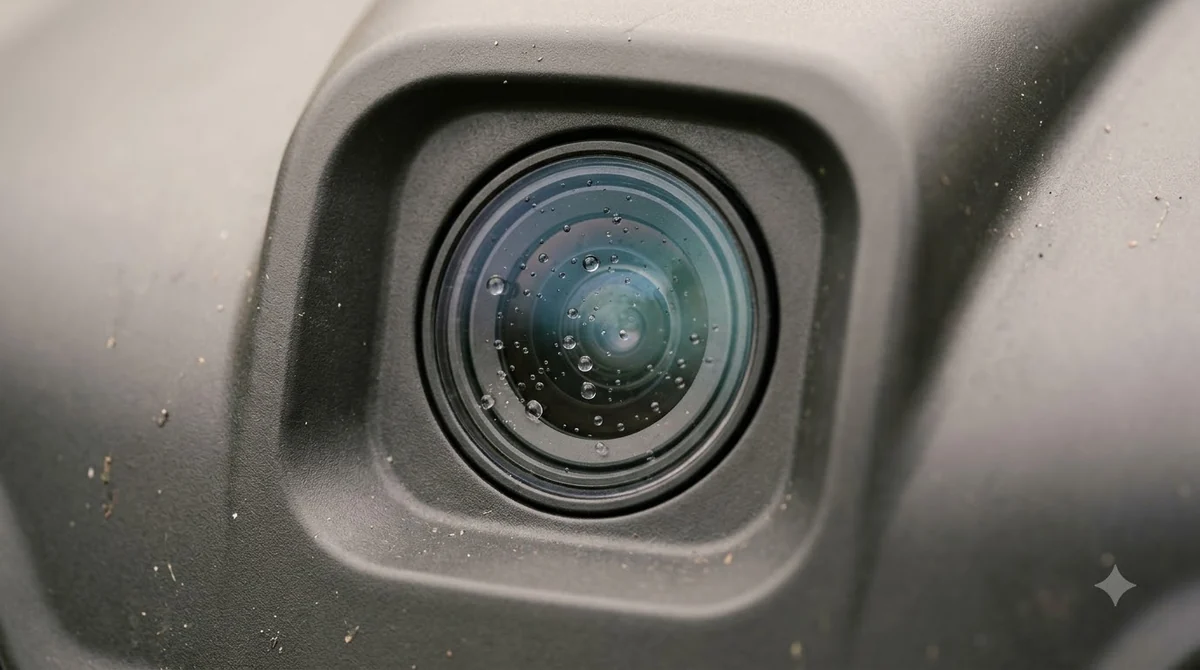
The mower is rated IP66 for water resistance. The review says the box does not include a storage case, so plan for a place to keep the mower out of the weather. Weight matters if you need to lift it onto a garage shelf or move it across a wet slope.
Model sizes and listed coverage
The H2 range comes in several sizes, and each model’s rated area is the first number to check. The table below uses the rated areas from the review. We leave the review’s undated prices out, because prices change often and differ by market.
| Model | Rated area in the review |
|---|---|
| H206 | up to 600 m² |
| H210 | up to 1,000 m² (0.25 acres in the US) |
| H215 | up to 1,500 m² |
| H220 | 0.5 acres in the US |
| H230 | up to 3,000 m² |
Check the current price with the seller before you compare models. In the Segway Navimow H2 pros and cons, size is the choice that changes the most. Our reading is that a rated area is a ceiling, not a promise. Measure your lawn and leave room for beds, trees and other obstacles before you pick a size.
Navigation: no perimeter wire and no RTK antenna
The H2 combines LiDAR, network RTK and vision, so it needs no local RTK base antenna and no boundary wire. The data sheet names the system EFLS LiDAR+, and the reviewer lists reliable triple navigation as one of its main strengths. Our guide to how EFLS positioning works on Segway Navimow and the comparison of RTK vs LiDAR explain the terms. You can read the full test in Notebookcheck’s H2 review.

Slope and obstacle behavior
The manufacturer rates the H2 at 45% or 24 degrees, and the review says it handles slopes up to about 45%. That 45% figure is a manufacturer value, not a reviewer measurement. Grass, moisture and soil change grip, so treat the rating as a ceiling rather than a guarantee on every slope.
In the reviewer’s coverage test, the mower covered the lawn completely and revisited missed spots at the end of the run. Obstacle detection was robust overall, but a neon-yellow tennis ball was missed and run over every time.
The review also reports a wide unmowed strip along the edges. The reviewer ties this to the deck sitting about 10 cm from the edge, so plan to trim the borders by hand. Our explainer on what edge cutting means on a robot mower shows why this matters.
Cutting height, blades and deck
The H2 cuts between 2 and 7 cm, and the height adjusts electrically. The data sheet lists six blades and includes 12 replacement blades in the box.
The cutting width is in conflict. The data sheet gives 22 cm, while the review text describes the deck as about 45 cm wide. We do not state a width until the manufacturer clarifies which figure is correct.
Battery, runtime and standby
The H2 uses a 5.1 to 10 Ah battery, and the reviewer’s test unit had the 5.1 Ah version. In the reviewer’s test, one charge gave about two hours of mowing, covering about 300 m².
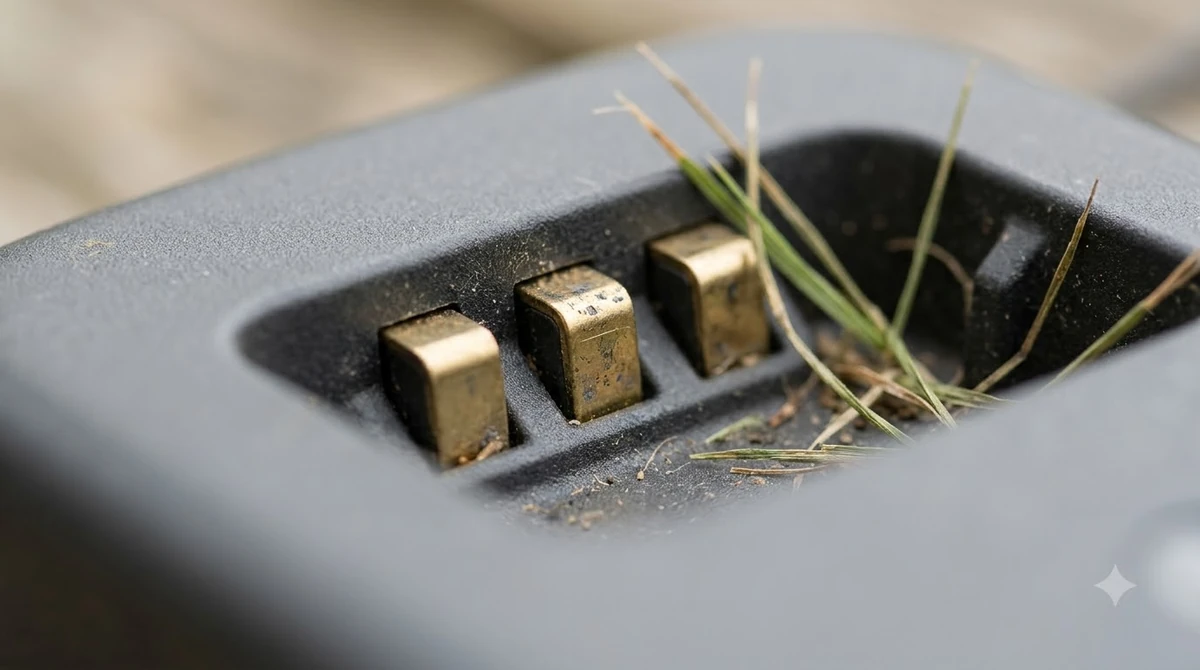
These are the reviewer’s own measurements, not lab results. Each figure below is labeled with its source:
- Charging (reviewer test): 100 Wh charged in under two hours, at up to just under 100 W.
- Standby (reviewer measurement): about 13 W while docked with a full battery.
- Energy estimate (reviewer calculation): about 10 kWh per month, assuming three mowing cycles a week over 500 m².
- Noise (reviewer observation): roughly 60 dB, which depends on how much the mower is working.
Our reading is that standby power is the cost most owners overlook, because the mower draws it every day of the year, not only during mowing. For the wider picture, see our robot mower total cost of ownership guide.
Segway Navimow H2 pros and cons: the strengths
Among the Segway Navimow H2 pros and cons, the reviewer lists four strengths, all as opinion rather than long-term results:
- Reliable triple navigation with LiDAR.
- No RTK antenna needed.
- Robust obstacle detection.
- A good app.
Cons reported in the review
The cons side of the Segway Navimow H2 pros and cons is short. The reviewer names three weak points, and each one changes the total cost of ownership or the work you still do yourself:
- No edge-trimming feature, so borders need hand work.
- High standby power use.
- A relatively high price for the category.
Who the H2 suits, and who should skip it
The Segway Navimow H2 pros and cons weigh differently for each owner. The H2 suits owners who want a wire-free install and can accept hand trimming along the edges. It also fits a lawn that sits inside the rated area of the model you choose. Our reading is that it is a weaker fit if you need automatic edge cutting, if standby power is a concern, or if the price is a strict limit. The review is the only independent source we read, so no second test data is available for comparison. If you are still choosing a navigation type, our LiDAR robot lawn mower guide lists what to check.
Frequently asked questions
Does the Navimow H2 need a perimeter wire?
The brand’s H-series page describes the line as robot lawn mowers without a perimeter wire. The review also says the H2 needs no RTK antenna.
Which H2 model size should I buy?
Choose by rated area with room to spare. The review lists the H206 up to 600 m², the H210 up to 1,000 m², the H215 up to 1,500 m², and the H230 up to 3,000 m².
Can the Navimow H2 trim the edges?
The review lists the lack of an edge-trimming feature as a con, and it reports an unmowed strip along the edges. Plan for hand trimming along borders.
How much power does the Navimow H2 use?
The reviewer measured about 13 W in standby. The reviewer’s estimate is about 10 kWh a month, assuming three mowing cycles a week over 500 m².
Sources
- Notebookcheck’s H2 review (independent tech publisher): data sheet specs, reviewer test results, pros and cons.
- Navimow’s H-series page (Segway Navimow): wire-free positioning of the H-series.
 Up next9 min readReviews & CompareSunseeker V3 vs Eufy E15 Robot Mower: Wire-Free Vision ComparedUpdated Nov 19, 2026
 8 min readReviews & CompareSegway Navimow i215 LiDAR Review: Specs, Pros and ConsUpdated Nov 16, 2026
 8 min readReviews & CompareSegway Navimow i110N Review: Pros, Cons and Specs to CheckUpdated Nov 11, 2026
 7 min readReviews & CompareWorx Landroid vs Segway Navimow: Slope, Navigation and SpecsUpdated Nov 11, 2026
 10 min readReviews & CompareSunseeker Elite X5 vs Dreame A1 Pro: Specs, Navigation, and FitUpdated Nov 19, 2026
 9 min readReviews & CompareNavimow i210 vs Dreame A3: Yard Size, Navigation and Slope ComparedUpdated Nov 12, 2026