
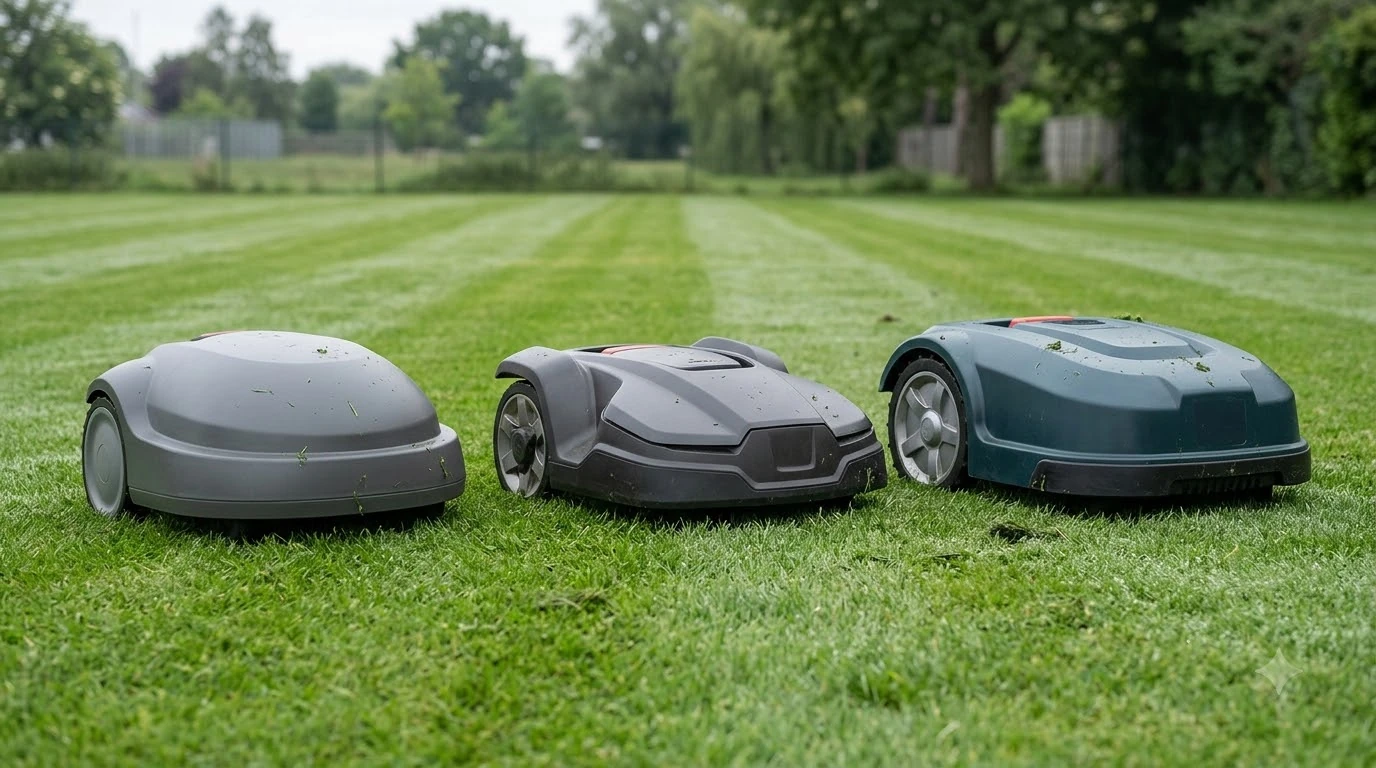

Worx Landroid vs Husqvarna robot mower: neither brand wins on every spec. On the US pages we read, Husqvarna publishes more figures per model, including slope limits, sound level and warranty length. Worx rates coverage and RTK navigation clearly but leaves out slope, runtime and noise numbers on the pages we checked.
The short answer
- Coverage: in a Worx Landroid vs Husqvarna robot mower match-up, Husqvarna’s 420 iQ is rated for 1 acre, and Worx’s WR340 is rated for the same size.
- Boundary: Husqvarna’s 410 and 420 iQ use physical or virtual wire, while Worx’s RTK models say there is no antenna to install.
- Slopes: Husqvarna publishes 45% inside the installation area for the 420 iQ. The Worx pages we read give no slope percentage.
- Warranty: Husqvarna lists 4 years for the 410 and 420 iQ in the US. Worx’s site footer lists a 3-year limited warranty.
How the two lineups name and group their models
Husqvarna’s US pages use model names such as 410 iQ, 420 iQ, 435X AWD and 560 EPOS. Worx uses WR numbers such as WR310.1, WR320.1 and WR340, and sorts models by navigation type, either Vision Cloud (RTK) or Vision AI. The names do not map to each other, so compare models with similar coverage and navigation rather than brand against brand. Our reading is that model-to-model comparison gives a more useful answer than a single winner. Our guide to reading a robot mower spec sheet explains the fields used below.
Worx Landroid vs Husqvarna robot mower: coverage by model
The Husqvarna 420 iQ is rated for 1 acre, and its page gives 0.5 acre for irregular lawns. Worx’s WR340 is rated for 1 acre, and its WR310.1 for a quarter acre. Husqvarna’s 440 iQ is rated for 2 acres, and its 580 EPOS is rated for the same size.
| Brand | Model | Rated lawn size | Navigation or boundary |
|---|---|---|---|
| Husqvarna | 410 iQ | 0.5 acre | Physical or virtual wire |
| Husqvarna | 420 iQ | 1 acre | Physical or virtual wire |
| Husqvarna | 435X AWD | 0.9 acre | Physical wire |
| Husqvarna | 440 iQ | 2 acres | Not checked |
| Worx | WR310.1 | 1/4 acre | Vision Cloud (RTK) |
| Worx | WR320.1 | 1/2 acre | Vision Cloud (RTK) |
| Worx | WR340 | 1 acre | Vision Cloud (RTK), 4G |
| Worx | WR220 | 1/2 acre | Vision AI |
Husqvarna’s 420 iQ page shows its rating with a plus or minus 20% tolerance, so a 1-acre rating can cover somewhat more or less ground. Worx gives coverage only in fractions of an acre, with no square-foot figure. For a fair comparison, convert your own lawn to acres first and then match it to the model’s rating on the brand page. The robot mower coverage rating explained guide shows how that tolerance works.
Boundary and navigation: wire, virtual wire and RTK
In a Worx Landroid vs Husqvarna robot mower comparison, the boundary method is the biggest setup difference. Husqvarna’s 410 iQ and 420 iQ pages list both physical wire and virtual wire as boundary options. The 420 iQ page also says its loop wire is not included in the box, so budget for that kit separately. Its EPOS reference station is included, and the page says it is needed to install the mower if Husqvarna Cloud is unavailable.
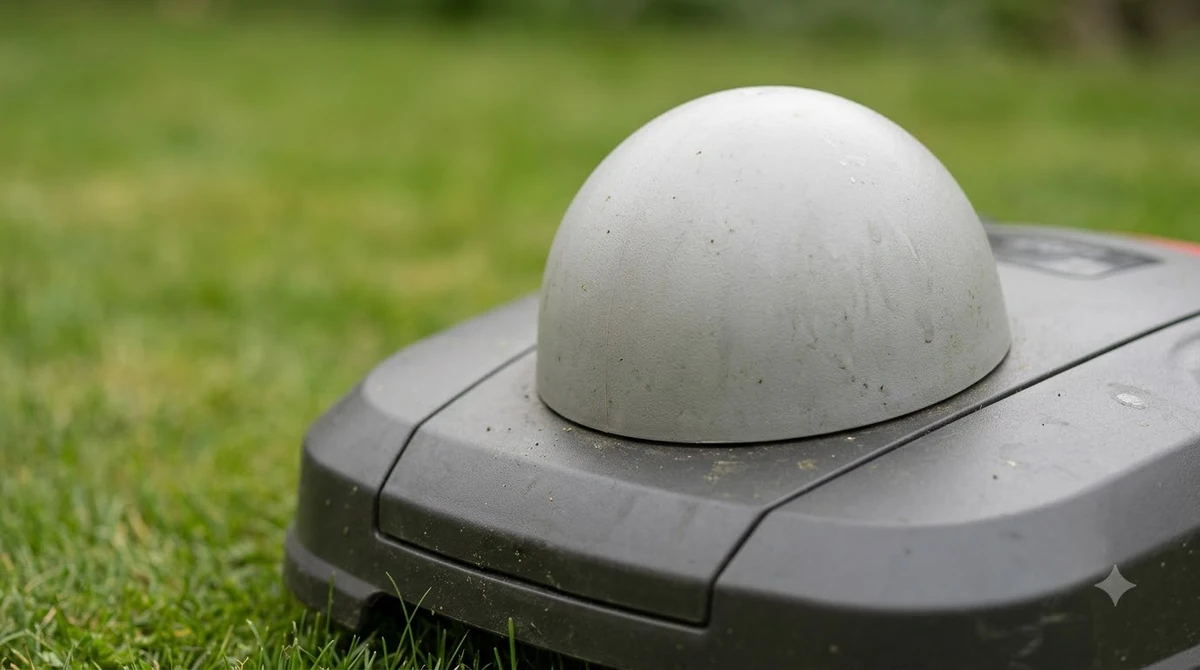
Worx’s Vision Cloud (RTK) models are described as having “No antenna to install.” The lineup page we read never mentions boundary wire for any model, so it does not say whether a wire kit is needed. Our reading is that you should confirm the setup steps for your exact Worx model in its manual before you assume the lawn needs no wire. For the general trade-off, see wire-free vs boundary wire robot mowers.
Slopes and hills: the numbers each brand publishes
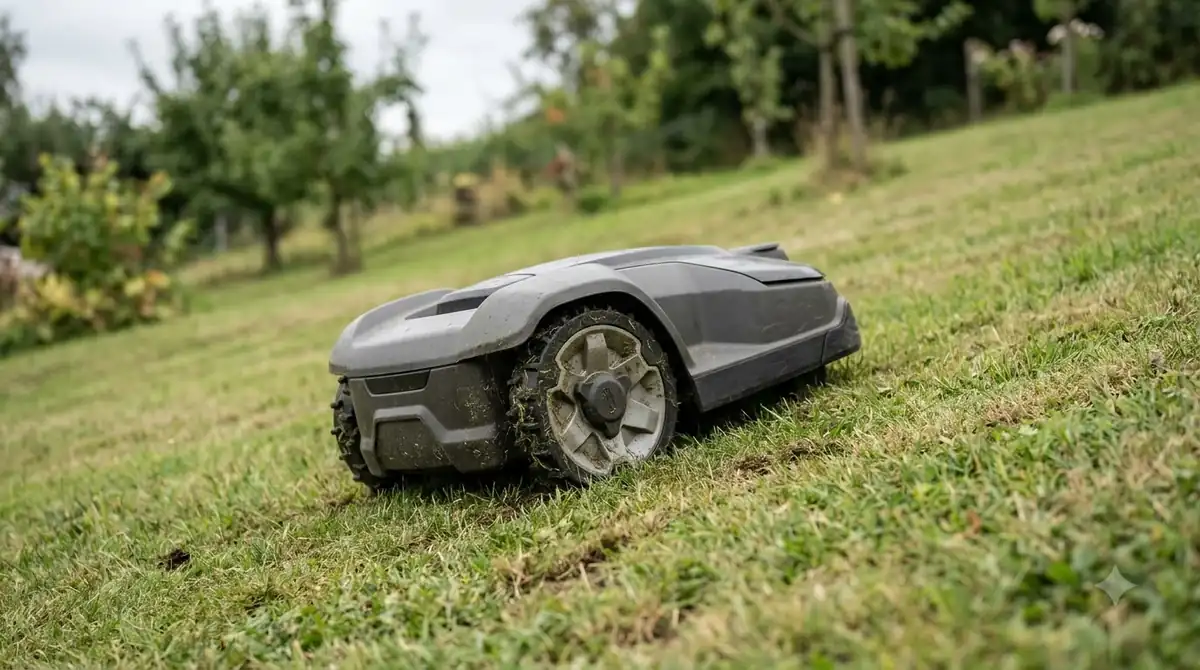
Husqvarna publishes slope limits for the models we read. The 420 iQ and 410 iQ are rated at 45% inside the installation area and 15% at the boundary. The 435X AWD is rated at 70% inside and 50% at the boundary, and the 435 iQ AWD page says it navigates slopes up to 70%.
| Brand | Model | Slope inside installation | Slope at boundary |
|---|---|---|---|
| Husqvarna | 410 iQ | 45% | 15% |
| Husqvarna | 420 iQ | 45% | 15% |
| Husqvarna | 435X AWD | 70% | 50% |
| Worx | WR341 (4WD) | Not stated | Not stated |
Worx’s WR341 is described as “4WD for slopes and steps,” but its page gives no percentage. Because the two brands publish different things, a true hill-to-hill comparison is not possible from the brand pages alone. If your lawn has steep sections, measure the grade with a level and read the slope rating in the manual for the Worx model you are considering. Our explainer on robot mower slope ratings shows what the inside and boundary figures mean.
Runtime, charging and noise
The Husqvarna 420 iQ page lists 24 hours of maximum active time and 84 minutes of mowing on one charge, with 54 minutes of typical charging and 62 dB(A) perceived sound. Those two runtime figures measure different things, so read both before you judge battery life.
| Brand and model | Max active time or mowing per charge | Typical charging | Sound |
|---|---|---|---|
| Husqvarna 420 iQ | 24 h max active; 84 min mowing on one charge | 54 min | 62 dB(A) |
| Husqvarna 410 iQ | 24 h max active | 108 min | 62 dB(A) |
| Husqvarna 435X AWD | 24 h max active | 45 min | 60 dB(A) |
| Worx lineup pages read | Not stated | Not stated | Not stated |
Charging times vary inside the same brand. The 410 iQ page lists 108 minutes and the 420 iQ lists 54, so do not assume one charging time applies to a whole product line. IP ratings also differ: the 410 and 420 iQ are rated IPX5, and the 435X AWD is rated IPX4.
Warranty and support terms
Husqvarna’s 410 iQ page lists a 4-year warranty for users in the US and Canada, and the 420 iQ page shows a 4-year warranty too. The 435X AWD page says its warranty covers defects in material and workmanship under normal use, but it gives no duration. Worx’s site footer lists a 3 Year Limited Warranty, which is not tied to any one model on the pages we read.
Husqvarna also lists GPS theft tracking on the 420 iQ, 410 iQ and 435X AWD pages. The Worx pages we read do not mention theft tracking. Warranty terms can differ by model and by country, so read the full terms for the exact model you buy. See our robot mower warranty guide for what to look for.
Who each option suits (our reading)
In the Worx Landroid vs Husqvarna robot mower choice, Husqvarna’s published figures suit buyers who want a stated slope limit and a stated warranty on a specific model. Worx’s RTK range suits buyers who want to avoid buried wire and whose lawn fits a rated coverage, but who are willing to confirm slope and runtime in the manual.
- Choose a Husqvarna 410 or 420 iQ if you want a published 45% inside slope limit and a 4-year warranty on the US page.
- Choose a Husqvarna 435X AWD if your lawn is hilly and you can install physical wire, since its page lists 70% inside slope.
- Choose a Worx WR310.1 to WR340 if you want an RTK setup and your lawn fits its rated coverage, then confirm slope and runtime in the manual.

What to check before you buy
Before you decide a Worx Landroid vs Husqvarna robot mower match-up, confirm the rated area, slope limit, boundary method and warranty for the exact model, because the two brands leave different gaps on their pages.
- Measure the lawn in acres. Match the total to the model’s rated size, and leave some margin for an irregular shape.
- Check your steepest section. Compare its grade with the 45% or 70% figures, and with any Worx figure in the manual.
- List the kits you need. The 420 iQ page says loop wire is not included, so price it into your total.
- Read the warranty terms. The 435X AWD page gives no duration, and the Worx 3-year warranty is a site-wide footer statement.
- Compare noise with your schedule. The 420 iQ is rated at 62 dB(A), so check whether it suits early-morning or evening mowing near neighbors.
Frequently asked questions
Is the Worx Landroid better than the Husqvarna Automower?
Neither is better on every spec in a Worx Landroid vs Husqvarna robot mower comparison. On the US pages we read, Husqvarna publishes more figures per model, including slope limits and warranty length. Worx lists coverage and RTK navigation clearly but gives fewer runtime and noise numbers.
Which mower covers a bigger lawn, Worx or Husqvarna?
It depends on the model. Husqvarna’s 440 iQ is rated for 2 acres and its 420 iQ for 1 acre. Among the Worx models we read, the WR340 is rated for 1 acre and the WR310.1 for a quarter acre.
Do Worx Landroid mowers need a boundary wire?
The Worx lineup page we read says the RTK models have no antenna to install, and it never mentions boundary wire for any model. Check the manual for your specific model, because the page does not describe the full setup.
Does a Husqvarna Automower need a reference station?
The Husqvarna 420 iQ page says its EPOS reference station is included and is needed if Husqvarna Cloud is unavailable. Other models may differ, so check the product page for the model you plan to buy.
Sources
- Automower 420 iQ (Husqvarna, US): rated lawn size, slope limits, boundary options, runtime, sound, IP code, warranty, EPOS reference station.
- Automower 410 iQ (Husqvarna, US): rated lawn size, slope limits, charging time and warranty for the 410 iQ.
- Automower 435X AWD (Husqvarna, US): rated lawn size, 70% inside slope, physical wire boundary, sound and IP code.
- Robotic lawn mowers (Husqvarna, US): lineup and rated lawn size for each model listed.
- Landroid robotic mowers (Worx, US): model coverage, RTK “No antenna to install” wording, 3 Year Limited Warranty footer.
 Up next9 min readReviews & CompareHusqvarna Automower 115H vs Worx Landroid Vision: SpecsUpdated Nov 11, 2026
 7 min readReviews & CompareBest Alternative to Worx Landroid: What the Published Specs ShowUpdated Nov 11, 2026
 9 min readReviews & CompareWorx Landroid Vision Pros and Cons: What Reviews ShowUpdated Nov 11, 2026
 7 min readReviews & CompareWorx Landroid vs Segway Navimow: Slope, Navigation and SpecsUpdated Nov 11, 2026
 8 min readReviews & Compareeufy E15 vs Worx Landroid Vision: Lawn Size, Slope and SpecsUpdated Nov 11, 2026
 7 min readReviews & CompareWorx Landroid Vision Review: 5 Models, Specs and Worth ItUpdated Nov 11, 2026