
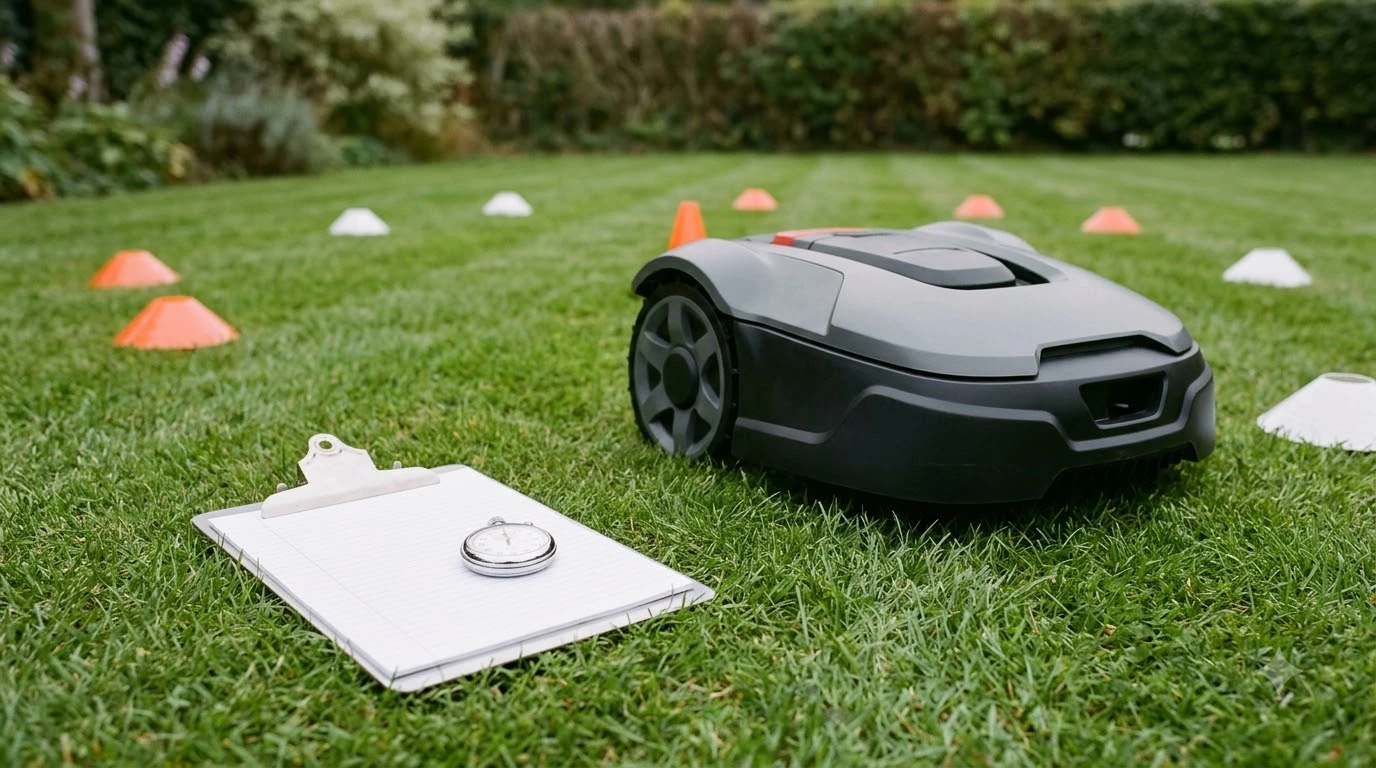

A best wire-free robot mower under $1500 is usually a LiDAR or vision model with a rated area in the quarter-acre to third-of-an-acre range. Two models read for this guide show how much the rated area and slope limit can differ inside the same budget. The figures below come from maker pages and reviews, as of Nov 2026, and prices change, so check the current listing before you buy.
The short answer
- Rated area: one LiDAR model in this band is rated at 0.25 acre, another at about 0.37 acre. Compare both against your measured lawn plus headroom.
- Slope: two LiDAR models in this band list a 45 percent work-area slope, but boundary ratings are separate figures.
- Dock space: one hands-on review asked for about 6.6 feet in front of the dock and 1.6 feet on each side.
- Running costs: some makers sell a cellular plan after a free first year, so check it before you buy.
What a $1500 budget usually buys without a wire
Under $1500, a wire-free mower normally relies on LiDAR, which builds a map with laser pulses, or on a camera with AI vision. The maps are created during a guided pass around the lawn, and the app then lets you draw no-go zones. That replaces the boundary wire, which a Dreame buying guide estimates can take two to three hours to dig in, while LiDAR mapping takes 15 to 30 minutes. The core technology is explained in wire-free mowing without a perimeter wire. To see what a smaller budget still delivers, compare the wire-free options under $1000 with this price band. A $1500 budget changes what wire-free mowing offers, which is the subject of this guide to lawn mowing with no perimeter wire.
The trade-off is weather and light. Ecovacs notes that fog and heavy rain can scatter or absorb the laser beams. Mammotion, a competing maker, claims LiDAR works in shade and under tree cover, but that is a vendor claim, and we did not find an independent test that compares LiDAR and satellite positioning under a tree canopy. Treat both claims as things to verify on your own lawn.
Compare the two rated areas side by side
The two models below are useful for seeing how far apart ratings can be inside one budget. The MOVA LiDAX Ultra 1000 is rated for 0.25 acre, which is 1,012 square meters, so a lawn of exactly that size would leave no headroom. The Navimow i215 LiDAR is rated for 0.37 acre, about 1,497 square meters.
| Model | Rated area | Work-area slope | Navigation | Warranty |
|---|---|---|---|---|
| MOVA LiDAX Ultra 1000 | 0.25 acre (1,012 m2) | 45% | 360-degree 3D LiDAR with AI vision, RTK-free | 3 years (retailer listing) |
| Navimow i215 LiDAR | 0.37 acre (1,497 m2) | 45% | LiDAR and vision, no perimeter wire, no RTK antenna | 3 years (maker figure) |
Both figures are as quoted on a retail spec page that repeats the maker’s numbers, so confirm them on the maker’s own site. If your lawn is near half an acre, neither model leaves much room, and a larger budget may be the better path.
Slope: where the money matters
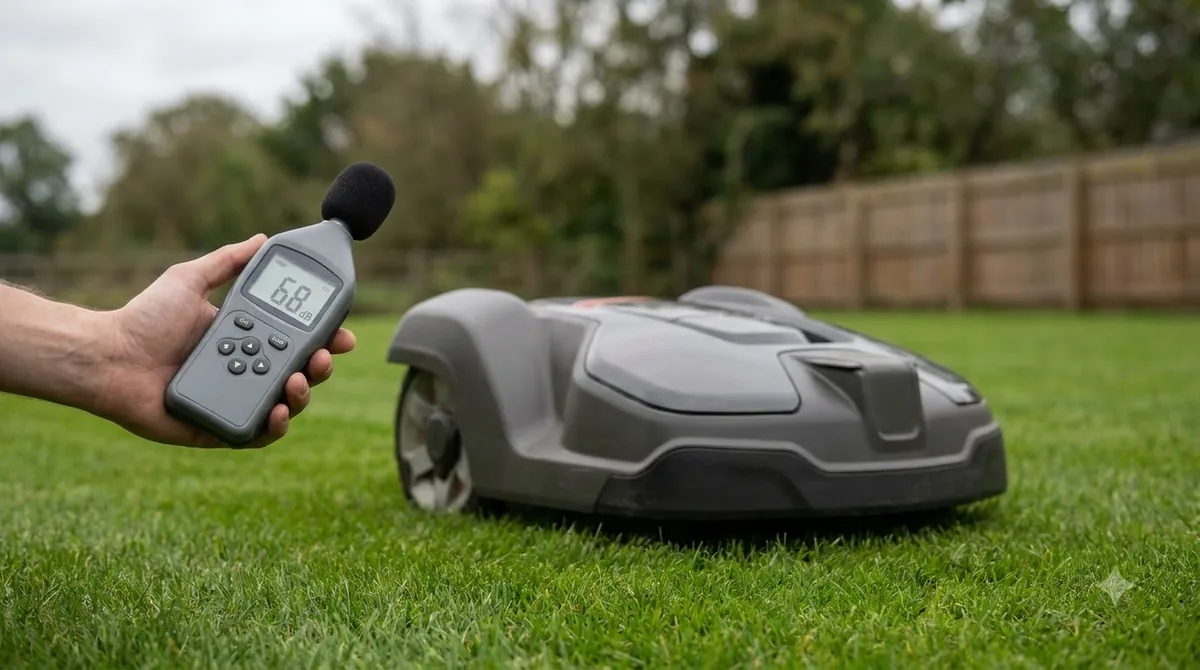
A 45 percent work-area rating is steep, but it is not the same as a 45 percent boundary rating. The Sunseeker buying guide points out that some makers publish two slope figures, and advises all-wheel drive above about 30 percent. The Dreame guide says to rule out a two-wheel-drive model if any section is steeper than about 35 percent. If your yard has a bank or a steep corner, those two sentences decide more than the brand name.
Dock space and cutting height
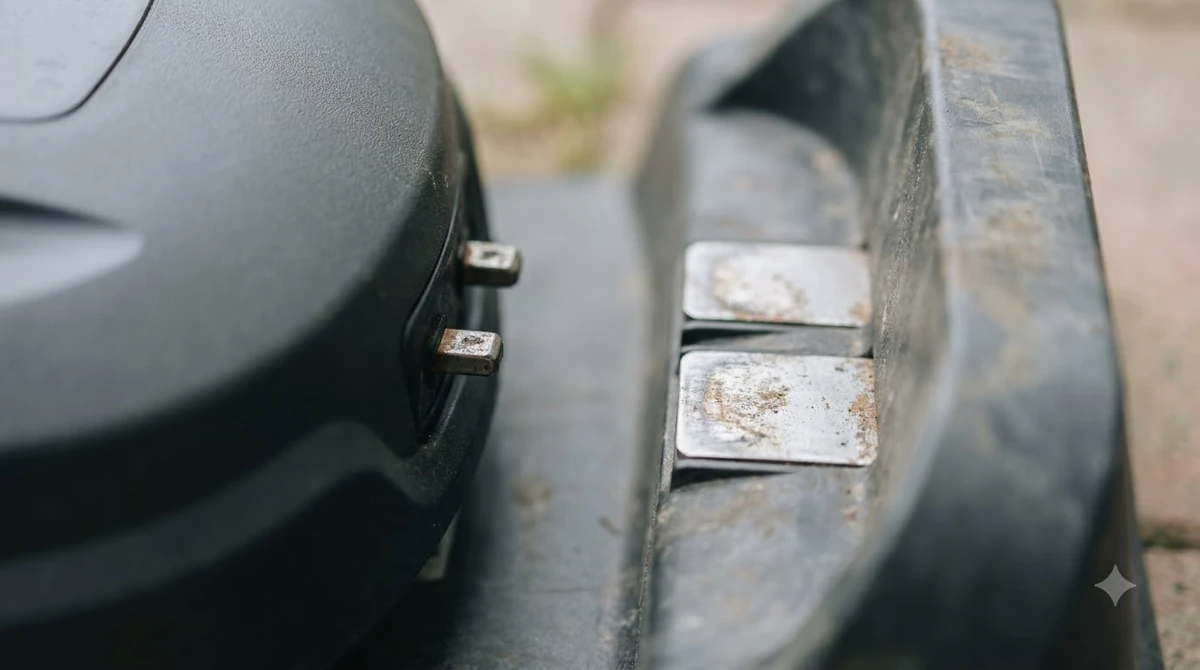
The PCWorld hands-on review of the Navimow i215 found the test lawn included slopes, trees, shade, mulch and a fence, and that the mower slipped a couple of times on a narrow strip between a raised grass edge and the fence. The same review measured the dock at about 6.6 feet clear in front and 1.6 feet on each side. Cutting height for that model is 2 to 4 inches. Measure your dock spot before you order, because the space in front of it is often the hardest part to fit.
Subscriptions and running costs
Some makers charge for a cellular connection plan. One review of the Navimow i215 reported a first year free and then $32.90 per year, but the same review noted the plan could change, and it also reported a price of $1,599 that should not be treated as current. Dreame’s guide gives typical running costs of $20 to $40 per season for blades, $100 to $300 for a battery after three to five years, and $15 to $25 per year in electricity.
Heads up
Maker and retailer prices move often. Treat any dollar figure here as a snapshot from Nov 2026 and check the current listing before you decide.
Best wire-free robot mower under $1500: how to choose inside the budget
Start with your measured lawn area and add at least 20 percent headroom, the figure Sunseeker and Dreame both recommend. Then check the work-area and boundary slope on the spec sheet. Next, measure the dock spot and confirm the clearance. Finally, read the warranty terms and the subscription conditions, because those are the costs that surprise owners after the first season. Readers who can spend more may prefer the next tier up, which is covered in wire-free mowers under $2000.
Frequently asked questions
Is LiDAR better than RTK for a wire-free mower?
They suit different yards. LiDAR maps the lawn with laser pulses and does not need a satellite signal, but fog and heavy rain can limit it. RTK depends on a clear sky view. Ecovacs and Mammotion both publish comparisons from their own side, so weigh them as maker sources.
How much lawn can a mower under $1500 cover?
The two models read here are rated for about 0.25 and 0.37 acre. Sunseeker and Dreame both suggest keeping 20 to 30 percent extra headroom, so a rated figure close to your lawn size will likely fall short on real coverage.
Does a wire-free mower need an app subscription?
Some do. The Navimow i215 review reported an optional cellular plan after the first year, but terms change. Check whether remote control and map updates depend on a paid plan.
Can it handle steep slopes?
Some LiDAR models list a 45 percent work-area slope. Check the boundary rating separately, and consider all-wheel drive once any section is steeper than about 30 to 35 percent, as the Sunseeker and Dreame guides suggest.
Sources
- Smart Home Compared, MOVA LiDAX Ultra 1000 (retail spec page): used for the 0.25 acre rating, slope and warranty figures.
- Smart Home Compared, Navimow i215 LiDAR (retail spec page): used for the 0.37 acre rating and navigation details.
- PCWorld, Navimow i215 review (review): used for the hands-on lawn test and dock clearance.
- Dreame robot lawn mower buying guide (manufacturer): used for setup time, slope threshold and running costs.
 Up next9 min readBest Robot MowersBest LiDAR Robot Mower Under $1500: What the Spec Sheets ShowUpdated Nov 16, 2026
 7 min readBest Robot MowersThe Best Wire-Free Robot Mower Under $500: What the Price Guides ShowUpdated Nov 14, 2026
 8 min readBest Robot MowersBest Wire-Free Robot Mower Under $5000: What to CheckUpdated Nov 17, 2026
 6 min readBest Robot MowersBest Wire-Free Robot Mower Under $700: What to Expect at This PriceUpdated Nov 17, 2026
 7 min readBest Robot MowersBest Wire-Free Robot Mower Under $2000: Slope, Area and Running CostsUpdated Nov 14, 2026
 7 min readBest Robot MowersBest Wire-Free Robot Mower Under $1200: What to Check Before You BuyUpdated Nov 16, 2026