
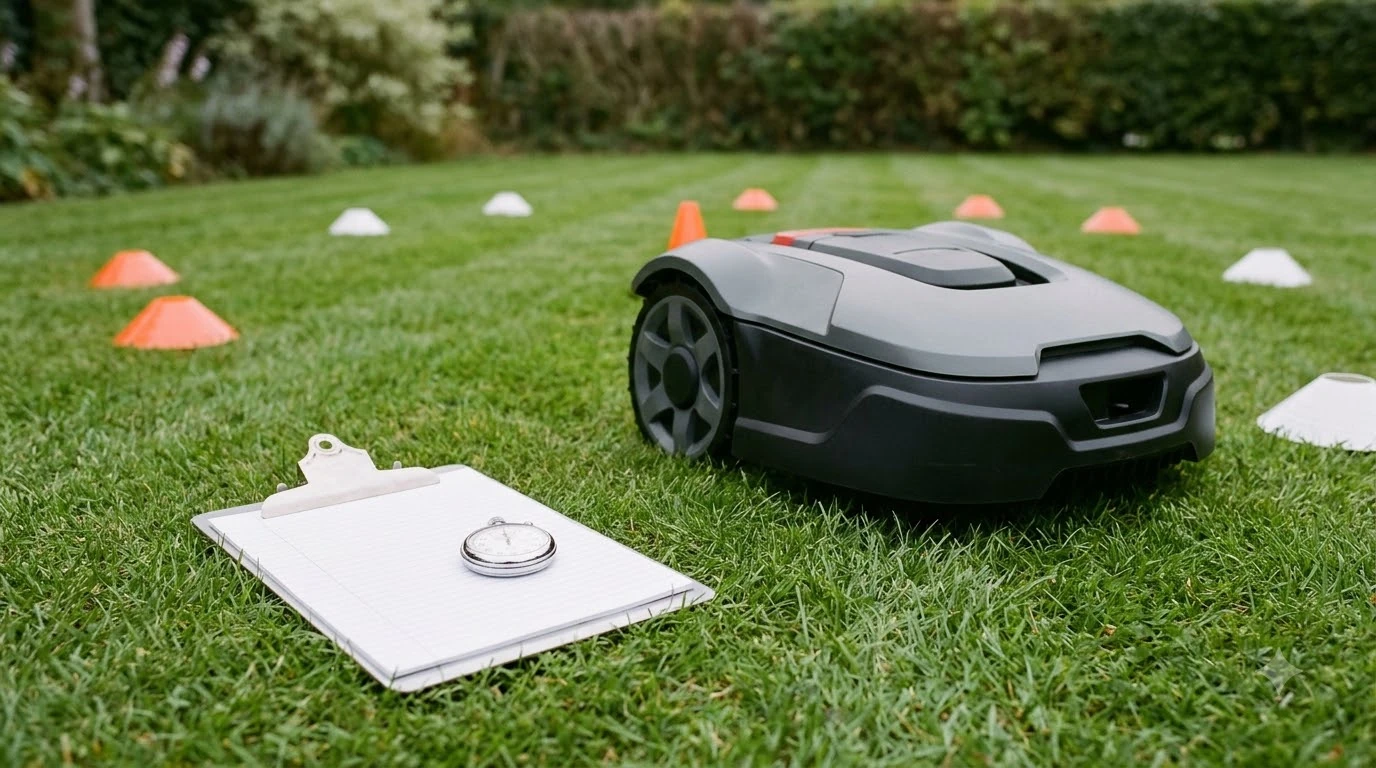

The best robot lawn mower without perimeter wire depends on how it finds its position: RTK-GPS, LiDAR, or camera vision. Each one needs something different from your yard, such as open sky, a clear view of the lawn, or steady light. Wire-free mowers remove the buried cable, but they still need a setup that fits your lawn, so the right pick starts with your yard and not with a brand name.
The short answer
- Open lawn with clear sky: RTK-GPS models usually fit best, and they need a base station on a level spot with an open view.
- Trees, a house, or a fence close to the lawn: LiDAR or vision models handle blocked satellite signal better than RTK alone.
- Grass-sensor mowers: these are a different category. They follow the edge of the grass and usually need physical barriers at beds and borders.
- Before you buy: check sky view, slope, and whether the mower can cover your lawn in one charge.
How wire-free robot mowers find their way
Wire-free mowers do not follow a buried loop. They build a map of the lawn and locate themselves inside it, and the three main methods do that in different ways. The method decides how the mower behaves near trees, walls, and shade, so it matters more than the cutting deck or the battery. For the full picture of this category, start with the main guide to wire-free robot mowers. Different systems find their way differently, which robot mower navigation compared across technologies explains.
RTK-GPS uses satellite signals plus a correction source, either a local base station or a network service. Husqvarna describes its virtual boundary system as using RTK-GNSS through the Automower Connect app, and it notes that where satellite coverage is poor, a physical wire can be buried as a fallback. LiDAR uses laser scanning to read objects around the mower, and vision systems use cameras and software. Some brands combine these, but the combined systems still depend on the conditions that each part needs.
Vendors often describe their own systems in strong terms. Treat those as vendor claims. The useful question is how each method behaves in your yard, not which one sounds most advanced.
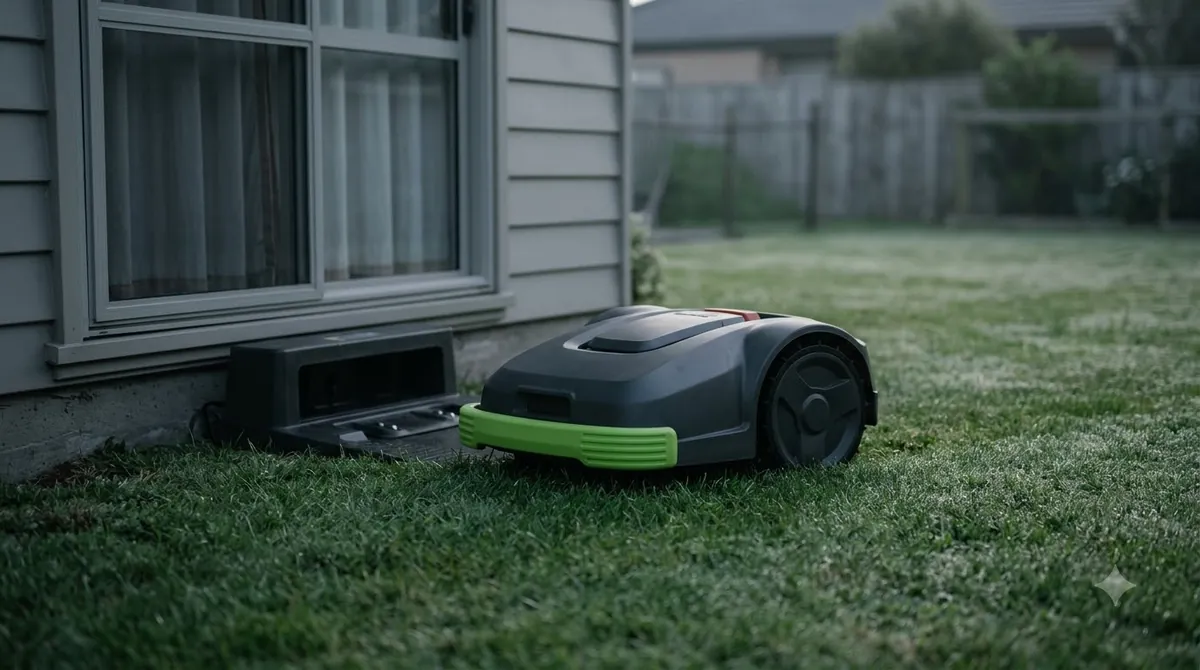
RTK, LiDAR, and vision: where each one struggles
Each navigation method has a weak spot, and the weak spot is usually a feature of the yard. Read the table below as a checklist of conditions, not a ranking. Accuracy varies with the technology, as shown in navigation accuracy by technology type.
| Method | Needs from your yard | Typical limit |
|---|---|---|
| RTK-GPS | A base station with a clear sky view, or a network correction service in your area | Dense tree canopy and tall buildings can reduce precision |
| LiDAR | Clear line of sight to the lawn edge and nearby objects | Less dependent on sky view, but the sensor must stay clean |
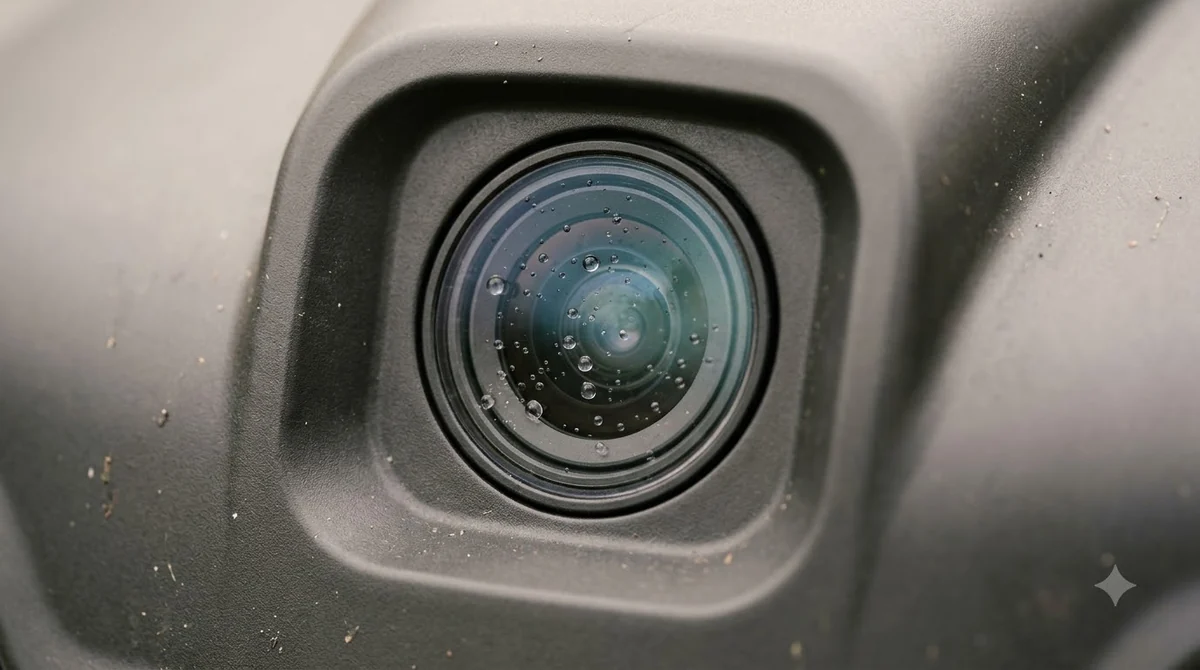
| Vision | Steady light and a clean camera | Low light, heavy shadow, and dirty lenses can reduce accuracy |
Sunseeker notes that RTK models can lose precision under dense tree canopies and that vision systems may struggle in low light or heavy shadow. Its manual also says an RTK base station must sit on a level surface with a clear sky view. These points are useful even if you choose a different brand, because they describe the physics of each method.

Lawn size and slope limits come first
A wire-free mower is only useful if it can cover your lawn and climb your slopes. Maximum coverage and slope ratings are printed on each product page, and they change from model to model, so compare the exact model you are considering instead of the category as a whole. Size and slope limits come first, so see half-acre lawns with slopes for a practical example.
Sunseeker’s guideline for slopes is at least 35 percent for basic models and 45 percent or more for higher-end ones. Husqvarna lists standard models for slopes of 20 to 40 percent, with its all-wheel-drive models rated up to 70 percent. Those numbers come from different manufacturers and different test conditions, so do not treat them as directly comparable. Use them to decide whether your slope falls clearly inside a model’s rating, not just near it.
Heads up
If your lawn has a steep section near the edge, check the slope rating for that specific model. A mower that handles the average slope can still struggle on a short, steep bank.
Base station, network service, or wire backup
Many RTK buyers ask whether they need a base station at all. Segway Navimow says its Network RTK setup needs no local antenna and that availability is checked by postcode. Mammotion says many makers have moved to network RTK, so a physical base station is no longer always required. Both are vendor claims, and network coverage differs by region, so confirm it for your address before you buy. Network and base-station dependence affects uptime, so read the reliability of wireless robot mowers.
If you do use a local base station, put it where it has the widest open view of the sky. Keep it away from trees, walls, and metal fences. Plan on some setup time to map the lawn edge, and expect the mapping to take longer on a large or irregular yard.
Trade-offs of grass-sensor mowers
Some products advertise wire-free operation by sensing the boundary of the grass rather than using satellites or cameras. That approach has real limits. Robomow notes that these mowers cannot return to the station on their own and cannot reach separate zones. It also says they need physical barriers, such as boards, stakes, or edging about 10 cm high, around flower beds and neighbouring lawns, and fallen leaves can be mistaken for lawn. For a plain list of options that need no wire, see robot mowers that skip the boundary wire.
If your yard has several zones, a garden bed next to the lawn, or a path that needs to stay clear, a grass-sensor mower may not be enough by itself. Those yards usually suit RTK, LiDAR, or vision models better.
Choosing the best robot lawn mower without perimeter wire
Use this short checklist before you compare prices. Prices change often, so the list focuses on conditions that stay the same. Budget readers can compare the wire-free robot mower under $500 tier to see what the lowest-cost options give up.
- Sky view. Note where trees, roof edges, and fences block the sky over the lawn.
- Slope. Measure the steepest section and compare it with the model’s rating.
- Coverage. Compare the rated area with your lawn size, leaving room for obstacles and garden beds.
- Correction method. Confirm whether the model uses a local base station or a network service, and whether that service covers your postcode.
- Wire fallback. Ask whether the company offers a buried wire option for areas where the satellite signal is weak.
- Service and parts. Check warranty terms, local dealer support, and replacement blade availability.
Our reading is that the strongest choice depends on the yard. An open lawn with clear sky has the fewest obstacles, while a shaded or fenced yard needs a more careful match. Verify each specification on the manufacturer page before buying, because product details and coverage claims change between model years.
Related reads: If RTK positioning is weak at your site, RTK antenna options for mowers may help.
Frequently asked questions
Is a wire-free robot lawn mower reliable?
Reliability depends on the navigation method and the yard. RTK, LiDAR, and vision each have conditions that reduce accuracy, such as dense canopy, low light, or a blocked sky view. Choose the method that matches those conditions in your yard.
Do I need a base station for RTK?
Some RTK models use a local base station, while others use a network correction service. Check the manufacturer’s documentation and confirm that the network covers your location before you rely on it.
Can a wire-free mower work under trees?
It can work under some trees, but dense canopy can reduce RTK precision. LiDAR and vision systems depend less on the sky view, though they still need a clean sensor and enough light.
What is the difference between a wire-free mower and a grass-sensor mower?
A wire-free mower with RTK, LiDAR, or vision maps the lawn using sensors and signals. A grass-sensor mower follows the edge of the grass and usually needs physical barriers around beds and neighbouring lawns.
Sources
- Husqvarna US, how Automower works (manufacturer): virtual boundary with RTK-GNSS, wire fallback, and slope ratings.
- Robomow, boundary wire vs grass sensors (manufacturer): limits of grass-sensor mowers, barriers, and return to station.
- Segway Navimow, how wire-free mowers work (manufacturer): Network RTK and the claim that no local antenna is needed.
- Sunseeker Elite, best robot lawn mower without perimeter wire (manufacturer): base station placement, canopy limits, and slope guidelines.
 Up next9 min readBest Robot MowersBest Robot Lawn Mower Without Perimeter Wire: How to Choose in 2026Updated Nov 16, 2026
 8 min readBest Robot MowersWhat Is the Best Robot Mower Without a Boundary Wire?Updated Nov 11, 2026
 7 min readBest Robot MowersBest Wire-Free Robot Mower Under $2500: How to Choose in 2026Updated Nov 14, 2026
 10 min readBest Robot MowersRobot Mower No RTK Antenna: How Navigation Works Without OneUpdated Nov 16, 2026
 7 min readBest Robot MowersBest Wire-Free Robot Mower Under $1200: What to Check Before You BuyUpdated Nov 16, 2026
 8 min readBest Robot MowersBest Wire-Free Robot Mower Under $5000: What to CheckUpdated Nov 17, 2026